Burg Neuhaus: A Medieval Water Castle in Wolfsburg, Germany



Site at a Glance
- Rating
- 4.4
- Popularity
- Low
- Country
- Germany
- Primary era
- Medieval
- External website
- Open
- Eras represented
- Medieval, Early Modern, Modern
- Civilizations
- German, Holy Roman Empire
- Site type
- Military
- Remains
- Castle
On this page11 sections
History
Burg Neuhaus is a medieval water castle in Wolfsburg, Germany, built by Duke Magnus the Younger of Brunswick and completed in 1372. First documented in 1371, it was constructed as a new fortified residence and counter-castle against Wolfsburg and the Altes Haus fortification at Vorsfelde, both controlled by the von Bartensleben family.
Foundation and the Lüneburg War of Succession
The castle arose after the von Bartensleben family breached its feudal loyalty to Magnus by entering a fief agreement with an eastern territorial lord. The city of Brunswick assisted the duke with the project. Burg Neuhaus protected trade routes linking Lüneburg with Leipzig and Bremen with Magdeburg, which crossed the Aller glacial valley at a relatively dry point between the Barnbruch marshes and the Drömling.
During the Lüneburg War of Succession, a late-fourteenth-century conflict over the succession and territorial rights of the Duchy of Lüneburg, Magnus declared war on the von Bartensleben family and placed a strong garrison at Burg Neuhaus. On 24 June 1372, Brunswick forces and troops from Wolfsburg fought an inconclusive battle near Heßlingen. A special peace concluded in 1374 ended the regional hostilities.
Burg Neuhaus remained involved in later territorial conflict. In 1464, Duke Otto of Lüneburg attacked it during a retaliatory campaign against Duke Heinrich I of Brunswick. Burg Neuhaus and Wolfsburg resisted, while the Altes Haus fortress at Vorsfelde was completely destroyed.
The von Bartensleben residence
From 1423, Burg Neuhaus was the seat of the Rothehofer branch of the von Bartensleben family. This branch used the designation “von Bartensleben zum Newenhauß.” A local tradition places Huner von Bartensleben at the castle in 1473, when his cousins Jakob and Busso sought an assurance from the territorial lord that they would receive the castle if Huner died.
Siege and administrative transformation
In 1552, troops commanded by Count Vollrad von Mansfeld of the Schmalkaldic League besieged Burg Neuhaus. The league was an alliance of Protestant princes and cities that fought the Catholic Emperor Charles V. Mansfeld’s force included about 5,400 mercenaries and 2,100 cavalrymen and had already devastated several towns in the Harz foreland. Heavy artillery, including large-caliber mortars, badly damaged the castle, although the attackers did not capture it. The castle chapel was not rebuilt after the siege, and its period as a knightly residence came to an end.
After 1552, and especially after 1568, Burg Neuhaus became an Amtshaus, a territorial administrative office, and part of an agricultural domain operated by the Duchy of Brunswick. A brewery and distillery functioned within the domain from 1585 to 1890. The castle’s roles as an administrative seat and agricultural enterprise ended in 1934.
Twentieth-century uses
During the Nazi period, Walther Darré, head of the Race and Settlement Main Office, established a Reich sports school at the castle. Between 1936 and 1939, about 950 girls and boys from farming families attended courses lasting several weeks. Their program included physical exercises and folk dancing, alongside ideological instruction that presented them as an elite of the purported “Nordic race.”
After the Second World War, the state of Brunswick established a youth hostel at Burg Neuhaus in 1946. A children’s home planned for the winter of 1946–47 could not open because of a coal shortage. Instead, a boarding school opened on 10 April 1947 for children who had lost their parents through wartime events, flight, or expulsion. The children first attended school in Reislingen. After an elementary school opened in Neuhaus in 1956–57, they were taught together with children from the village.
The district of Helmstedt leased the castle from 1948 and purchased it from the Hanover Chamber of Agriculture in 1955. The boarding school was modernized and expanded according to plans by architect Kurt Piepenschneider, but it closed on 31 July 1980. On 1 April 1981, the City of Wolfsburg acquired the 65-room complex, which covered about 3,200 square metres. The city first housed resettlers there and later made the complex available to local residents and associations. Modernization in 2015 improved fire protection and created additional space for associations.
Since 1992, large parts of the former agricultural domain have housed a hotel and conference centre. The complex also contains the Burg Neuhaus museum, a branch of the City Museum at Wolfsburg Castle, as well as the archive of Burg Neuhaus and its domain, a local administrative office, event rooms, a daycare centre, a gymnasium, a sports association, and studios for artists and craftworkers. Burg Neuhaus is recognized as a cultural heritage monument in Lower Saxony.
Remains
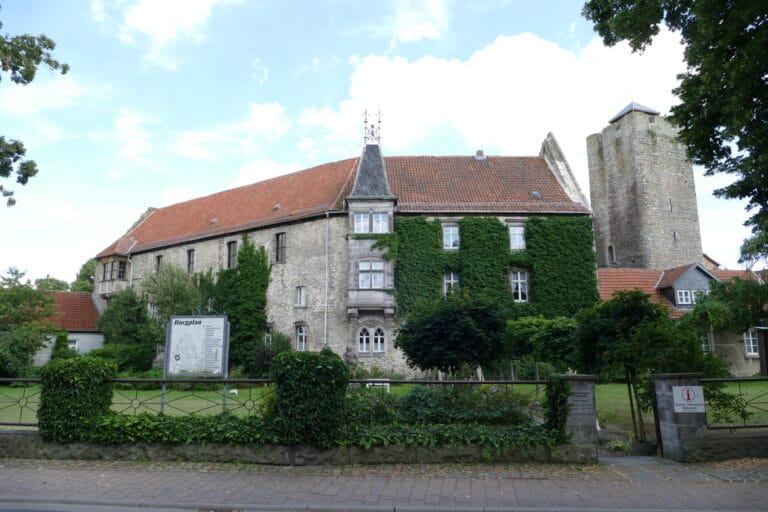
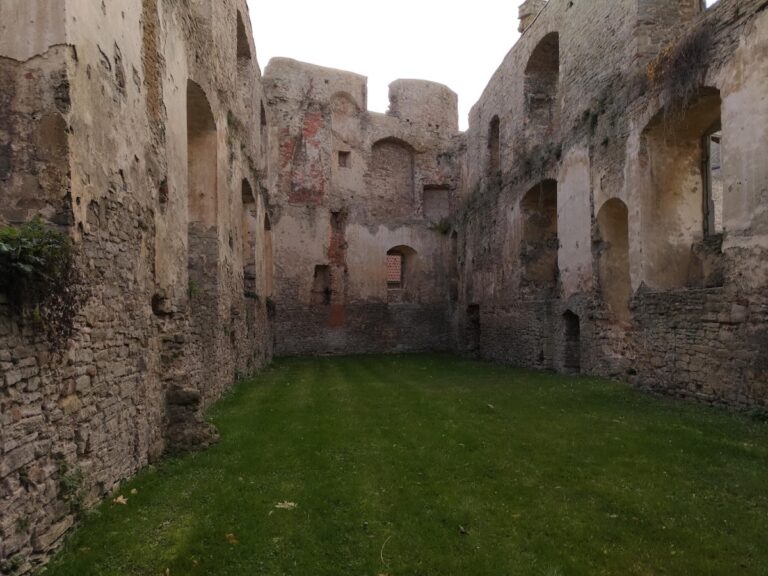
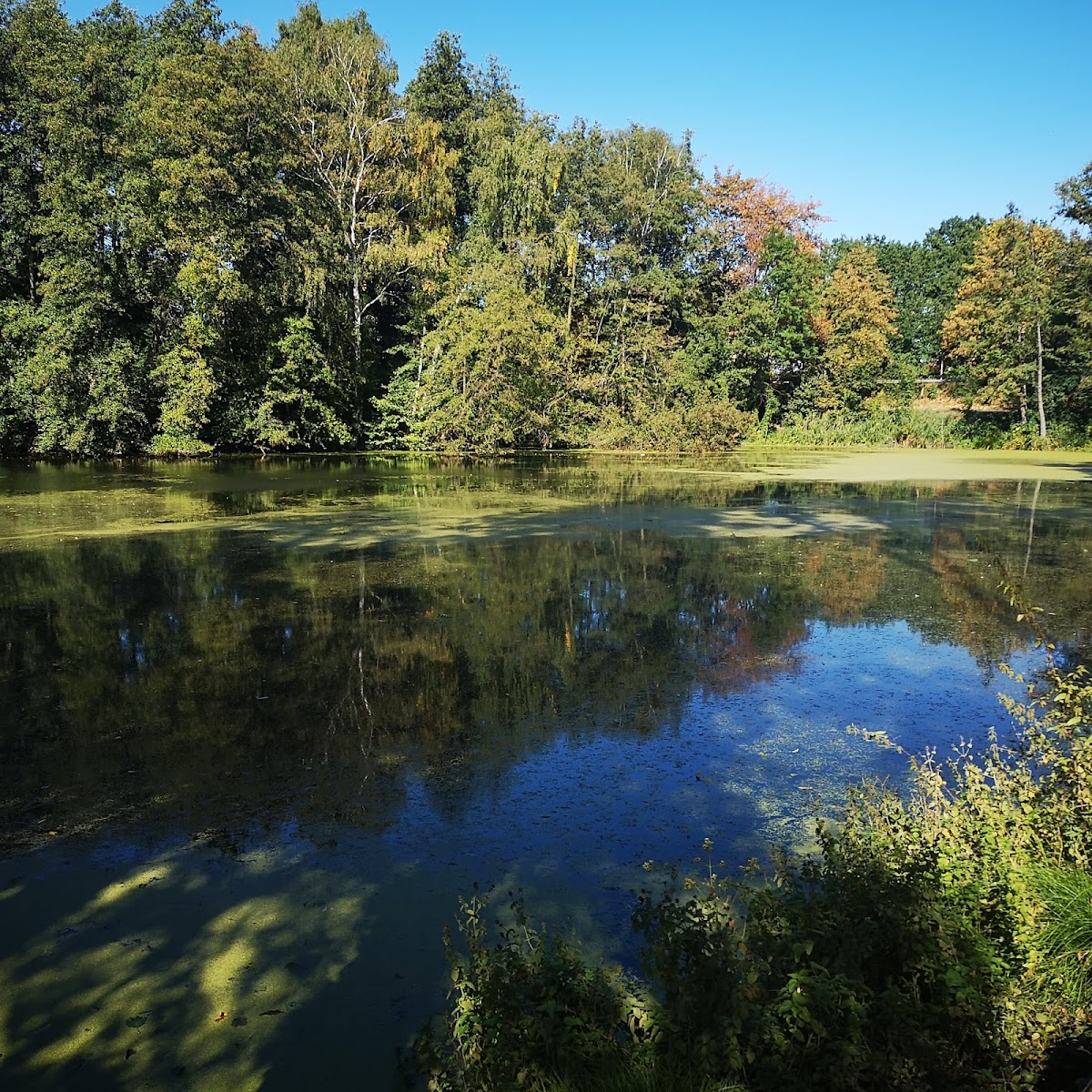
Burg Neuhaus stands on a Keuper sandstone rock massif above the Aller lowland. Its square plan encloses an inner courtyard measuring approximately 33 by 30 metres. The castle became a water castle when the Hehlinger Bach was dammed to create surrounding moats. The moats are now dry, while the Burgteich remains as the visible water feature of the former defensive system. The complex is regarded as one of the best-preserved medieval water castles in northern Germany.
Buildings and enclosing defenses
Keep
A keep beside the entrance rises about 20 metres and measures approximately 8 by 11 metres. Its original pointed-arched entrance has been bricked up. A well in the cellar was filled in about 50 years ago. During the castle’s conversion into an administrative and agricultural complex, the keep was incorporated into the brewery, while a broader entrance was opened beside it.
Palas and inner courtyard
The palas, the principal residential and representational building of a medieval castle, includes the knights’ hall and forms the surviving original part of the castle buildings. Later additions have supplemented it. The other buildings around the inner courtyard were constructed during the twentieth century.
Corner tower and ring wall
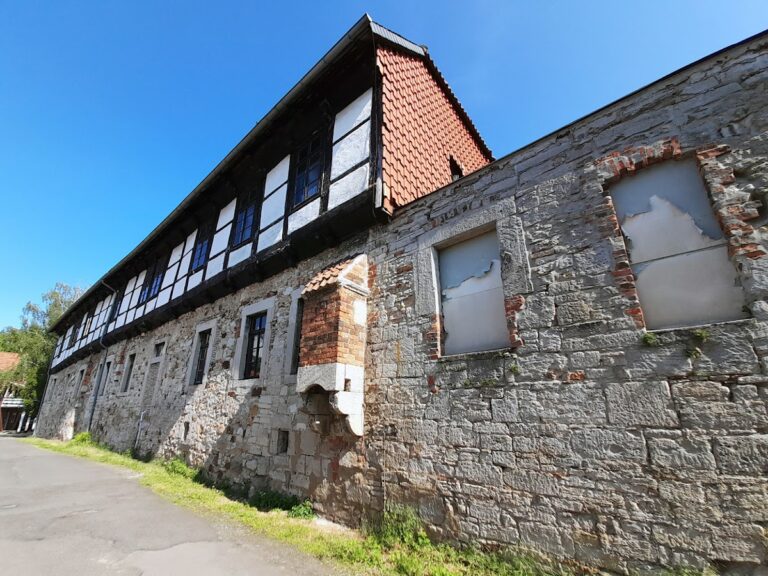
A round corner tower occupies the southwestern section of the enclosing walls. Economic buildings were attached to the inner side of the ring wall when the castle became an administrative and agricultural complex. The round tower was incorporated into the resulting administrative wing.
Access and water system
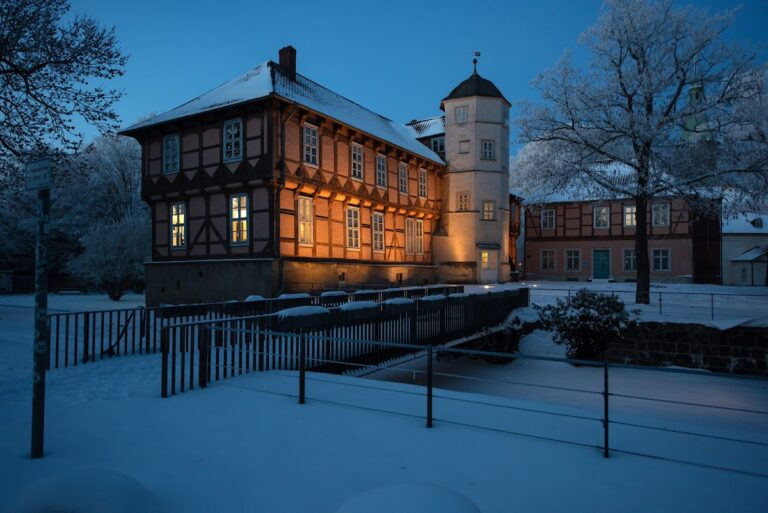
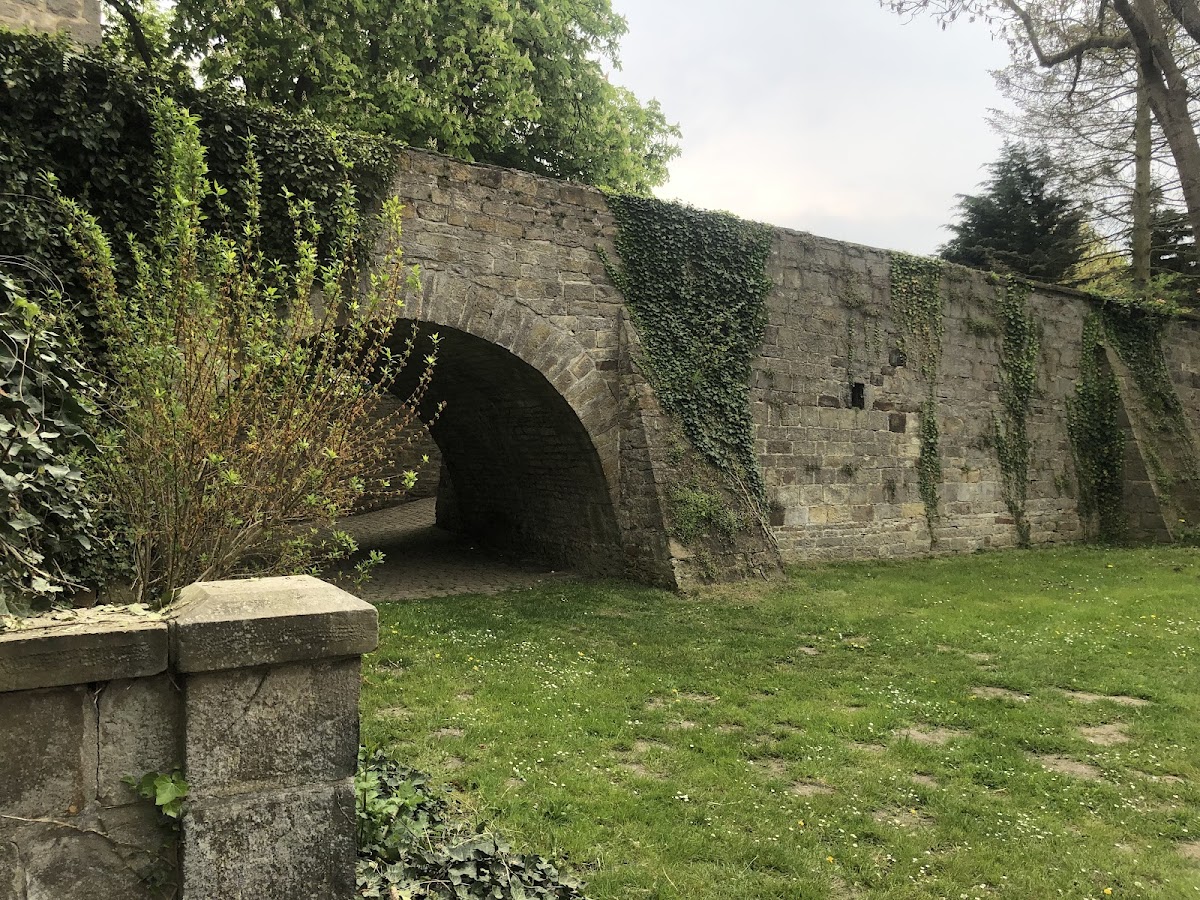
The castle was originally reached only by a drawbridge. In the modern period, the drawbridge was replaced by a stone bridge. The Hehlinger Bach supplied the former moats, and the surviving Burgteich preserves the principal visible element of the water-castle setting.