Bilstein Castle (Lennestadt): A Medieval Hill Castle and Administrative Seat


Site at a Glance
- Rating
- 4.3
- Popularity
- Low
- Country
- Germany
- Primary era
- Medieval
- External website
- Open
- Eras represented
- Medieval, Modern
- Civilizations
- Holy Roman Empire
- Site type
- Military
- Remains
- Castle
On this page7 sections
History
Bilstein Castle is a medieval hill and spur castle in Lennestadt, Germany, built between 1202 and 1225 on the Rosenberg under the direction of the nobleman Dietrich II of Gevore. Its position on a projecting rocky spur gave it a naturally defensible site, while its later history connected it with the Counts of Mark, Electoral Cologne, Prussia, and the administration of the surrounding district.
Origins and the Lords of Gevore
The castle’s first known documentary mention appears in a charter of 1225. Count Gottfried II of Arnsberg recorded that Dietrich of Bilstein had sold his privately held estate at Seringhausen near Erwitte to Rumbeck Abbey. The document shows that the Bilstein family was established at the castle by that date.
The Lords of Gevore had earlier held Peperburg Castle near Grevenbrück. That castle was abandoned for reasons that remain unclear in the mid-twelfth century. One interpretation is that the family withdrew to its hunting grounds, after which Dietrich II of Gevore adopted the name Dietrich I of Bilstein. The name Bilstein probably originated with the prominent rocky spur, formed from green keratophyre, a volcanic rock. It may mean “a steeply towering or prominent rock,” although other explanations connect it with a hunting place, an idol, or the Old High German word billi, meaning “sword.”
Counts of Mark and Electoral Cologne
Bilstein Castle passed to the Counts of Mark in 1363. During the Soest Feud, a fifteenth-century conflict between the city of Soest and its allies and the archbishopric of Cologne, Electoral Cologne seized the castle after a siege lasting several weeks. The castle was taken without a fight on 24 October 1445. A truce had been concluded a week earlier, and Archbishop Dietrich II of Moers confirmed the inhabitants’ traditional rights and liberties on the day of the capture.
The castle remained in Electoral Cologne possession until secularization in 1802. Electoral Cologne, also called Kurköln, was the territorial state governed by the archbishops of Cologne. Bilstein served as the seat of the local administrative district, with the archbishop’s representative, the district steward, residing there. Ferdinand von Fürstenberg, who later became prince-bishop of Paderborn, was born at Bilstein Castle in 1626.
Administrative and modern use
After the dissolution of Electoral Cologne in 1802, the area first became part of the Landgraviate of Hesse-Kassel and then, from 1816, of Prussia. The castle housed the Bilstein district administration from 16 January 1817 until 31 December 1818. Administration moved to Olpe in 1819, while forestry officials continued to use the castle until 1920.
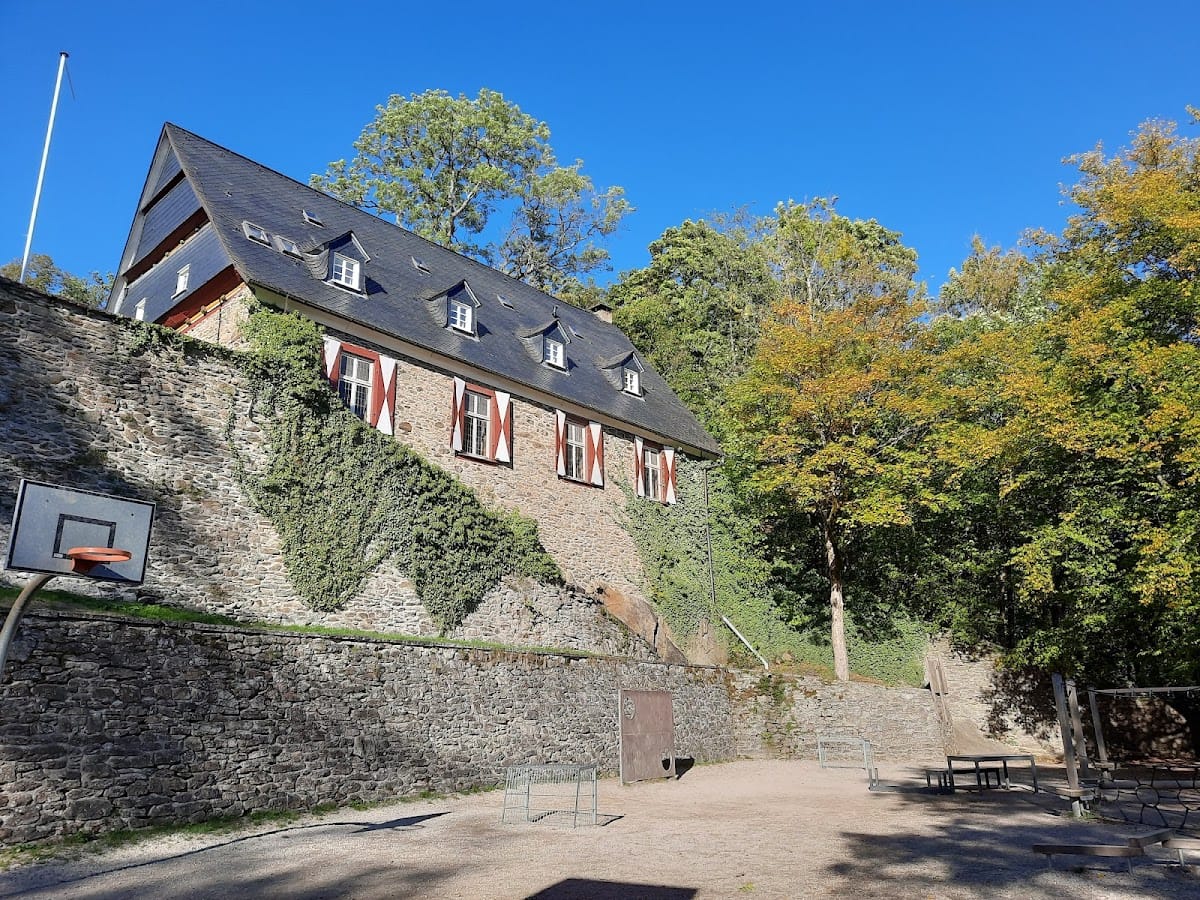
A youth hostel has occupied the castle since 1927, and the German Youth Hostel Association acquired it in 1979. A side wing that had been destroyed by fire several centuries earlier was rebuilt completely in 1978. The reconstruction enlarged the youth hostel and created most of its guest rooms and two common rooms.
Remains
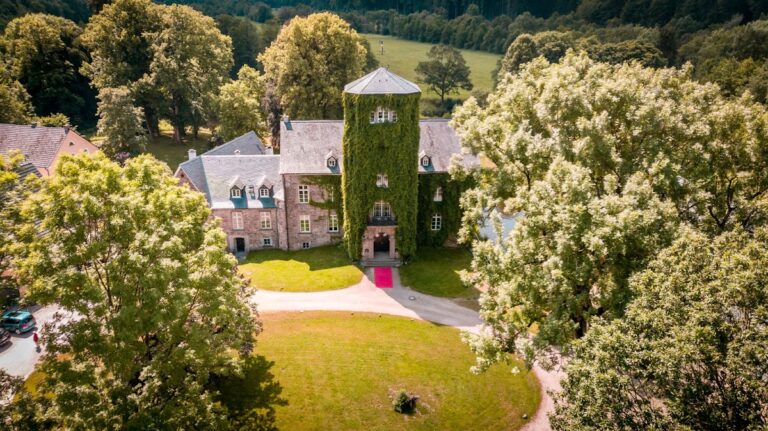
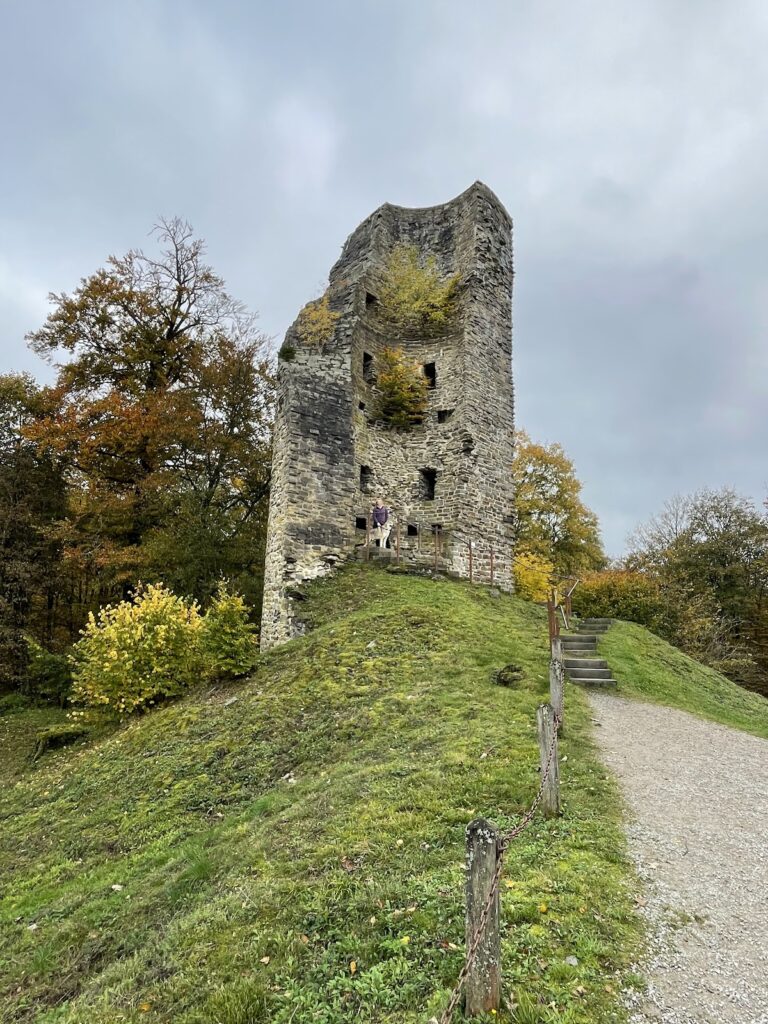
Bilstein Castle occupies a spur extending from the Rosenberg. The ground falls steeply on three sides, concentrating the defensive works along the northeastern side facing the land. The surviving complex includes a main ward, two round towers, a partly filled-in ditch, a bridge, and an outer bailey with three named buildings.
Main ward and towers
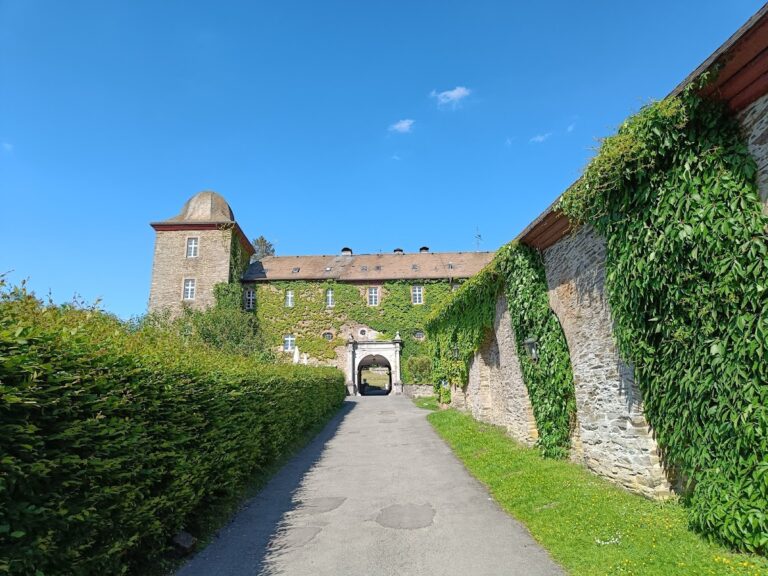
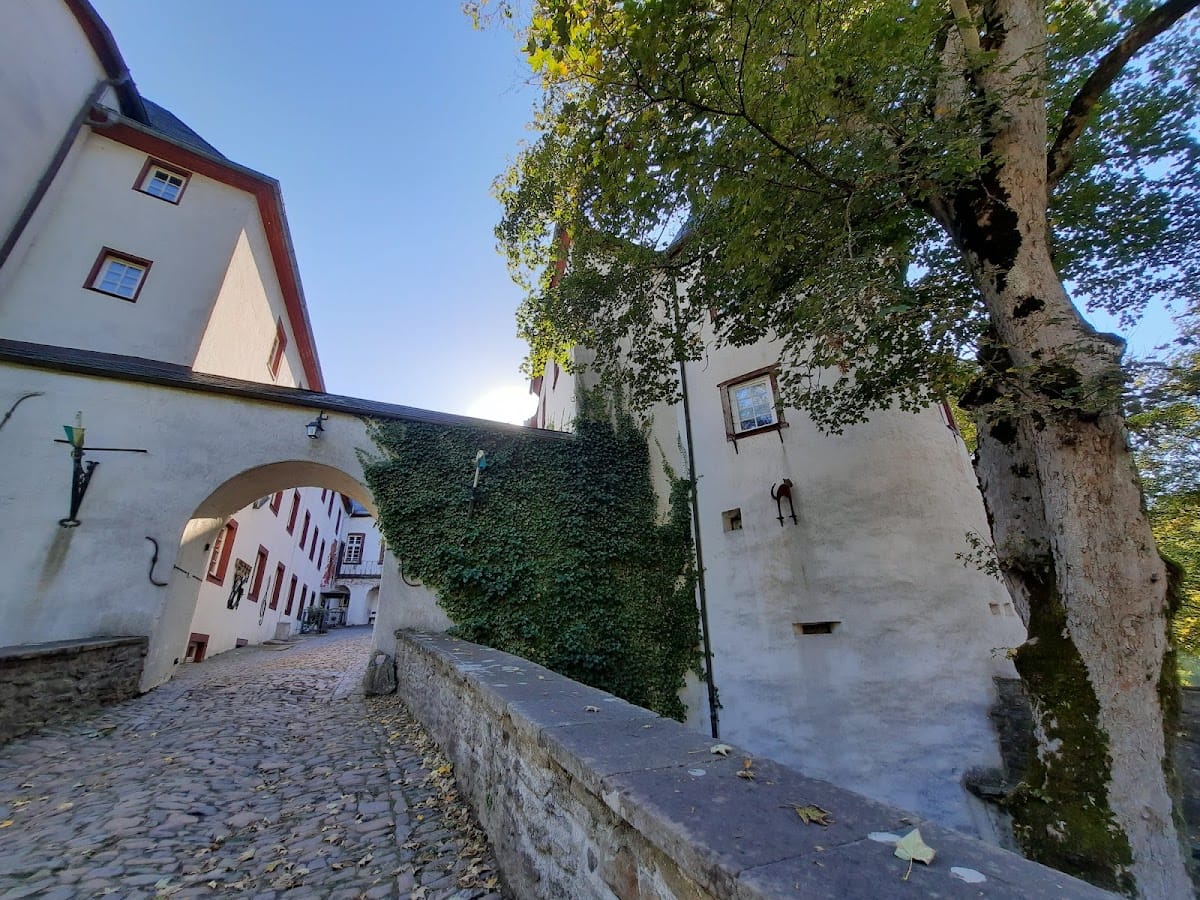
Two round towers define the castle’s appearance. The Chapel Tower stands at the northwest and the Hohnekamp Tower at the southeast; each measures approximately 8 metres in diameter. A tunnel runs beneath the courtyard and links the two towers, while an archway built in the early twentieth century spans the space between them above ground.
The northwestern wing of the main ward and the central block on its southwest side retain historical fabric. The southeastern wing was built in 1978 as an extension of the youth hostel. On the valley side of the central block, a projecting terrace known as a Söller, or balcony-like platform, carries a prominent linden tree.
Ditch and outer bailey
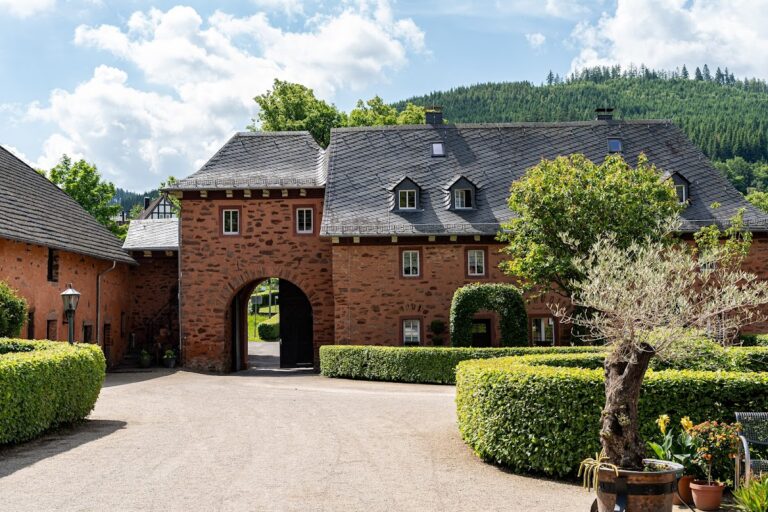
A neck ditch approximately 15 metres wide separates the main ward from the outer bailey. It is partly filled in, and a masonry bridge now crosses it. The outer bailey contains three buildings called the gatehouse, the timber-framed house, and the festival hall.
The natural monument known as “Two Linden Trees” stands beside the northern approach to the castle. Together with the rocky spur and the steep slopes around it, this landscape helps explain the position of Bilstein’s defensive works and the division between the main ward and the outer bailey.
Nearby sites