Dunvegan Castle: Historic Seat of the MacLeod Chiefs on Skye
Site at a Glance
- Rating
- 4.4
- Popularity
- Medium
- Country
- United Kingdom
- Primary era
- Modern
- External website
- Open
- Eras represented
- Medieval, Early Modern, Modern
- Civilizations
- British, Kingdom of Scotland
- Site type
- Domestic
- Remains
- Castle
On this page19 sections
History
Dunvegan Castle is a medieval and later residential stronghold in the United Kingdom, built and developed by the Scottish MacLeod clan on the Isle of Skye from the thirteenth century onward. It has been the seat of the MacLeod chiefs for more than 800 years, linking the family to historic territories in northwestern Skye, parts of Harris and Lewis, and, until 1931, St Kilda.
MacLeod origins and the medieval fortress
MacLeod tradition traces the clan to Leod, son of Olaf the Black, King of Mann. Leod married the heiress of the Macarailt family, Viking seneschals of Skye who were based at Dunvegan. His sons, Tormod and Torquil, became ancestors of the MacLeods of Dunvegan, Harris and Glenelg, and of the MacLeods of Lewis respectively. A clan chief was the hereditary leader of this kindred political and territorial community.
The first fortification on the rock was established in the thirteenth century. The MacLeods later developed it into a castle, including a principal residential tower built during the mid-fourteenth century. The fortress provided a durable base for the chiefs as their influence extended across the islands and western Highlands.
Conflict and political change
From the early fifteenth through the eighteenth century, the MacLeods were repeatedly involved in conflict with the MacDonalds. Scottish monarchs also interfered in the affairs of the islands as they sought to bring them under firmer royal control. In March 1557, Iain Dubh seized Dunvegan Castle after killing rival claimants to the clan leadership. The clan later expelled him, and members of the O’Donnell family killed him in Ireland.
The MacLeods lost about 800 men at the Battle of Worcester in 1657 while supporting Charles II of England. The clan did not support the Jacobite rising of 1745, although many individual MacLeods did. Jacobitism was the movement to restore the Stuart dynasty to the British throne, and the rising sought to place Charles Edward Stuart, known as Bonnie Prince Charlie, on the throne. Its suppression, together with the Battle of Culloden, helped bring about the later loss of the clans’ political power.
Expansion and transformation into a residence
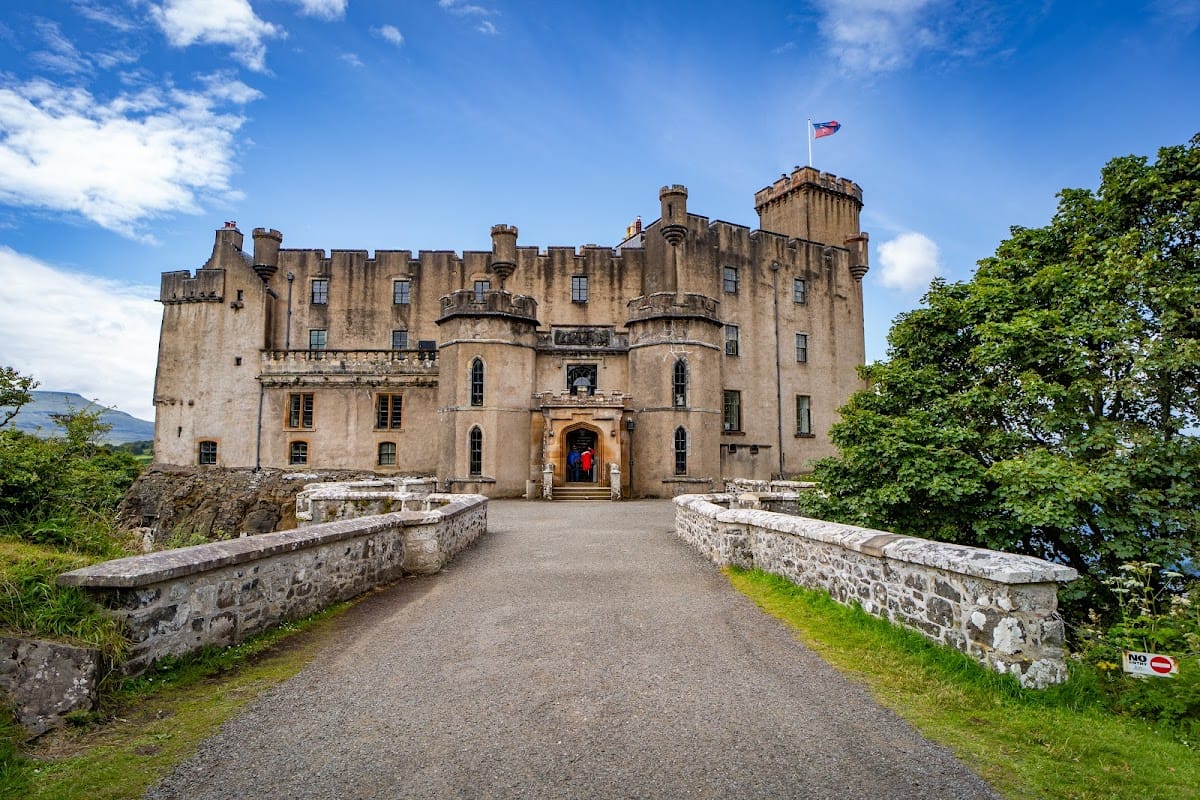
Rory Mor MacLeod began expanding the chiefs’ residential complex in 1623. Further alterations followed in 1664 and 1689, with the Piper’s Gallery surviving from this phase. In 1790, the twenty-third chief, General Norman MacLeod, converted the medieval castle into a more comfortable residence. His son added a stone bridge at the main gate in 1801.
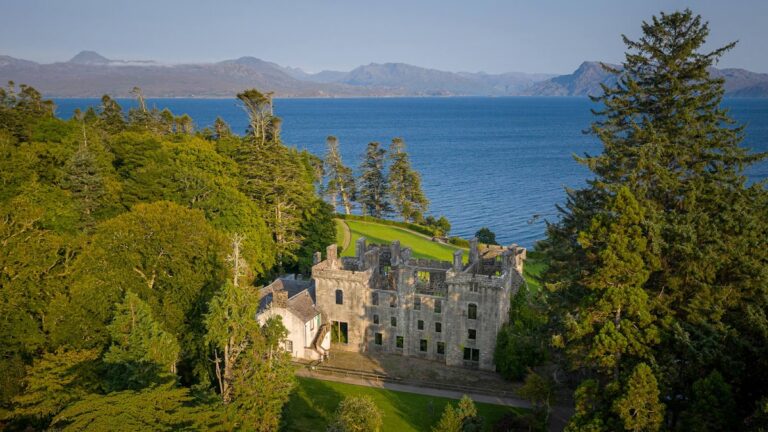
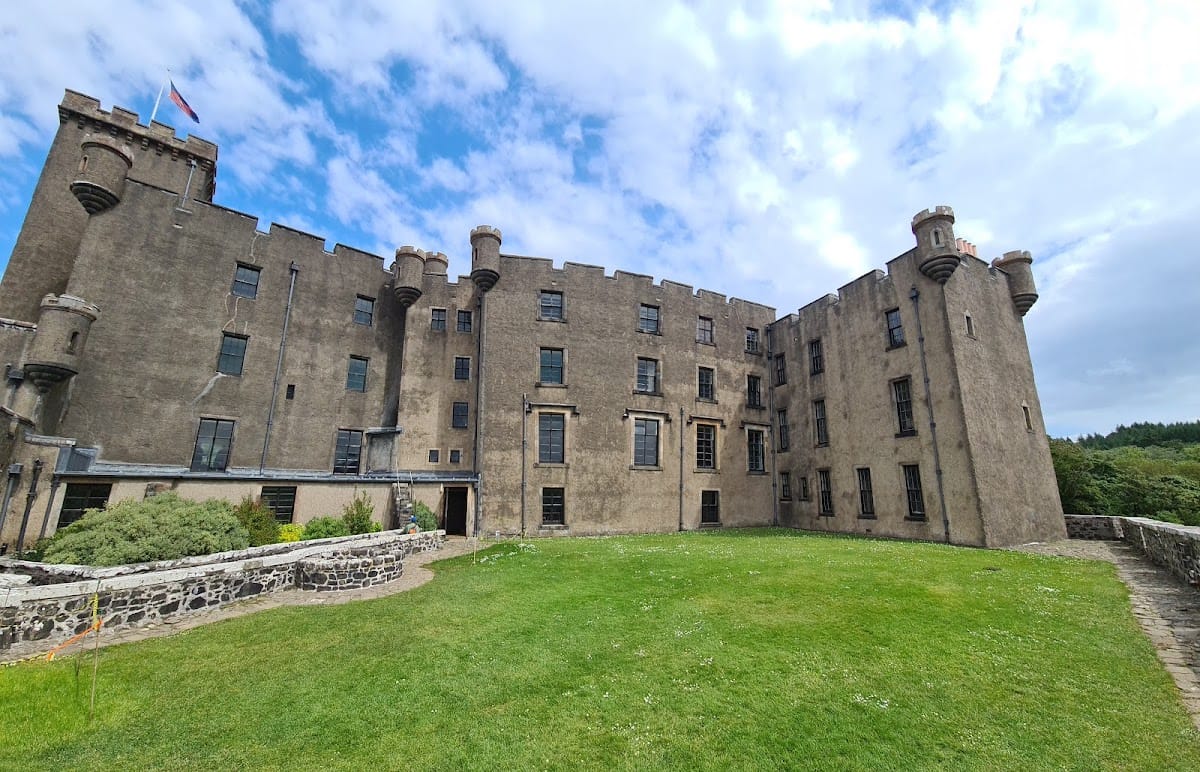
Between 1840 and 1850, the castle was remodelled into its largely Victorian form in work attributed to the Scottish architect Robert Brown. The changes gave the building a more palace-like character and added small corner turrets resembling machicolations, ornamental features rather than practical defensive works.
Financial difficulties associated with the potato famine of 1847–1851 led the twenty-fifth MacLeod chief to leave the castle. The building remained unoccupied until the twenty-ninth chief returned in 1929. A fire completely destroyed the south wing in 1938, altering the surviving form of the residence.
Opening, conservation, and continuing use
Reginald MacLeod, the twenty-seventh chief, opened parts of Dunvegan Castle to the public in 1933. The castle continues to serve as a residence and museum under the management of the MacLeod clan. It is protected as a Category A listed monument, Scotland’s highest listed-building category. The designed grounds were added to Scotland’s Inventory of Gardens and Designed Landscapes in 1987.
Substantial restoration of the gardens began in 1978 under John MacLeod, the twenty-ninth chief, through replanting and landscape improvements. Dunvegan Castle and Gardens became a partner garden of the Royal Horticultural Society in 2022. The society is a British organization devoted to horticulture and garden education, and its partner-garden program recognizes associated gardens.
Remains
Rock fortress and residential towers
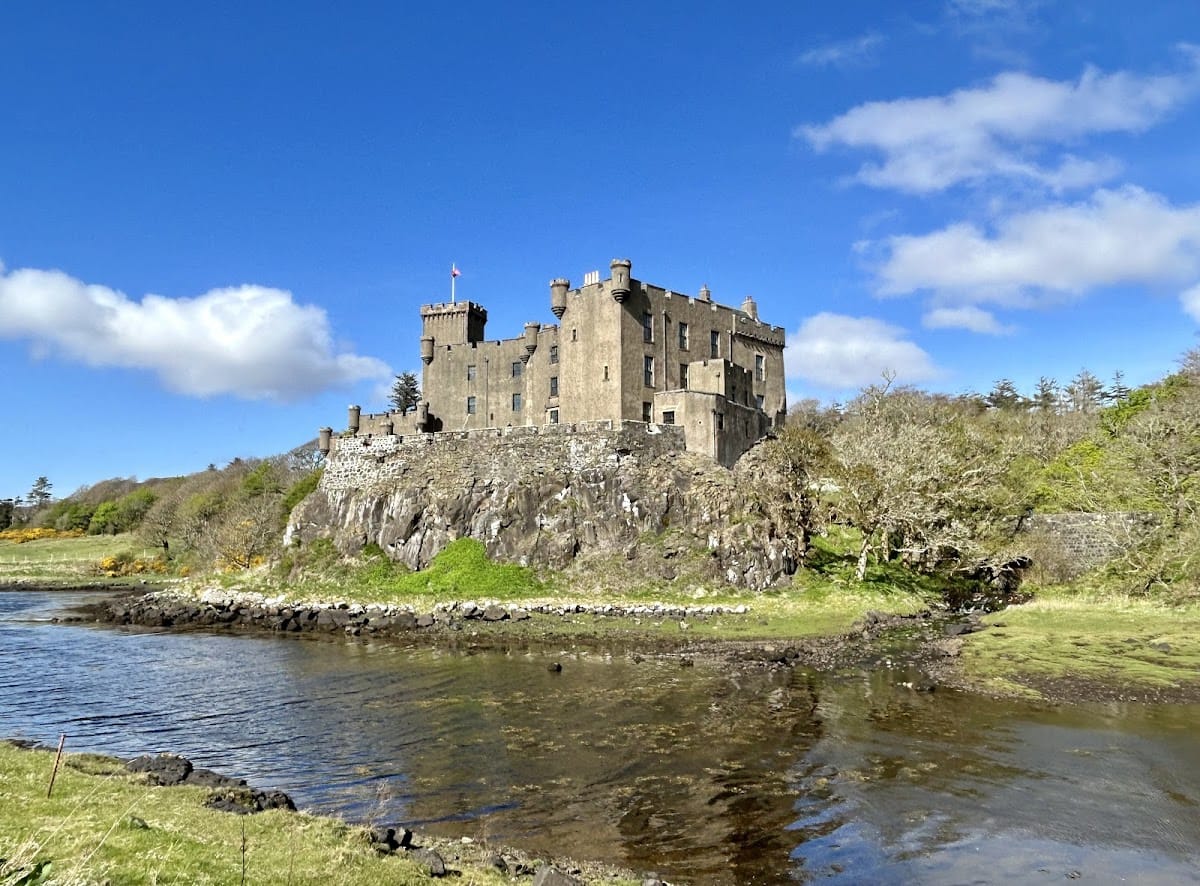
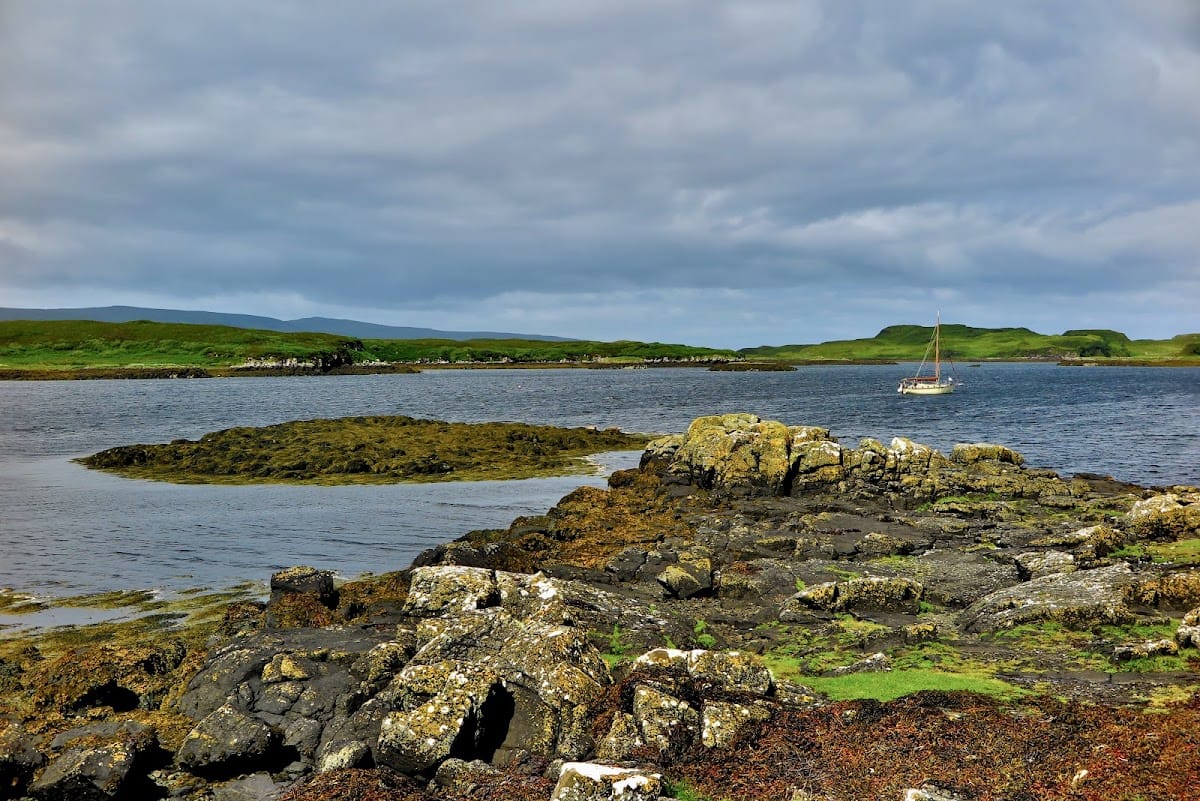
Dunvegan Castle stands on a basalt rock approximately 15 metres above the water on the eastern shore of Loch Dunvegan. The rock lies directly opposite Gairbh Eilein, while the Iron Age broch of Dun Fiadhairt occupies a peninsula farther north in the loch. A broch is a prehistoric, usually circular drystone tower found mainly in northern and western Scotland.
Early fortification
The earliest thirteenth-century fortification was largely wooden, with a stone curtain wall enclosing residential and service buildings. Its foundations became part of the later castle, including areas near the Fairy Tower. Crenellations protected the defenders, and access was originally possible only through a sea-gate, a waterside entrance from the loch. A land entrance was created in 1748, while the former sea-gate remained part of the castle’s earlier access arrangement.
Main medieval tower
The main medieval residential tower, or donjon, is a four-storey structure built during the mid-fourteenth century. A donjon was the principal fortified residential tower of a medieval castle. A freshwater spring served the castle, supporting life within the fortified complex.
Fairy Tower
The four-storey Fairy Tower occupies the southeastern corner of the rock. It was built around 1500, or during the late fifteenth to early sixteenth century, and its habitable floors are connected by a narrow spiral staircase.
Rory Mor’s House and the Piper’s Gallery
Rory Mor’s House was built in 1623 in the space between the main tower and the Fairy Tower as the residential complex expanded. Alterations carried out in 1664 and 1689 left the Piper’s Gallery as the surviving element of that later phase. Together, these structures show how the fortified stronghold was adapted to provide a more extensive residence for the chiefs.
Victorian additions and approach
The remodelling of 1840–1850 produced the castle’s largely Victorian appearance. The small corner turrets were designed to resemble machicolations, projecting structures historically used for defence, but they were added here as ornament. A stone bridge built in 1801 leads to the main gate and forms part of the approach to the castle.
Gardens and estate grounds
The formal gardens cover approximately five acres, or 2.023 hectares, and extend into grounds that also include woodland. Their layout combines planted areas, water features, enclosed productive spaces, ornamental structures, and wooded paths. Gardening at Dunvegan probably began in the seventeenth century, and an estate gardener was recorded in the early eighteenth century before being dismissed in 1712.
Formal and productive gardens
In 1811, John Norman, the twenty-fourth chief, created the enclosed rectangular vegetable garden and began large-scale tree planting. His son, the twenty-fifth chief, is credited with creating the circular garden and its sixteen triangular beds. The circular rose garden contains a geometric parterre of Ilex crenata and a central Araucaria araucana. A parterre is a formal garden bed arranged in a geometric ornamental pattern.
The grounds also contain herb beds, raised vegetable beds, a lily pond, and a greenhouse. During the potato famine of 1847–1851, the gardens produced crops for the chief’s family and tenants. Sir Reginald MacLeod carried out the last planting of the 1920s, much of which was later destroyed by wind and animals.
Water garden and ornamental features
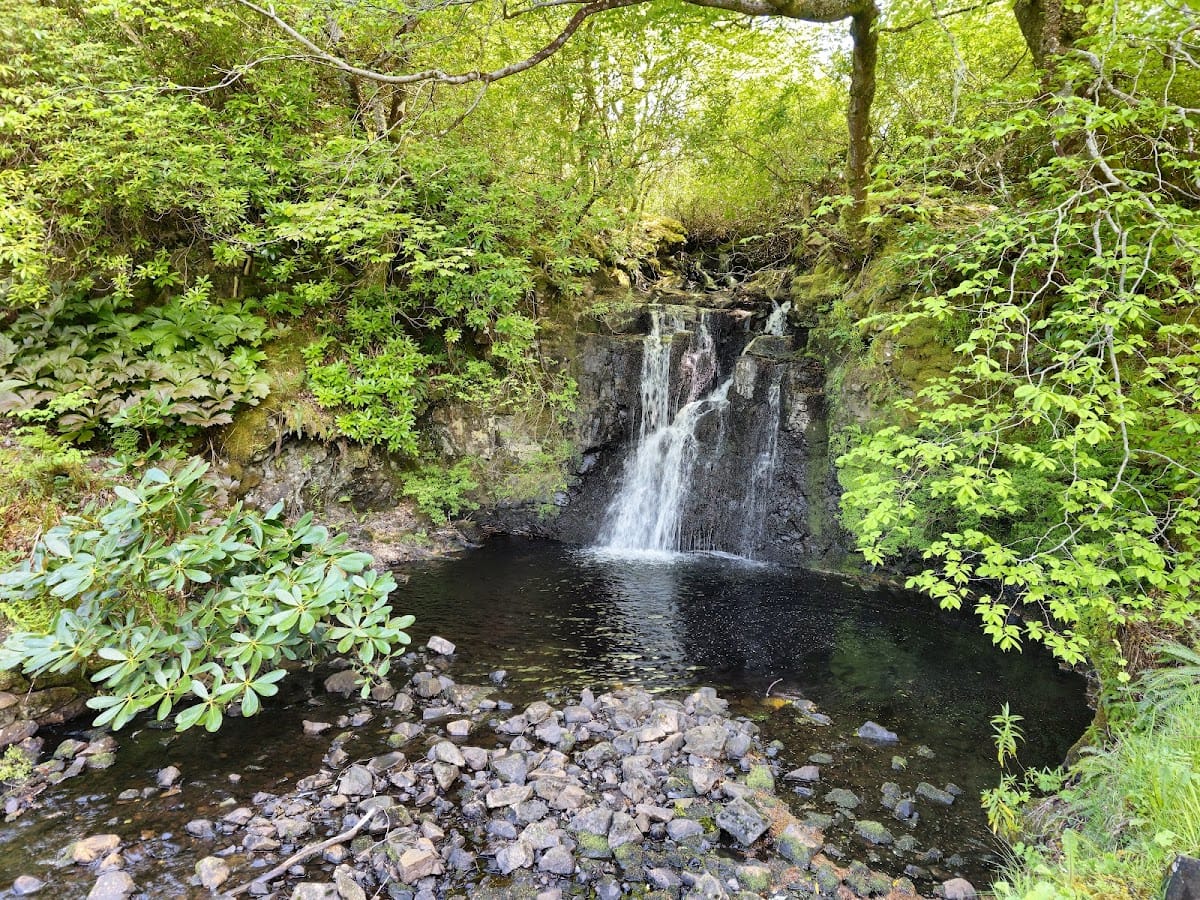
A water garden includes ponds, ornamental bridges, and islands. Other features include a seventeenth-century sundial, a larch pergola, a waterfall, and a garden museum and memorial pavilion. Woodland paths and a rhododendron display garden form additional parts of the grounds. A large rotating Carrara-marble sculpture weighing 2.7 tonnes is known as the Dunvegan Pebble. The wild woodland children’s area contains a willow tunnel and an insect hotel.
Museum collections and clan heirlooms
The castle museum displays MacLeod family heirlooms and clan treasures, including the Fairy Flag, the Dunvegan Cup, Jacobite-related relics, family oil paintings, and the Horn of Rory Mor. These objects preserve traditions associated with the chiefs, their alliances, and the military and political history of the clan.
The Fairy Flag
The Fairy Flag is made from yellow-dyed Middle Eastern silk, possibly from Syria, and dates broadly from the fourth through seventh centuries. Legends describe it variously as a garment associated with an early Christian saint, an object brought back from the Crusades, or a gift from the fairies of Skye. Tradition holds that displaying it would bring victory to the MacLeods, although its power would end after its third unfurling.
MacLeod tradition says that the flag was used twice. One use was almost certainly at the Battle of Trumpan Church during a MacDonald attack carried out in retaliation for the Massacre of Eigg. The other may have occurred during a livestock epidemic. It was normally carried rolled during warfare and was associated with the MacLeod victory at the Battle of Glendale.
The Dunvegan Cup and Horn of Rory Mor
The Dunvegan Cup is a rectangular wooden drinking vessel dating to around 900. It was originally set with gemstones and has a decorative silver covering. In 1595, the O’Neill family of Ulster presented it to Rory Mor MacLeod in gratitude for assistance during their wars against Elizabeth I of England.
The Horn of Rory Mor is a drinking horn connected with a clan tradition requiring a chief’s adult male heir to empty it in one draught as a test of fitness for leadership. Another tradition attributes the horn to Malcolm MacLeod, who allegedly killed a wild Highland cow with a dirk and kept one of its horns as a memorial of his courage.
Jacobite relics
The Jacobite material includes a lock of Bonnie Prince Charlie’s hair, a pin cushion embroidered with the names of the fallen, and Donald MacLeod’s spectacles. Donald MacLeod of Galtrigal helped Bonnie Prince Charlie travel from the mainland to Skye, while Flora MacDonald assisted the prince in evading English forces. Flora’s daughter later lived at Dunvegan Castle.
Nearby sites