Rocca dei Boiardo: A Historic Castle in Scandiano, Italy

Site at a Glance
- Rating
- 4.4
- Popularity
- Low
- Country
- Italy
- Primary era
- Early Modern
- Eras represented
- Medieval, Early Modern
- Civilizations
- Duchy of Ferrara
- Site type
- Domestic
- Remains
- Castle
On this page10 sections
History
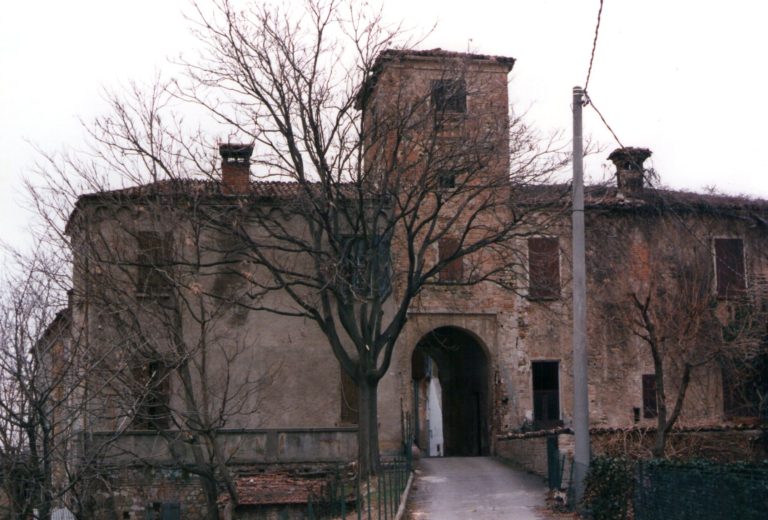
Rocca dei Boiardo is a castle in Scandiano, Italy, whose origins lie in the medieval fortifications developed by the Da Fogliano family from the twelfth century onward. Its first fortress core was built in 1315 for an explicitly defensive purpose. Scandiano belonged for centuries to the Duchy of Reggio, first within the duchy linking Ferrara, Modena, and Reggio until 1598, and then within the Duchy of Modena and Reggio from 1598 to 1859.
From fortress to Boiardo residence
The complex changed character when the Boiardo counts assumed the government of Scandiano. The family occupied the castle from 1423 to 1560, transforming the defensive stronghold into a residence. During this period, the Italian Renaissance painter Nicolò dell’Abate decorated it with frescoes illustrating scenes from the Aeneid.
In 1772, the Aeneid frescoes were removed and transferred to the Great Hall of the Ducal Palace in Modena. A fire later irreparably damaged part of the paintings. The surviving frescoes were subsequently moved to the Galleria Estense in Modena, where they remain.
Later dynasties and changing ownership
The Thiene family commissioned major alterations under Giovan Battista Aleotti, an architect and engineer active during the late Renaissance and early modern period. His work brought the complex close to its present form. The castle was later occupied by the Bentivoglio family, a prominent ruling family of Bologna and its surrounding territories, and then by the Este of Scandiano, a junior branch of the Este dynasty. The Este introduced Baroque decoration.
After the Este marquises, the castle entered a period of abandonment and deterioration. Marquis De Mari held it from 1740 to 1777, after which it returned to the ruling Este family. During the French Revolution, a period of political upheaval that ended monarchical rule in France and affected governments across Europe, the castle became state property. It was later sold to Paolo Braglia of Scandiano, who retained it until the Restoration. The complex then returned to the Este family and served as a summer residence for cadets of the Modena military academy.
Restoration and present status
The complex continued to deteriorate until restoration began in 1983 under the Superintendency for Environmental and Architectural Heritage of Emilia-Romagna, a state authority responsible for protecting historic buildings and works of art. Management passed to the municipal administration in 2007 for a period of 50 years. In 2011, a regional wine center was established within the complex to promote wines from Scandiano and Emilia-Romagna, especially Spergola wine from Scandiano.
Rocca dei Boiardo belongs to the circuit of the Association of the Castles of the Duchy of Parma, Piacenza and Pontremoli and is designated Italian national heritage. The Italian state is its current owner.
Remains
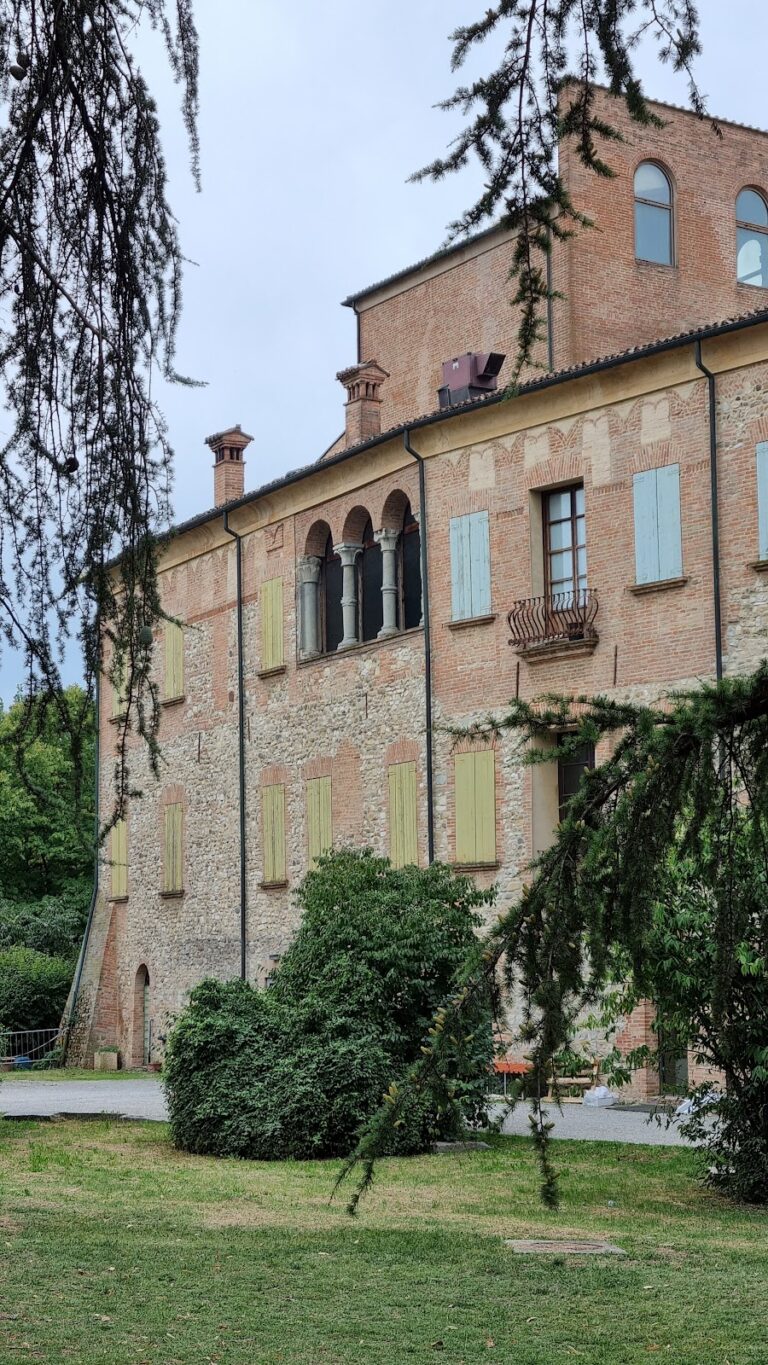
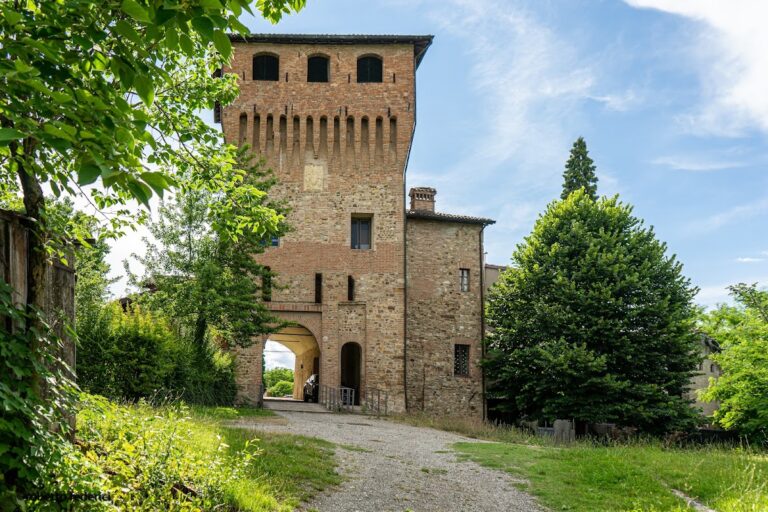
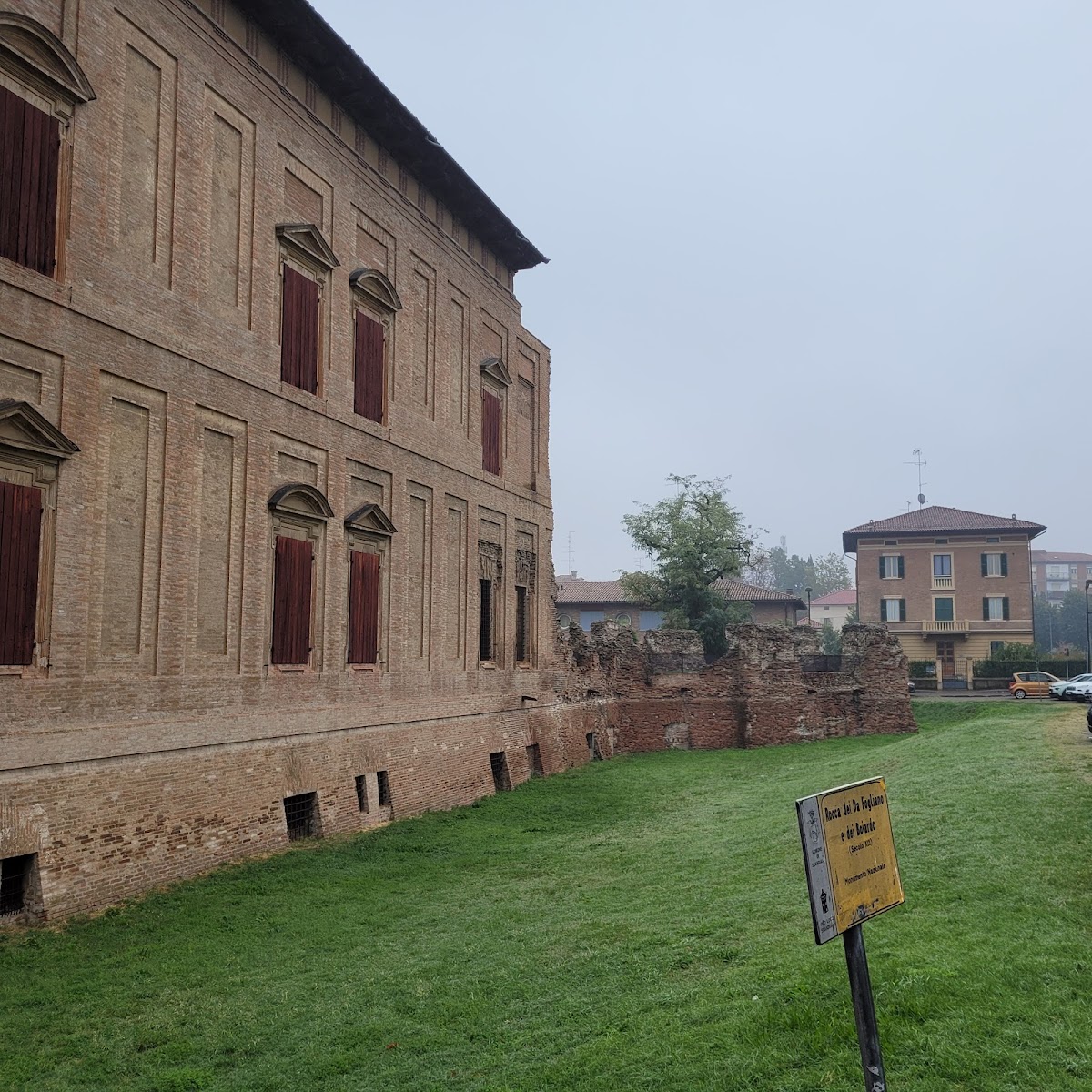
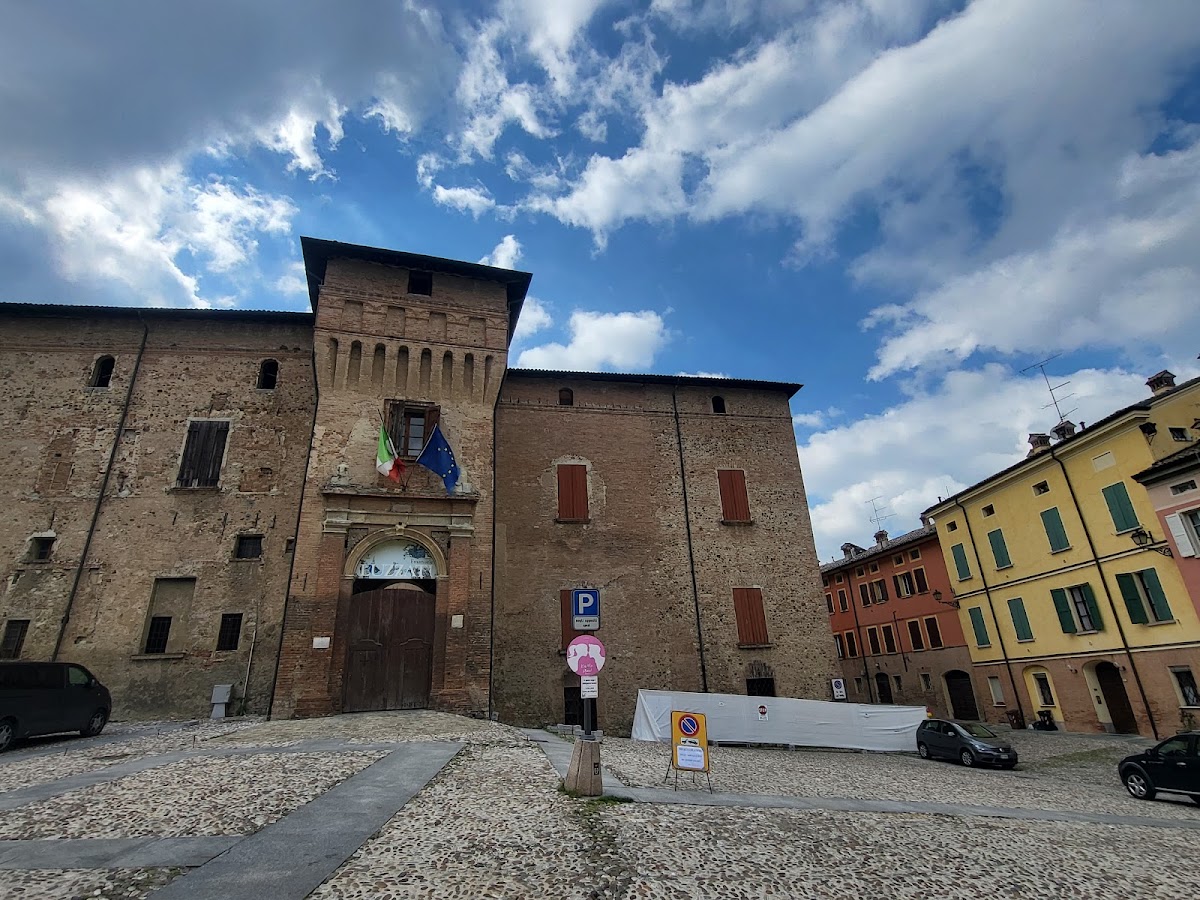
Rocca dei Boiardo is a lowland defensive castle built principally in brick masonry, with stone and mortar also used in its construction. The original defensive arrangement included an enclosing wall, a moat crossed by a drawbridge, and two lookout towers. One of the towers was never completed. Later alterations added residential and decorative elements while preserving parts of the earlier fortress.
Defensive structures and later alterations
Aleotti designed the imposing staircase leading to the upper floors, completed the tower on the western side, and worked on the southern facade. These interventions formed part of the changes that brought the complex near its present configuration, combining the earlier defensive fabric with the requirements of a residence.
Courtyard and painted decoration
Southern wall and medieval portico
The southern wall of the courtyard retains a column with a distinctive medieval water-leaf capital, a capital decorated with stylized leaf forms. The column belonged to the original fifteenth- or sixteenth-century portico, a covered walkway or entrance supported by columns.
Western wall and fresco fragments
The western wall combines several architectural styles and preserves recognizable fragments of sixteenth-century frescoes. The courtyard’s appearance can also be understood through a manuscript produced by Giovanni Battista Venturi in the early nineteenth century. Its sketches and brief comments describe frescoed walls divided into two large compartments, with magical episodes from a poem by Boiardo, colossal figures, shields bearing the arms of families related to the Boiardo family, and other small panels.
Este Apartments
The ground-floor Este Apartments extend through several rooms associated with the Este dynasty. They are described as the most finely finished part of the complex, and their rooms have undergone restoration and enhancement.