Paralio Astros Castle: A Greek Medieval Fortification

Site at a Glance
- Rating
- 4.5
- Popularity
- Low
- Country
- Greece
- Primary era
- Early Modern
- Eras represented
- Early Modern
- Civilizations
- Ottoman, Venetian
- Site type
- Military
- Remains
- Castle
On this page11 sections
History
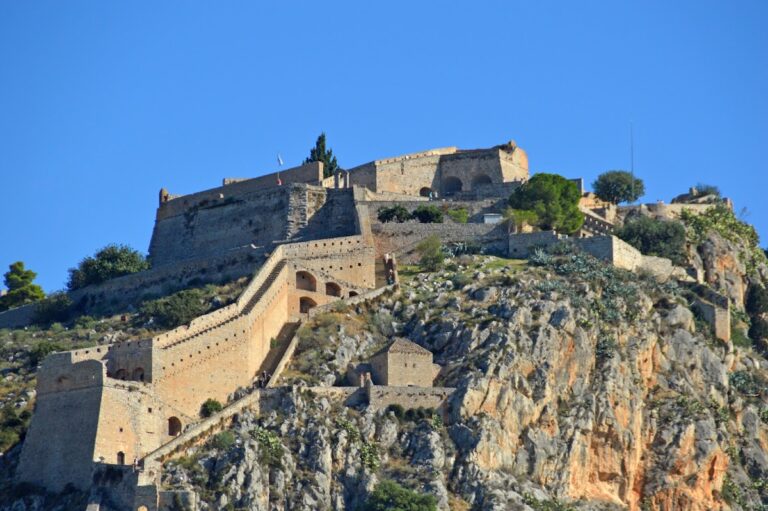
Paralio Astros Castle is a medieval fortification in Greece, with a listed construction date of 1256 and identifiable building phases extending from the seventeenth to the nineteenth centuries. Built on a commanding hilltop, it later became a stronghold of the Zafeiropoulos brothers during the Greek War of Independence and is now designated as an archaeological site.
Ottoman-era fortification
The castle’s first identifiable building phase dates from the seventeenth century through the end of the eighteenth century. It may have been associated with the end of Venetian rule and the Ottoman reconquest of the Morea in 1715. The Morea was the historical name commonly used for the Peloponnese, the peninsula in southern Greece. During this period, the Ottomans fortified positions in the area to strengthen their control, fearing both the Tsakonians, a Greek regional population associated especially with the eastern Peloponnese, and a possible Venetian return.
The Zafeiropoulos stronghold
During the Greek War of Independence, which began in 1821 as a revolt against Ottoman rule, the castle came into the possession of the Zafeiropoulos brothers, Konstantinos, Ioannis, and Panagiotis. The brothers, wealthy merchants from abroad who had joined the Friendly Society, fortified the site and built their residences there. The Friendly Society was a secret Greek revolutionary organization that helped prepare the uprising.
A second construction phase took place in 1824 and 1825. On 4 August 1826, 1,200 soldiers sheltering inside the castle defeated the larger army of Ibrahim, which was besieging the fortification. In 1833, Panos Zafeiropoulos, also known as Akouros, dedicated the castle to the Kingdom of Greece and King Otto, the first king of the modern Greek state, who ruled from 1832 to 1862.
Abandonment and protection
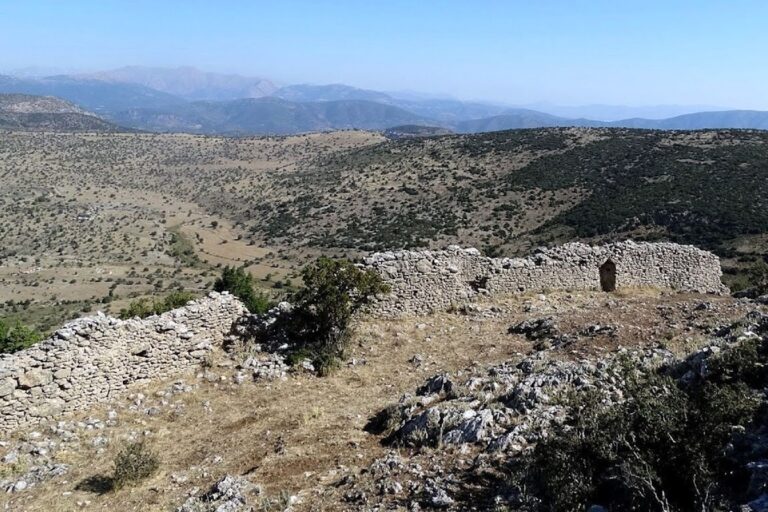
The castle was abandoned at the beginning of the twentieth century and subsequently fell into ruin. Its surviving walls, defensive features, and summit buildings preserve evidence of the successive phases that shaped the fortification.
Remains
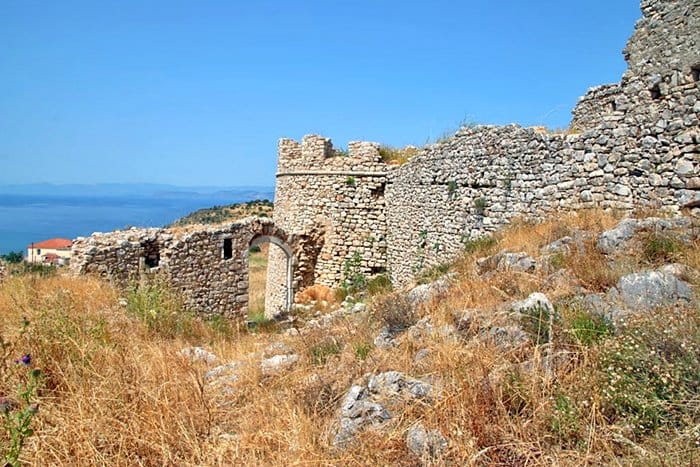
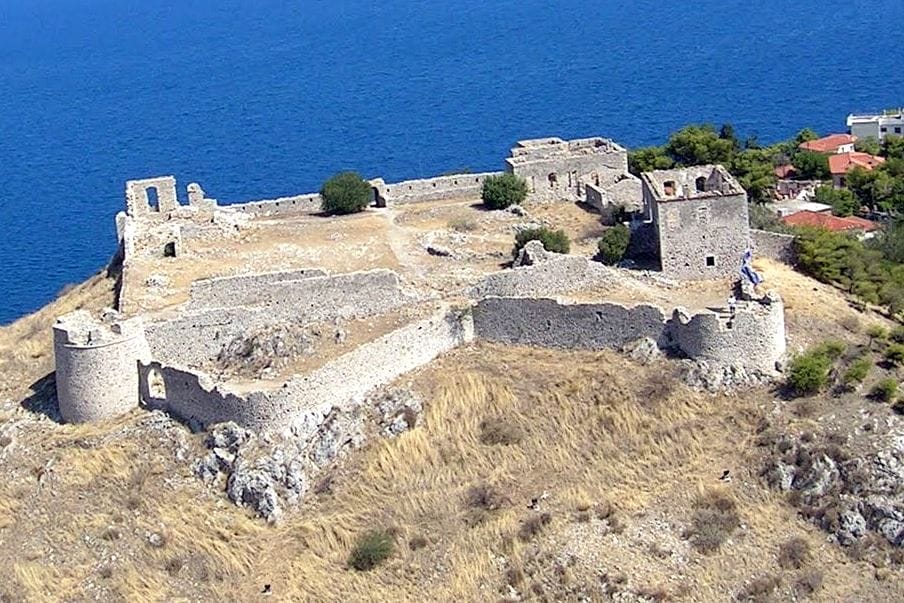
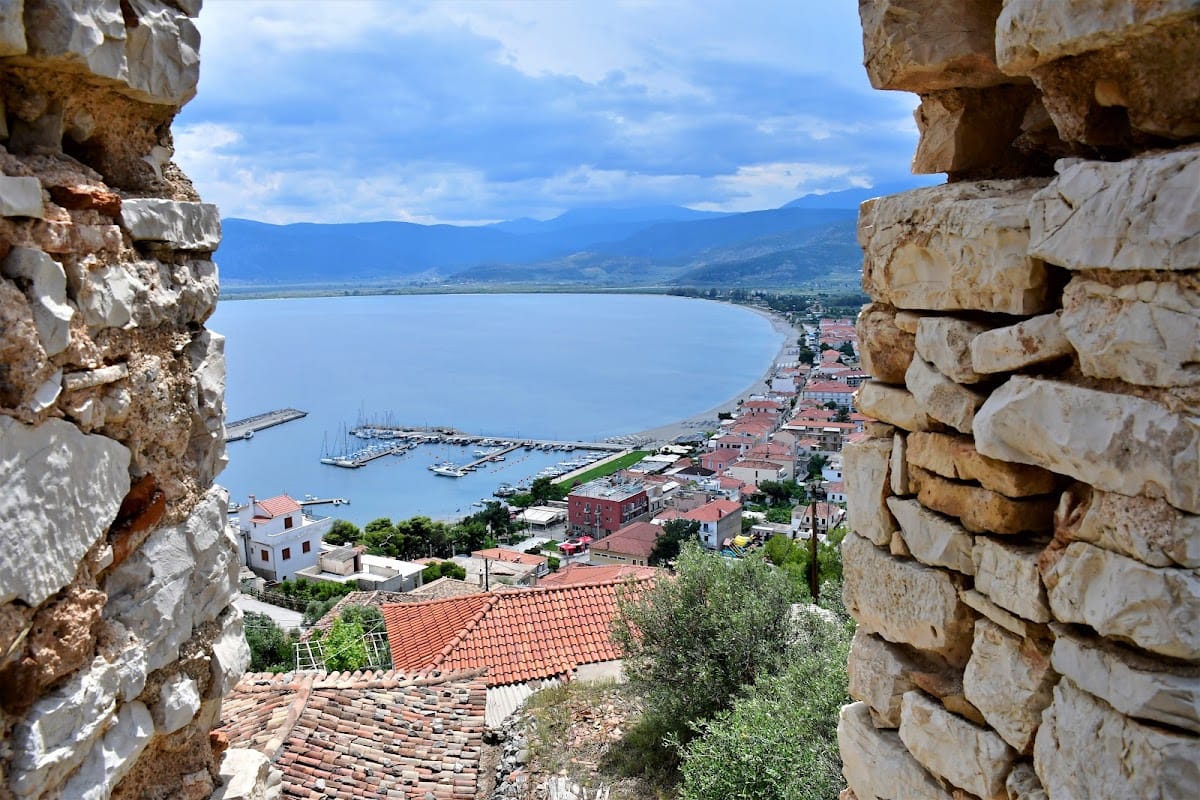
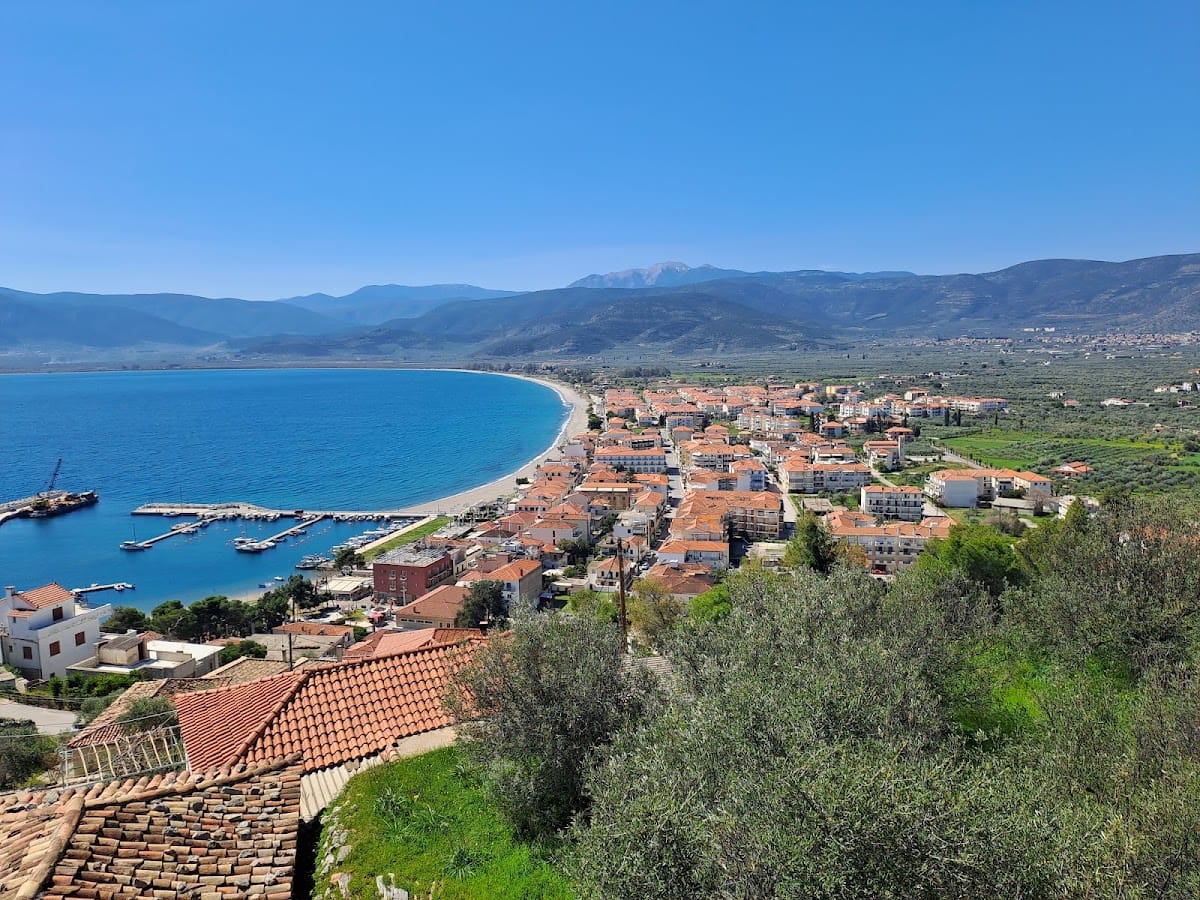
Built of stone on a narrow, elongated hill, the castle follows an approximately square plan. Steep cliffs protect its western side, while the sea lies to the east. The enclosure survives to a height of up to 6 metres and incorporates defensive openings from different phases of use.
Walls, gates, and towers
One gate stands at the northwestern end of the enclosure, where a massive circular tower provides protection. A second gate opens on the eastern side and is reached from the upper part of Paralio Astros. The eastern side also contains a tower identified as Venetian.
Loopholes are especially numerous along the eastern side of the fortification, while the southern wall contains openings for firearms. These features belong to the defensive organization of the stone enclosure and reflect the castle’s military function.
Summit buildings
Storehouses and water tanks
Ruined storehouses and water tanks survive on the summit plateau alongside the residential buildings. The tanks include cisterns, enclosed reservoirs used to collect and store water, which formed part of the settlement’s infrastructure.
Panagiotis Zafeiropoulos’s residence
Panagiotis Zafeiropoulos’s residence has a rectangular plan and stands over the foundations of an earlier structure. Its position on the summit plateau places it within the residential group established during the Zafeiropoulos phase.
Konstantinos Zafeiropoulos’s residence
Konstantinos Zafeiropoulos’s house contains four apartments, ancillary rooms, a latrine, and cisterns. The surviving arrangement gives the building a more extensive domestic layout than a single-room residence.
Ioannis Zafeiropoulos’s residence
Ioannis Zafeiropoulos’s residence survives in poor condition. Its remaining form resembles Konstantinos Zafeiropoulos’s house and contributes to the group of residences on the summit.