Newark Castle: A Medieval Bishop’s Fortress in England
Site at a Glance
- Rating
- 4.5
- Popularity
- Medium
- Country
- United Kingdom
- Primary era
- Medieval
- External website
- Open
- Eras represented
- Medieval
- Civilizations
- English
- Site type
- Military
- Remains
- Castle
On this page9 sections
History
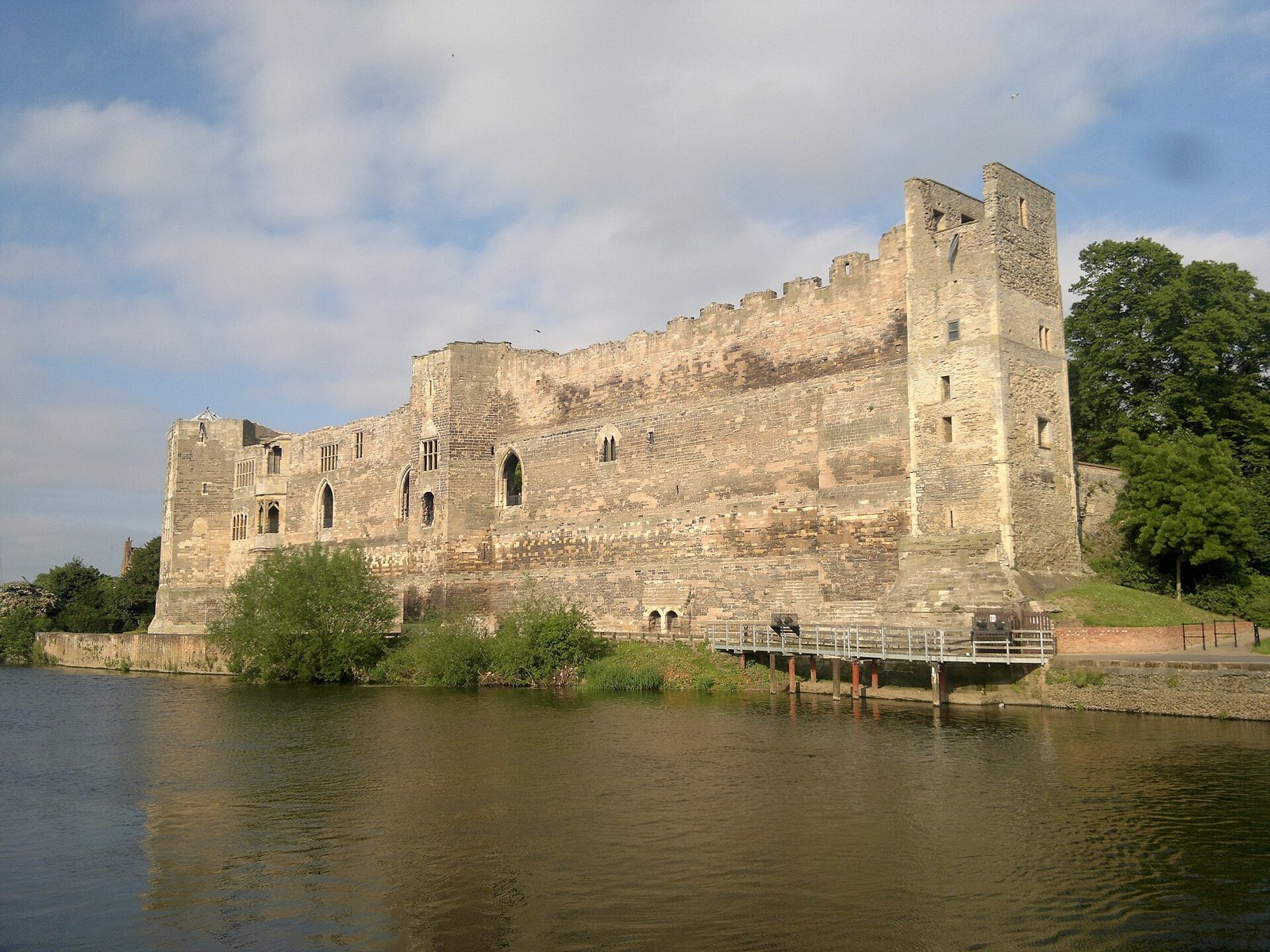
Newark Castle is a medieval castle in the United Kingdom, located in Newark-on-Trent, Nottinghamshire. Founded in the mid-12th century by Alexander, Bishop of Lincoln, it began as a timber fortification and was rebuilt in stone toward the end of the 12th century. Its history includes royal conflict, deliberate destruction during the English Civil War, and extensive restoration.
Foundation and stone rebuilding
A charter generally dated to 1135 records that Henry I authorized Alexander to create a ditch and rampart around his fishpond at Niwerc on the Fosseway. The same charter allowed the bishop to divert the Fosseway through the town as he wished. This early work formed the basis of the castle at Newark.
The first castle was probably built mainly of timber. Alexander also established a mint there. By the close of the 12th century, the fortification had been rebuilt in stone, creating the substantial medieval castle whose surviving elements include a 12th-century gatehouse.
Royal conflict in the early 13th century
During the First Barons’ War, the conflict between King John and rebellious English barons from 1215 to 1217, John ordered the castle to be slighted on 29 August 1216. Slighting meant deliberately dismantling or disabling a fortification so that it could no longer serve a defensive purpose. The order was later rescinded.
King John died at Newark Castle on the night of 18 October 1216 from dysentery. A tradition links his illness to eating too many peaches, but that explanation remains a tradition rather than an established fact.
Destruction and restoration
Newark Castle was slighted again in 1648 during the English Civil War, the mid-17th-century conflicts between supporters of the monarchy and Parliament. This destruction involved blasting the fortification with gunpowder. The castle was subsequently left derelict.
Between 1845 and 1848, the architect Anthony Salvin restored the castle. After Newark Corporation purchased the site in 1889, it undertook further restoration. Newark Castle is a Scheduled Monument, meaning that its archaeological and historic fabric is legally protected in England. It is also a Grade I listed building, a category reserved for structures of exceptional national architectural or historic interest, and is recognized as an internationally important structure. The castle grounds and gardens were added to the National Register of Historic Parks and Gardens in 1994.
Remains
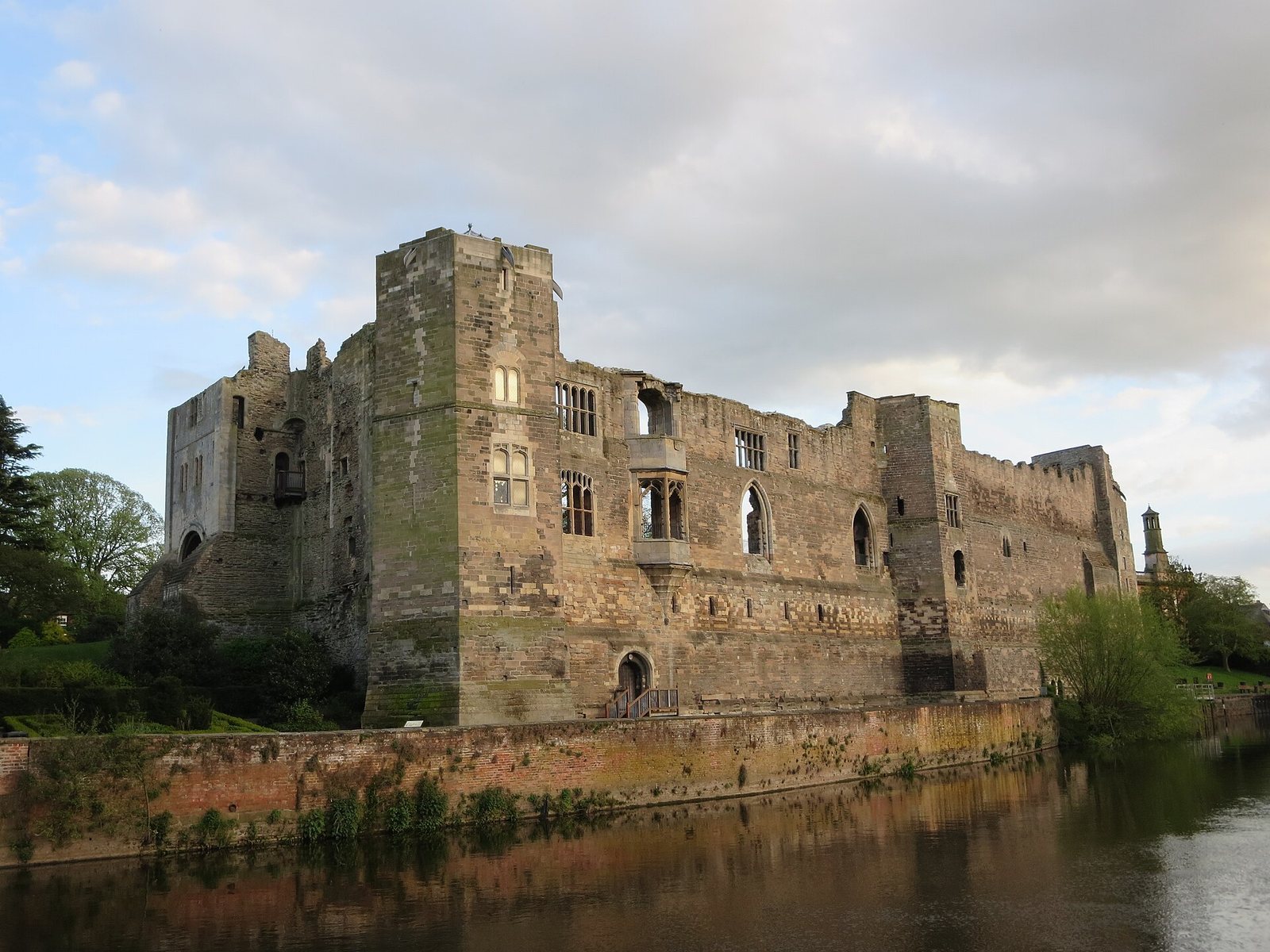
The surviving remains combine parts of the stone castle with later restoration work. The site includes a 12th-century gatehouse, sections of the internal wall, the north-west corner of the courtyard, and grounds containing gardens and later heritage buildings.
Castle structures
Twelfth-century gatehouse
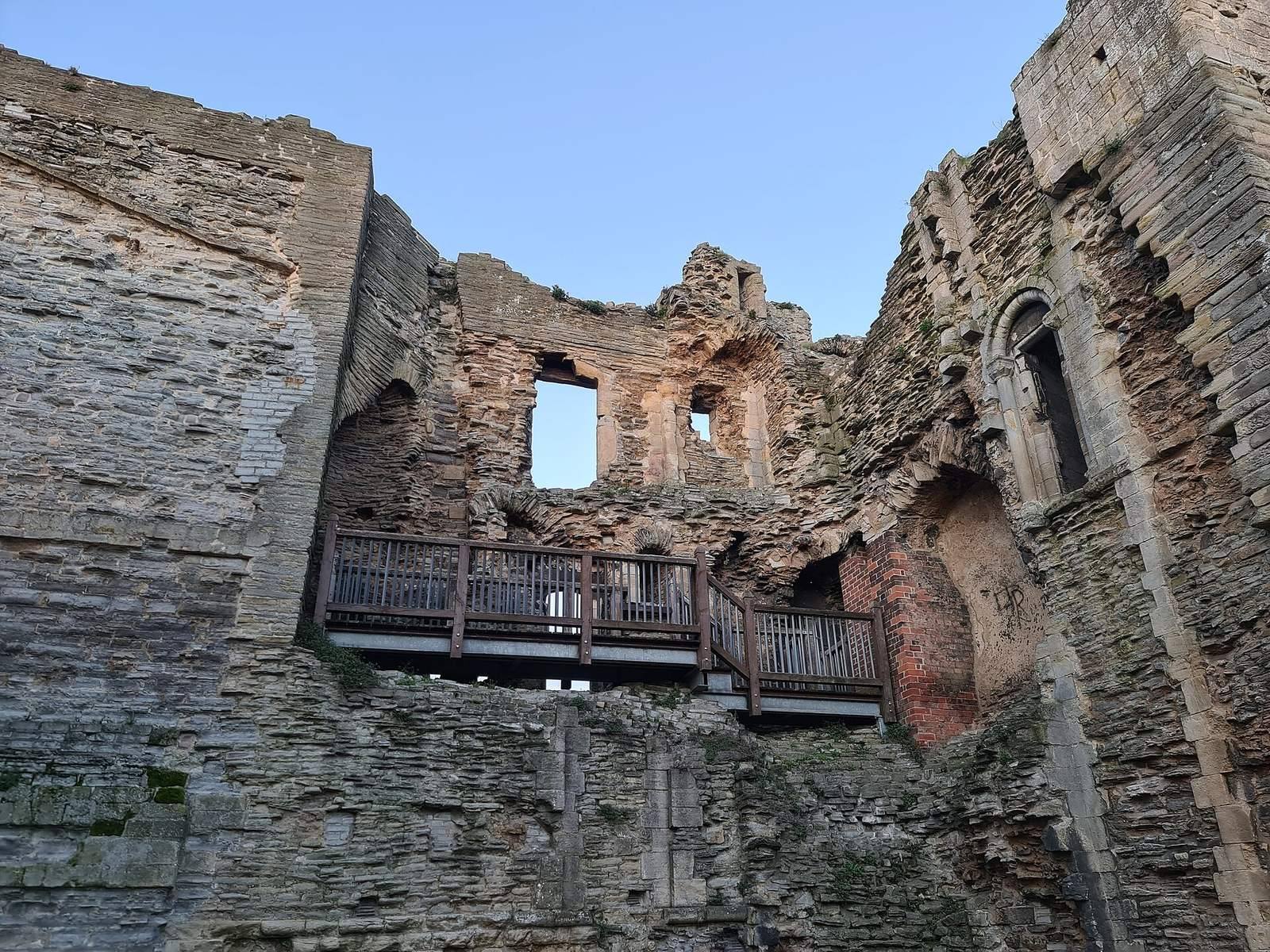
The 12th-century gatehouse is a principal surviving feature of Newark Castle. Its southern elevation remains identifiable, and brickwork associated with restoration can be seen within the structure. The gatehouse reflects the transition from the earlier timber fortification to the stone castle developed toward the end of the 12th century.
Internal wall and courtyard
Sections of the castle’s internal wall survive, together with the north-west corner of the courtyard. The Ranger’s Office was located in this corner, linking the surviving masonry to a later use of the castle’s interior.
Grounds and later buildings
The castle grounds include gardens and the building formerly occupied by the Gilstrap Heritage Centre. That centre housed exhibitions about the castle and Newark’s history during the English Civil Wars. The building is now used as Newark Registration Office.