Dar el Bacha: A Palace and Museum in Marrakesh
Site at a Glance
- Rating
- 4.6
- Popularity
- Very High
- Country
- Morocco
- Primary era
- Modern
- External website
- Open
- Eras represented
- Modern
- Civilizations
- Alaouite
- Site type
- Domestic
- Remains
- Elite Residence
On this page7 sections
History
Dar el Bacha is a palace in the old medina of Marrakesh, Morocco, built in 1910 as the private residence of Moroccan political leader Thami El Glaoui. Its design combines Moroccan and riad traditions with European influences. A riad is a building organized around an interior courtyard. The palace was among the earliest in Marrakesh to feature lavish exterior decoration.
Residence and political role
El Glaoui built the residence on a lavish scale to impress his guests. In 1912, Sultan Moulay Youssef, Morocco’s monarch, granted him the title of pasha of Marrakesh. A pasha was a high-ranking official, often a governor. During the French Protectorate, when France exercised control over Morocco, El Glaoui became the most powerful political figure in southern Morocco for several years.
Notable visitors included Colette, Maurice Ravel, Charlie Chaplin, Josephine Baker, and Winston Churchill. A 1924 photograph shows local men queuing to be received at the palace.
Museum and earthquake damage
Morocco’s Fondation nationale des musées renovated the palace and converted it into Dar el Bacha – Musée des Confluences. King Mohammed VI inaugurated the museum on 9 July 2017. It hosts temporary exhibitions on Moroccan culture and art from different cultures. In 2018, an exhibition presented objects from places of worship associated with Judaism, Christianity, and Islam.
The September 2023 earthquake damaged the palace, which subsequently closed for repairs.
Remains
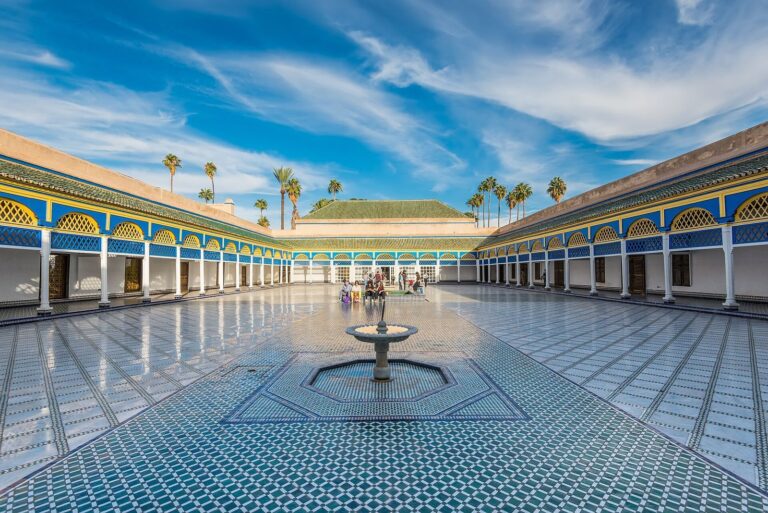
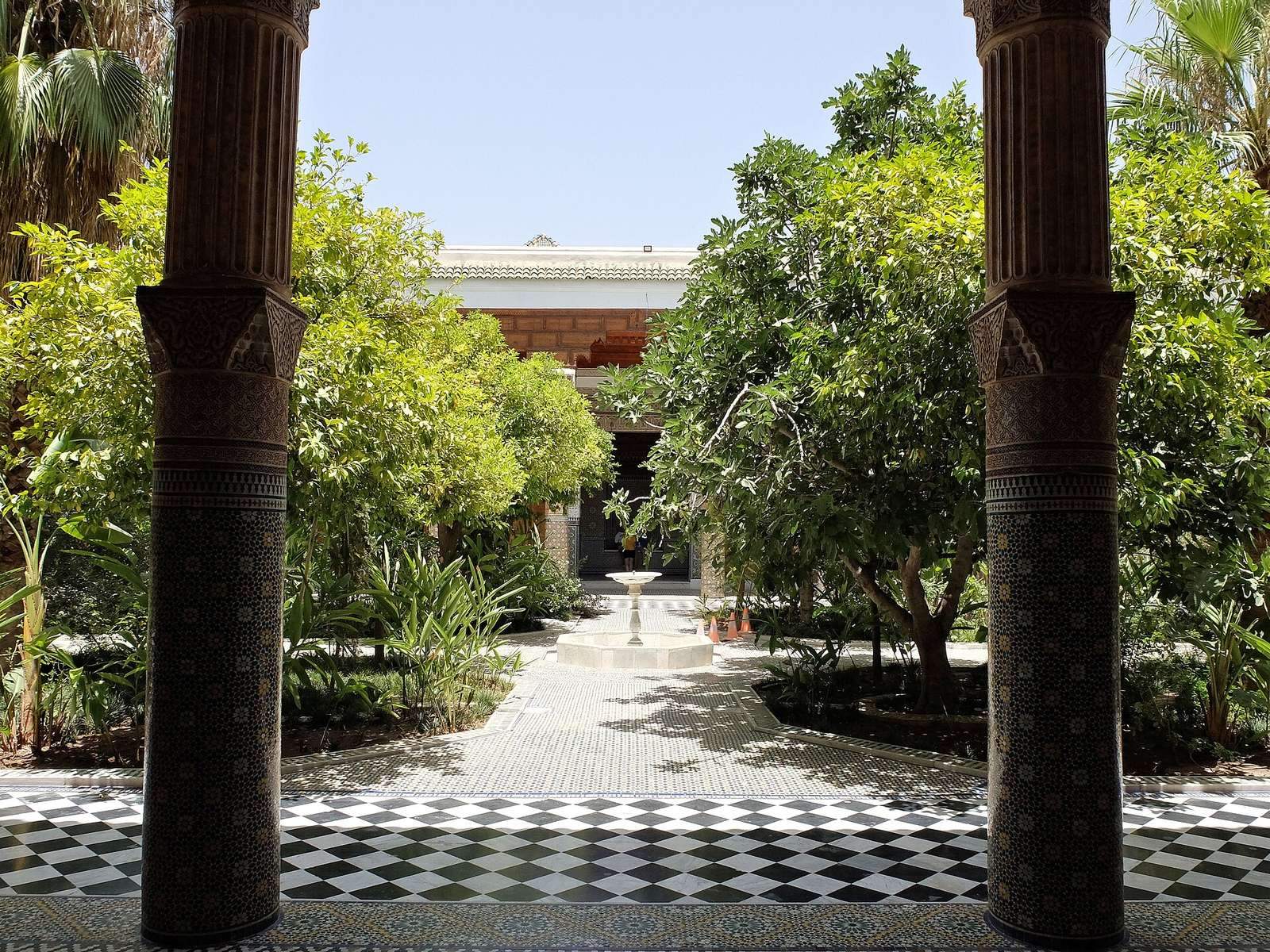
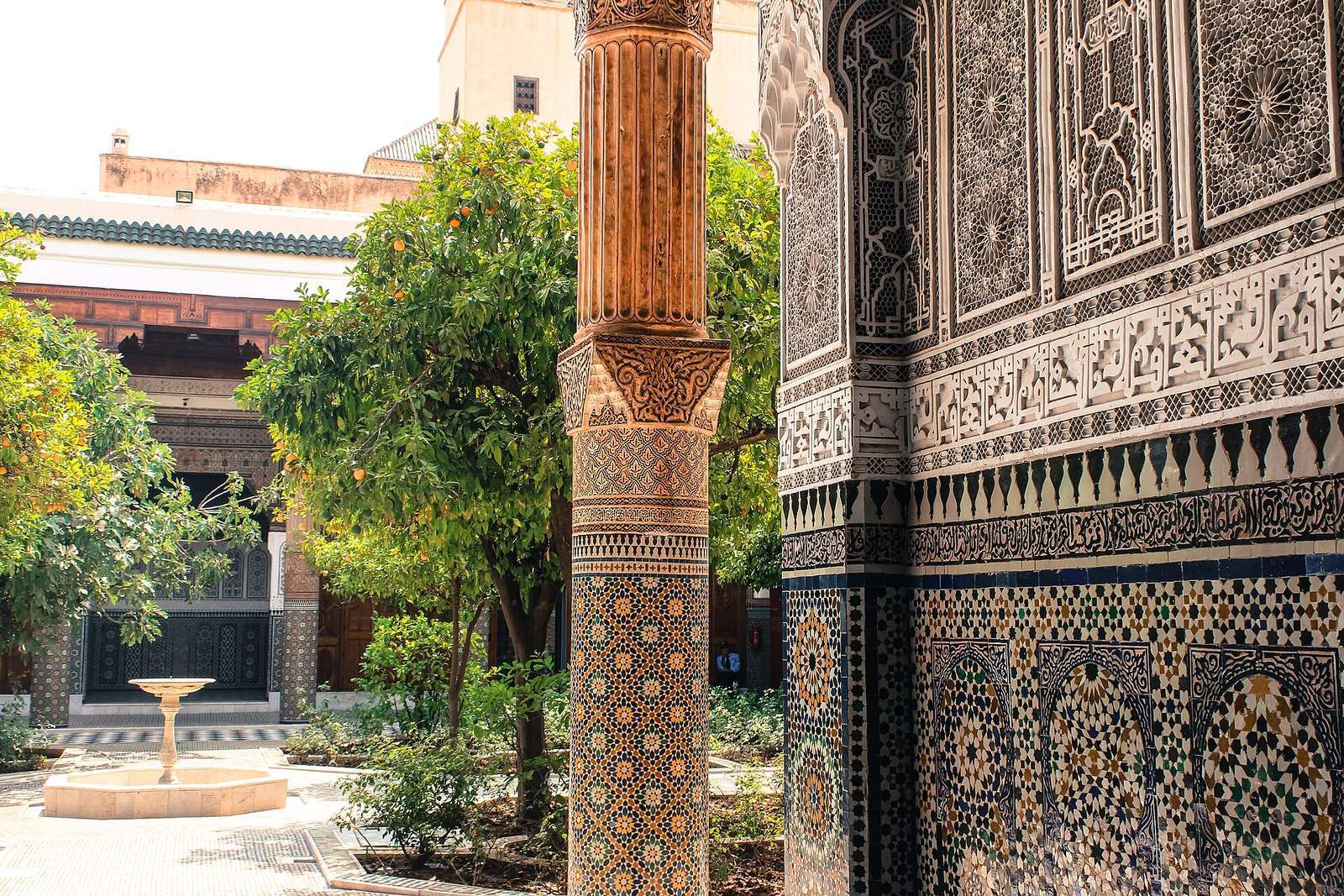
The museum area is arranged in a riad plan around a rectangular courtyard. A large garden is symmetrically divided into four sections, while fountains and orange trees occupy the central courtyard.
Palace layout and decoration
Courtyard and surrounding rooms
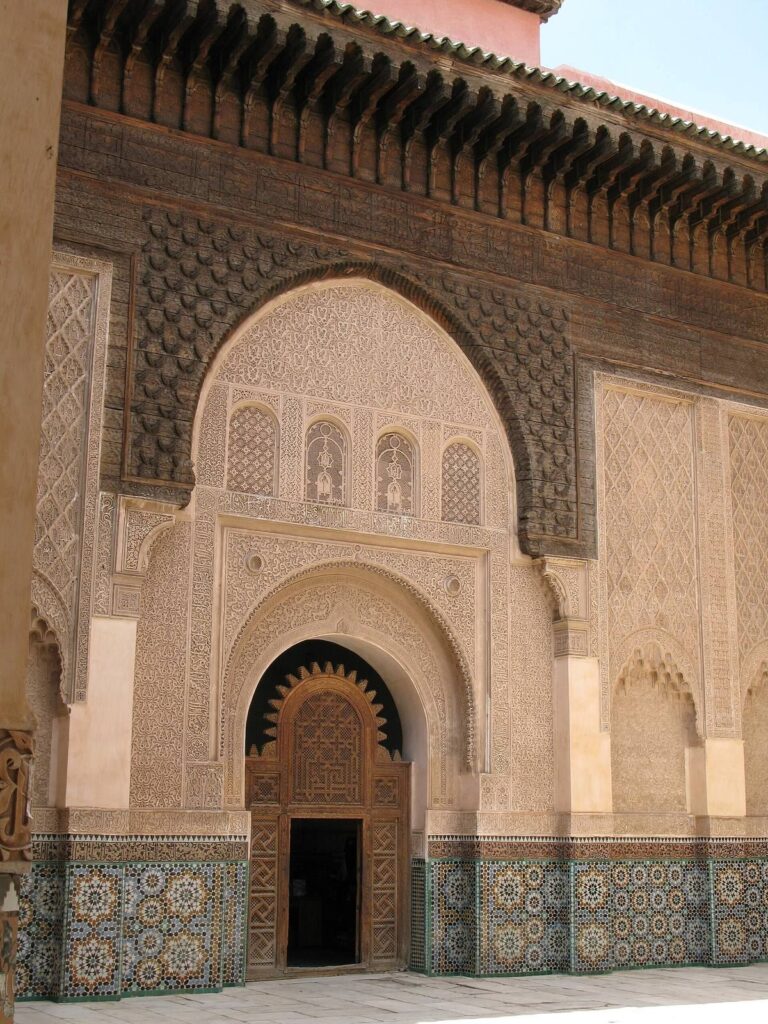
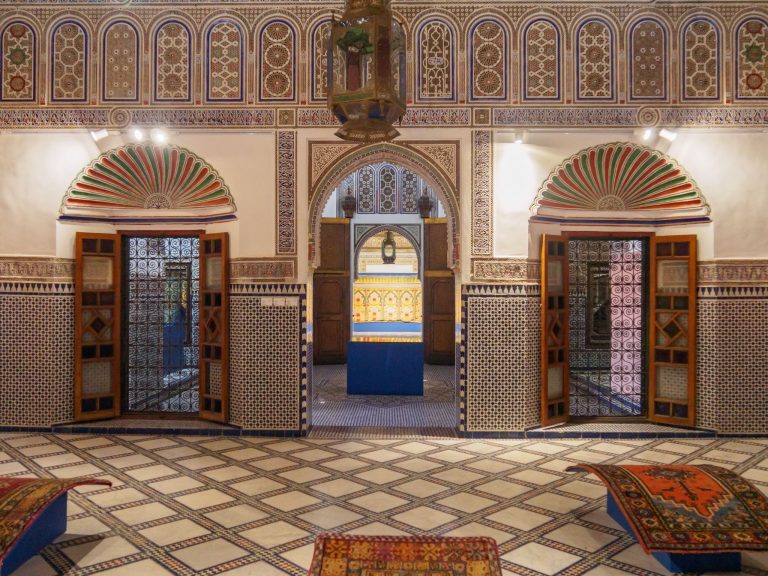
A hall stands on each side of the courtyard, each fronted by a covered porch with ornate columns. An alcove with a wall fountain adjoins the main courtyard. The wider palace complex also included a bathhouse, service areas, private family quarters, large gardens, and pavilions.
Decorative features
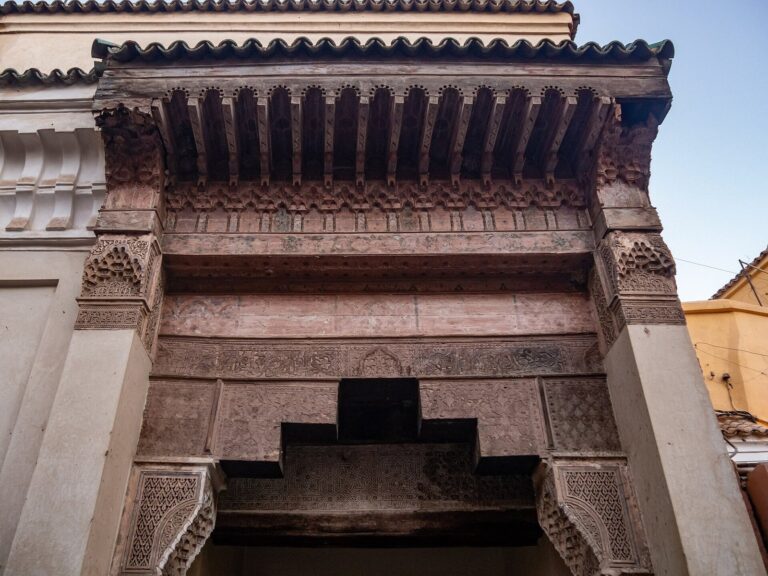
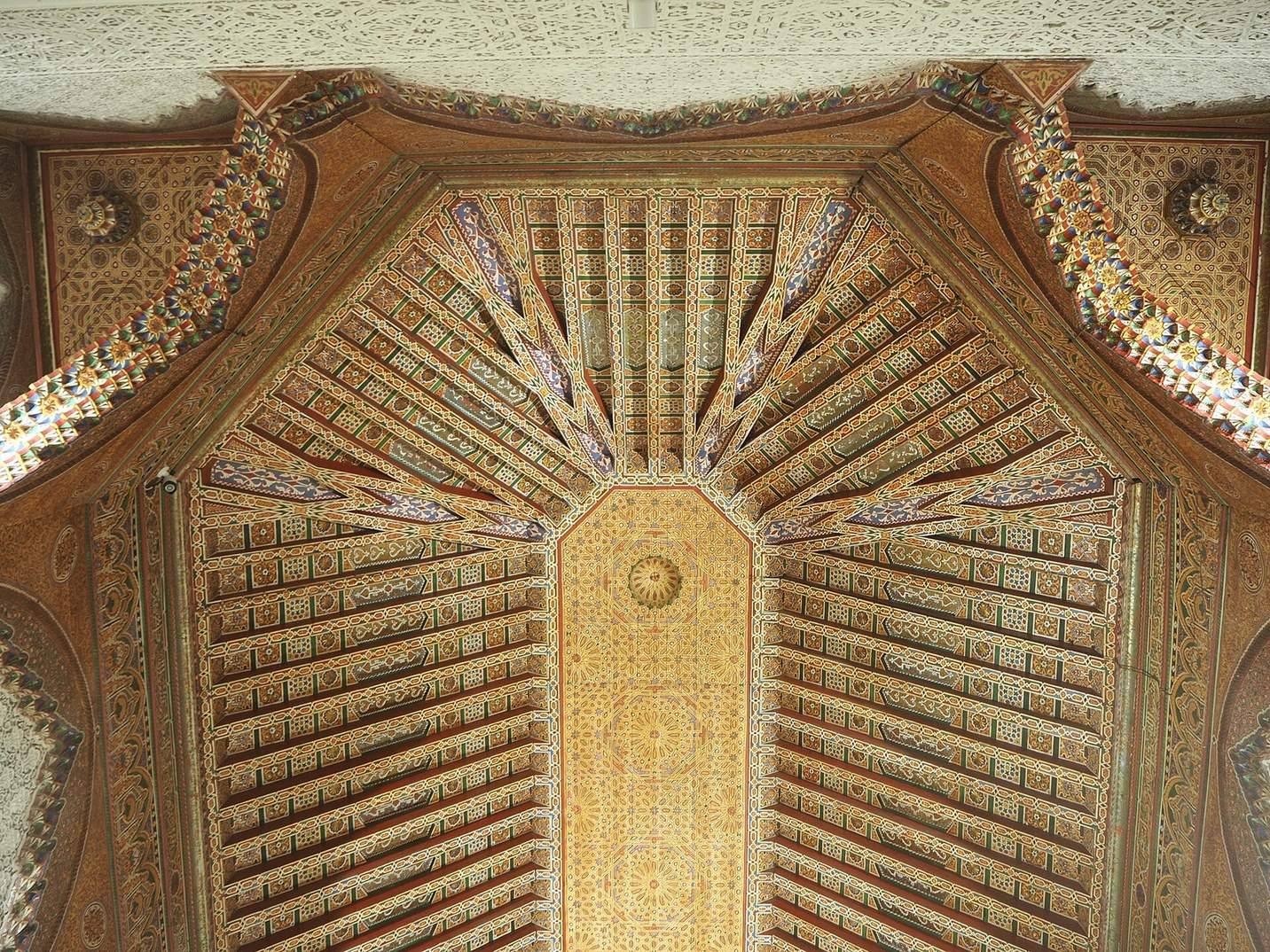
Retained and restored features include zellij, a form of decorative mosaic tilework; carved stucco; carved and painted cedar doors; and decorated floors and ceilings. Natural dyes, including indigo, saffron, and poppy, color the columns.