Château Lascombes: A Classified Wine Estate in Margaux
Site at a Glance
- Rating
- 4.7
- Popularity
- Medium
- Country
- France
- Primary era
- Modern
- External website
- Open
- Eras represented
- Early Modern, Modern
- Civilizations
- French
- Site type
- Economic
- Remains
- Production Complex
On this page9 sections
History
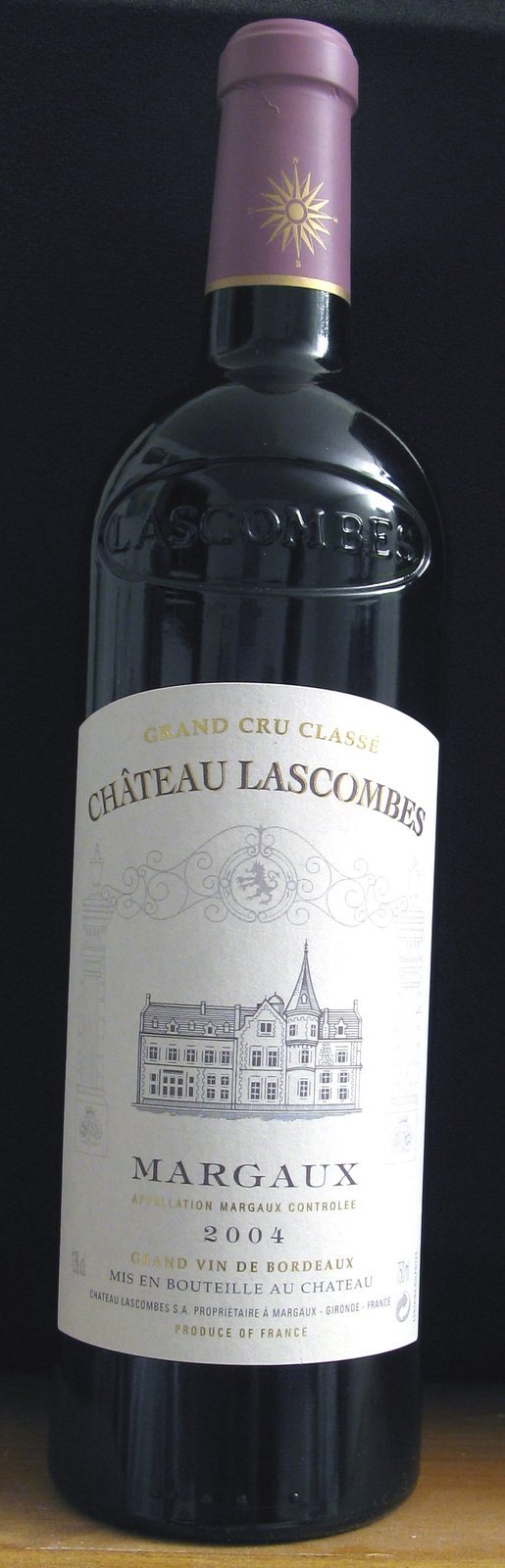
Château Lascombes is a wine estate in Margaux-Cantenac, France, with vineyard origins in the fifteenth century and a present château developed in a late-nineteenth-century neo-English style. Its classification as a Second Growth in 1855 placed it among the estates ranked in the Bordeaux classification. The estate produces wine under the Margaux appellation, a legally defined geographic designation.
Origins and the Lascombes family
The Durfort de Duras family had established itself in Margaux by the twelfth century, and by the fourteenth century its holdings included land on Margaux’s highest hill. The first vines on the Lascombes lands were planted in the fifteenth century. The property was initially connected with the broader Durfort holdings, including Durfort-Vivens.
Antoine, chevalier de Lascombes, a title meaning knight, was born in 1625 and is the earliest named owner associated with the estate. How he acquired it is uncertain, and it was first part of the Durfort estate. Wine from Lascombes is mentioned in 1700. Between 1700 and 1750, the property separated from the Durfort holdings and passed to Jean-François and Anne de Lascombes.
Jean-François de Lascombes de Chaumont held several public roles. He served as a councillor of the Parlement of Bordeaux, a high court under the French monarchy, and as the king’s prosecutor at the Admiralty. He joined the Bordeaux Academy in 1761. In 1776, Labadie’s classification of Guyenne wines ranked Lascombes as a second-growth wine and valued it at 750 livres, half the value assigned to Château Margaux. In 1838, Le Producteur judged Lascombes wines comparable to those of Château Margaux.
Classification and nineteenth-century ownership
After Jean-François died shortly before the French Revolution, a period of political upheaval in France, the estate left the Lascombes family around the revolutionary period. It passed to Nathaniel Johnston and soon afterward to Fabre. In the early 1820s, M. Loraigue acquired the property. His heirs sold it in 1844 for 90,000 francs to a daughter of Léonor Antoine, Count of Blagny Hüé.
On 18 April 1855, Lascombes was classified as a Second Growth in the Bordeaux classification. The property was known as Domaine de Lascombes until 1860. In 1867, it was sold to Gustave Louis Chaix d’Est-Ange, a Paris lawyer and former head of the Paris bar. The estate’s vineyard covered 27 hectares in the late nineteenth century, but had contracted to 13 hectares by 1887.
Twentieth-century changes
Chaix d’Est-Ange’s grandson Gustave took over the estate’s operation and acquired Château Marquis d’Alesme Becker, with the intention of combining the two properties. His death in 1923 ended that plan. His adopted son, Emmanuel du Bourg de Bozas, sold Marquis d’Alesme Becker to Glasgow wine company W. H. Chaplin & Co. Lascombes became a management company in 1926, with the Ginestet wine-trading family as its principal shareholders. In the later stages of the Second World War, the estate’s country house served as an Allied headquarters.
Alexis Lichine, a French wine writer and expert, and a syndicate of American investors acquired Lascombes in 1952. Lichine managed the property until 1971, when British brewing company Bass Charrington took principal ownership. Winemaker René Vanatelle then assessed the vineyard and judged that 50 hectares produced wine of Second Growth quality. From the 1980s, lower-rated parcels were separated for Château Segonnes, then a second wine. In 1997, Vanatelle introduced Chevalier de Lascombes as a higher-quality second wine. Bruno Lemoine succeeded him as winemaker.
Investment firm Colony Capital and its partners, including entrepreneur Yves Vatelot, acquired the estate in 2001 and carried out extensive modernization. In July 2011, MACSF, a French mutual insurer serving the health professions, acquired Lascombes. The estate remains classified as a Second Growth, and oenologist Michel Rolland serves as its winemaking consultant.
Remains
The château and vineyard
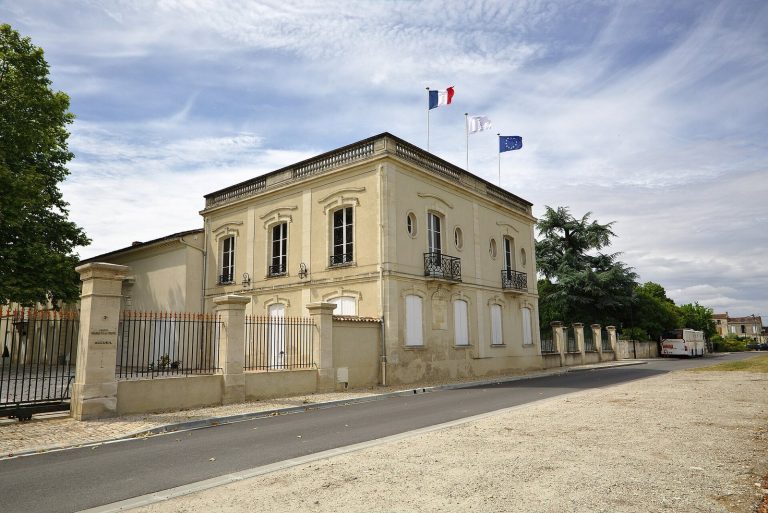
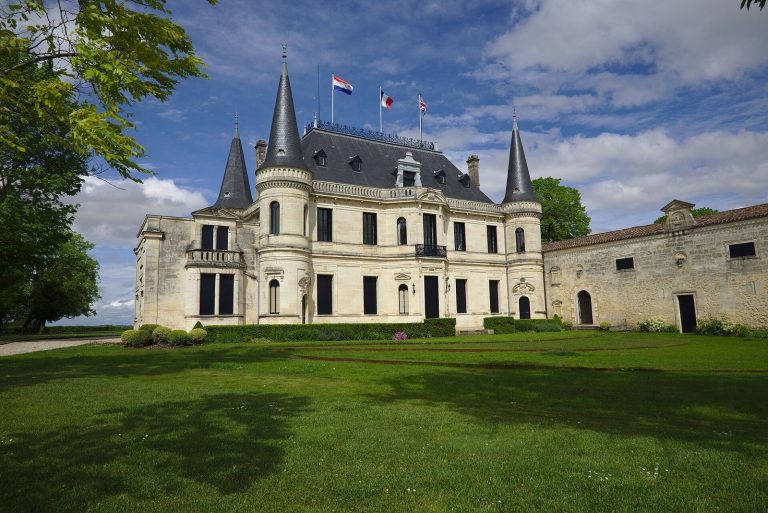
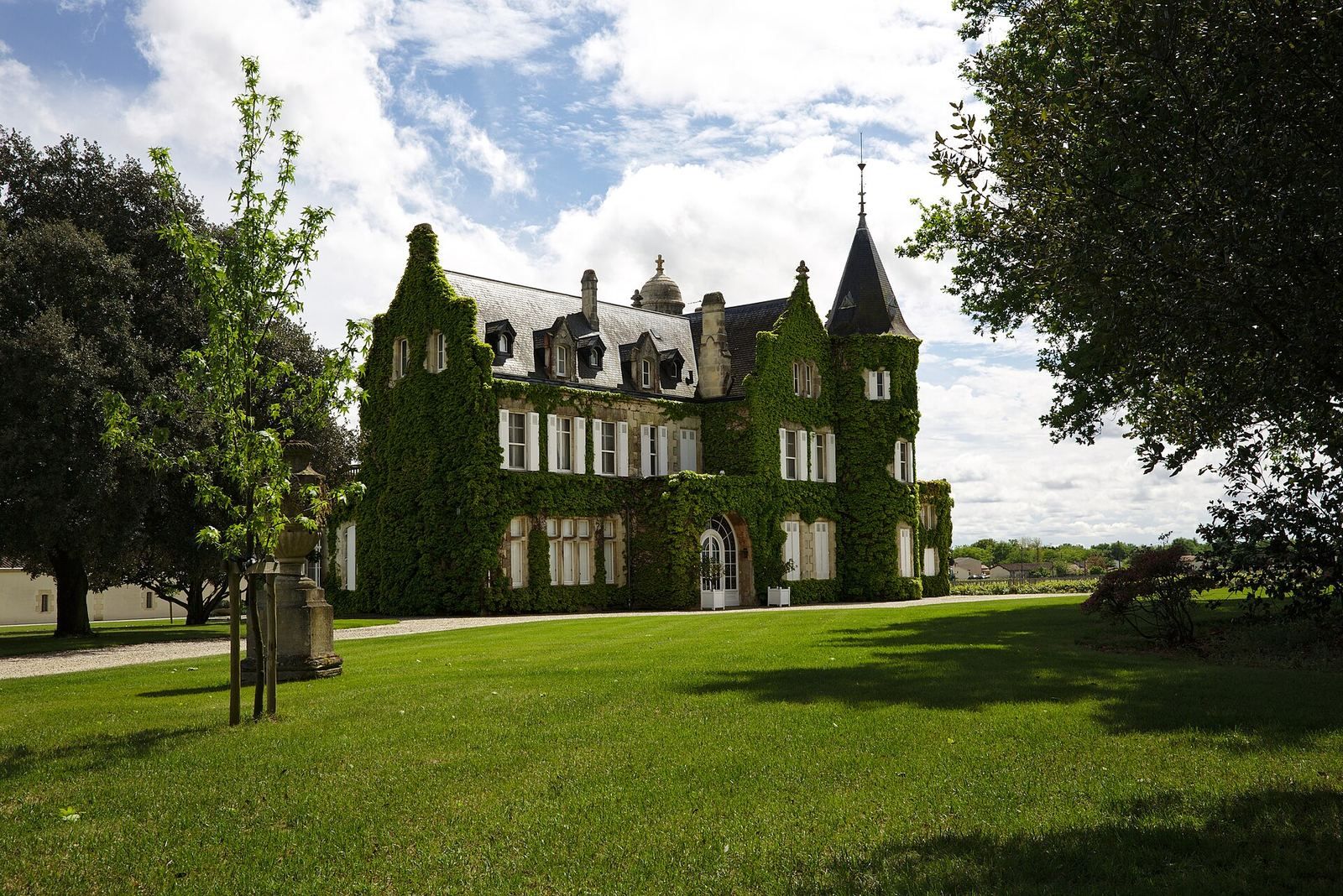
Construction at the estate began around 1780. The present château took shape in the late nineteenth century, when architect Louis Garros was entrusted with work on a new building around 1875. The design followed a neo-English style. The château is part of an estate covering about 100 hectares, of which 84 hectares are planted with vines.
The vineyards occupy parcels with distinct soils, and a parcel-by-parcel study led to changes intended to match grape varieties and rooted vine bases, known as rootstocks, to the ground beneath them. Clay-limestone and clay gravel are used for Merlot, clay gravel and gravel for Cabernet Sauvignon, and gravel for Petit Verdot. The plantings are 50 percent Merlot, 45 percent Cabernet Sauvignon, and 5 percent Petit Verdot, on 101-14, Riparia, and 3309C rootstocks. Vines average 35 years of age and are pruned with a two-cane method. Trellises were raised to expand leaf area and support photosynthesis. Workers remove shoots and leaves and thin the crop by hand; harvesting is entirely manual.
Winery and wine production
Vat room and grape handling
Since 2001, the winery’s vat room has been arranged across four levels, including a level with buried, temperature-controlled vats. Vats are sized to individual vineyard parcels, and eight are made of French oak. The layout also allows wine to move by gravity. Grapes arrive in crates and are sorted on perforated vibrating tables both before and after their stems are removed. Bins carry the selected berries by elevator to an upper level, where the grapes are lightly crushed as they enter the vats. Dry ice is added for a cold soak before fermentation, lasting about eight days at 8–10°C.
Fermentation and ageing
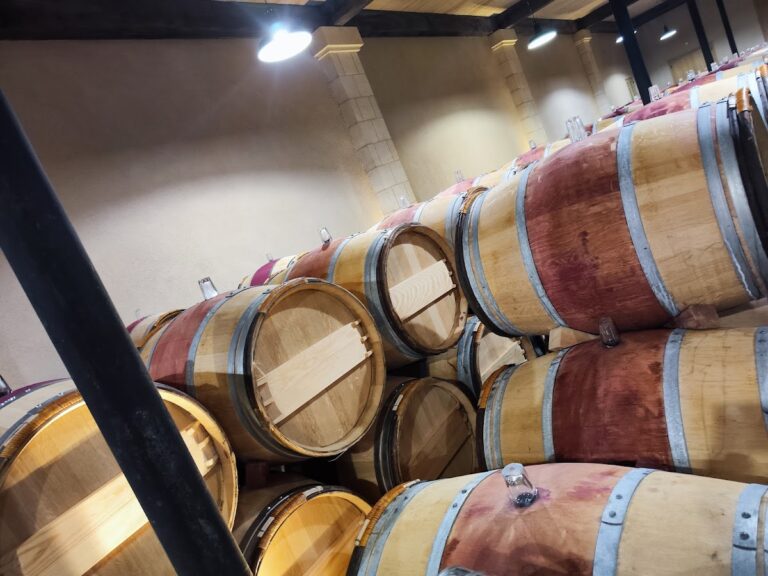
Fermentation, which turns grape sugars into alcohol, takes place at 28°C, with gentle pumping of juice over the grape solids. A further soaking period at 30°C follows, with daily tasting used to decide when it should end. Wine is then drained and moved by gravity to French-oak barrels, where a secondary fermentation converts malic acid to lactic acid at 21°C. Each year, 80–100 percent of the barrels are renewed. The principal wine and Chevalier de Lascombes mature in barrels for about 18–20 months. For four months they remain in contact with lees, the yeast deposits left after fermentation; rotating racks keep these deposits suspended and reduce oxidation risks. The wines are blended by gravity, transferred off sediment every three months using compressed air, clarified with egg white, and bottled.
In most vintages, the principal wine is blended from 55 percent Cabernet Sauvignon, 40 percent Merlot, and 5 percent Petit Verdot. Chevalier de Lascombes contains a larger share of Merlot. The estate also produces Château Segonnes, Rosé de Lascombes, Vin Sec Chevalier de Lascombes, and Gombaud. Annual production is about 250,000 bottles of the principal wine and 70,000 bottles of Chevalier de Lascombes. The wines are typically considered ready to drink after about eight years and can age for up to thirty years.