Ita-Sungō Kofun Cluster: A Group of Late Sixth-Century Burial Mounds
Site at a Glance
- Rating
- 3.7
- Popularity
- Low
- Country
- Japan
- Primary era
- Medieval
- External website
- Open
- Eras represented
- Medieval
- Civilizations
- Yamato
- Site type
- Burial
- Remains
- Necropolis
On this page10 sections
History
Mound Building in the Kofun Period
The Ita-Sungō Kofun Cluster is a group of late-sixth-century burial mounds on a ridge in Ida, Numazu, Shizuoka Prefecture, Japan. The mounds were built during the Kofun period, an era of early Japanese history associated with burial-mound construction and conventionally dated from about the third to the seventh century.
The cluster’s first known written mention appeared in 1800, in a regional gazetteer’s discussion of ruined tombs. The sword fittings associated with the burials suggest that the people who formed the cluster held relatively high status, since they had repeated access to decorated objects of this kind.
Investigations and Protection
A local high school, working under a teacher’s direction, investigated Mound No. 7 in 1954 and Mound No. 21 the following year. A fire at the school in the winter of 1954 destroyed excavation records and many recovered objects. Some fire-damaged finds survived and were deposited in a local museum in Toda.
In 1964, plans for a road between Numazu and Toi threatened the site. Toda village authorities arranged investigations of Mounds Nos. 9 and 18 under the guidance of a high school teacher. Surveys in the early and mid-1980s then sought to establish basic records for the site’s protection.
After the cluster received designation as a Shizuoka Prefecture Historic Site in the mid-1990s, work from 1995 to 1997 examined Mounds Nos. 7 and 18 again and prepared their burial chambers for public viewing. X-ray examination of earlier finds during 1996–1997 helped establish the repeated presence of decorated sword fittings among the burial objects, supporting the interpretation that the people buried here were of relatively high status.
Remains
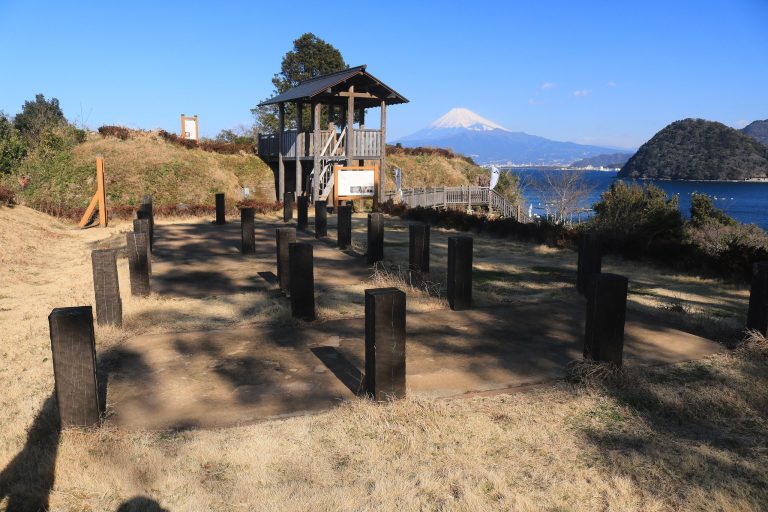
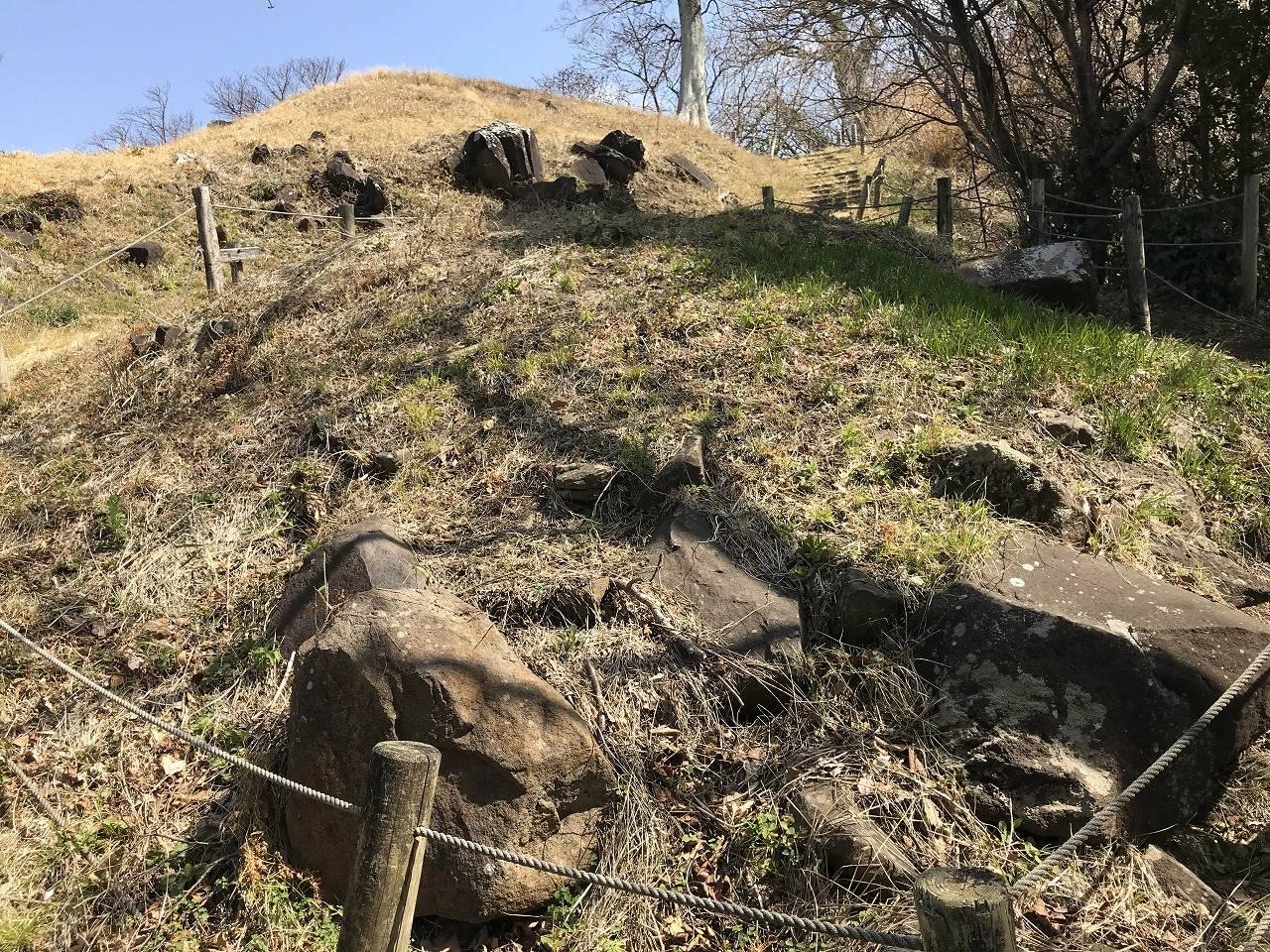
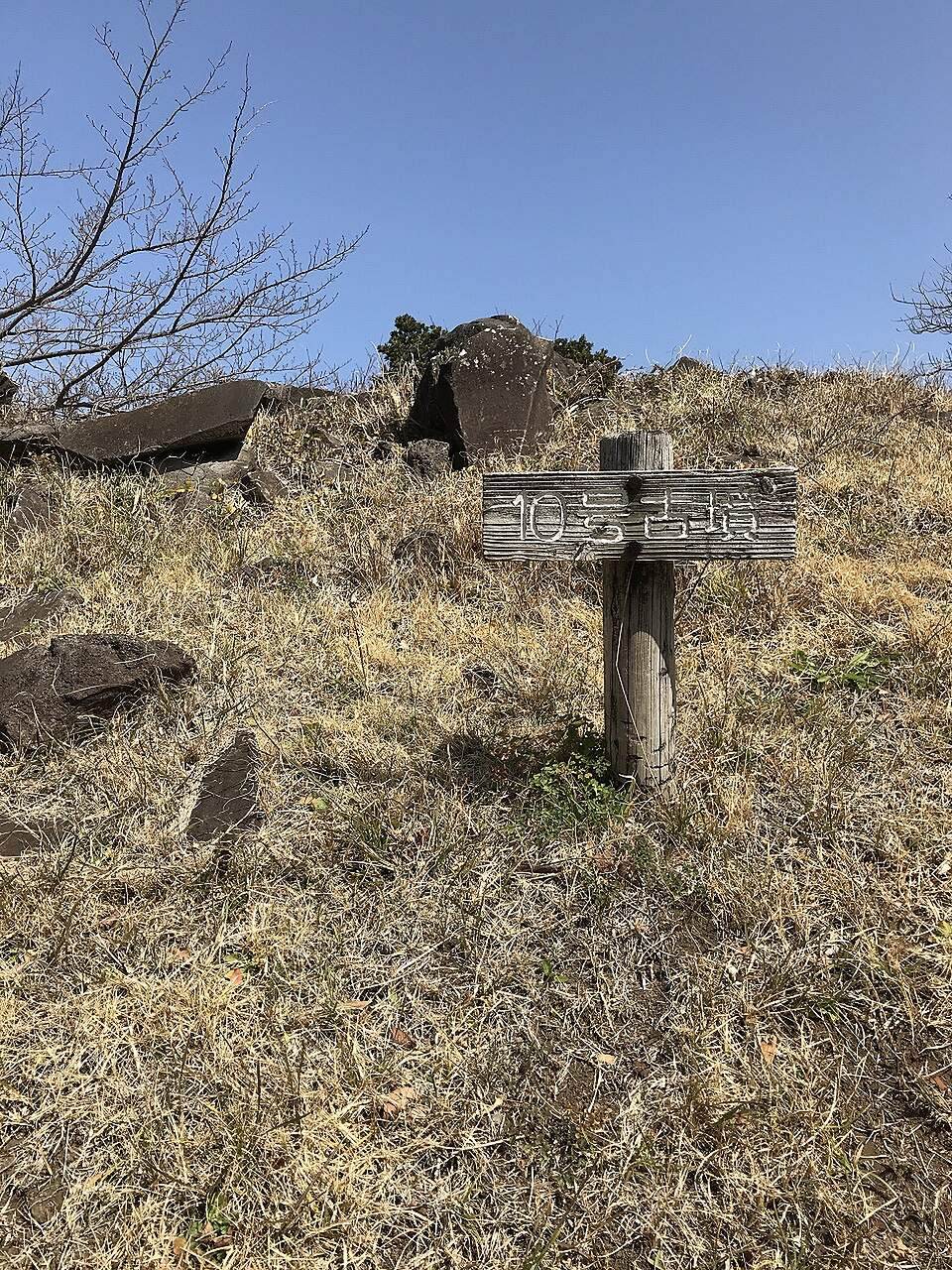
The mounds occupy a ridge about 60–75 metres above sea level that extends into Suruga Bay. Seventeen circular burial mounds, generally about 7–13 metres in diameter, are present in the cluster.
Mound No. 7
Mound and stone chamber
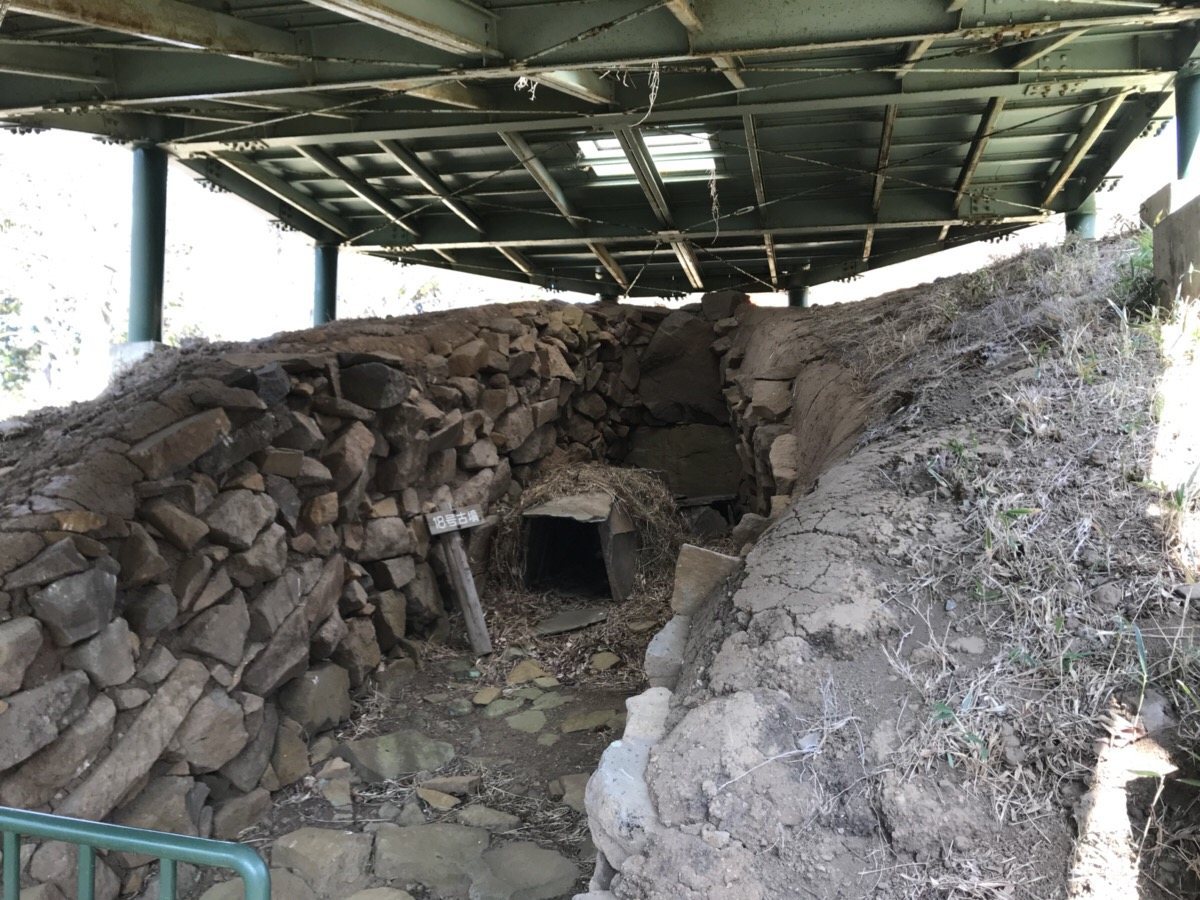
Mound No. 7 is about 12 metres in diameter, with an east–west measurement of roughly 10.6 metres. It stands about 1.4 metres above its western foot. Its stone burial chamber is around 8.8 metres long and built from irregularly laid stones. The inner chamber measures about 5.7 metres long and 1.4–1.8 metres wide; its rear wall is thought to rise more than 2.1 metres.
Burial finds
Finds from the mound include gold rings, round and tubular beads, jujube-shaped and faceted beads, glass beads, iron arrowheads, horse trappings, Sue ware pottery and human remains. Sue ware is a high-fired stoneware produced in ancient Japan, and its dating can help establish the chronology of burial contexts.
Mound No. 18
Burial chamber and coffins
Mound No. 18 contains a large stone burial chamber entered through a passage running horizontally into the mound. The chamber is about 8 metres deep and 1.5 metres wide, with two stone coffins of different sizes at its rear.
Objects and sword fittings
Objects associated with the mound include personal ornaments, gold rings, beads, bronze bracelets, straight swords, knives and iron arrowheads. A silver-inlaid pommel fitting from a round-headed sword measures 7.3 centimetres long and 4.8 centimetres wide. Its decoration shows a phoenix within a linked pattern of double circles and parallel lines, with whorl-shaped motifs around the bird. The fitting dates to the fourth quarter of the sixth century, in keeping with the dating of Sue ware found at the site.
X-ray imaging of previously excavated objects identified four inlaid sword guards, one with a heart-shaped design and three with spiral designs. They date from the fourth quarter of the sixth century to its end. The sword fittings associated with Mound No. 18 indicate that at least four decorated swords were placed in its burial.