Bräunisburg Castle: A Medieval Ministerial Stronghold in Germany
Site at a Glance
- Rating
- 4
- Popularity
- Very Low
- Country
- Germany
- Primary era
- Medieval
- Eras represented
- Medieval
- Civilizations
- Holy Roman Empire
- Site type
- Military
- Remains
- Castle
On this page6 sections
History
Bräunisburg Castle was built in the 12th or 13th century in Tuttlingen, Germany, as a ministerial castle (a stronghold linked to lords’ military and administrative retainers). Its name comes from the Bräunisberg ridge on which it stands.
The Lords of Wartenberg owned the castle and staffed it with their retainers. In 1394, it was described as a ruin under the name Neuwartenberg. The Fürstenberg family owned it from 1411 to 1435, when it was known as Burg Lichtwartenberg.
Remains
Layout and surviving fabric
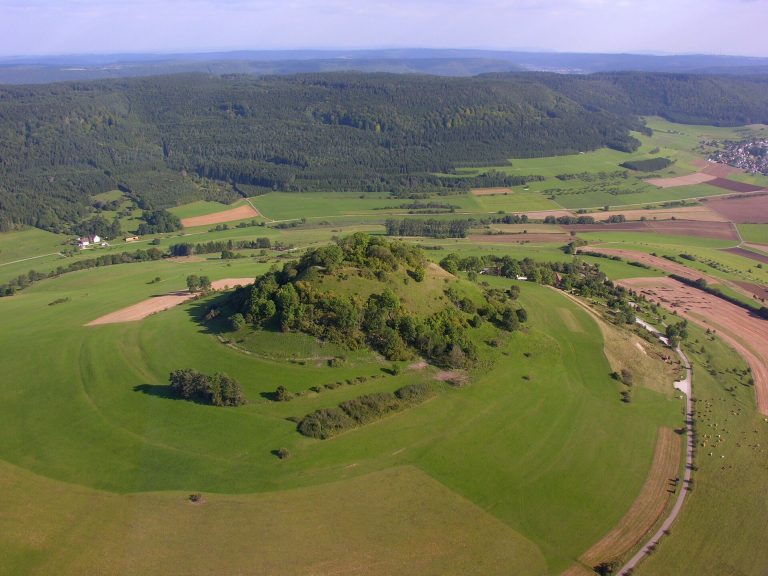
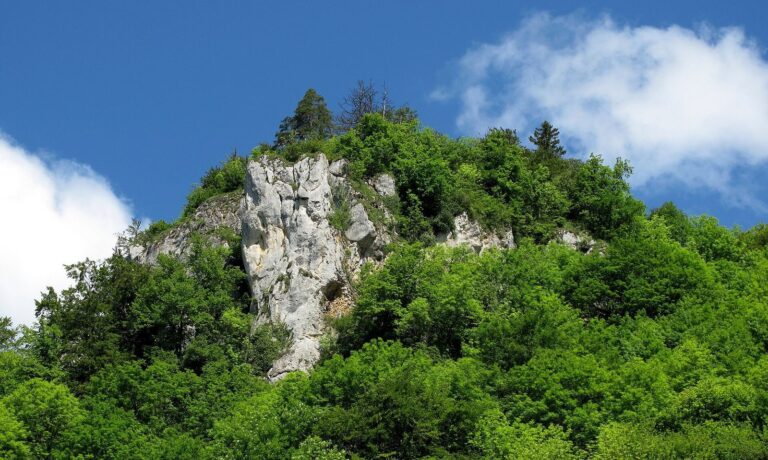
The 3,400-square-metre complex occupies a west-facing ridge projection, 852 metres above sea level, above the Ursental and west of Mühlheim an der Donau. The site lies within Nendingen in Baden-Württemberg. It comprised an inner stronghold of about 300 square metres and a much larger outer defended area. Today, terrain traces and masonry rubble mark the remains.
Approach bank and ditch
About 75 metres before the ridge projection’s tip, a curved defensive bank crosses the approach for 110 metres. It stands 3.5 metres high on its field-facing side and 1.6 metres on the side toward the castle. Its southeastern end meets a steep slope, while its northern end joins a semicircular ditch that divided the inner stronghold from the outer defended area.
Outer defended area
A curved stone wall in the outer area connects with the defensive bank. Nearby, a circular stone structure measures about four metres across and survives to a height of half a metre. It is probably the remains of the castle’s water cistern.
Inner stronghold
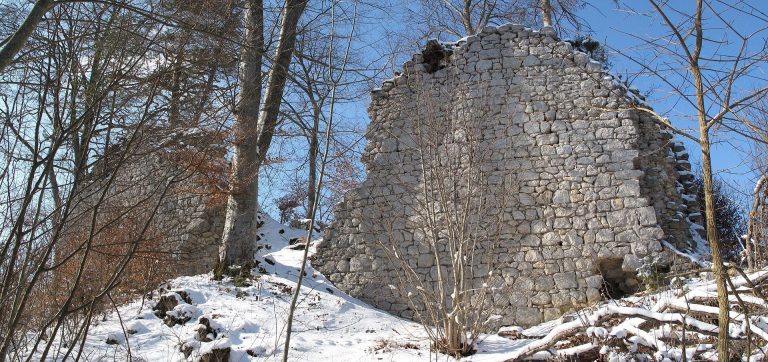
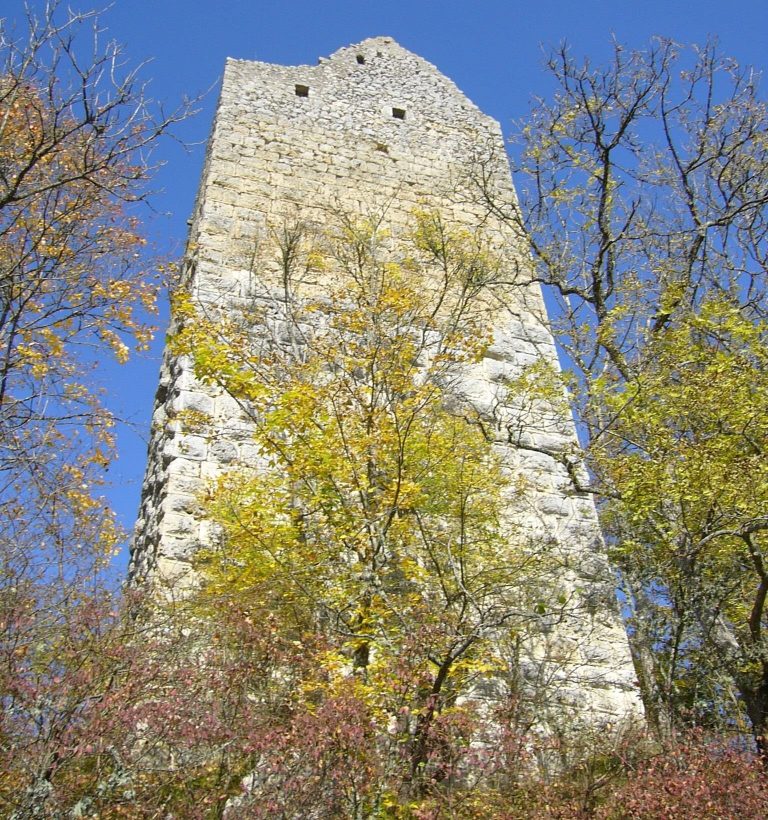
The inner stronghold occupied the small rocky tip of the ridge projection and a lower terrace. Masonry along the inner side of the semicircular ditch may belong either to a curved defensive wall protecting the exposed approach or to a round tower.