Church of Santa María in Mojácar: A Catholic Church with a Defensive Past
Site at a Glance
- Popularity
- Low
- Country
- Spain
- Primary era
- Early Modern
- Eras represented
- Early Modern, Modern
- Civilizations
- Crown of Castile, Spanish
- Site type
- Religious
- Remains
- Fortified Church
On this page7 sections
History
The Church of Santa María is a Catholic church in upper Mojácar, Spain, built in 1560 by master builder Sebastián Segura on the site of the town’s former principal mosque.
Before the church was established, the site served as a fortress under Arab rule and later under Christian control. Following the Reconquista, the centuries-long Christian expansion into Muslim-ruled territories in the Iberian Peninsula, the site was converted to Christian worship. The church continued to serve a defensive purpose, helping protect the town from possible attacks.
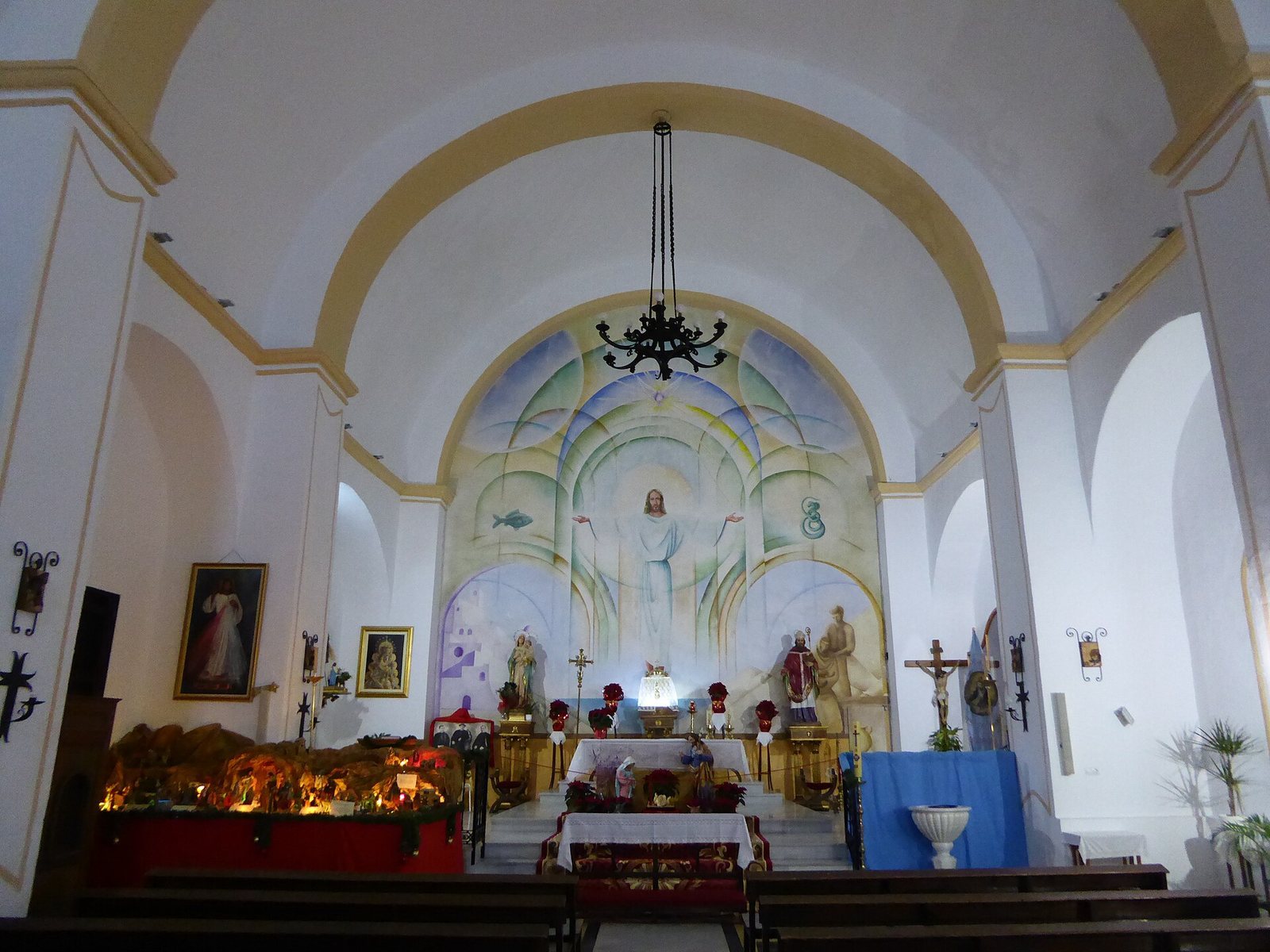
During the Spanish Civil War, the church lost its main altar altarpiece. In the 1980s, German painter Michael Sucker, who lived in Mojácar for nine years, created a fresco for the church. It belongs to the Diocese of Almería, a Catholic district administered by a bishop, and has Spain’s Asset of Cultural Interest designation.
Remains
Layout and construction
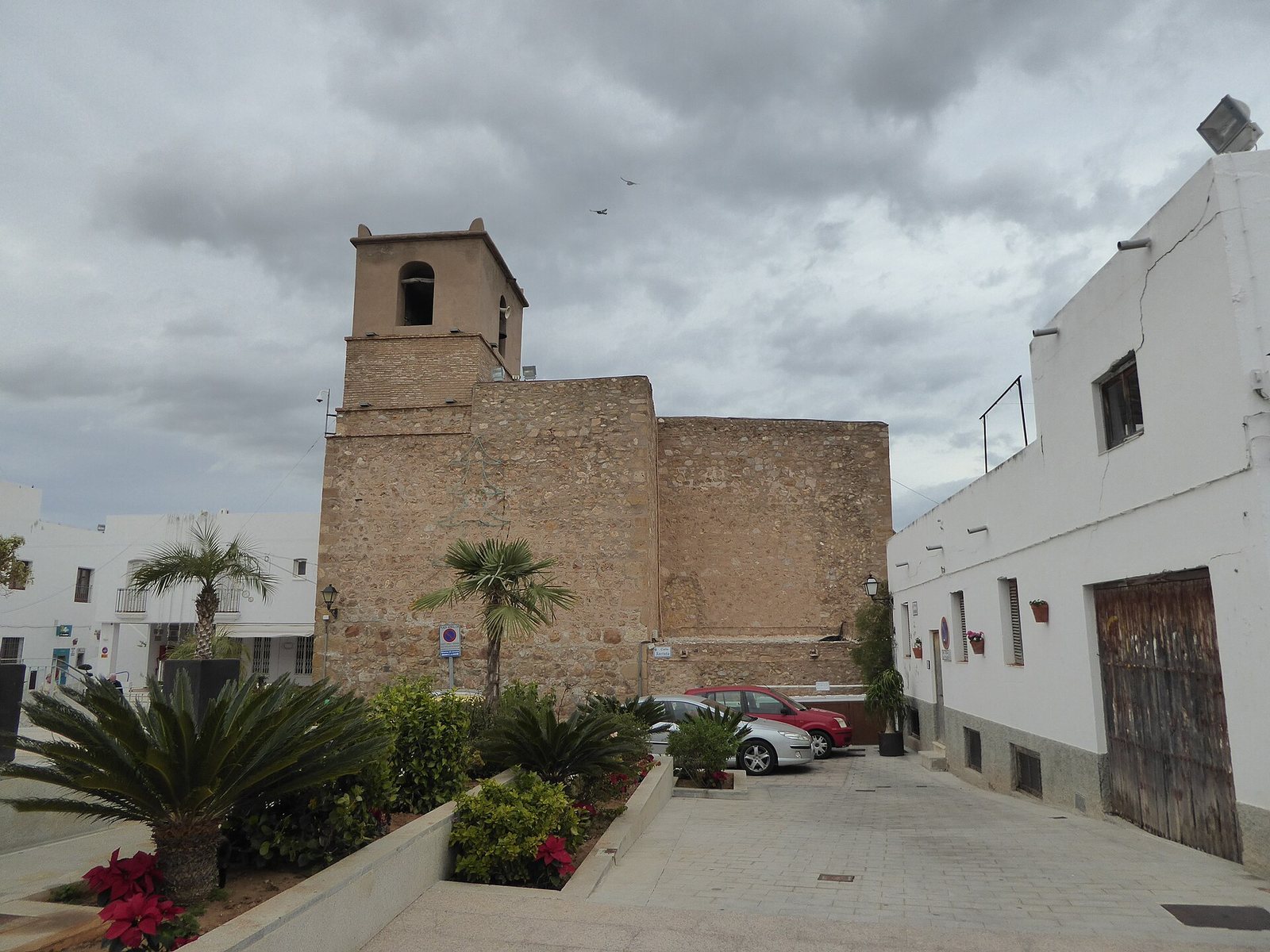
The church has a rectangular plan and a single nave, built of masonry and large dressed stone blocks. Two towers and substantial side supports contribute to its fortress-like character.
Entrance and side walls
The simple entrance has a semicircular arch made from prominent wedge-shaped stones. A small window and a square blind opening sit above it. Large buttresses along the side façade resist the roof’s outward thrust.
Towers
Both towers are square and divided into three levels. Masonry forms their lower sections, while brick is used above. Each top level has four openings with semicircular arches.
Nave and interior
A barrel vault, a continuous curved ceiling, covers the nave. Crosswise arches resting on square pillars support it. The interior contains a fresco and a small collection of religious carvings, including Saint Augustine, a late-antique Christian theologian and bishop, and the Virgin of the Rosary, a Catholic title for Mary associated with the Rosary prayer. Both are patron saints of Mojácar.
Archaeological finds
Restoration work inside and outside the church brought to light ceramic material from the Muslim period and several burials. Excavation of the outer patio yielded fragments of terra sigillata, fine Roman tableware with a smooth, often red surface.