Ulvsunda Castle: A Swedish Estate and Residence
Site at a Glance
- Popularity
- Medium
- Country
- Sweden
- Primary era
- Early Modern
- Eras represented
- Early Modern, Modern
- Civilizations
- Swedish
- Site type
- Domestic
- Remains
- Castle
On this page5 sections
History
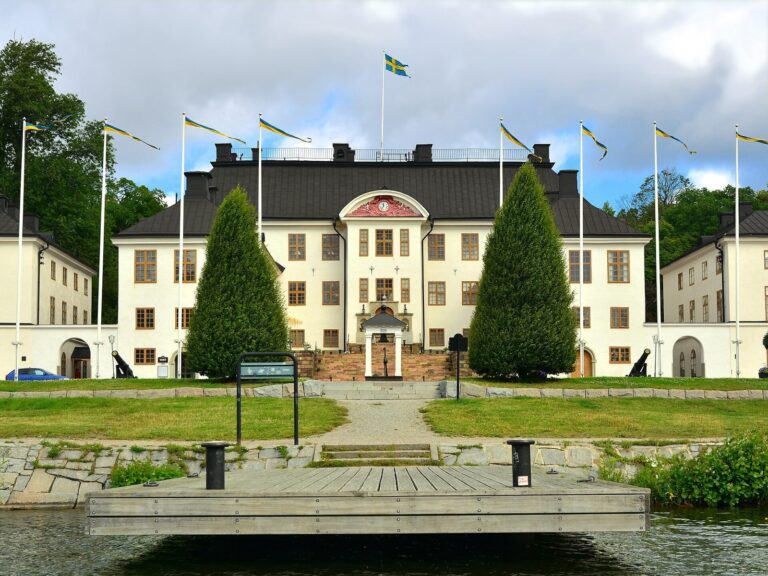
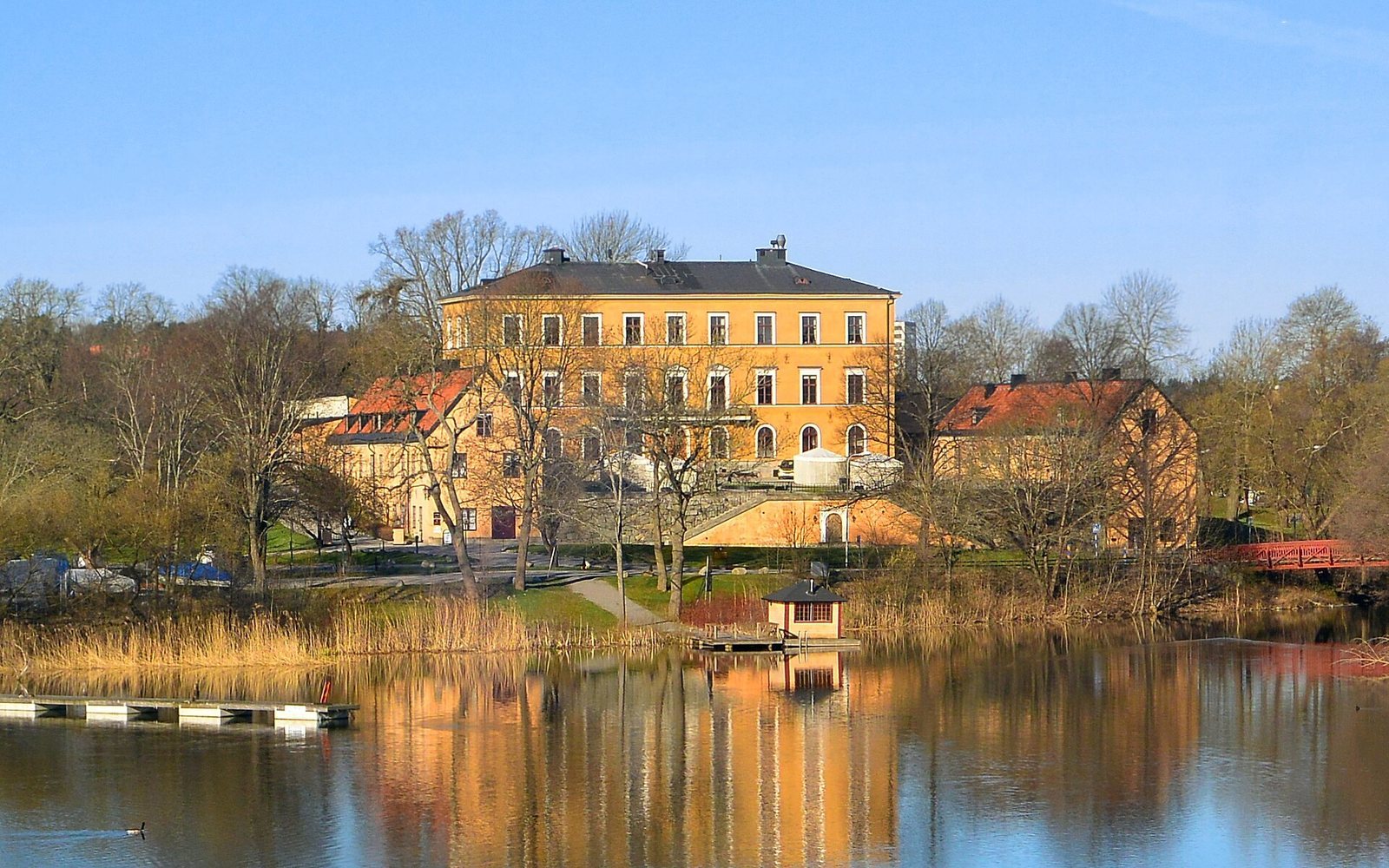
Ulvsunda Castle is a German-Dutch Renaissance estate built for Swedish field marshal Lennart Torstenson in Bromma, western Stockholm, Sweden, between 1644 and 1647. It was completed around the time Torstenson returned from the Thirty Years’ War, a major European conflict fought from 1618 to 1648.
The recorded name
The name Ulvsunda appears on an eleventh-century runestone beside Björn, identified as the estate’s owner. Ulvsunda is the oldest recorded place-name in the Stockholm area, and Björn is Stockholm’s oldest known named resident.
Torstenson and later owners
The castle formed part of a prestige rivalry between Torstenson and the nobleman Åke Axelsson, who commissioned Åkeshov Castle. Torstenson also ordered a palace on Gustav Adolf Square in Stockholm, later converted into the Palace of the Hereditary Prince. His family gave up Ulvsunda during the eighteenth century. Later owners included members of the Bielke, Gyllenkrook, Rudenschöld, and Ruuth families.
Baron von Essen acquired the castle in the early nineteenth century. The Åkerhielm family held it from 1843 until 1902. Gustaf Åkerhielm, Sweden’s prime minister from 1889 to 1891, chiefly used the estate as a summer residence. He was its last noble occupant and died in 1900; his heirs sold most of the property in 1902.
Institutional and later use
In 1905, the Stockholm County Administrative Board purchased the castle for 250,000 kronor and established a care institution there. It served people then classified as mentally ill or intellectually disabled, people with alcohol dependence, and people categorized at the time as vagrants. The institution closed in autumn 1972. Renovation led by Nils Sterner then adapted the building for use as a county training center.
The castle returned to private ownership in 1999 and was renovated again in 2000. A hospitality company, Svensk Inredning Viking, acquired it in 2003. It has since been used as a hotel and conference venue, with exhibition space, and is managed by Fazer Konferens.
Remains
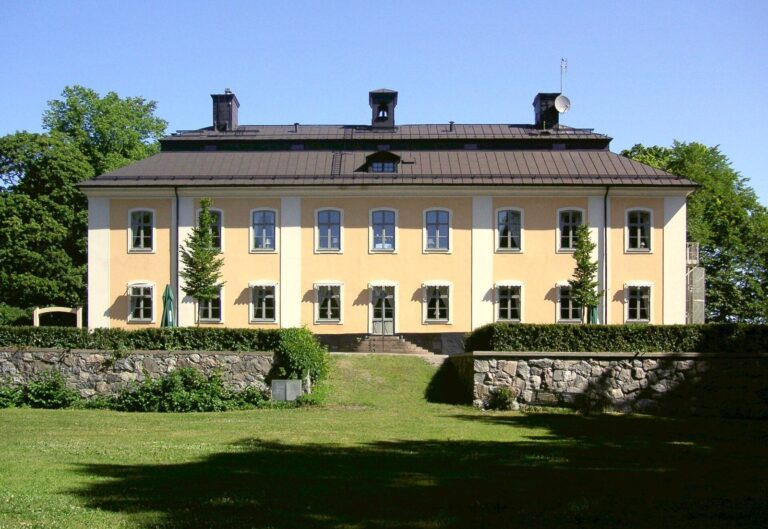
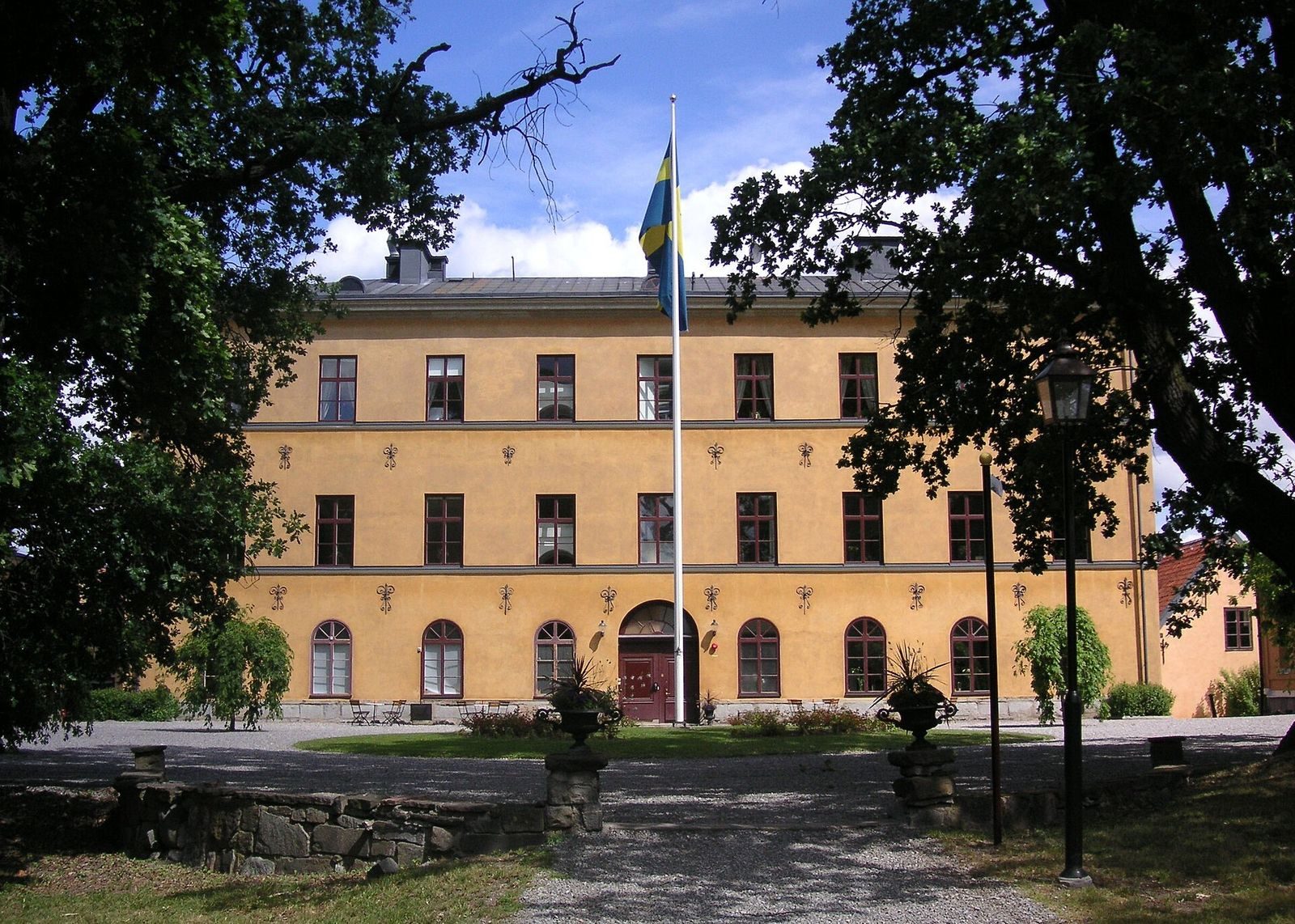
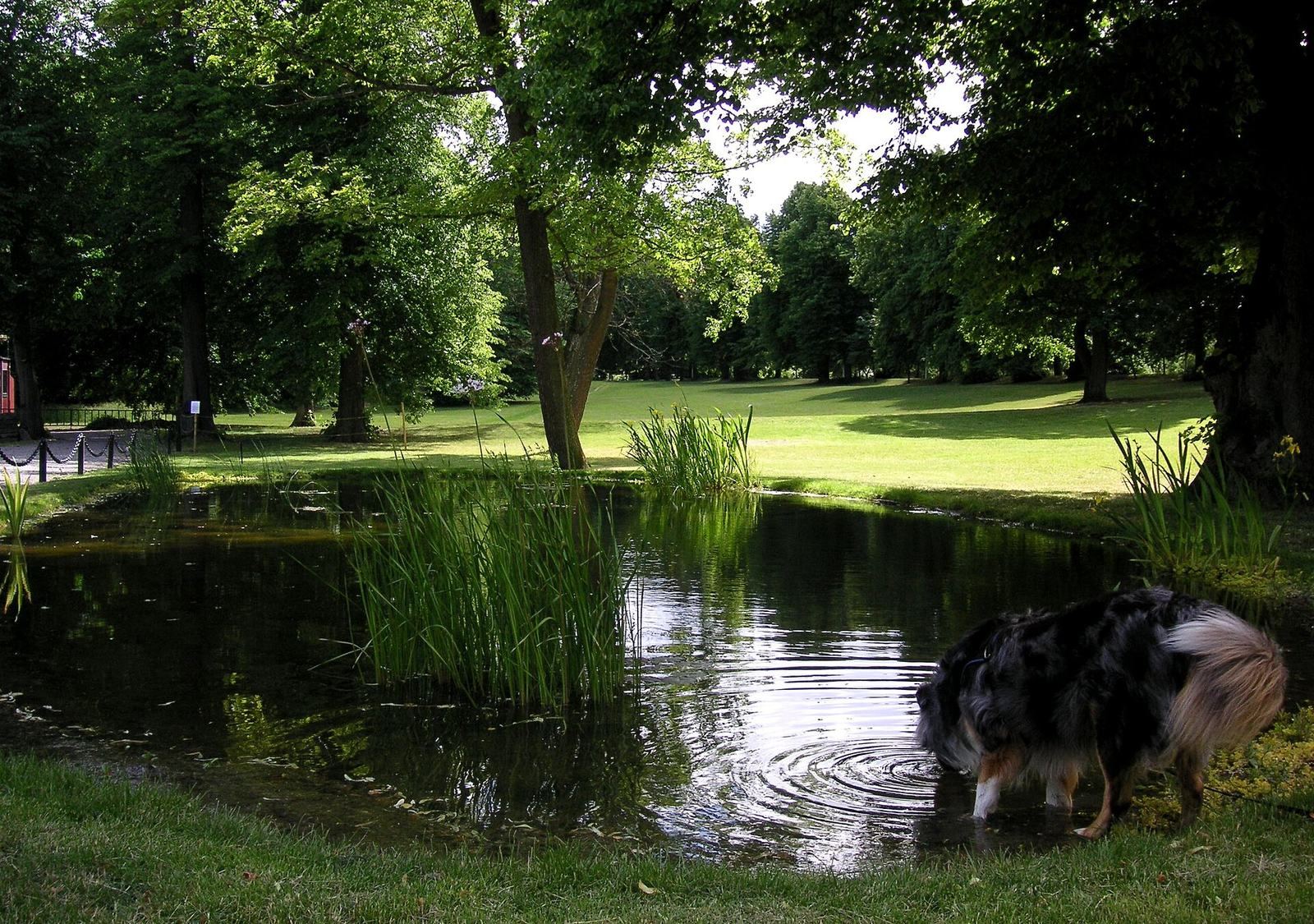
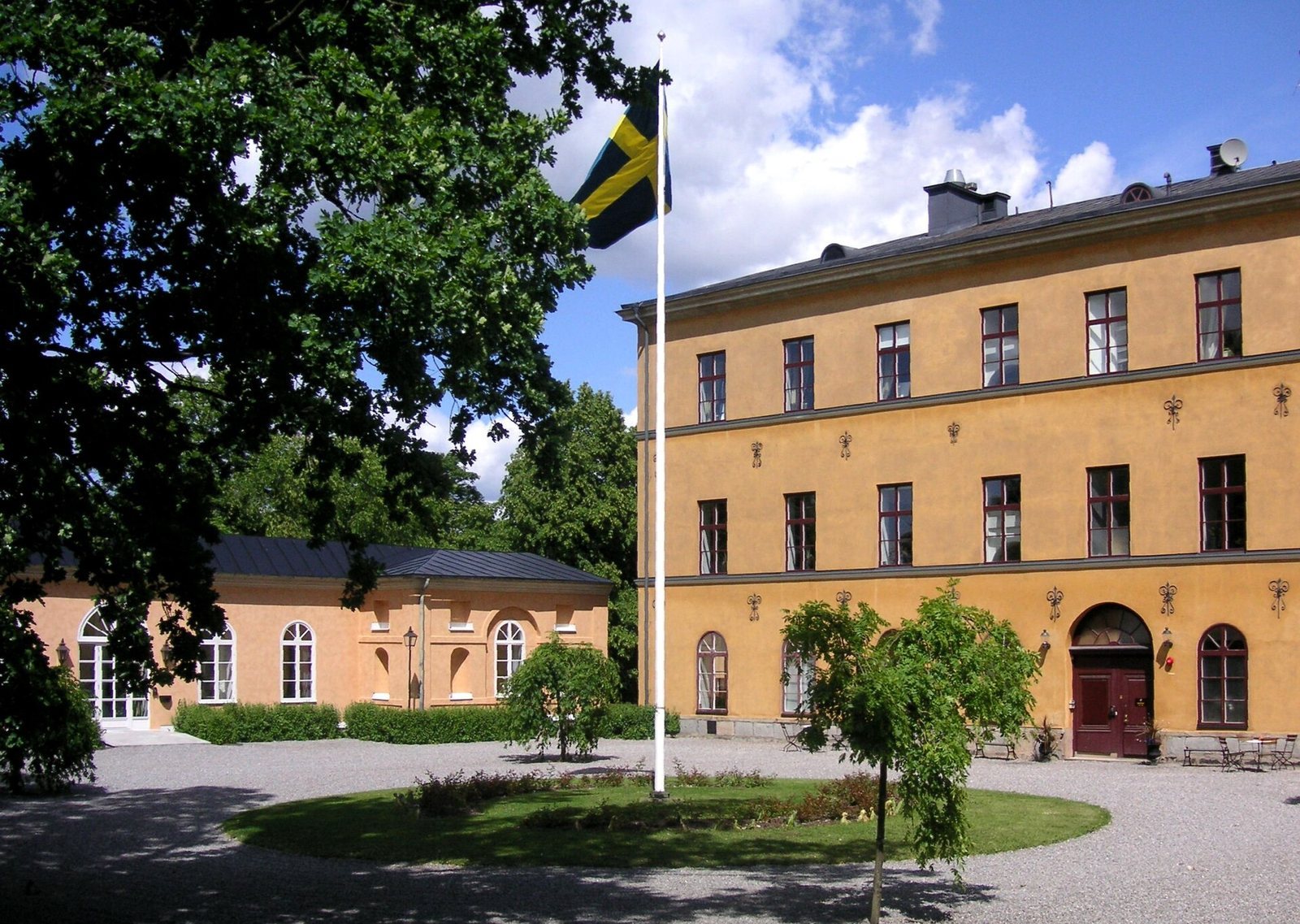
The castle’s main building has four wings, and the estate includes a park laid out in the seventeenth century. The building originally had a steep roof covered in copper and exterior frescoes showing armed Roman warriors, including figures carrying spears. In the early nineteenth century, von Essen’s alterations replaced the copper roof with tiles, which remain visible. The façade paintings were covered with plaster during renovation, and the building’s present appearance dates to the 1830s. The main building contains conference and dining rooms, while the wings accommodate guest rooms.