Tosterup Castle: A Late-Medieval Fortified Residence in Sweden
Site at a Glance
- Rating
- 4.4
- Popularity
- Very Low
- Country
- Sweden
- Primary era
- Early Modern
- External website
- Open
- Eras represented
- Medieval, Early Modern, Modern
- Civilizations
- Danish, Swedish
- Site type
- Domestic
- Remains
- Castle
On this page9 sections
History
Medieval origins and the Brahe family
Tosterup Castle is a late-medieval fortified residence in Tosterup, Sweden. Its main building was completed around 1500 under Thyge Axelsen Brahe, although the oldest fortified parts may be earlier. The estate is known both for its long succession of owners and for Tycho Brahe’s childhood connection to the castle.
Several kilometres west of Tosterup lie the remains of an older fortification called Vallen, which may have preceded the castle. Tosterup’s earliest known owner was Axel Eskildsen Mule, who lived around 1330. The estate is said to have passed through his daughter Barbara to her husband, Torkild Nielsen Brahe. After an accusation of murder, Torkild fled and lost his lands. A claim that a grandson, Axel Pedersen, returned Tosterup to the Brahe family around 1440 is disputed.
The later succession includes Anders Jacobsen Grim and his son Jens, followed by Peder Torkildsen Brahe, Peder’s son Axel, and Axel’s son Peder. Peder’s son, Axel Pedersen Brahe, held the estate from 1441 to 1487. His ownership was followed by Thyge Axelsen Brahe (1487–1523), Jørgen Thygesen Brahe (1523–1565), Otte Thygesen Brahe (1565–1571), Jørgen Ottesen Brahe (1571–1601), Tønne Jørgensen Brahe (1601–1611), Knud Ottesen Brahe (1611–1615), Axel Ottesen Brahe (1615–1616), and Thyge Axelsen Brahe (1616–1640).
The date of the earliest fortified construction is uncertain. It may have followed 1483, when King John, known in Danish as Hans and ruler of Denmark, Norway, and Sweden, lifted the nobility’s ban on building fortified houses. The main building was completed around 1500.
Tycho Brahe and the sixteenth-century estate
Tycho Brahe, the Danish nobleman and astronomer, grew up at Tosterup with his uncle Jørgen Ottesen Brahe. Jørgen supported his nephew’s studies in Latin, law, and statecraft, rather than the military education Tycho’s father, Otte, preferred. It has been suggested that Tycho first became interested in observing the stars from the castle tower.
Jørgen Ottesen inherited Tosterup in 1571, expanded the estate, and arranged repairs to Tosterup Church with the intention of making it a family mausoleum. He and his wife died of plague at Gunnerstorp in 1601 and were buried there. The Brahe male line retained Tosterup until Thyge Axelsen Brahe’s death in 1640.
Later owners
After 1640, the estate passed to Otte Tagesen Thott, also known as Tage Thott. In 1656 it went to his daughter Jytte Thott, who was married to Jörgen Krabbe. Krabbe was executed in Malmö in January 1678 after being condemned for supporting the Snapphanar, pro-Danish irregular fighters in the seventeenth-century conflicts over Scania, and the Danish cause. His widow lost Tosterup in 1688.
That year, Tosterup passed to Rutger von Ascheberg, a Swedish military commander who served as governor-general of Scania. The estate later descended through von Ascheberg’s daughter to his grandson, Colonel Rutger Barnekow, who died in 1772. Barnekow was an active builder at Tosterup. Johan Sparre af Söfdeborg bought the property from Barnekow’s heirs in 1783.
Johan’s daughter Sophie married Count Carl August Ehrensvärd, who lived from 1745 to 1800, and later married Lieutenant General Isaac Lars Silfversparre in 1803. Silfversparre bought Tosterup from his mother-in-law in 1810 and sold it in 1833 to his stepson, Count Gustaf Karl Albert August Ehrensvärd. After Gustaf’s death in 1860, the estate passed to his son, Foreign Minister Albert Ehrensvärd the Elder, who died in 1901. Tosterup remained with Ehrensvärd descendants.
Remains
The castle complex
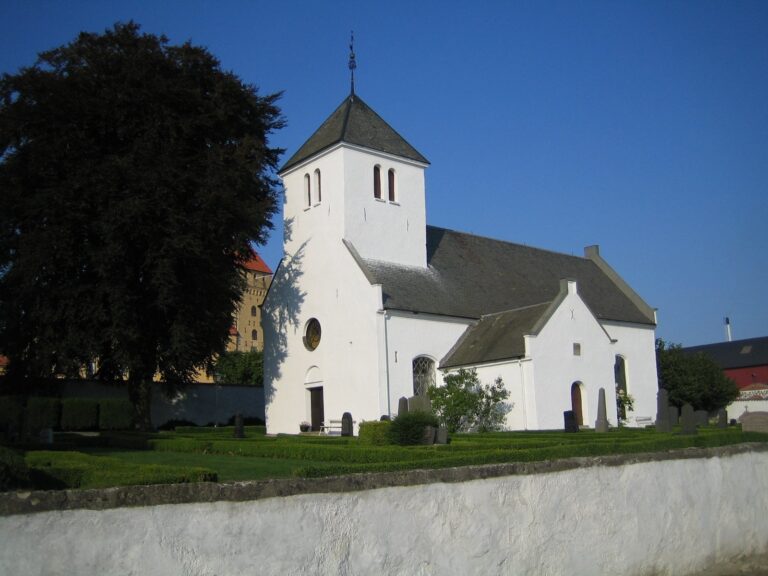
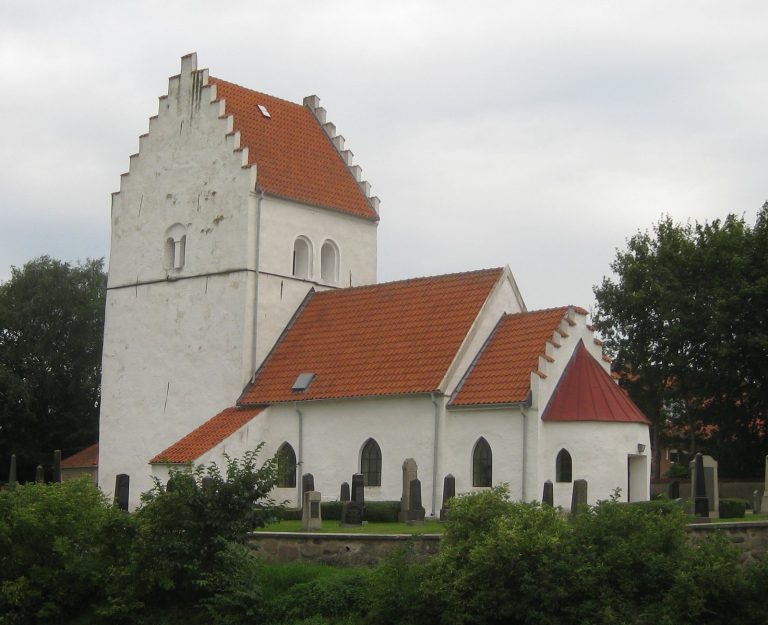
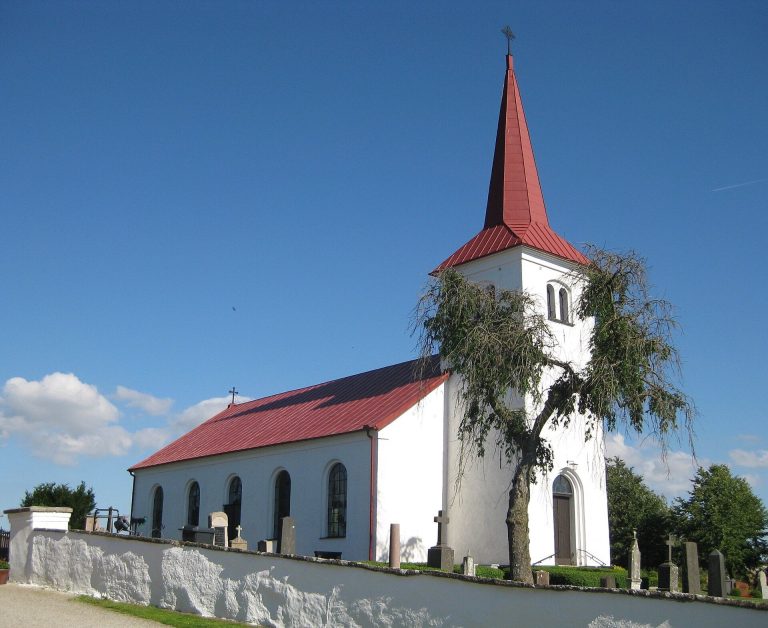
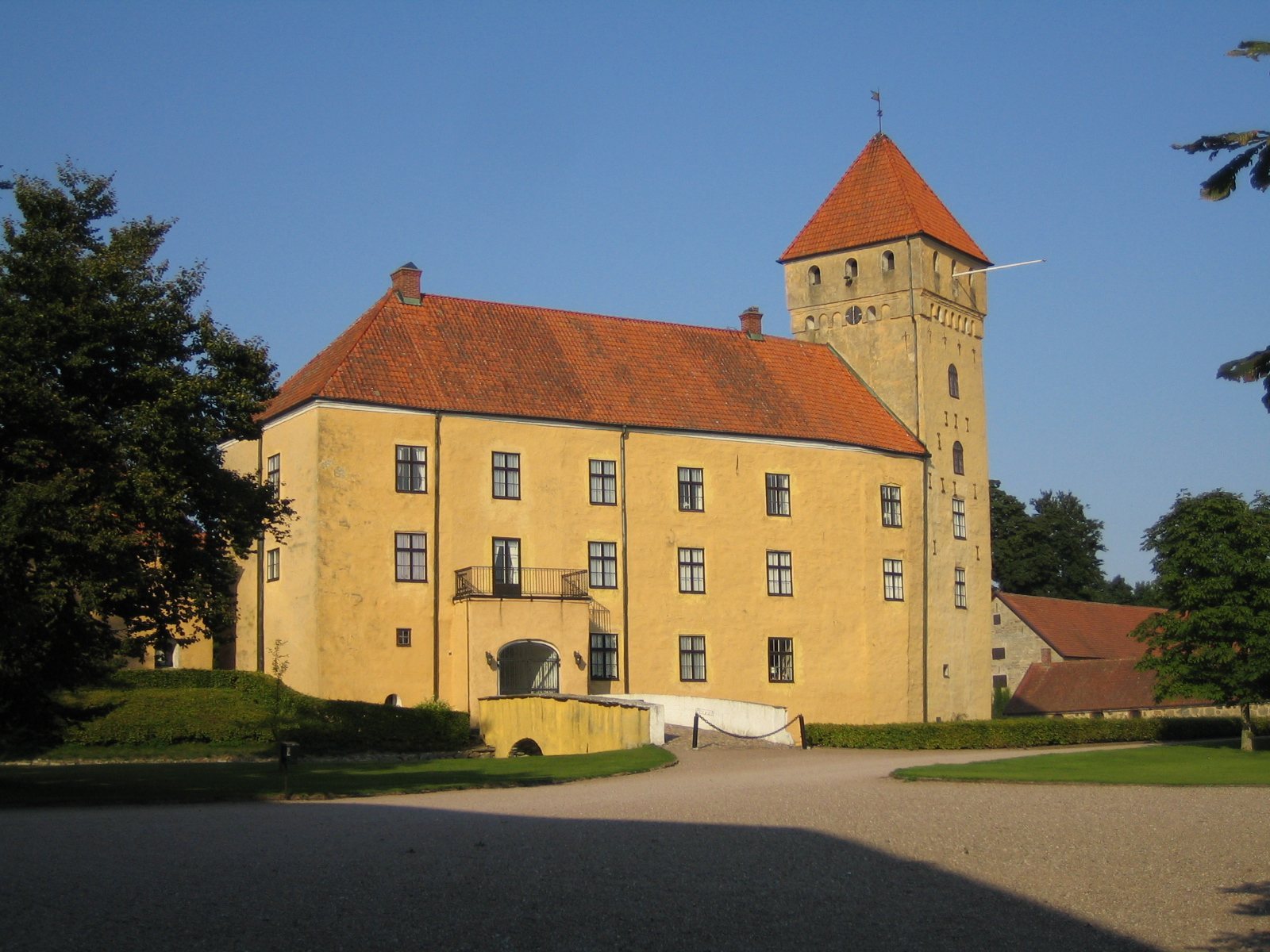
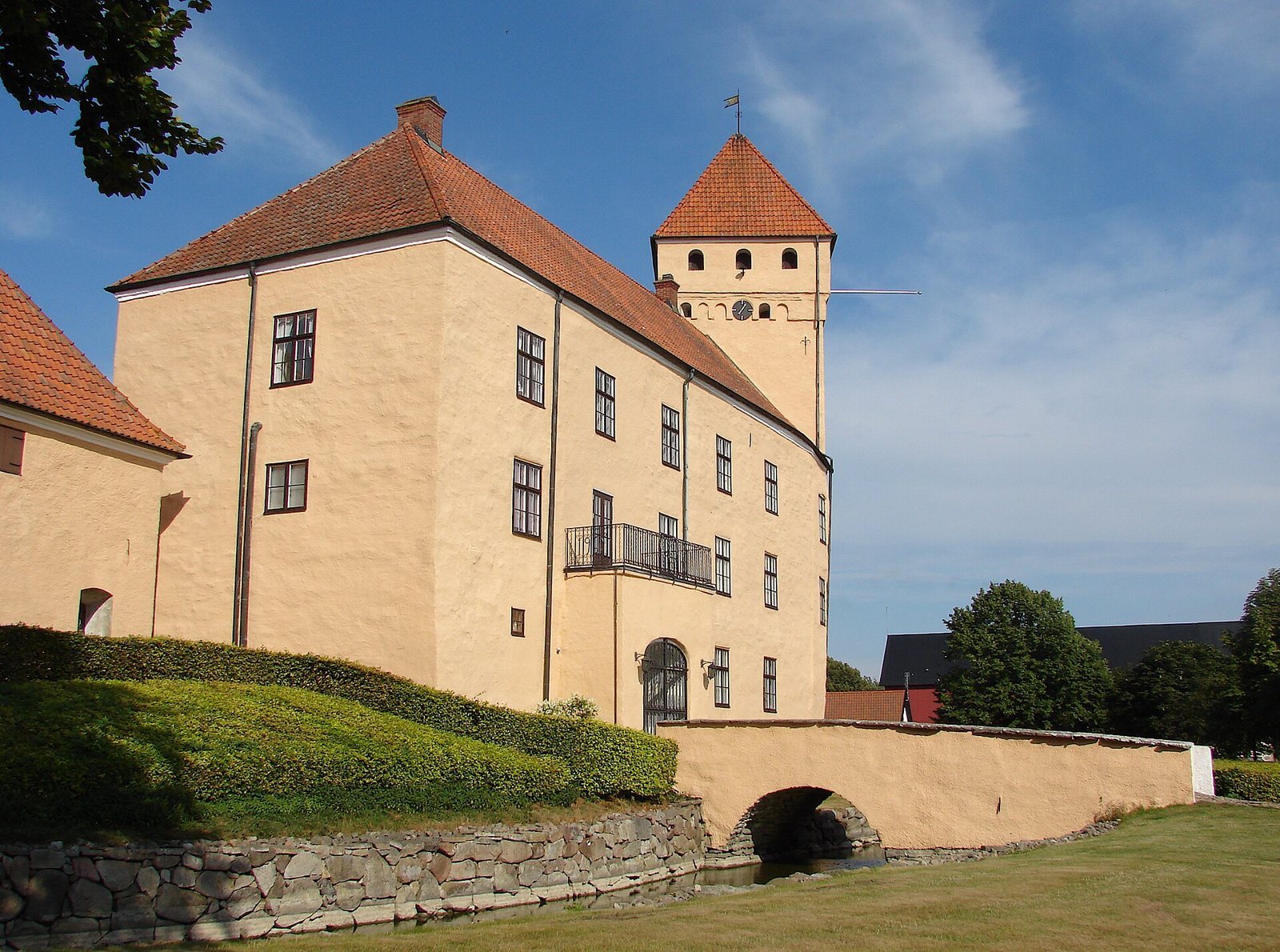
Tosterup is a three-winged castle enclosed by a moat, with a courtyard at its centre. The main building, tower, and courtyard structures form the principal parts of the complex, while Tosterup Church stands beside it. The buildings preserve features from different periods of construction and alteration.
Main building and tower
The main building has three storeys, and its exterior largely reflects work from the 1760s. Despite additions and changes over the centuries, the castle retained an old-fashioned appearance. At the southeast corner stands a square, five-storey defensive tower. It was originally free-standing and was connected to the castle in the mid-eighteenth century. Its construction is attributed to Jørgen Thygesen Brahe, who died in 1565, though the tower’s date is uncertain.
For a time, the tower also served as a sea mark. A lantern there warned seafarers of sandbanks off Sweden’s southern coast, until Sandhammaren Lighthouse took over the warning function.
Entrance and moat
The castle was probably first approached from the west. In the sixteenth century, builders cut a vaulted entrance passage through the main building, leading to a gate tower. The lower part of that tower survives. A drawbridge once crossed the moat; in the nineteenth century it was replaced by the fixed stone bridge now at the entrance.
Courtyard wings and farm building
Barnekow’s building works included a stair tower on the north side of the main building and two wings around the courtyard. Barnekow’s Barn, an agricultural building from his period, survives beside the west side of the present castle gate.