Fischbach Castle: A Late Renaissance Estate and Former Inn in Eisenach
Site at a Glance
- Popularity
- Low
- Country
- Germany
- Primary era
- Early Modern
- Eras represented
- Early Modern
- Civilizations
- Holy Roman Empire
- Site type
- Domestic
- Remains
- Castle
On this page6 sections
History
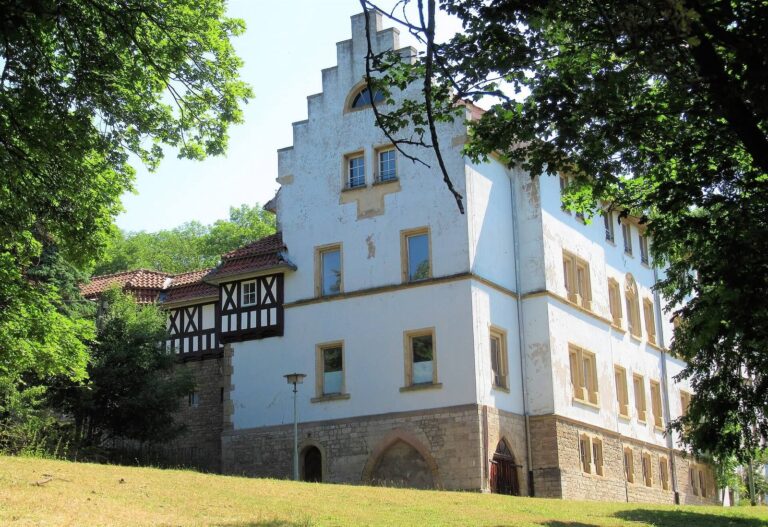
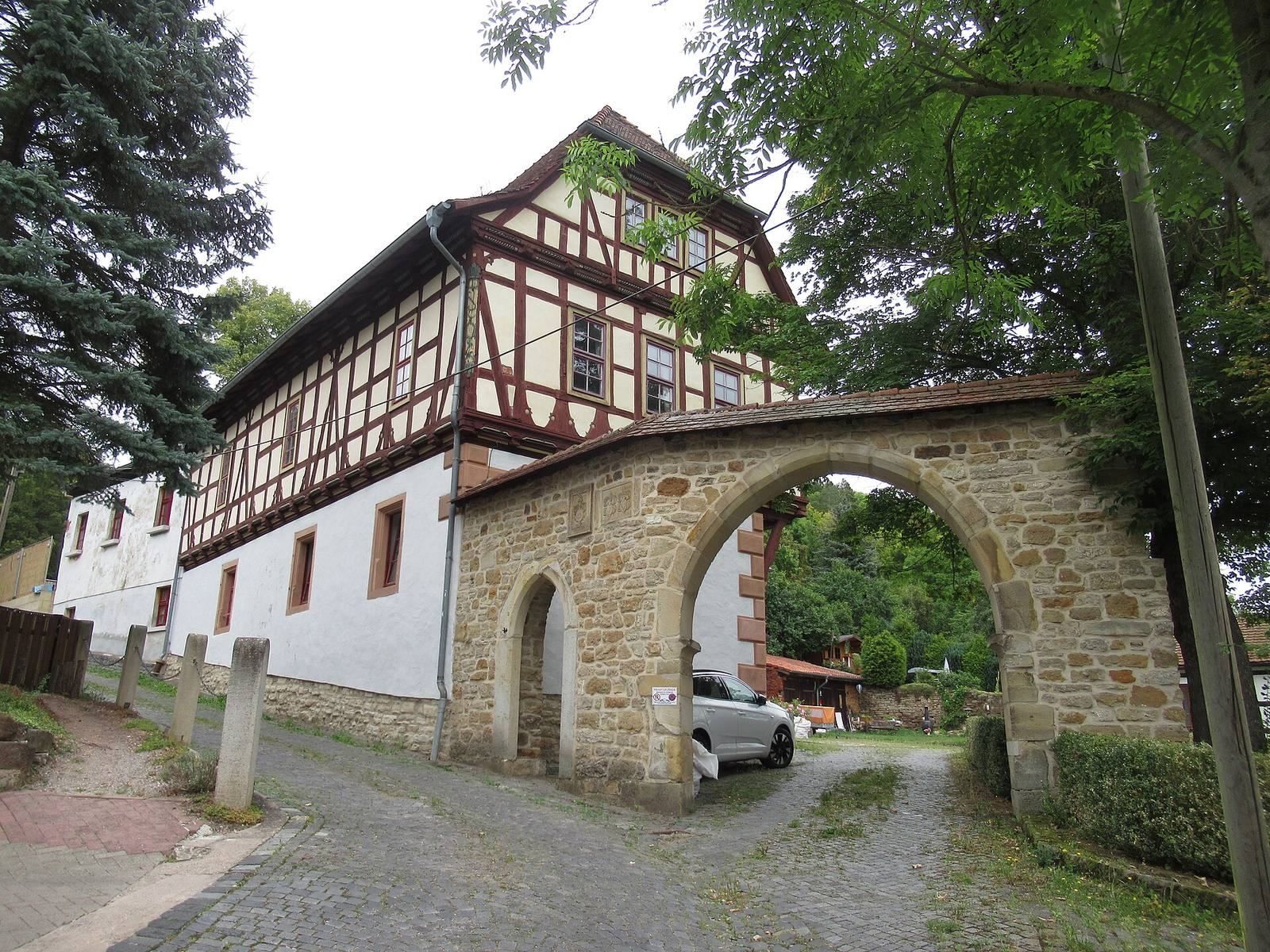
Fischbach Castle is a timber-framed estate in the Fischbach district of Eisenach, Germany. Its early-17th-century remodelling under Duke Johann Ernst, in the Late Renaissance style, shaped much of the building that survives today.
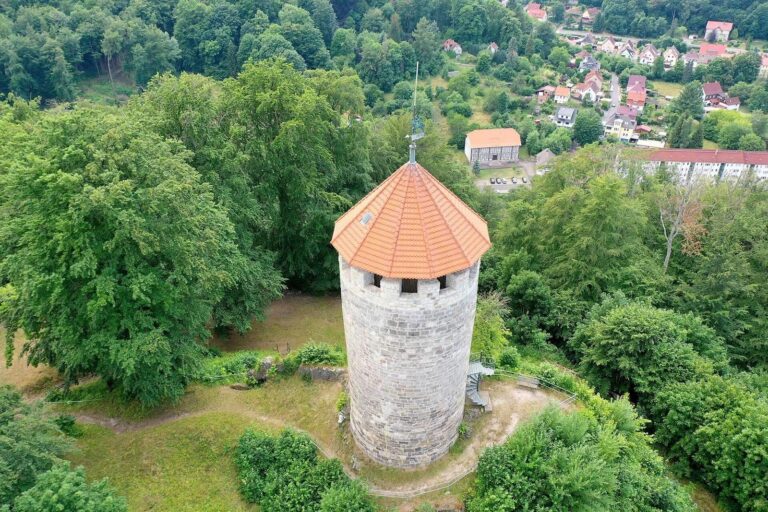
Medieval estate and Malittenburg
The village, referred to as Vispach in 1269, belonged to the landholdings of Eisenach’s Monastery of St Nicholas until the 16th-century Reformation, a religious movement that reshaped Western Christianity. An estate at the start of the hollow way climbing toward Malittenburg may have served as the monastery’s farm.
In the mid-13th century, during the Thuringian-Hessian War of Succession, a conflict over who would inherit the Landgraviate of Thuringia, a knight from nearby Stockhausen built Malittenburg above the village. This wooden castle occupied a projecting ridge and was defended by ditches and ramparts.
Ducal remodelling and changes of ownership
The Schellhase brothers sold the estate to Eisenach citizen Georg Kley in 1613. During the transfer, Duke Johann Ernst took possession of it and gave it the following year to his wife Christine, daughter of the landgrave of Hesse-Kassel, a territorial prince. Johann Ernst commissioned Hans Weber, a master builder from Hersfeld, to remodel and enlarge the property in the Late Renaissance style.
Before 1684, Christine’s heirs sold the estate to Heinrich Gebhard, a citizen of Eisenach. It later passed by purchase from the Gebhard family to Duchess Christine Juliane, then returned to the Gebhards in 1704. In 1719, the family had to sell again. The property was divided, and the town municipality received the largest share.
Inn and modern changes
By the 18th century, the castle served as an inn. A description from that century mentions guest rooms, a dance hall, a covered bowling alley and a garden with shaded arbors. On Sundays after church, young people from Eisenach came in groups to dance; the innkeeper was praised for his hospitality and for serving coffee and beer at low prices.
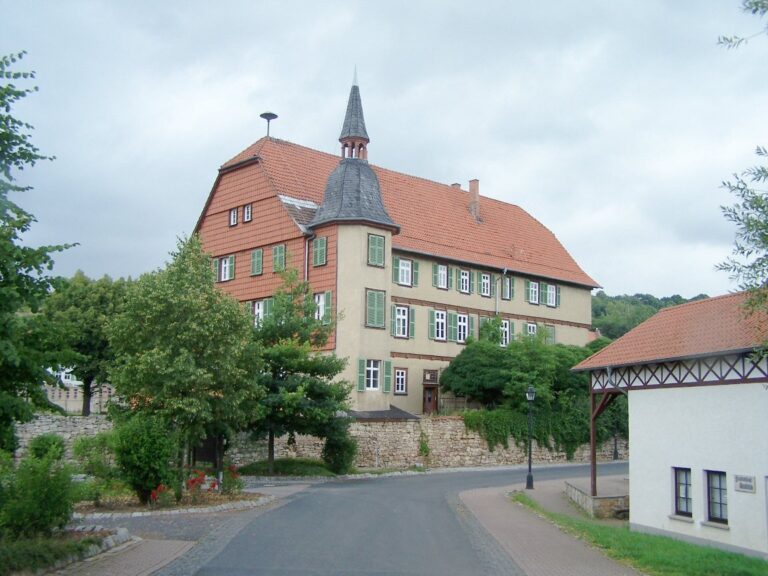
Around 1910, while the property belonged to Otto Liebetrau, its buildings and inn were remodelled. After 1980, the Eisenach branch of the state monument-preservation institute took over the deteriorated complex, renovated it and used it for offices, an archive, training rooms and workshops. Parts also hosted exhibitions, concerts and theatrical performances. The property was privatized after 1989.
Remains
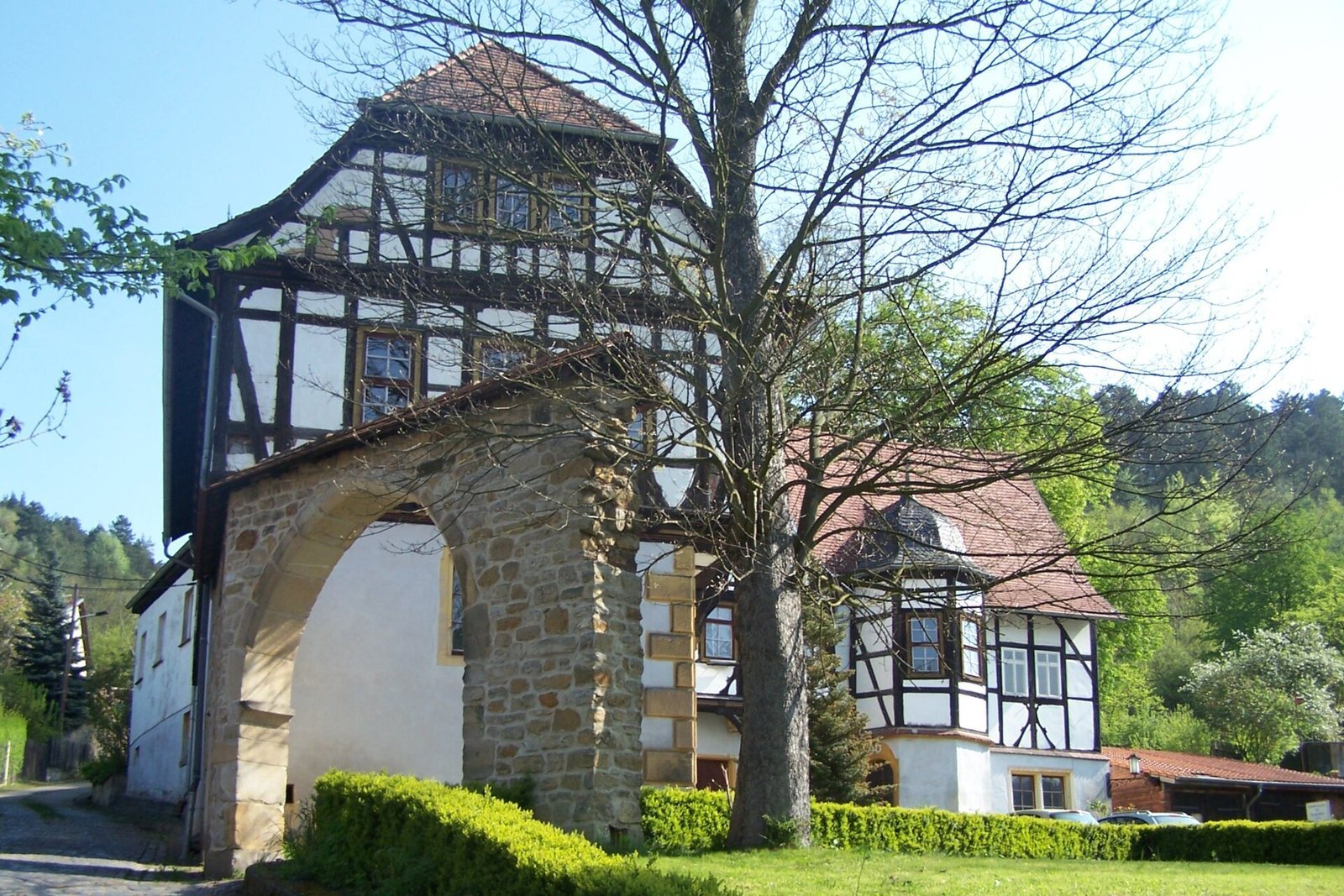
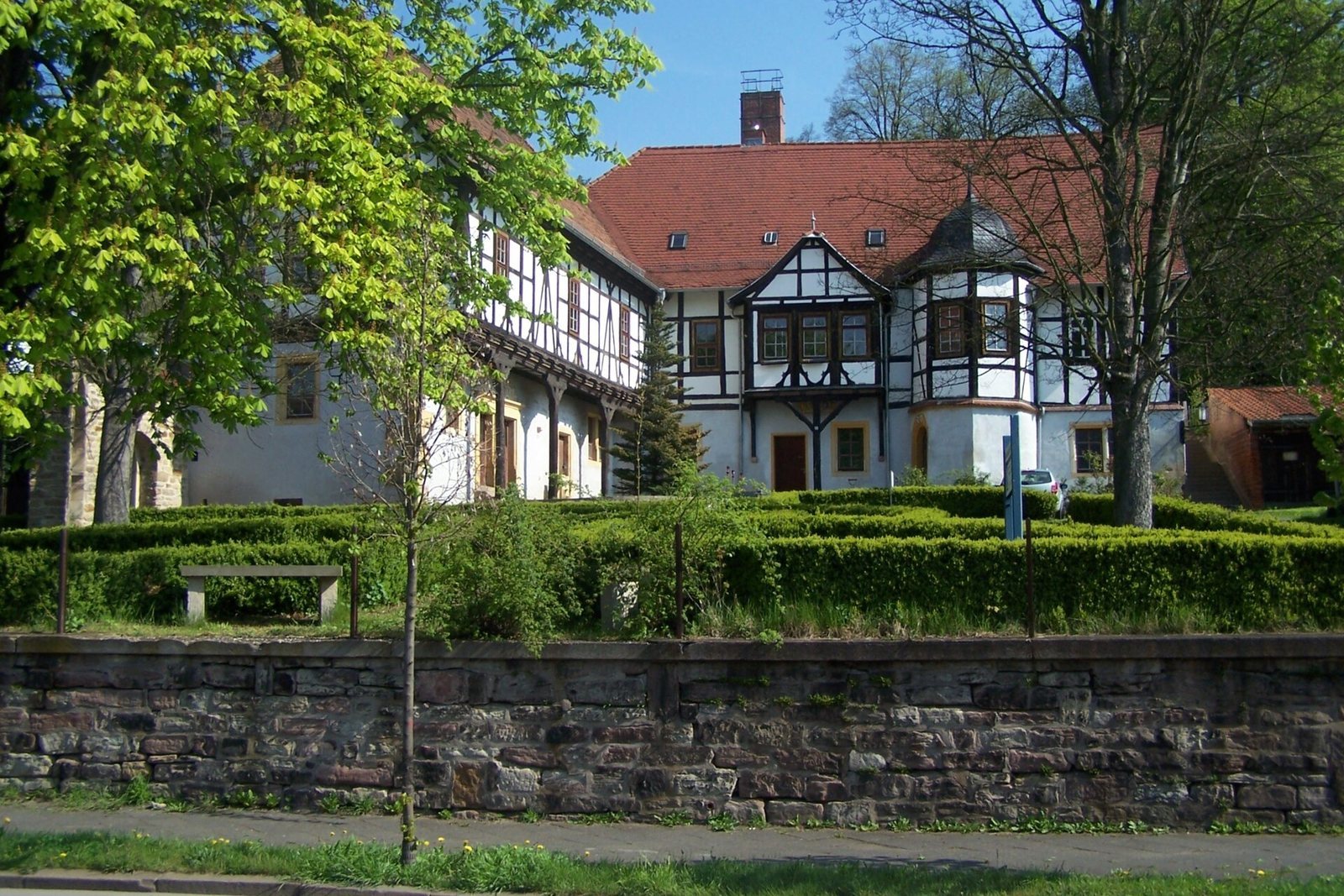
The complex combines a stone ground floor with a richly decorated half-timbered upper storey. Its main building stands in the southern part of the site, with a stair tower and side wing. The ends of several beams facing the courtyard carry the carved date 1624, while coats of arms decorate the main entrance portals.
Courtyard and former service buildings
A small park was laid out in the courtyard. Carriage sheds and service buildings once stood behind the castle, screened from view by the main building. A tall defensive wall and a portal were probably removed during the remodelling around 1910. A gateway arch, kept in storage and later re-erected on Malittenburgweg, marks the former line of the wall.