Zabal Castle: A Military Fortress in Sakaka, Saudi Arabia
Site at a Glance
- Popularity
- High
- Country
- Saudi Arabia
- Primary era
- Early Modern
- Eras represented
- Early Modern
- Civilizations
- Unclassified
- Site type
- Military
- Remains
- Castle
On this page6 sections
History
Origins and military use
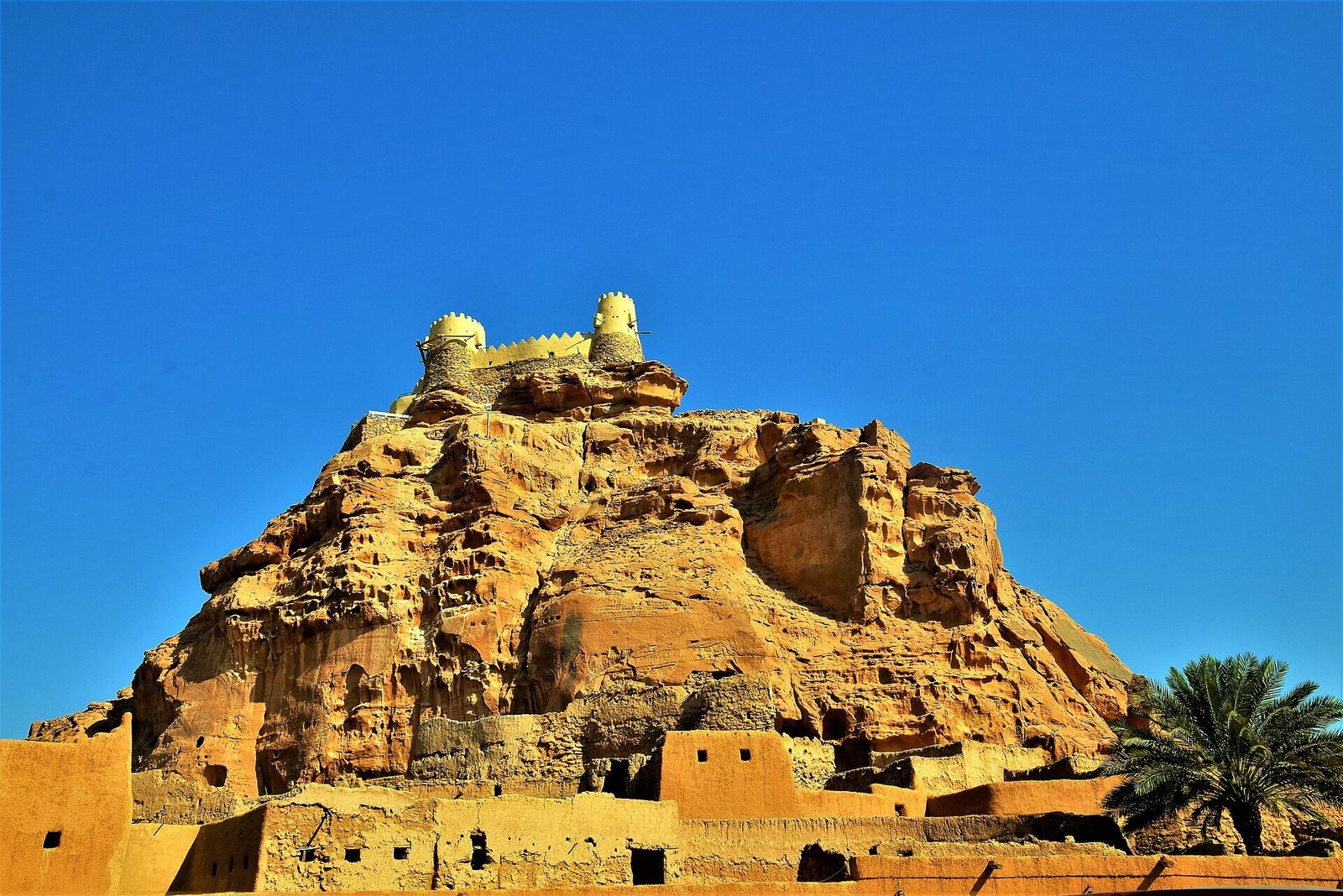
Zabal Castle is a hilltop fortress at the northwestern edge of Sakaka, Saudi Arabia. The castle is described as about 900 years old, while the present fort is estimated to be roughly 400 years old. It may have been built above an earlier structure from the Nabataean period, spanning the first century BCE through the first century CE. The Nabataeans were an ancient Arab people who established a kingdom in the region. Saudi historian and geographer Hamad al-Jasser interpreted the remains as evidence of construction before Islam.
The fortress served a military purpose and protected Sakaka for centuries. Its defenses and difficult approach helped it perform that role. Local tradition says it resisted invaders who sought to destroy it because of its strategic importance. Finnish traveller and scholar Georg August Wallin described Zabal as a ruined fortress, while English travel writer Lady Anne Blunt characterized it as an old castle overlooking and commanding the city.
Restoration
Restoration efforts involved the Archaeology Division of the Al-Jouf Education Administration, amid the Ministry of Education’s interest in archaeological sites in the region. The Saudi Commission for Tourism and National Heritage completed a restoration in 2020.
Remains
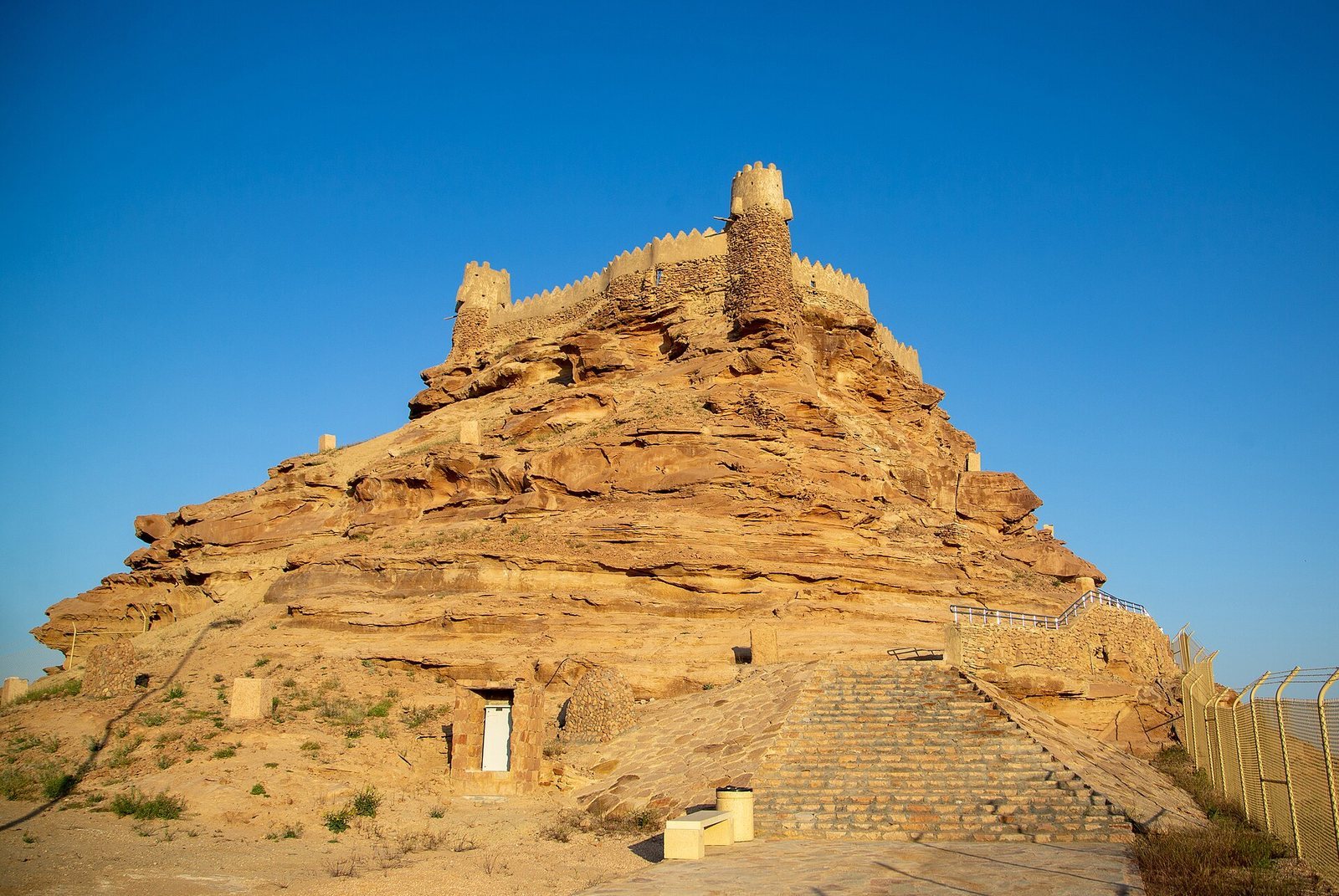
The remains form a compact hilltop fortress enclosed by a wall of stone and clay. A winding road approaches the fort, while a stone stairway climbs the mountain to its entrance.
Fortress and courtyard
Four cylindrical towers stand at the fort’s corners, rising about five metres above its floor. The fort contains two rooms and a small main entrance on its southeastern side, beside the southeastern tower. A square cistern cut into the rocky floor measures 1.6 metres on each side and one metre deep. A separate basin carved into the courtyard collected water.
Water systems and nearby rock features
Sisira Well lies near the castle. Attributed to the Nabataean period, it is carved into rock and has an interior staircase descending to the bottom. An opening there leads to a channel for carrying water around the city. A separate underground tunnel, about three kilometres long, connects the Al-Qasr area with Al-Laqa’et, east of Sakaka. Prince Mountain, west of the castle, contains rock inscriptions and drawings.