Alfriston Market Cross: A Medieval Market Marker in Sussex
Site at a Glance
- Popularity
- Very Low
- Country
- United Kingdom
- Primary era
- Medieval
- Eras represented
- Medieval, Modern
- Civilizations
- British, English
- Site type
- Civic
- Remains
- Monument
On this page7 sections
History
Alfriston Market Cross, a public marker associated with a market, stands in Waterloo Square, Sussex, in the United Kingdom. Probably erected in the early 15th century, it is one of two surviving market crosses in Sussex, the other being the elaborate example at Chichester.
Market rights and probable construction
On 24 May 1406, Henry IV granted Alfriston a market while it formed part of the Duchy of Lancaster, the historic estate and title held by the English monarch. The charter described Alfriston as “the king’s town” and granted a Tuesday market to the king and his heirs as Dukes of Lancaster. It also authorized two annual fairs, held on the vigils, or days before feast days, and feast days of Andrew on 30 November and Philip and James on 1 May. The cross was probably erected around the time of this grant.
Alterations and damage
The cross was changed during the 19th century, although the timing of particular alterations is uncertain. Canadian soldiers damaged it while climbing it during both the First and Second World Wars, and it was repaired. On 15 November 1955, a lorry weighing three tons struck and broke the monument. Alfriston Parish Council chose to restore it, and the local firm H. Wilson carried out the work. Delayed by bad weather, the restoration was complete by August 1956.
Protection and historical interpretation
The cross was designated Grade I on 13 October 1952, the highest category of listed-building status in England, and added to the National Heritage List for England. A 2008 assessment considered it a possible survival from the late medieval period, while raising the question of whether it remained the same object after so much of its fabric had been replaced.
Remains
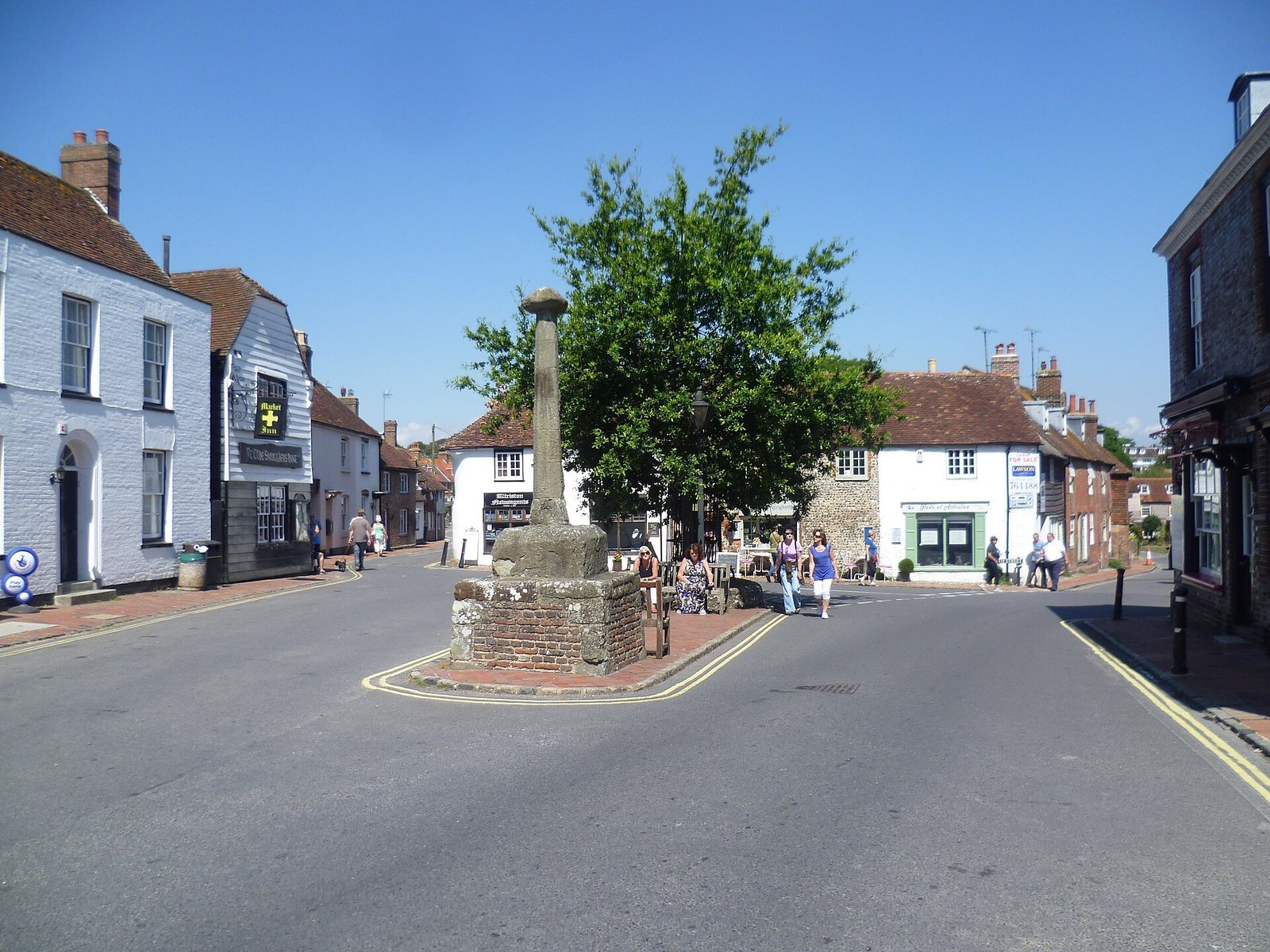
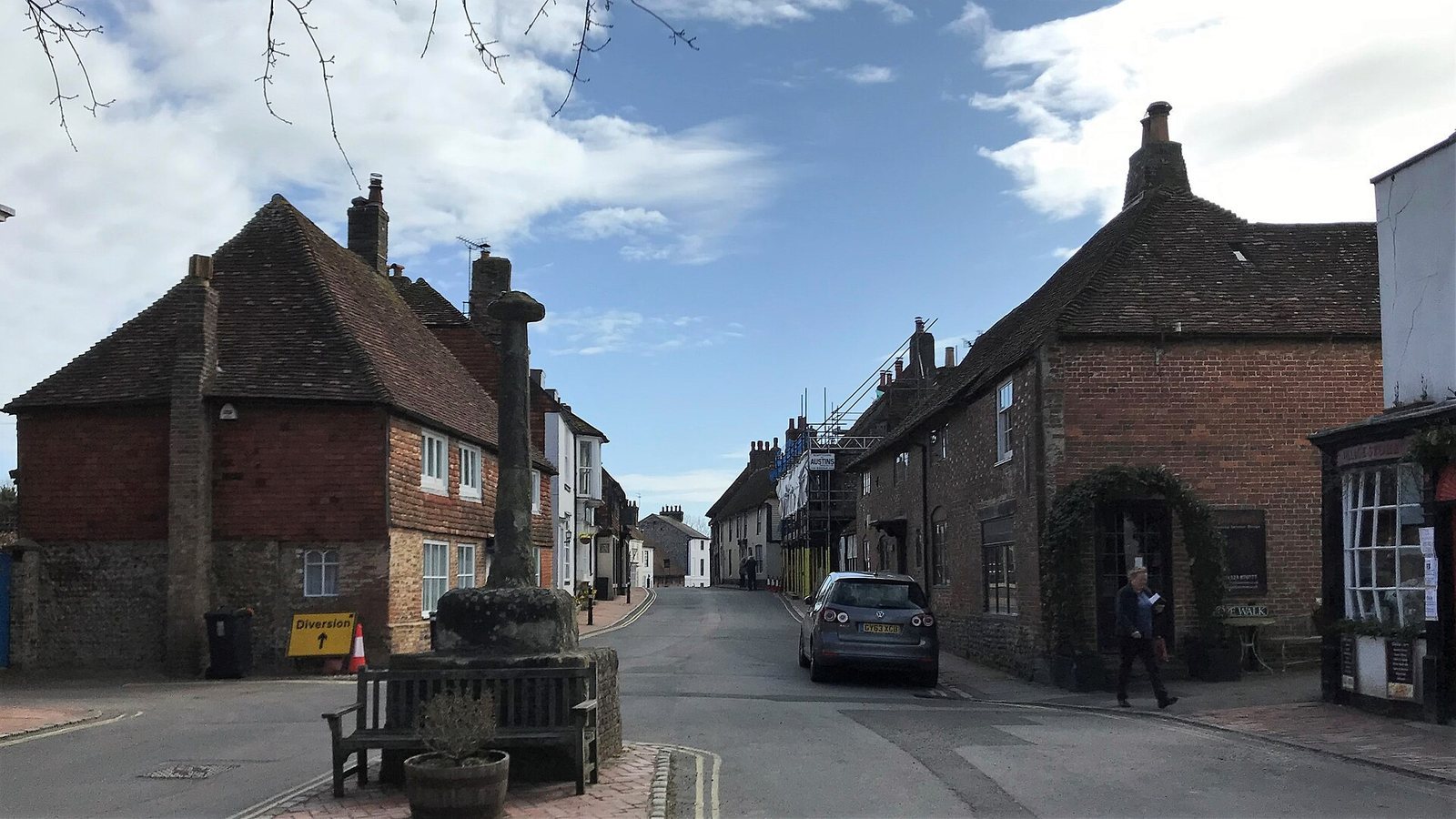
The monument survives as a stone base and shaft set on a brick plinth, with a cornice-like stone at the top. Its vertical arrangement preserves the form of a market marker. The cross was built of sandstone, which may originally have come from the seashore at Eastbourne.
Base and upper stone
Very little of the original fabric may remain. The stone socket that held the shaft and the lowest stone of the shaft are possible medieval components. The dates of the upper stone and base are uncertain. The official listing assigns the cornice-like cap to 1833, when the earlier steps were removed; another possibility is that the steps were removed and the present brick base built in the 1870s, during restoration of St Andrew’s Church. The upper stone may represent a “shepherd’s crown,” a flint sea-urchin fossil that downland shepherds traditionally carried for good luck.
Rebuilt shaft
Photographs from before 1900 show the stone shaft intact, while later postwar images show rough repairs at a break. In the 1955–56 rebuilding, replacement sandstone came from an ancient tithe barn, a building for storing church payments, on land belonging to Colonel R. V. Gwynne in the grounds of Wilmington Priory. The barn’s stone was considered a close match in colour and texture. The rebuilt shaft is thicker than its worn predecessor, and its shape follows the surviving base and upper stone. A solid concrete foundation was placed inside the brick plinth to lessen damage from future accidents, and a metal core was retained within the shaft.