Schloss Stauff: A Renaissance Castle in Austria
Site at a Glance
- Popularity
- Very Low
- Country
- Austria
- Primary era
- Early Modern
- Eras represented
- Medieval, Early Modern
- Civilizations
- Habsburg, Holy Roman Empire
- Site type
- Domestic
- Remains
- Castle
On this page5 sections
History
Schloss Stauff is a Renaissance castle on the right bank of the Vöckla in Austria, near Frankenmarkt railway station. Renaissance architecture drew on renewed interest in classical forms during a European period that began in the late Middle Ages.
Early records and noble status
Around 1450, the property was known as the Huntsreinermühle and belonged to the brothers Siegmund and Wolfgang Forster of Forstenreith and Hehenberg. Hans Heinrich Geumann was recorded as its owner in 1559.
In 1578, Emperor Rudolf II, a Habsburg ruler and Holy Roman Emperor, raised Stauf to the status of a noble seat. Michael Staufer owned it in 1580, followed by Elias Underholzer in 1581, described as the last imperial administrator, and Wolfgang Wagner in 1587. Wagner’s son Hans succeeded him and married Leonore Rosenberger von Rosenegg. The Lords of Thenn, Salzburg mint masters responsible for overseeing coin production, owned the property in 1614. Christoph Khevenhüller and his widow were owners in 1630.
Changing ownership and industrial use
Florian Max Clodi acquired the castle in 1778 and transferred it to Karolina Countess von Klam in 1790. The Counts Clam-Martinic owned it from 1803, and it passed to the Preuner family in 1810. In 1817, it was a landgravial noble seat, a status associated with a territorial noble ruler, held by Prince Carl Philipp von Wrede, a Bavarian field marshal and statesman. Anton Payr became its owner in 1833.
Glass manufacturer Baron Stimpfl von Freudenthal acquired the estate in 1865 and established a glass-grinding workshop there. His eldest son Theodor bought the castle in 1876, after which it remained uninhabited. In 1911, it passed to Theodor Stimpfl Jr.
Wartime use and restoration
During the Second World War, the castle served as a camp for female units of the Reich Labour Service, a German state labor organization. The Stimpfl family retained ownership until 1971, when Adolf Zelba acquired it. Fellnsteiner became the owner in 1977, followed by Herbert Ernst Pils in 1983 and beverage manufacturer August Starzinger in 1991.
Starzinger and his family carried out an extensive renovation between 2001 and 2007. The castle now houses Frankenmarkt’s registry office and a museum.
Remains
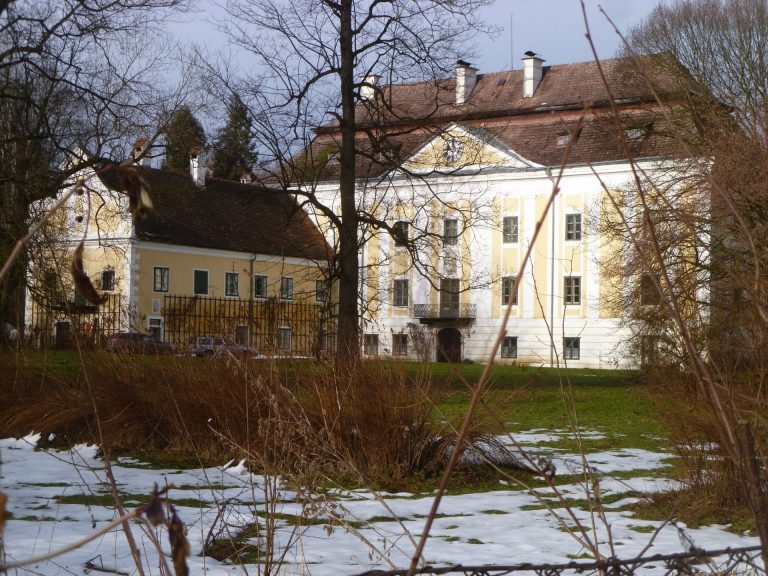
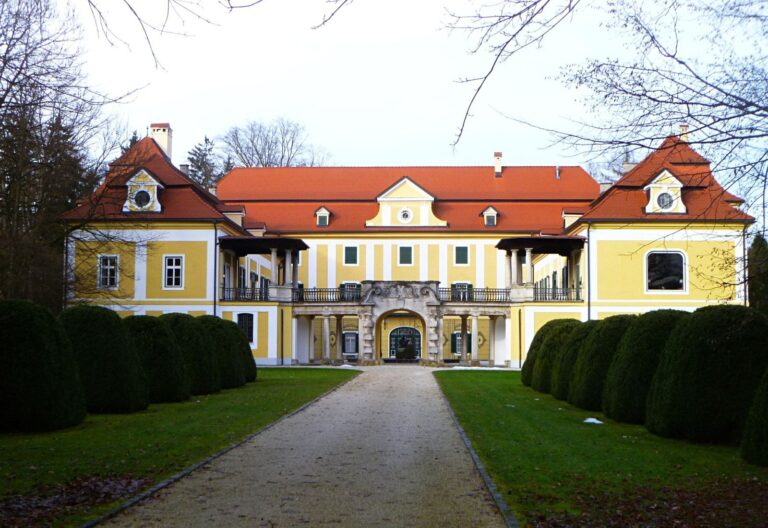
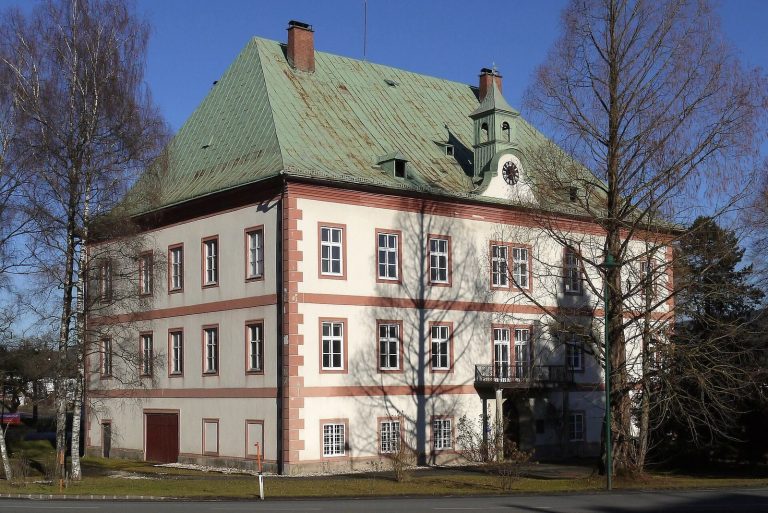
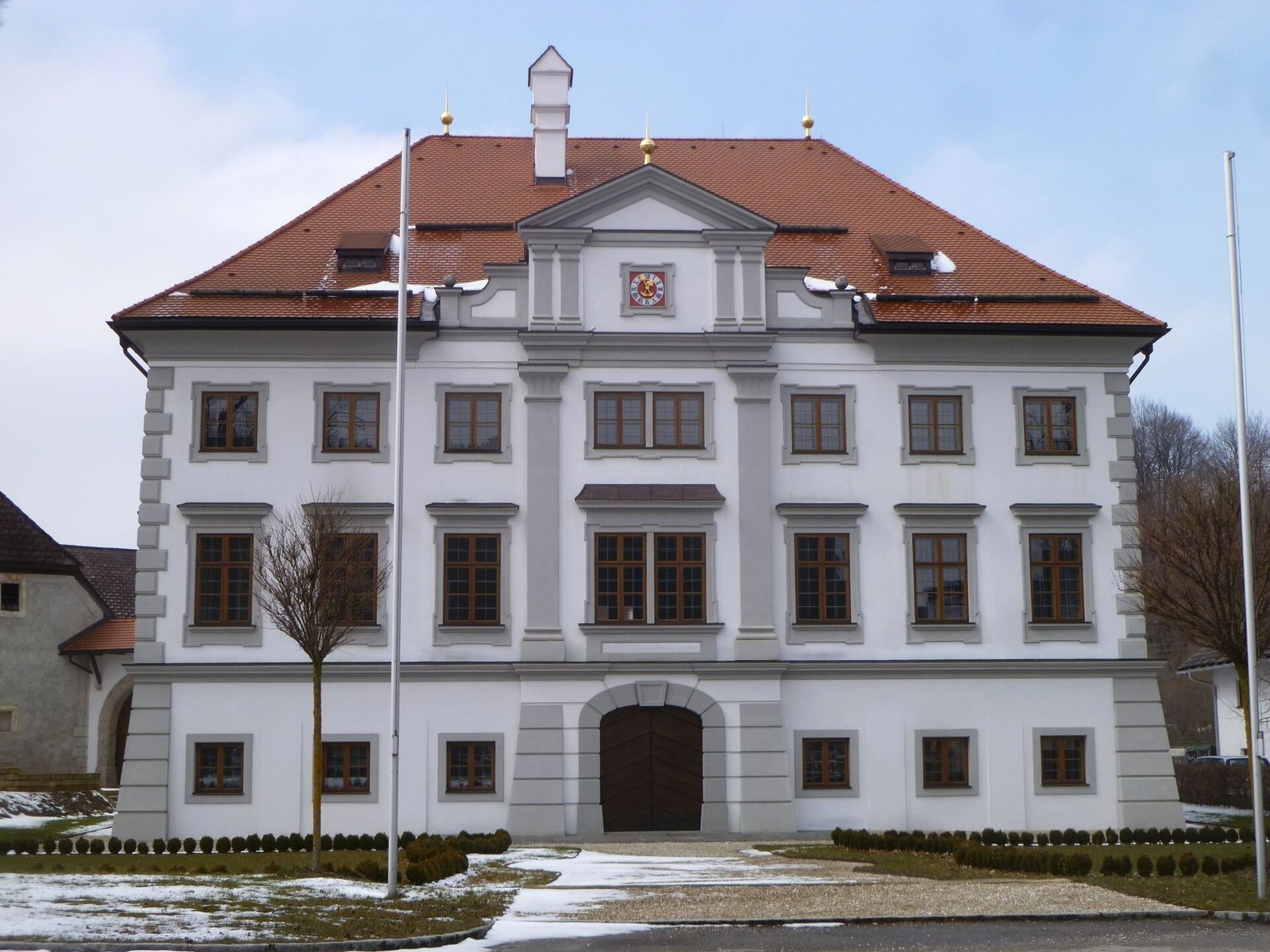
The castle is a three-storey Renaissance building with a hipped roof. Its main façade has a central projecting bay, supported by plastered columns, with a clock at roof level.
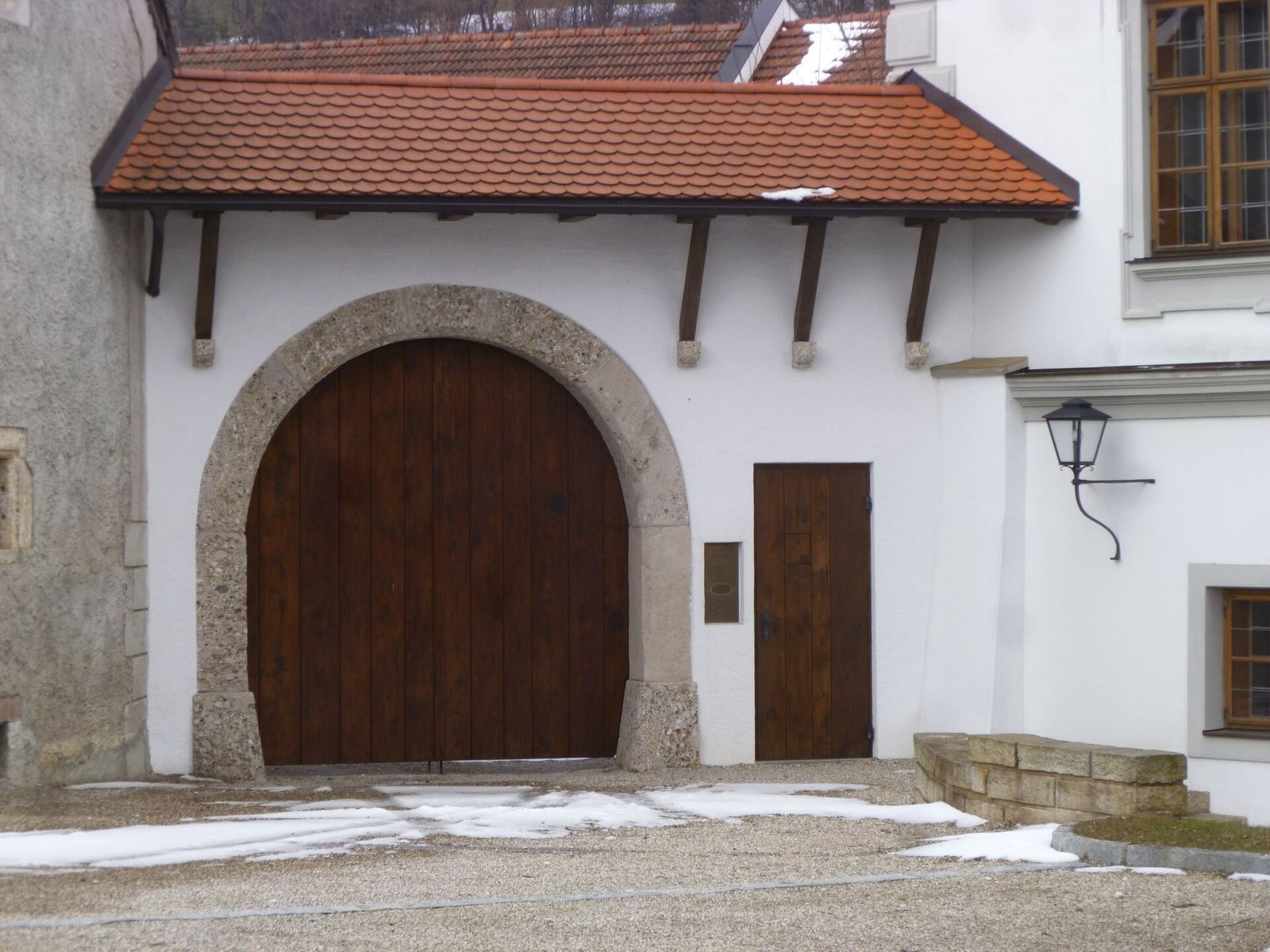
A round-arched entrance gate links the service wing to the castle building and opens into the courtyard. A small stage stands within the courtyard.