St Peter and St Paul, Buckingham: A Parish Church Rebuilt on Castle Hill
Site at a Glance
- Popularity
- Medium
- Country
- United Kingdom
- Primary era
- Early Modern
- Eras represented
- Early Modern, Modern
- Civilizations
- British
- Site type
- Religious
- Remains
- Church
On this page9 sections
History
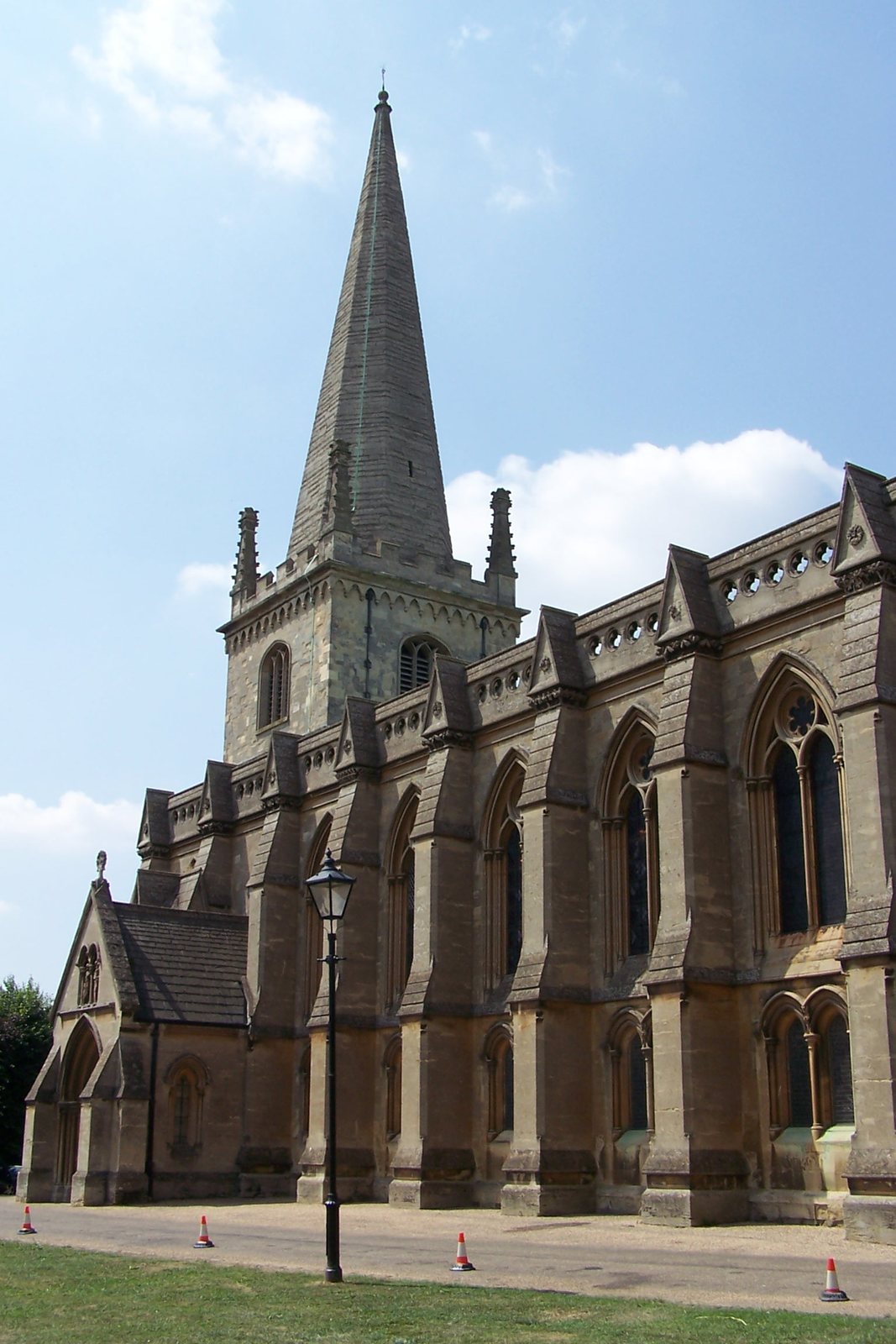
St Peter and St Paul is a stone Church of England parish church on Castle Hill in Buckingham, United Kingdom. Its foundation stone was laid in 1777, and it was consecrated in 1780. The original design was Georgian, an eighteenth-century British architectural style; later work introduced Victorian Gothic Revival forms, a nineteenth-century movement drawing on medieval Gothic architecture.
Predecessor at Prebend End
An earlier church stood at Prebend End. Before 1445, its history is associated with a reference in the Domesday Book of 1086, William I’s survey of landholding and resources in England.
The predecessor’s tower and spire collapsed more than once and were last repaired in 1698. Antiquary Browne Willis hoped to restore the church, but a proposed new spire was considered too ambitious. In 1776, the tower and spire collapsed again, destroying much of the building.
Rebuilding on Castle Hill
After the collapse, the parish could not afford to rebuild. Under an Act of Parliament, Richard, Earl Temple, undertook to provide a replacement church, which his heir, George, Earl Temple, completed. Ralph, Earl Verney, gave the parish the Castle Hill site, its access passages, and the surrounding area, and legally conveyed the land for church use.
Robert Bartlett, Buckingham’s bailiff, a local administrative officer, laid the foundation stone on 25 November 1777. The ceremony included a specially composed hymn and a roasted ox; an Earl Temple supplied bread and beer. Thomas Thurlow, Bishop of Lincoln, consecrated the church on 6 December 1780.
Victorian alterations and parish life
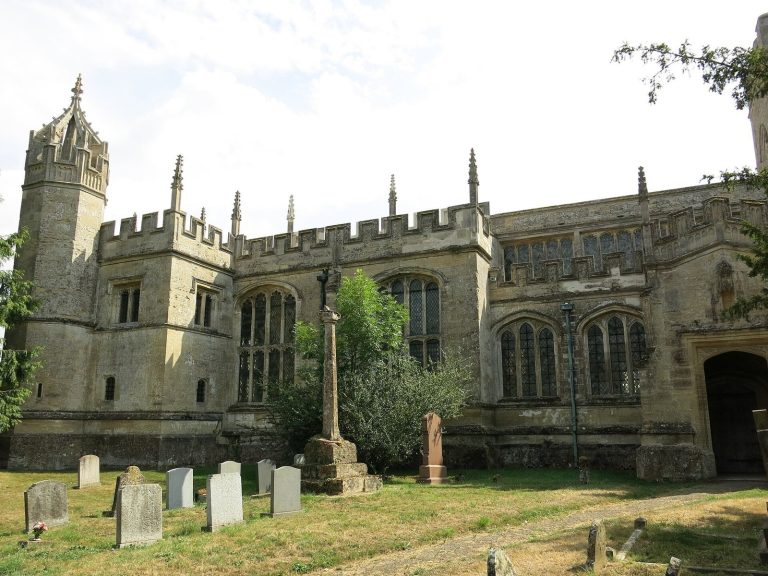
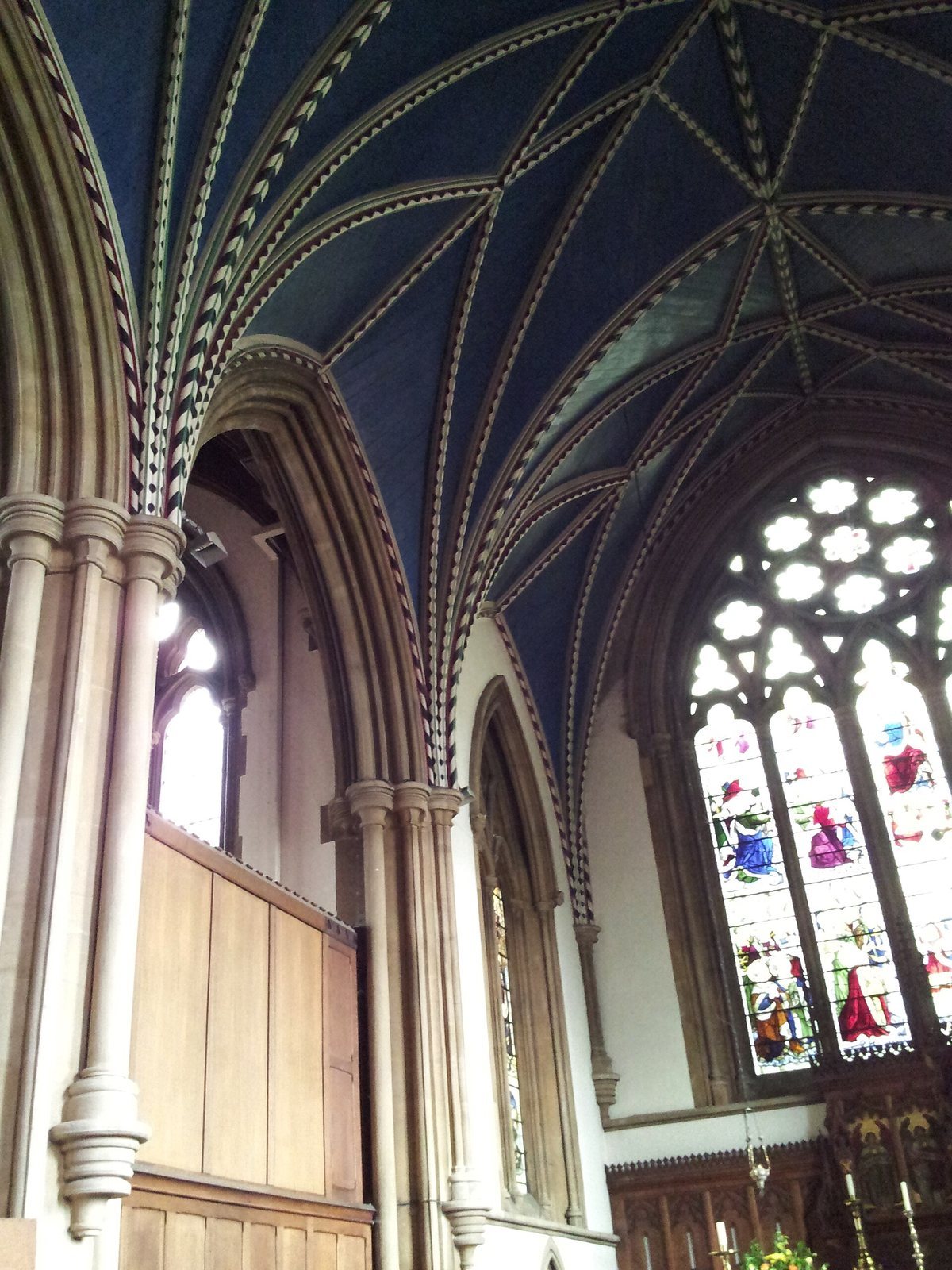
From 1860, Sir George Gilbert Scott directed major structural repairs and internal changes. The chancel, the part of a church associated with the clergy and altar, was added in 1865 with a donation of £358 from the Duke of Buckingham and Chandos. A porch was also added, and Bishop Wilberforce consecrated the new work in 1867. These alterations changed much of the eighteenth-century fabric.
St Peter and St Paul remains an active parish church in the Diocese of Oxford and the Province of Canterbury. Its evangelical churchmanship is an Anglican tradition emphasizing scripture, preaching, and personal faith. The building is Grade I listed.
Remains
Church building
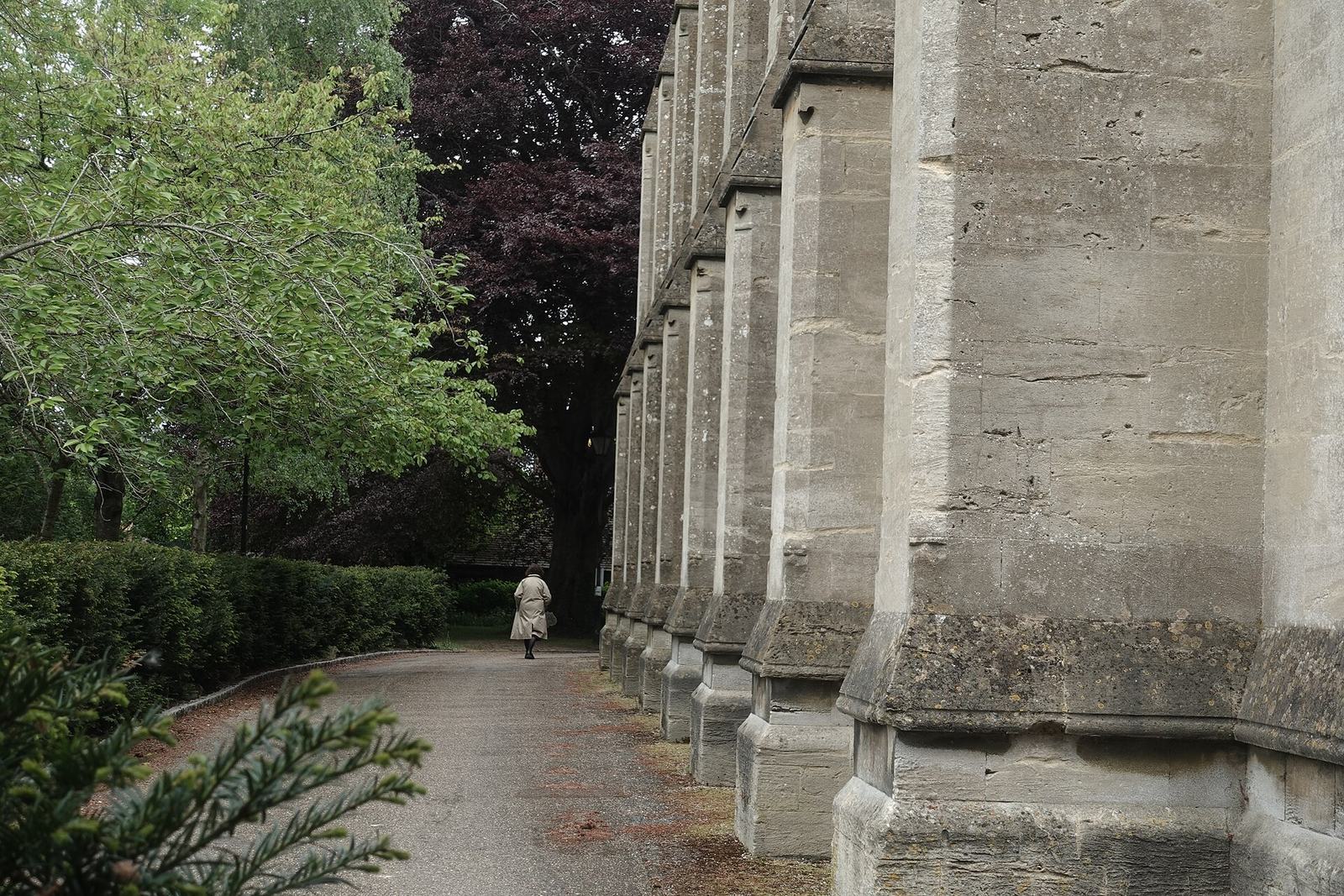
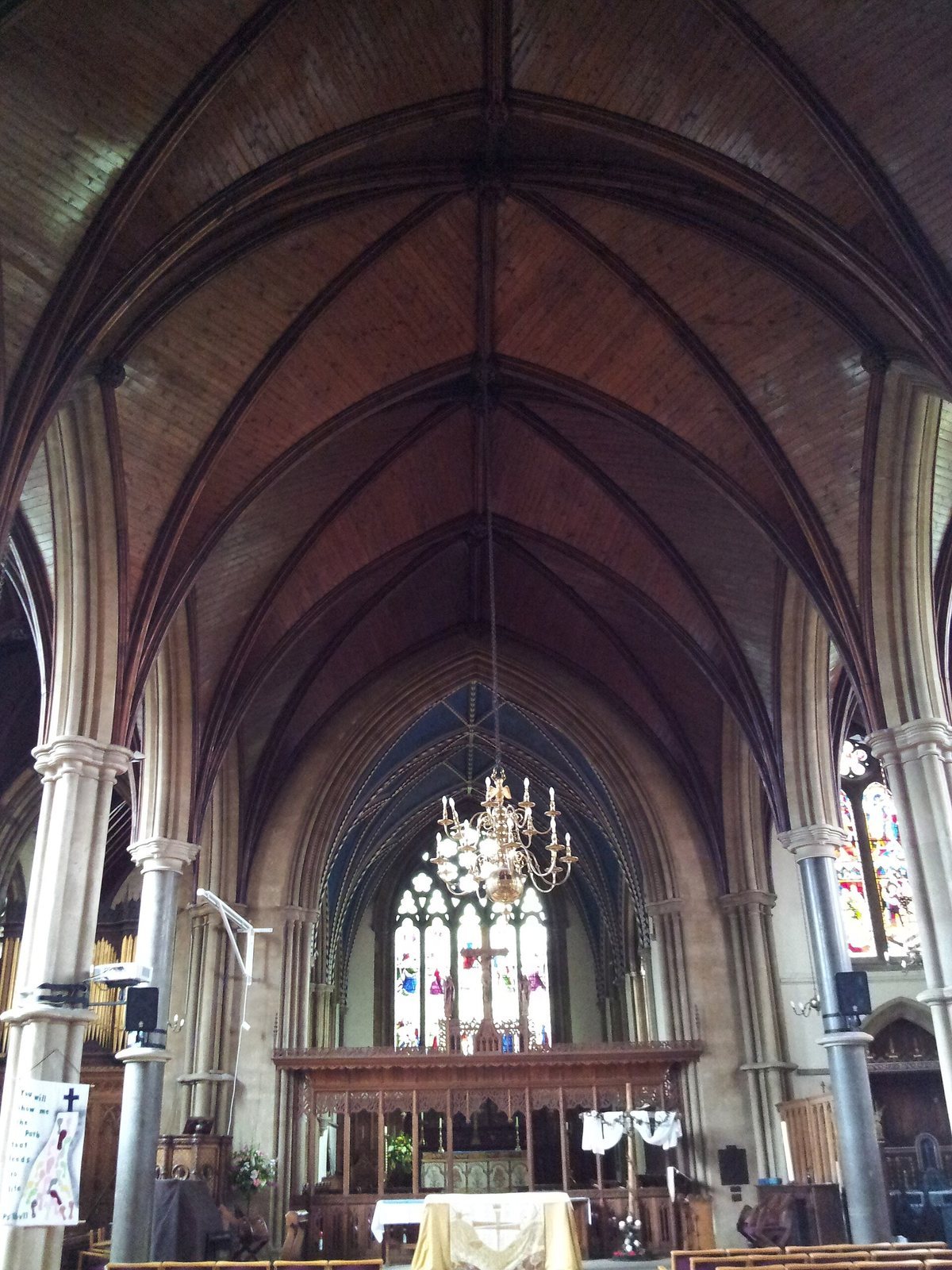
The stone church stands on Castle Hill in the centre of Buckingham’s historic core. Its first form was a simple Georgian building, with a tower topped by an eight-sided spire and a nave, the main body of the church, whose main space also included the sanctuary, the area around the altar. The present building reflects Scott’s Victorian Gothic Revival work, including structural repairs and projecting wall supports called buttresses. Its chancel and porch form part of the later arrangement.
Organ
Instrument and sound
The Norman & Beard organ was first installed at St John’s Church in Aylesbury, where Dr Ley gave its opening recital on 30 January 1913. It was transferred to Buckingham in 1969. On its arrival, its large Open Diapason, a principal pipe stop that selects a set of pipes, was replaced by a lighter-sounding diapason, and a mixture stop, which sounds several pitches together, was added. Peter Collins Ltd restored, raised, and rebuilt the instrument in 2015–16. The work reinstated the large Open Diapason, revoiced the mixture, and added stops to the Swell and Pedal sections to strengthen the organ’s combined sound without changing its overall tonal character.
Position and planned expansion
The organ was raised onto a mezzanine platform, an intermediate platform, to improve sound projection. Its front case was moved forward of arches that had partly concealed it on the south side, and its pitch was raised to concert pitch, A440 Hz. The mobile console includes stops for a possible Choir section, which would require another wind chest, the organ’s air-distribution box, and a clarinet stop. A floating Tromba stop, usable across divisions, is already in place. Other pipes salvaged from the Norman & Beard organ at St Andrew’s, Kettering, are in storage.