St. Anthony of Padua Church: Baroque Branch Church in Idrija, Slovenia
Site at a Glance
- Popularity
- Very Low
- Country
- Slovenia
- Primary era
- Early Modern
- Eras represented
- Early Modern, Modern
- Civilizations
- Austria-Hungary, Austrian Empire, Habsburg, Holy Roman Empire
- Site type
- Religious
- Remains
- Church
On this page9 sections
History
Foundation and miners’ devotion
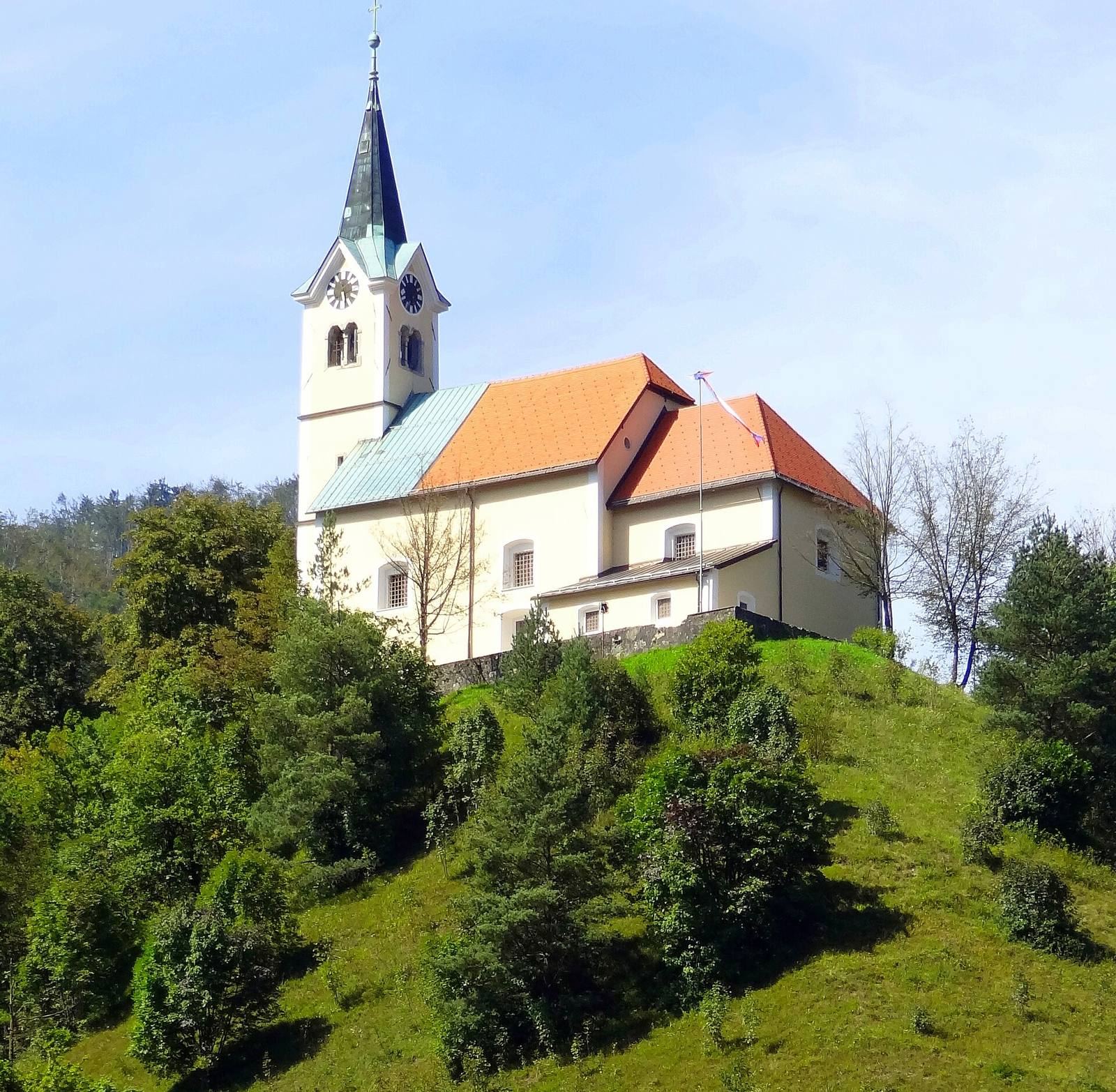
St. Anthony of Padua Church is a Baroque Roman Catholic branch church on Rožni grič above Idrija, Slovenia, serving the Parish of Idrija as a subsidiary to its principal church. Miners regarded St. Anthony of Padua, a thirteenth-century Franciscan preacher and Catholic saint, as their patron and sought his protection while working in the mercury mine. A wayside shrine to the saint stood on the site before miners rebuilt it as a wooden chapel.
Mine manager Kaspar, Baron Lichtenheimb, arranged a benefice, an endowment to support a religious ministry, and undertook to pay for a church. Miners also helped build it. Janez Krstnik Križaj, archdeacon of Gorizia, a senior cleric with diocesan administrative duties, blessed the cornerstone on 15 April 1678. Construction was completed soon afterward.
Pilgrimage and processions
Idrija held celebrations for the feast days of both St. Anthony of Padua and St. Anthony the Hermit, also known as Anthony the Great. The Hermit was an early Christian ascetic associated with the beginnings of monastic life. These celebrations had been observed with greater solemnity since 23 May 1707. The church also drew pilgrims from Cerkno, Škofja Loka, Vipava, Logatec, Vrhnika, and Postojna, generally for an Anthony feast. People from Črni Vrh came on 13 June, while residents of Otalež and Stara Oselica arrived on 2 July to seek protection for their livestock.
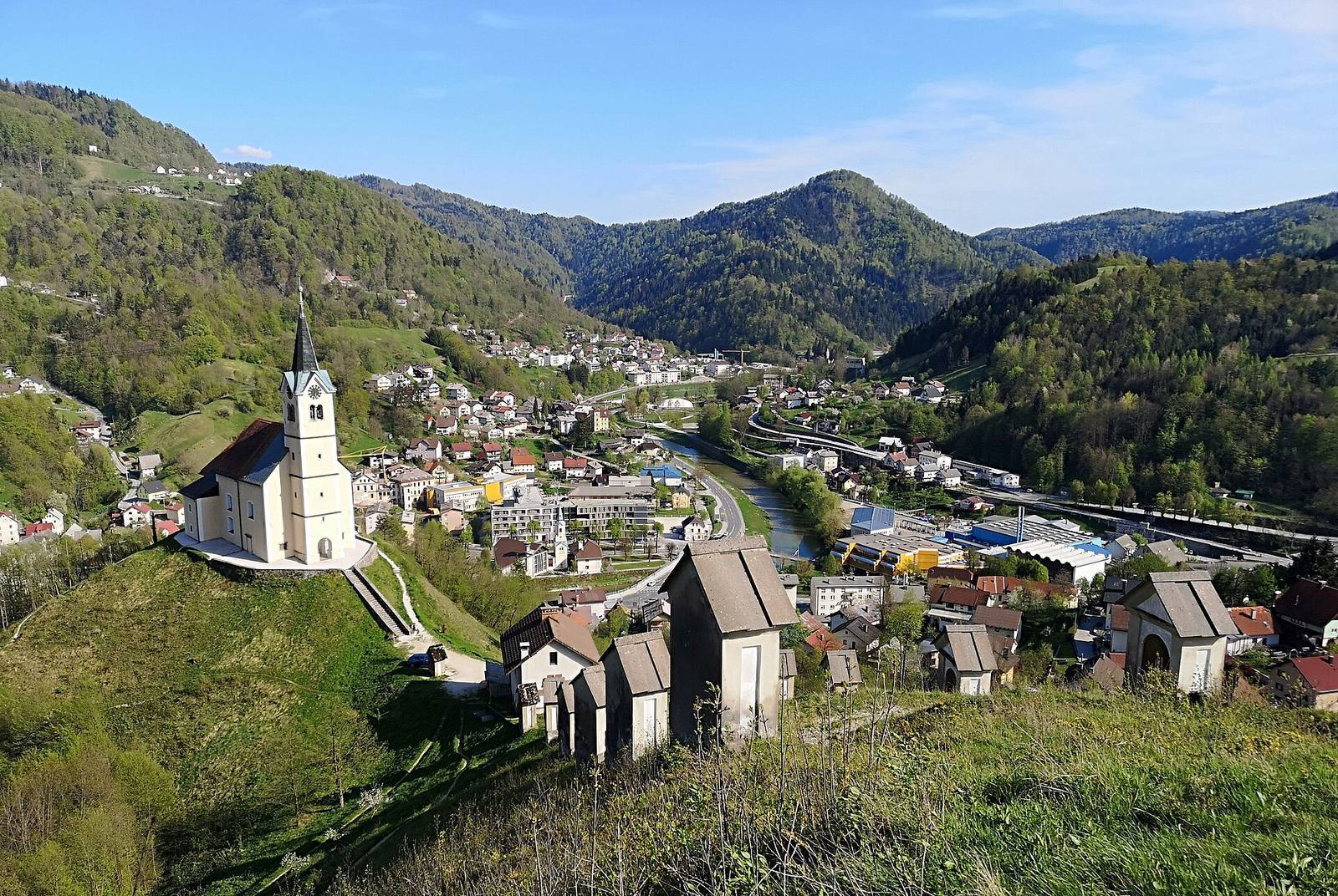
In 1766, residents built a Calvary opposite the church, a devotional arrangement commemorating Christ’s Passion through the Stations of the Cross. Until the Josephine reforms of 1780, church services were accompanied by solemn processions on 19 March for St. Joseph, 29 June for Saints Peter and Paul, a Sunday in September for the Name of Mary, and at Christmas. Miners’ confraternity processions also came on Easter Monday, 1 May for Saints Philip and James, Pentecost Monday, 22 June for St. Acacius, the feast of St. John the Baptist, and 4 December for St. Barbara. The Josephine reforms, church and state measures associated with Holy Roman Emperor Joseph II, brought these processions to an end.
Alterations and restoration
The church’s roof was renewed in 1835, and a bell tower was added in 1805. Lightning set the tower alight on 21 January 1866, while the rest of the roof structure escaped damage despite heavy snow. A comprehensive restoration followed in 1881. Three bells cast in 1887, weighing 629, 378, and 200 kilograms, were confiscated during the First World War. After the Second World War, priest Anton Lazar was responsible for restoring the ringing of bells.
The Calvary was vandalized several times in the second half of the twentieth century, then restored and blessed on 1 May 1979. An earthquake in the Upper Soča region damaged the church in 1998. Restoration and structural repairs began after 2008, with the state supporting work on the building and main altar and the Parish of Idrija funding an interior renovation. The work was completed in 2013. A further Calvary restoration took place in 2026.
Remains
The church stands on the steep slope of Rožni grič, 410 metres above Idrija. Together with the Calvary to its east, it forms a prominent feature in views of eastern Idrija, and its elevated position overlooks almost the entire town.
The church
Plan and exterior
The church has a rectangular nave and a flat-ended presbytery, the area around the altar. Both spaces have semicircular vaults, curved ceilings spanning the interior. The building measures 30 metres in length, 21 metres across the nave, and 10.5 metres in height. It has three floors and a bell tower that rises 26 metres.
Interior and furnishings
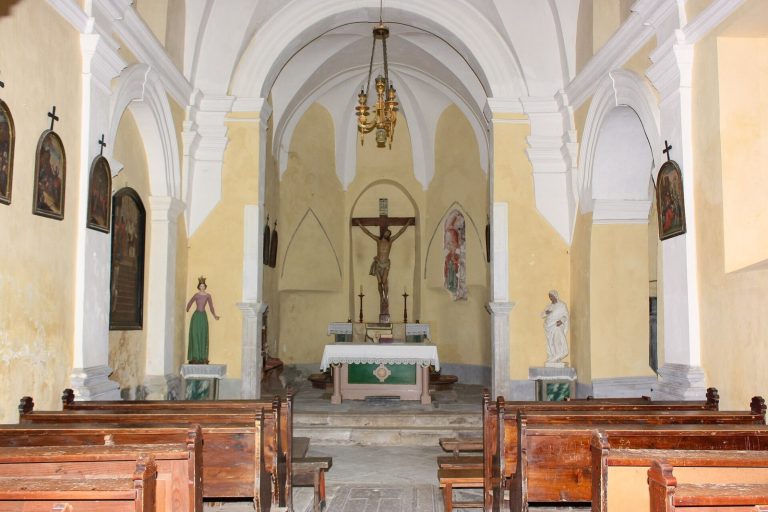
The interior and its furnishings are Baroque, with furnishings made by local residents. Luka Čeferin made the present main altar in 1837 and restored the side altars that year. The organ, made by Peter Rojc in 1847, has one keyboard and ten stops, controls that select sets of pipes. A cabinet in the sacristy, the room used to prepare for worship, dates to 1756. The church’s Stations of the Cross were blessed on 21 January 1866. In 1904, a new fireclay floor was laid as part of an interior renovation.
The Calvary and grounds
The Calvary’s Stations of the Cross route ends at an upper chapel dedicated to the Resurrection of Jesus. During its latest restoration, new artworks by Idrija artist Nande Rupnik were installed in the chapels. A former sexton’s house stands between the church and the Calvary.