Käseburg: A Medieval Water Castle in Brüheim, Germany
Site at a Glance
- Popularity
- Low
- Country
- Germany
- Primary era
- Medieval
- Eras represented
- Medieval, Early Modern
- Civilizations
- Holy Roman Empire, Landgraviate of Thuringia
- Site type
- Military
- Remains
- Castle
On this page8 sections
History
Käseburg, also known as Steinhof, is a small medieval water castle in Brüheim, Thuringia, Germany, built after 1200 by local nobility. Protected by water and wet ground, it was centered on a motte, a fortified mound.
Foundation and early lordship
The castle was associated with the local nobility of the Nesse Valley. There, the knights of Brüheim, the Wangenheims, the Lords of Erffa, and others served the Landgraves of Thuringia, territorial princes. Berthold von Brüheim, named in 1276, is the earliest known member of the Brüheim family. Käseberg is another name for the site and may be a distorted reference to its mound, said to have been scarcely larger than a cheese.
Changes of feudal control
After a conflict within the House of Wettin, the ruling dynasty of central Germany, in the early 14th century, the castle was held as a fief by the Lords of Salza. A fief was land or rights granted in return for obligations. The Schwarzburgs later succeeded the Lords of Salza, and the Wangenheims held the property from 1549.
The Wangenheims and later changes
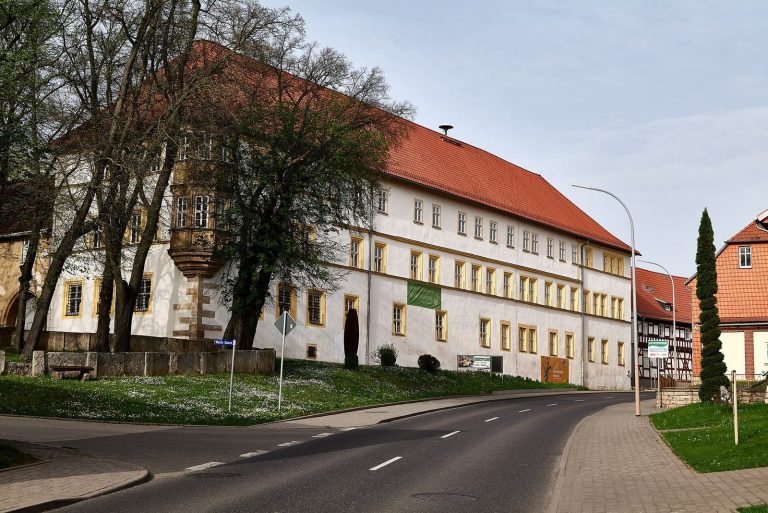
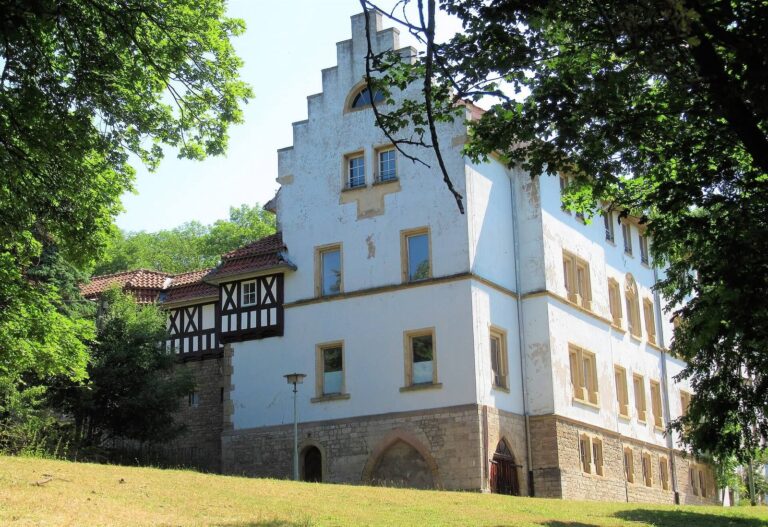
Around 1700, the Wangenheims built the Edelhof estate. The Steinhof burned in 1869, leaving only its tower. In 1945, a bomb struck the main building. The residential tower was renovated in 1984, and reconstruction of the main building began in 1990, after German reunification. The owners also carried out restoration work on the complex.
Remains
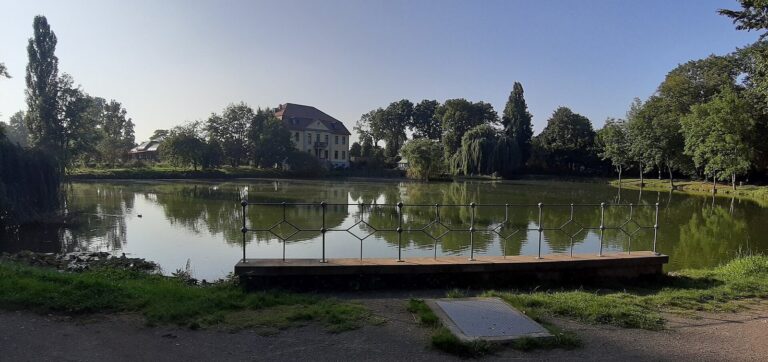
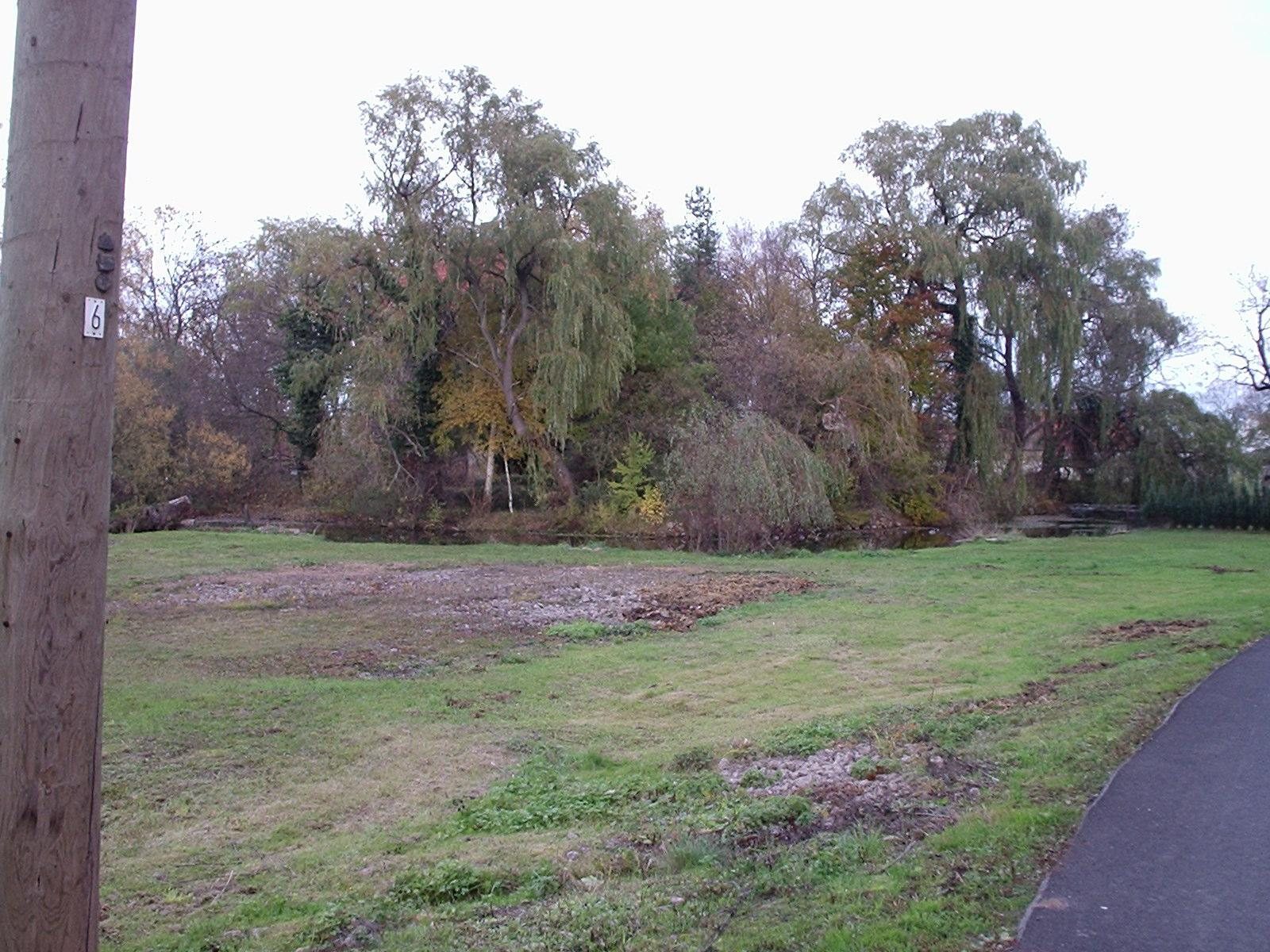
The remains lie in the southern part of Brüheim’s historic settlement, opposite the village church, at an elevation of 257 metres. The original fortification occupied the Nesse floodplain among marshy meadows. Weirs once directed the river into its defenses. The castle mound was surrounded by a water-filled moat, which survives alongside the residential tower.
Residential tower
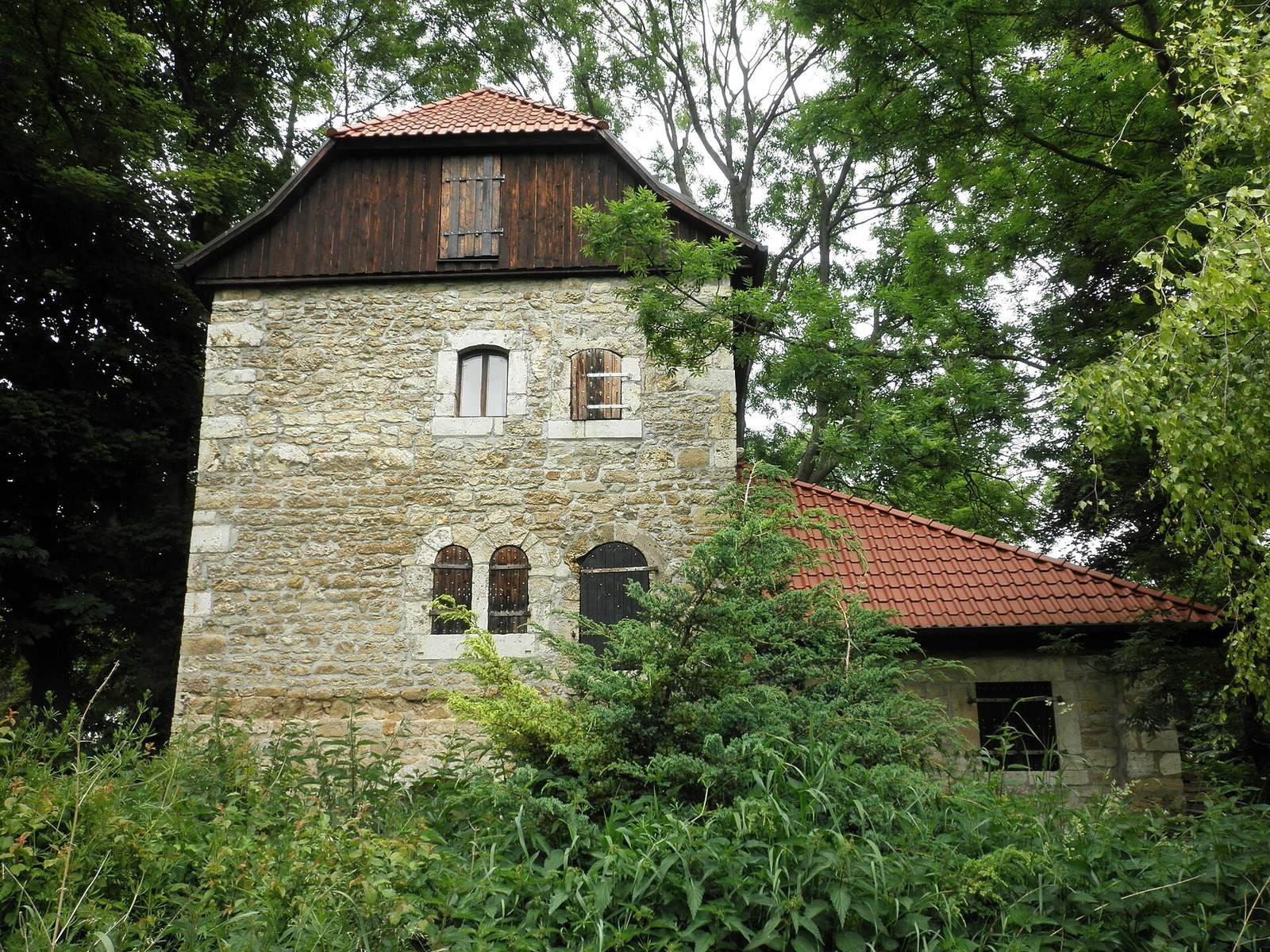
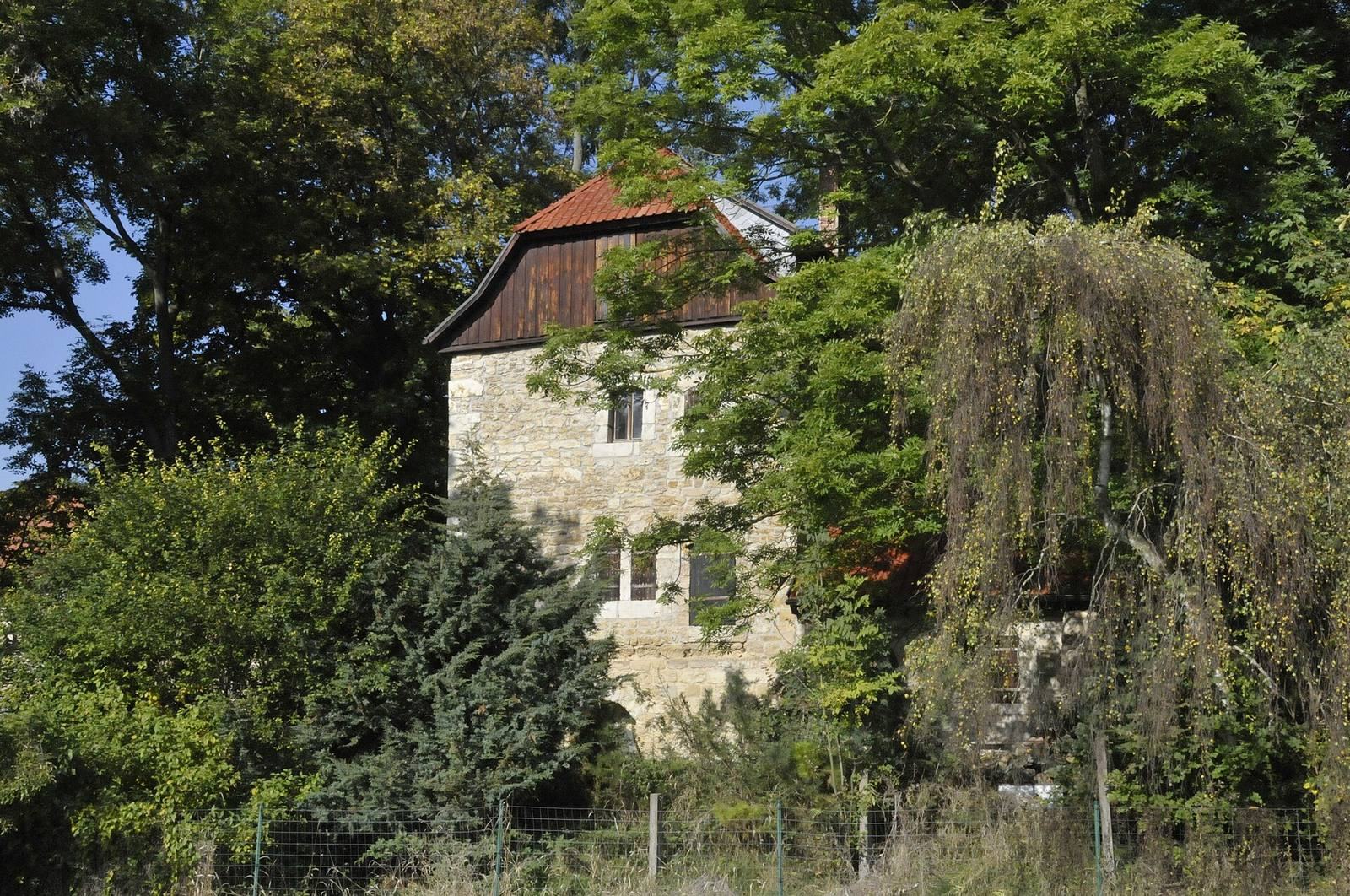
Dating to the 13th century, the tower is built of rubble stone and measures 6 by 7 metres at its base. It stands about 10 metres high. Its half-timbered upper section was renewed in the 19th century, and a narrow, keyhole-shaped opening for defense can be seen on the north side at first-floor level.
Edelhof
An adjoining farmstead stood immediately west of the castle mound. Its renovated residential buildings now form the Edelhof.
Wangenheim burial site
The Wangenheim family’s burial site occupies the southwest corner of the cemetery.