Palazzo Scola Camerini: A Renaissance Palace in Ferrara
Site at a Glance
- Popularity
- Very Low
- Country
- Italy
- Primary era
- Early Modern
- Eras represented
- Early Modern
- Civilizations
- Duchy of Ferrara
- Site type
- Domestic
- Remains
- Elite Residence
On this page6 sections
History
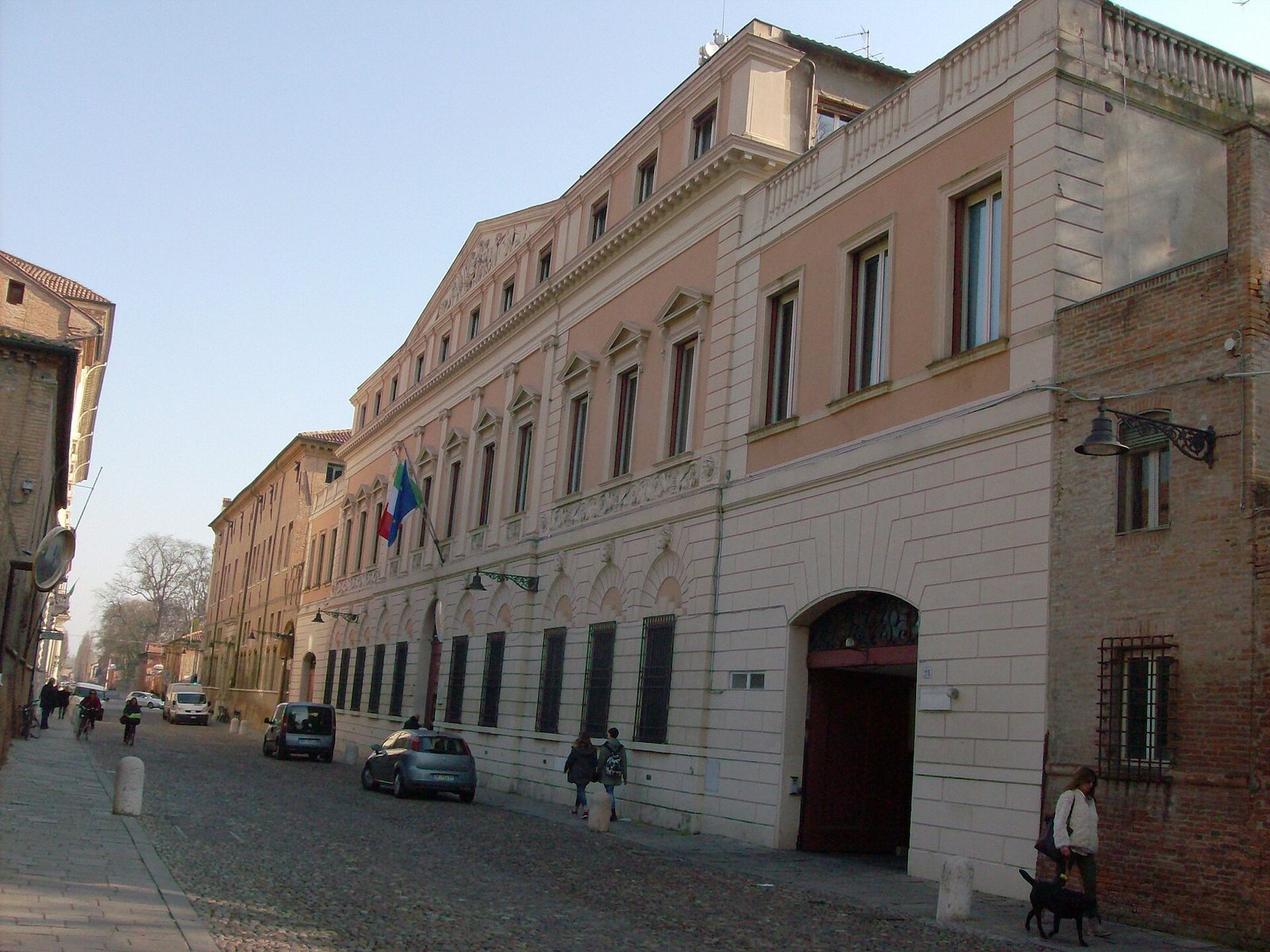
Palazzo Scola Camerini is a Renaissance-origin palace on Corso Ercole I d’Este in Ferrara, Italy. Built around the end of the sixteenth century, it was restored and altered on various occasions as ownership changed.
Silvestro Camerini’s residence
On 3 December 1830, entrepreneur Silvestro Camerini (1777–1866) bought the palace in very poor condition. After repairing and adapting it to his needs, he made it his residence and used it for official representation. Camerini had made his fortune in the Ferrara area and Veneto and received a ducal title. He also served as Ferrara’s gonfaloniere, a senior civic officeholder in Italian cities.
Inheritance and later use
When Silvestro died in 1866, his nephew Giovanni Camerini (1837–1919), a senator, inherited the palace, the ducal title, and the family’s holdings in Emilia-Romagna. Another nephew, Luigi, inherited the family’s Veneto holdings; he was the father of Duke Paolo Camerini.
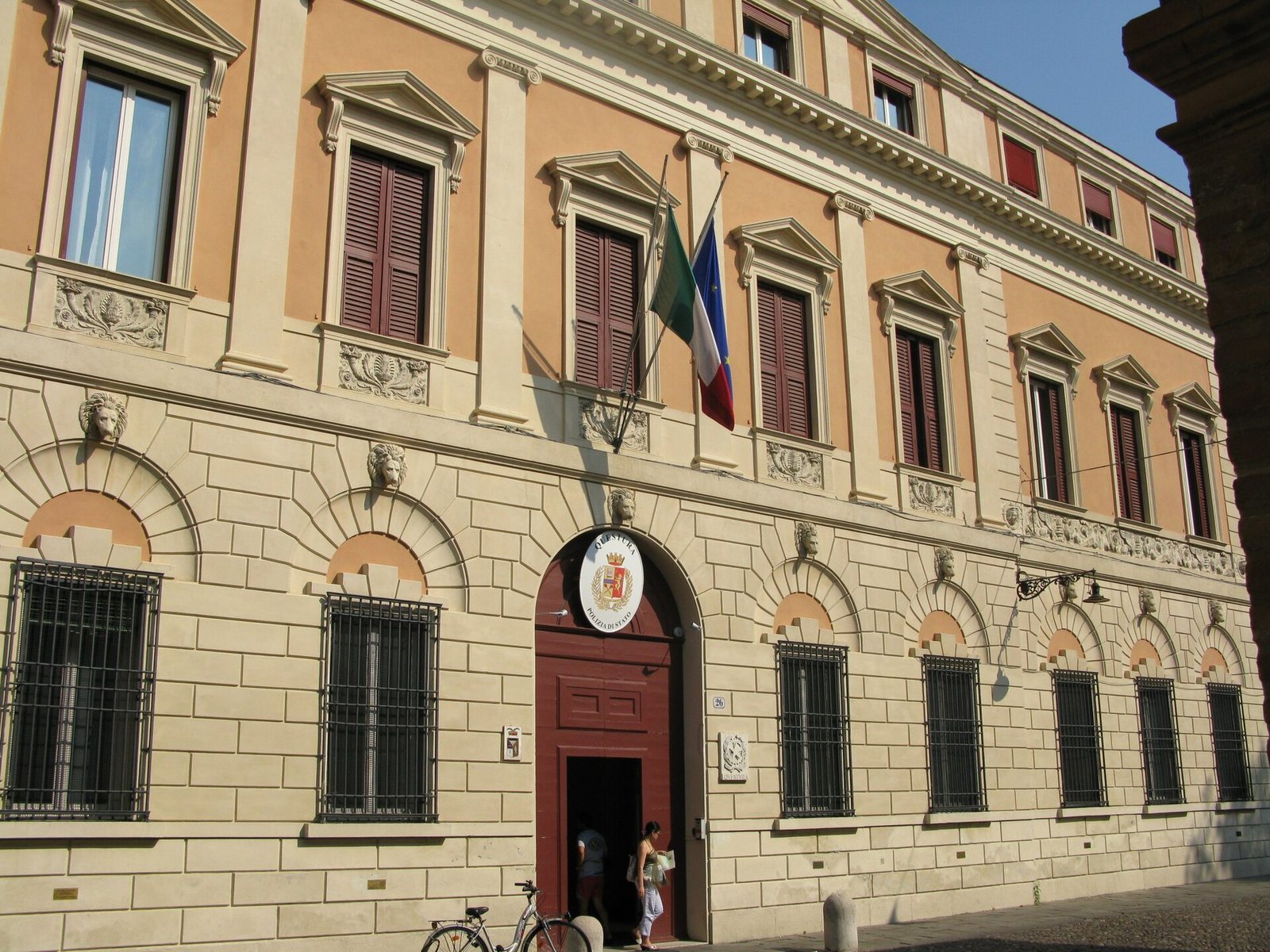
From the mid-twentieth century onward, the palace has housed offices of Ferrara’s police headquarters.
Remains
The palace has a principal facade and a formal floor above ground level, reached by a grand staircase. Its Renaissance origins are accompanied by a Neoclassical feature at the center of the facade.
Principal facade
A large Neoclassical pediment, the crowning element of a classical-style facade, occupies the center of the principal front. Sculptor Marco Casagrande made it from marble from the Euganean Hills. Neoclassical design drew on ancient Greek and Roman forms.
Staircase and principal floor
The grand staircase leads to the piano nobile, the palace’s formal principal floor, usually above the ground floor. Rooms on this level are decorated by the Ferrarese painters Francesco Migliari and Gaetano Domenichini.