Chapel of St George, Nitrianska Blatnica: A Roman Catholic Rotunda and Pilgrimage Chapel
Site at a Glance
- Popularity
- Medium
- Country
- Slovakia
- Primary era
- Early Modern
- Eras represented
- Medieval, Early Modern
- Civilizations
- Habsburg, Hungarian
- Site type
- Religious
- Remains
- Chapel
On this page9 sections
History
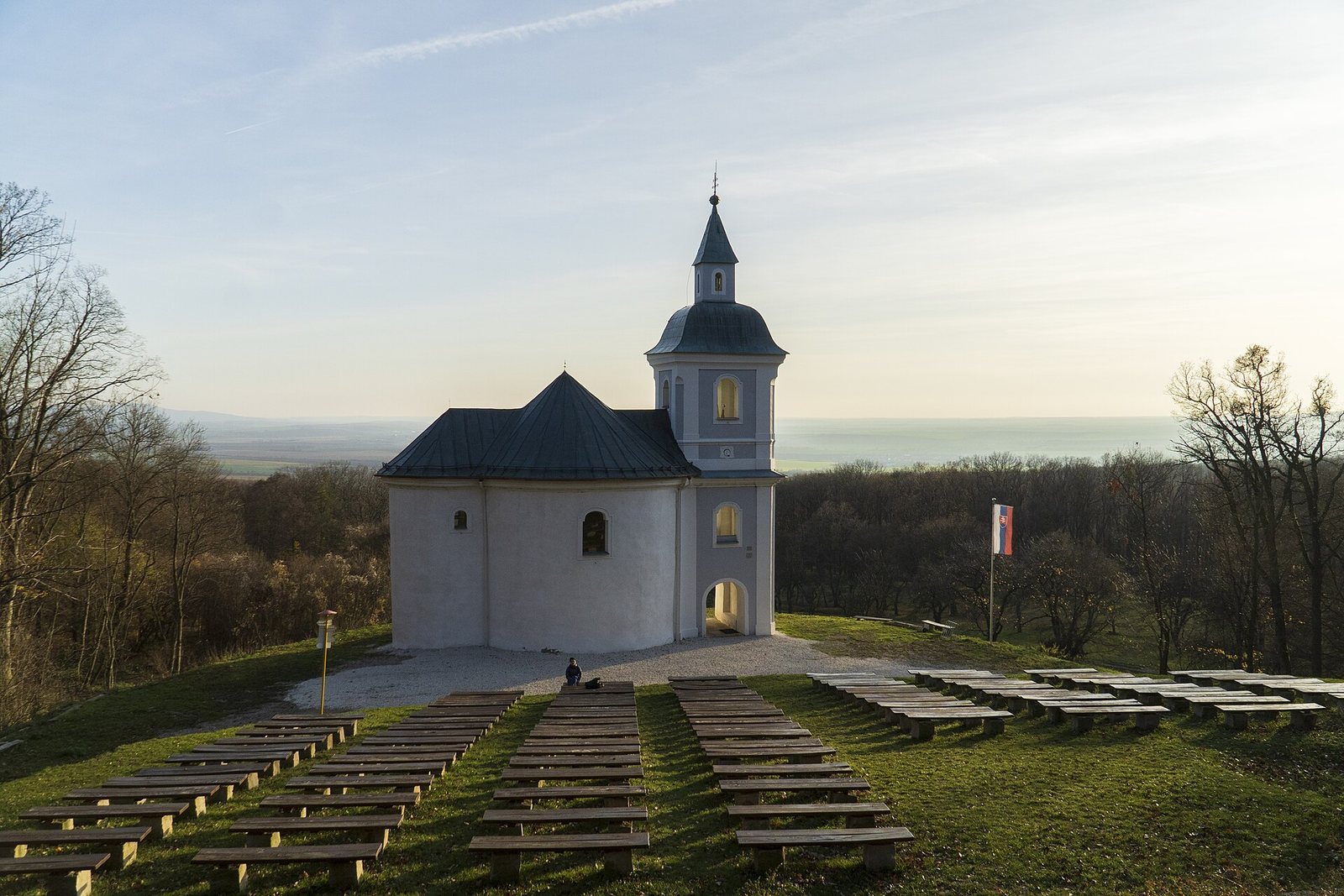
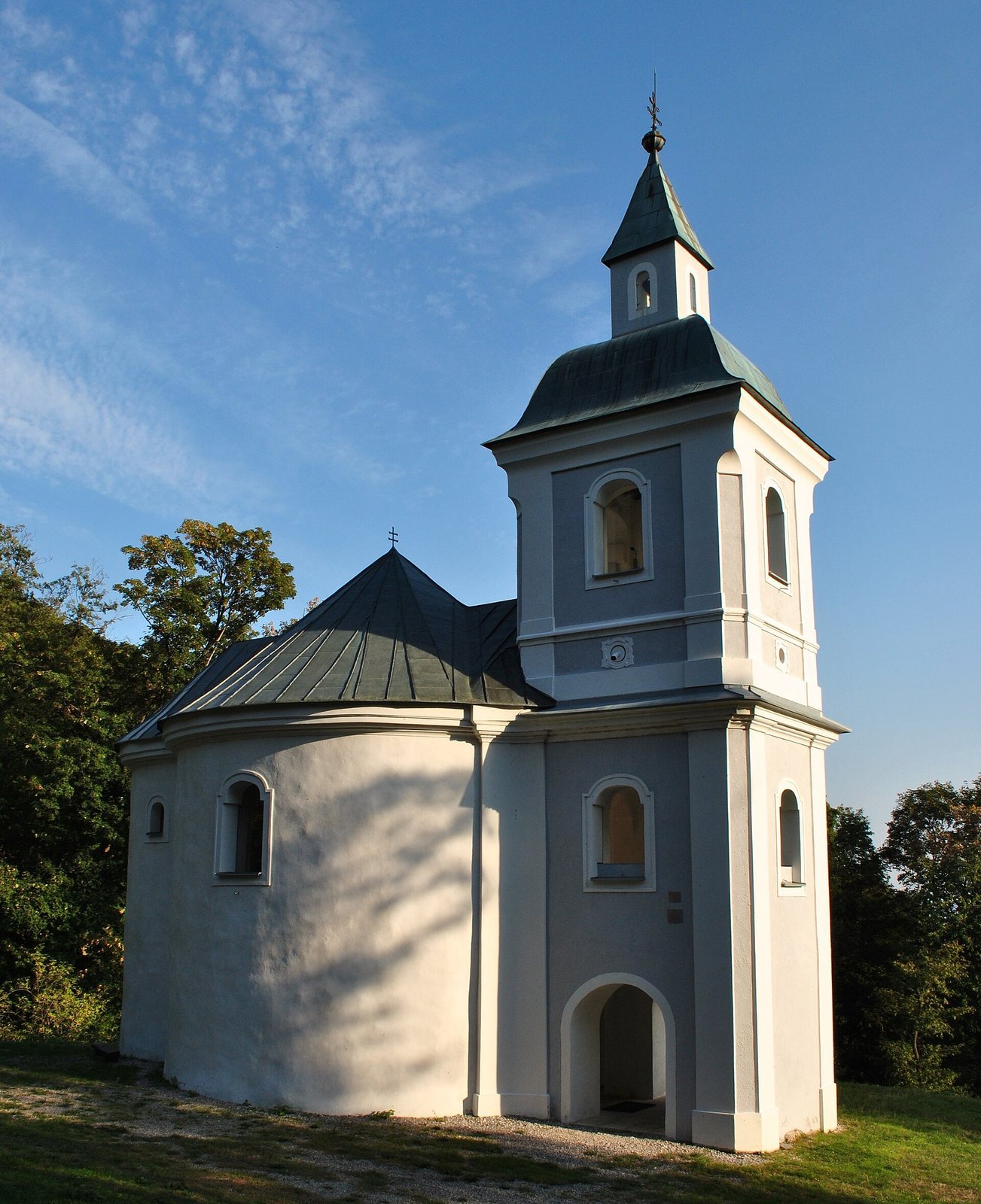
The Chapel of St George is a Roman Catholic rotunda, a circular, centrally planned church, on a rocky spur north of Nitrianska Blatnica, Slovakia. Its original construction is generally placed between the late ninth century and the second half of the tenth, though the dating and building phases remain debated. The chapel is among Slovakia’s oldest surviving sacred buildings and rotundas; whether it is the country’s oldest standing church remains disputed, particularly in comparison with the Church of St Margaret of Antioch at Kopčany. A Romanesque, or medieval-style, rebuilding is proposed for the eleventh century, and a Baroque, or early modern, remodelling took place in 1655.
Origins and dating
Archaeological work from 1974 to 1980 interpreted the earliest form as ninth-century, with the part above the foundations rebuilt in the Romanesque style in the eleventh century. A different interpretation published in 2012 placed the whole building in the first third of the ninth century, before the period of Great Moravia, a Slavic polity in Central Europe. Later analyses questioned the methods behind that earlier dating. Construction between the late ninth century and the second half of the tenth is still considered the likeliest explanation.
Settlement and abandonment
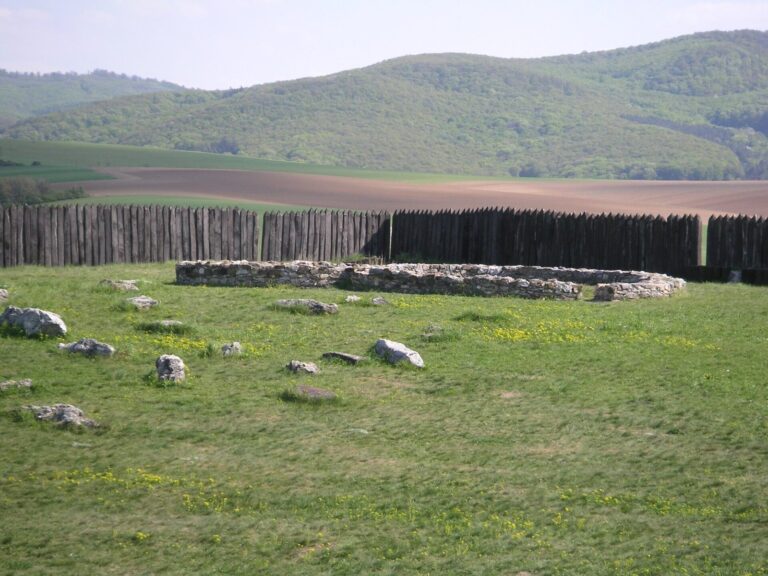
A settlement occupied the Púšť meadow below the chapel in the ninth and tenth centuries, changing in character during the eleventh. Its inhabitants mainly mined iron ore on the slopes of Marhát, while farming also took place in the surrounding area. The settlement had ended before the middle of the thirteenth century. Its people gradually moved to lower ground and became part of medieval Nitrianska Blatnica. As woodland spread across the area, the chapel fell into disrepair.
Restoration and later use
In 1530, Mária Turzová, owner of the local forests, arranged a renovation, or possibly a re-erection, in memory of her husband, who had died at the Battle of Mohács in 1526, a major conflict between Ottoman and Hungarian forces. The chapel soon deteriorated again. A remodelling in 1655 gave it nearly its present Baroque form. Hermits lived in the southern hermitage and, in practice, worked as teaching brothers at the local school until the first half of the nineteenth century.
Spring pilgrimages have been held at the chapel and the adjoining meadow since the sixteenth century, on the Sunday after St George’s feast day. St George is a Christian saint and martyr, and the pilgrimage tradition strengthened again after 1990. From about the middle of the nineteenth century, a school building on the slope above the chapel served first as a hunting station for the local estate and later as a forester’s lodge. It was demolished in 1962. Archaeological investigations from 1974 to 1980 and a further study in 2012 contributed to understanding the chapel’s date and the settlement’s history. The chapel is a National Cultural Monument, Slovakia’s official protected-heritage designation.
Remains
The chapel stands on a small rocky spur on the southeastern slopes of Marhát, in the Považský Inovec range. It lies above Háje grove and below the Kozí chrbát ridge, with a drinking-water spring nearby. The circular building has a tower on its western side and a hermitage on its southern side.
Rotunda and cemetery
The chapel
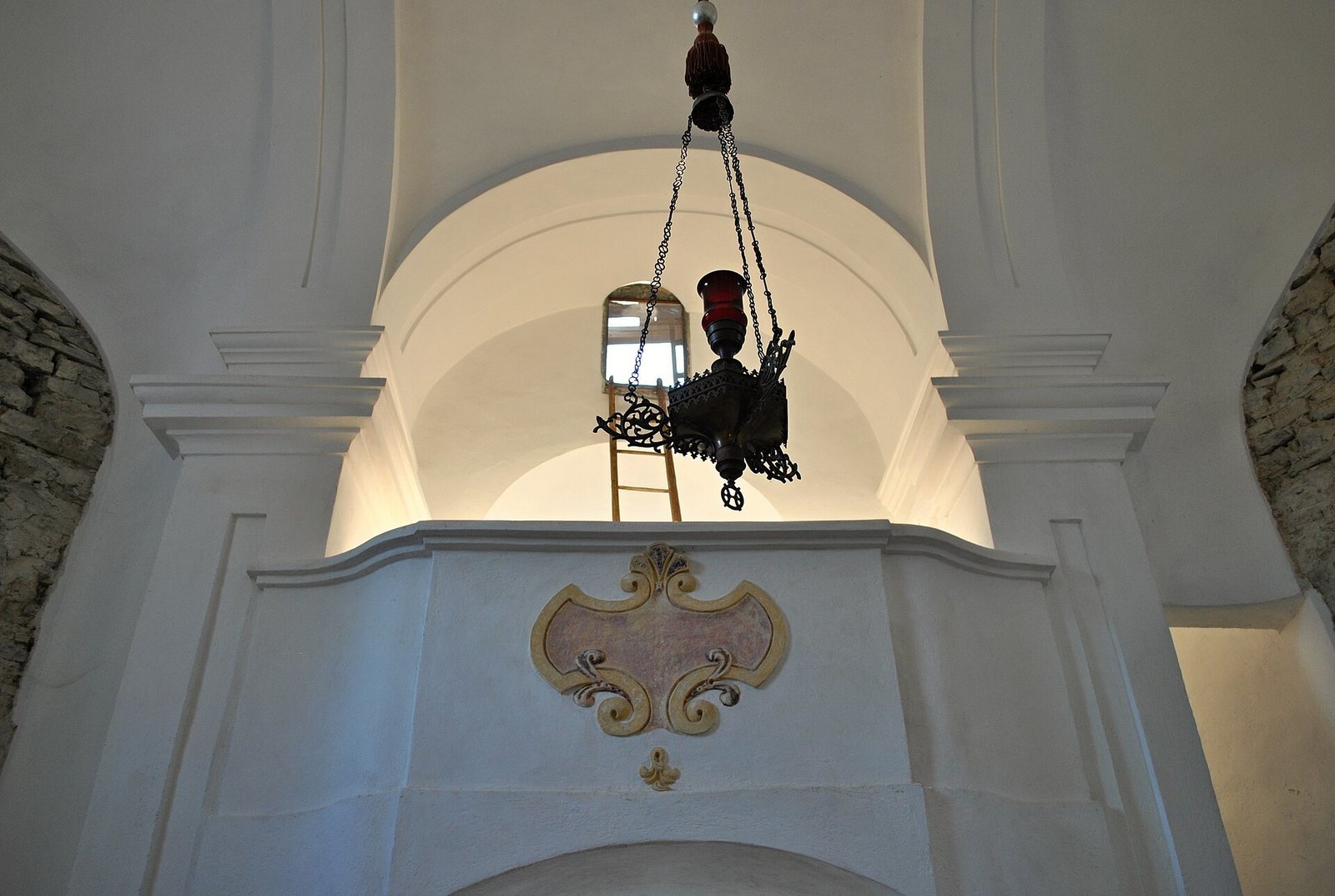
The earliest form of the rotunda had a horseshoe-shaped apse, a projecting space at the end of a church. When the building was renovated or possibly re-erected in 1530, walls from the older rotunda still stood between four and seven metres high. Later remodelling brought the chapel close to its present Baroque form.
Burials
Excavations beside the rotunda uncovered as many as 130 graves, most belonging to men. Silver and bronze objects were recovered from the burials.
Settlement remains on Púšť meadow
Remains on the meadow trace a settlement that began behind a palisade, a defensive fence. A larger compound was later replaced by a smaller one, followed by scattered dwellings in an unenclosed settlement. Finds include house remains, tar kilns used to produce tar from wood, querns or hand-operated grain mills, and iron products. Furrows in the surrounding ground provide evidence of cultivation.