Sonnerupgaard Gods: A Manor House and Estate in Denmark
Site at a Glance
- Popularity
- Low
- Country
- Denmark
- Primary era
- Modern
- Eras represented
- Modern
- Civilizations
- Danish
- Site type
- Domestic
- Remains
- Manor House
On this page7 sections
History
Sonnerupgaard is a manor house and estate in Hvalsø, Denmark. Its name first appears in 1341, when the property belonged to Niels Pedersen. The estate later became part of the Barony of Zeuthen, and its ownership and use changed repeatedly over the centuries.
Medieval and sixteenth-century ownership
After Niels Pedersen, the estate passed to his son and granddaughter. Anders Pedersen Panter owned it from 1374 to 1408, followed by Peder Tuesen Rani from 1408. Mette Andersdatter Rani, née Panter, held it until 1455; Otto Cernin became an owner in 1446. Later owners included Torben Bille, until 1492, and Peder Bille, from 1492 to 1508. Peder Bild acquired Sonnerupgaard in the mid-16th century and held it until his death in 1566, when it passed to Christoffer Bild. Jakob Trolle owned the estate until 1601. After his death, his widow, Mette Jakobsdatter Høg Trolle, née Banner, retained it.
Seventeenth and eighteenth centuries
Manderup Parsberg had acquired Sonnerupgaard by 1621. After his death in 1625, his widow, Anne Parsberg, née Brahe, kept the estate until her own death in 1633. It was then endowed to her brother, Otte Brahe, who sold it that year to Jørgen Knudsen Urne. Jørgen’s son Knud inherited it in 1642 and sold it to Bertel Bartholin in 1661. Johannes Fincke acquired the property in 1675 and sold it that year to his brother-in-law, Rasmus Poulsen Vinding, who owned it until 1684. Vinding’s heirs sold it in 1695 to Bodil Sørensdatter Klothak, née Hiort. She later ceded the estate to her son Severin Junge. Raised to the peerage as de Junge in 1731, he sold it in 1745.
Adolf Andreas von der Lühe owned Sonnerupgaard from 1745 to 1749, Frederik Brabrand from 1749 to 1788, and Johan Thomas Neergaard from 1788 to 1793. Neergaard was described as central Zealand’s largest landowner. Sonnerupgaard, Søgaard, and Tølløse then passed to Peder Christian Zeuthen, who died in 1823. His heirs held the estates until Christian Frederik Zeuthen bought them out in 1828. In 1843, he brought the three estates together as the Barony of Zeuthen, an estate held under a baronial title with hereditary succession.
The Barony of Zeuthen and later ownership
After Christian Frederik Zeuthen died in 1850, his widow, Sophie Hedvig Zeuthen, née Schulin, held the estate until 1866. Her brother inherited the barony and adopted the name Schulin-Zeuthen in 1867. Christian Julius William Schulin-Zeuthen owned Sonnerupgaard from 1873 to 1919, followed by his nephew William Christopher Sigismund Schulin-Zeuthen until 1923.
Denmark’s 1919 law provided for the dissolution of entailed estates, legal arrangements that restricted inheritance or sale. The Barony of Zeuthen was dissolved in 1921, and Sonnerupgaard was sold to a consortium in 1923 to meet the associated taxes. The consortium sold the property to N. Breit in 1928. Later owners included H. F. M. Hollesen from 1954 to 1959, the Copenhagen General Fire Insurance for Rural Buildings from 1959 to 1985, and Anne Dorph and Preben Herbo from 1985 to 1996. Birgitte Israelsen Knudsen and Peter Kjær Knudsen have owned it since 1996. After Hollesen’s death, an insurance company acquired the property, which became an educational centre in 1963. Since the 1990s, the main building has operated as a hotel and event venue.
Remains
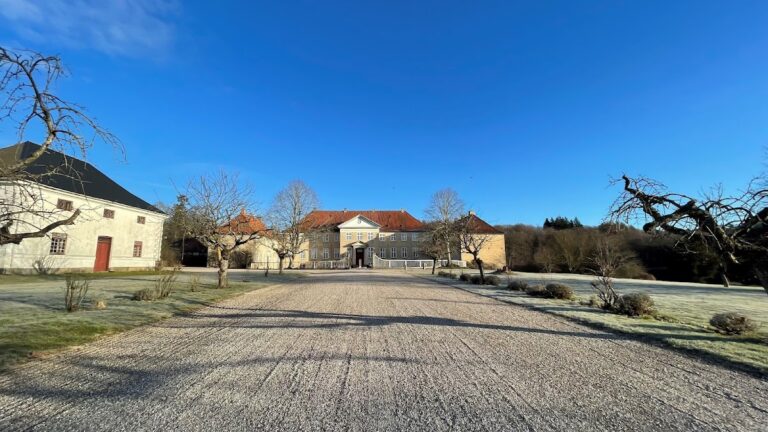
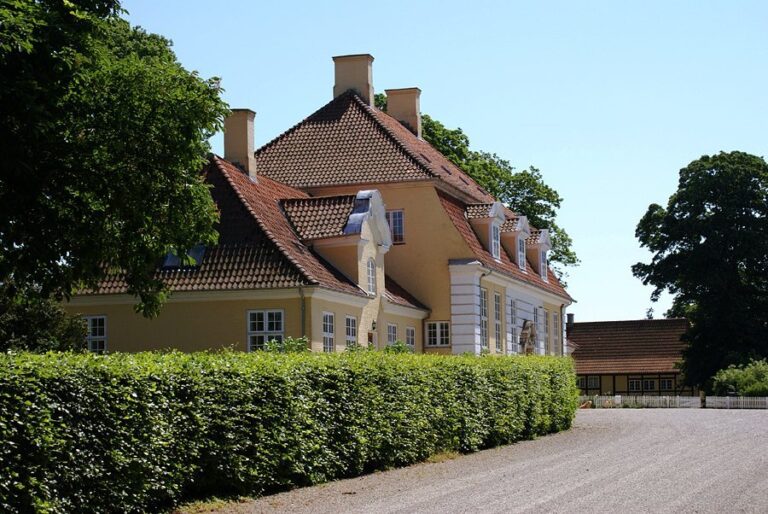
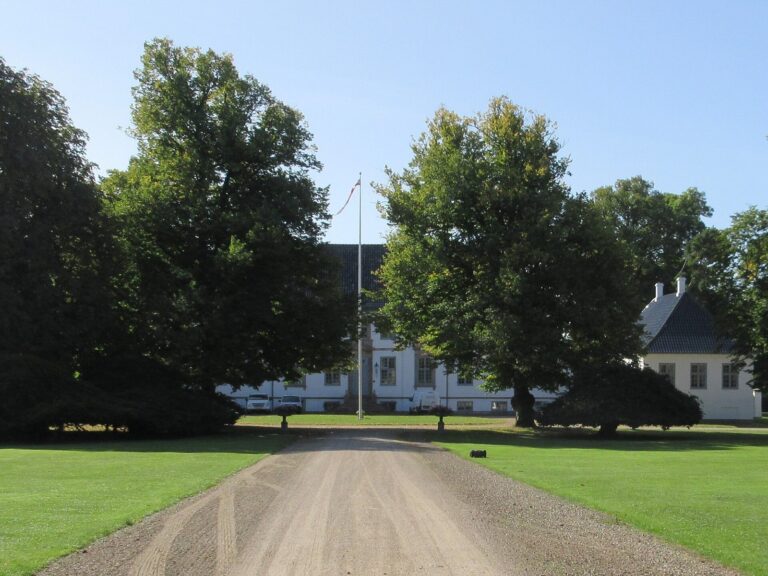
The estate’s principal built features are its manor house and home farm, both developed during the late 19th century.
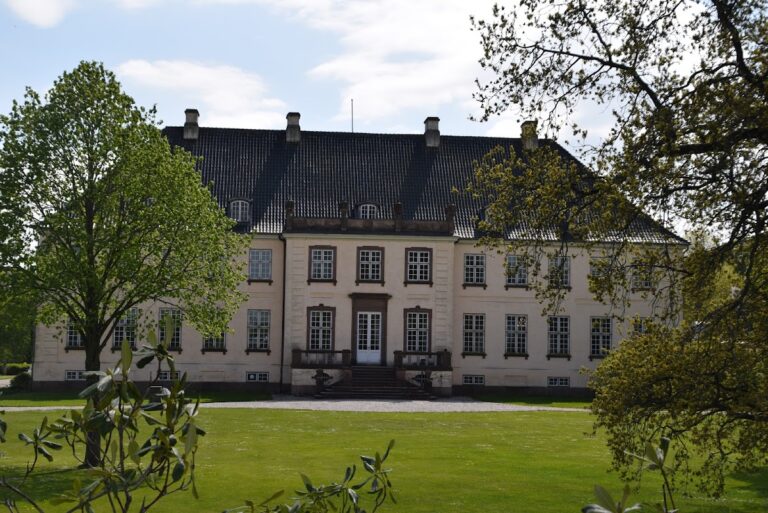
Manor house
The principal manor-house building was completed in 1879. It was built by a son of Christian Frederik Schulin-Zeuthen.
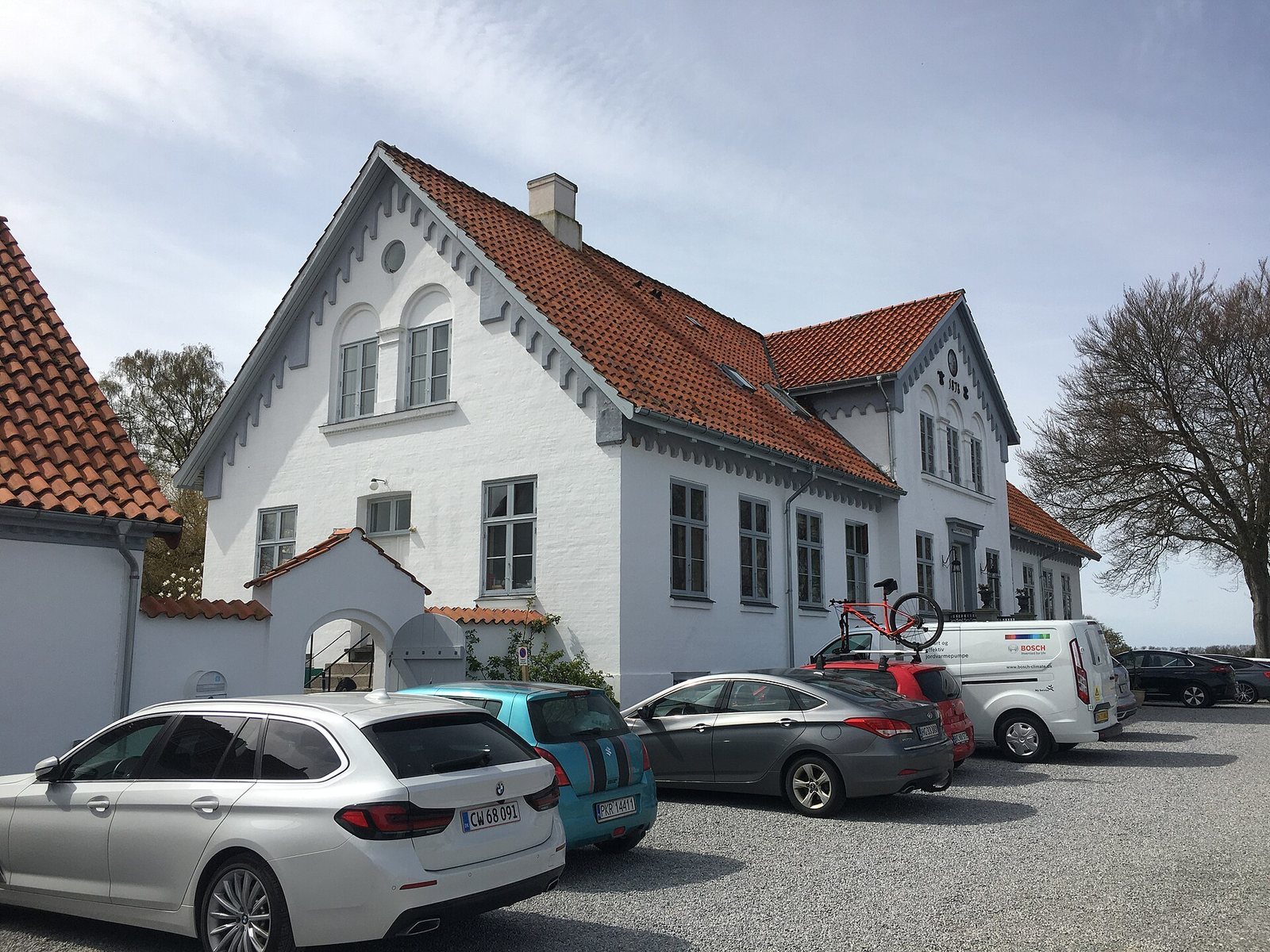
Home farm
A new home farm, the farmstead associated with a manor or landed estate, was built toward the end of the 19th century.