Weston Park: A Country House and Historic Estate in Staffordshire
Site at a Glance
- Popularity
- High
- Country
- United Kingdom
- Primary era
- Early Modern
- Eras represented
- Early Modern, Modern
- Civilizations
- British, English
- Site type
- Domestic
- Remains
- Manor House
On this page12 sections
History
Medieval estate and family inheritance
Weston Park is a country house and historic estate at Weston-under-Lizard in Staffordshire, United Kingdom. Weston appears in the Domesday Book, the late-eleventh-century survey of English landholding made for William I, as land held by the Norman Rainald de Bailleuil, sheriff to Roger de Montgomery. The park preserves part of a medieval deer park and forest.
The estate first belonged to the de Weston family. It passed to a branch of the Mytton family when heiress Elizabeth Mytton married Sir Thomas Wilbraham. Later, Mary Wilbraham’s marriage to Richard Newport, 2nd Earl of Bradford, brought Weston to the Earls of Bradford in the first grant of that title.
Wilbraham and Bridgeman ownership
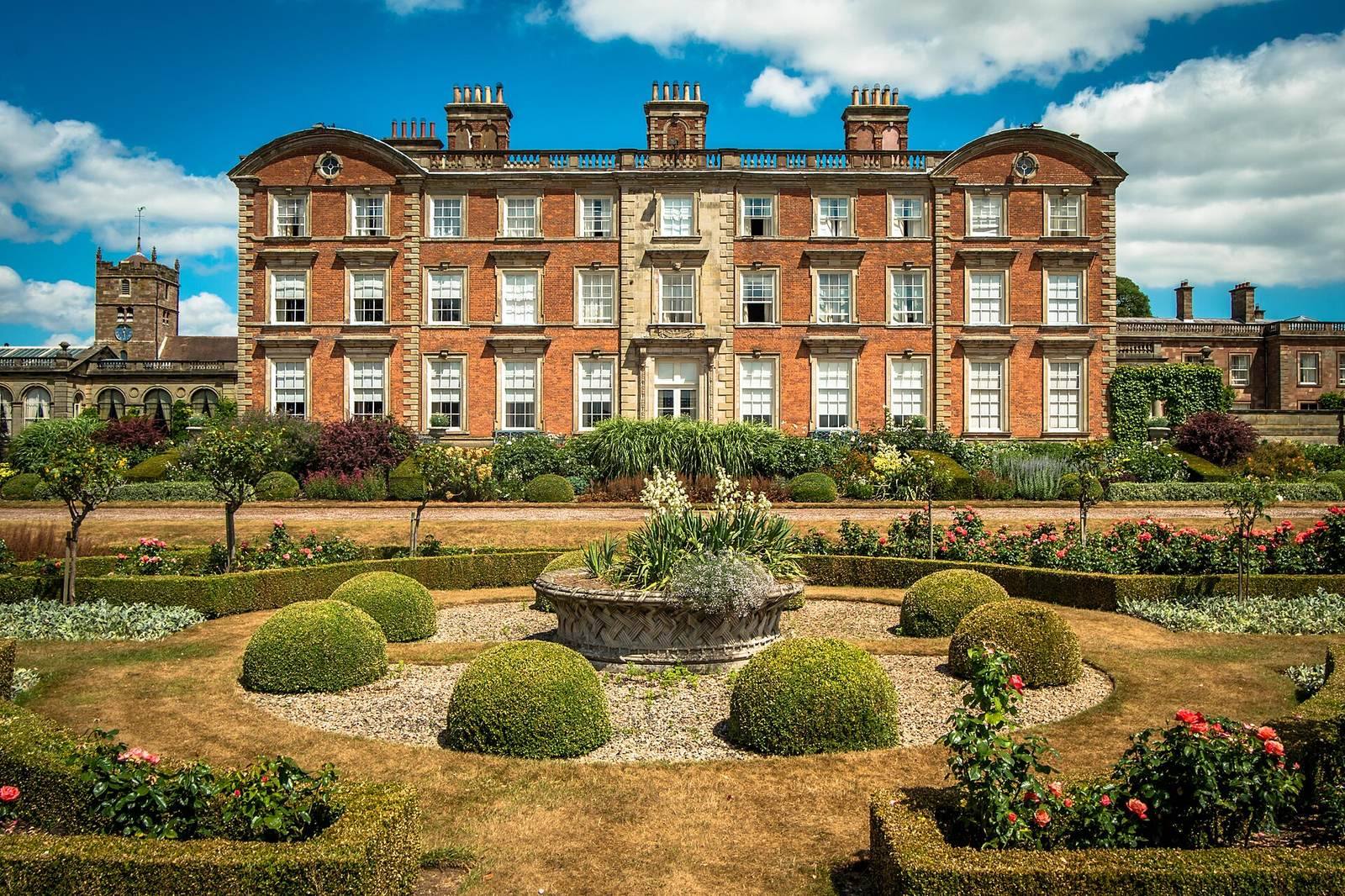
Weston Hall was built in 1671 for Lady Elizabeth Wilbraham in the Carolean style, associated with the reign of Charles II. Wilbraham is often credited with designing the house, but that attribution is unproven. William Taylor is considered the likeliest architect to have carried out the work, and he was at Weston in 1674. Wilbraham was an active patron of architecture; her copy of Andrea Palladio’s The Four Books of Architecture, marked with extensive annotations, remains in the house’s collection.
In the eighteenth century, the male line of the Newport Earls of Bradford ended, and Weston passed to Sir Henry Bridgeman, 5th Baronet. His mother, Lady Anne Bridgeman, was a granddaughter of Lady Wilbraham. Although the Bridgemans held other estates in Shropshire and Warwickshire, they made Weston their principal home. Sir Henry commissioned Capability Brown to landscape the park and employed James Paine to alter the house and undertake garden works in the 1760s.
Late-nineteenth-century alterations for Countess Selina and Orlando Bridgeman, 3rd Earl of Bradford in the second grant of that title, changed the house’s entrance arrangement and courtyard. In 1986, the 7th Earl of Bradford gave Weston Park House and the surrounding parkland to the nation, with support from the National Heritage Memorial Fund. Trustees of the Weston Park Foundation now care for the estate.
Weston Hall and its north and east service wings, the Roman Bridge, and the Temple of Diana are Grade I listed, a designation for buildings of exceptional architectural or historic interest. The park and garden are Grade II*, meaning they are of particular importance, while the Orangery and attached link, Stable Block, gateway, stables, and granary are Grade II listed. A tradition connects the hall and gardens with Blandings Castle in P. G. Wodehouse’s Lord Emsworth stories.
Remains
House and courtyard
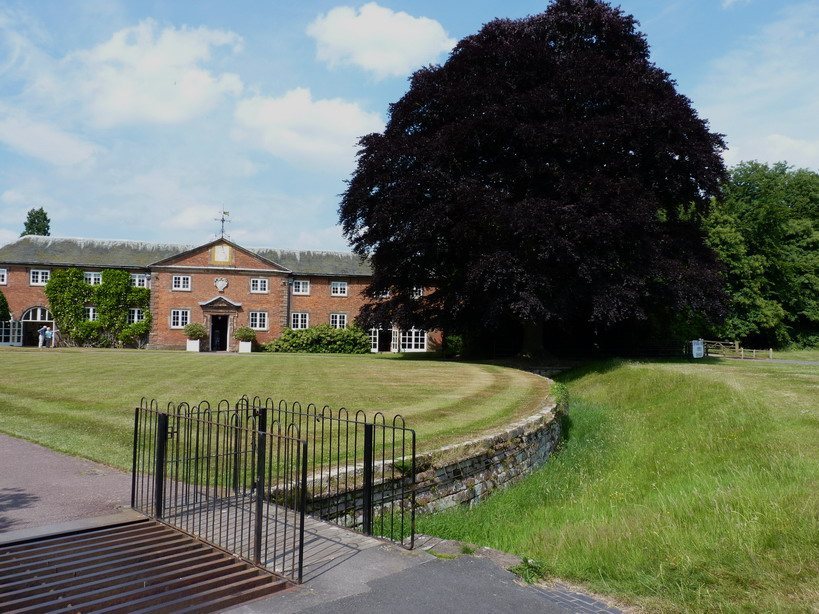
The estate covers more than 1,000 acres (about 400 hectares) of parkland. Weston Hall is a Carolean house arranged around a U-shaped courtyard. The courtyard was later roofed above ground-floor level and enclosed by a new front. The house’s south front, once its entrance front, has three storeys and twelve bays, or divisions across the facade. The main entrance is now on the east front.
Estate buildings and grounds
Orangery and service buildings
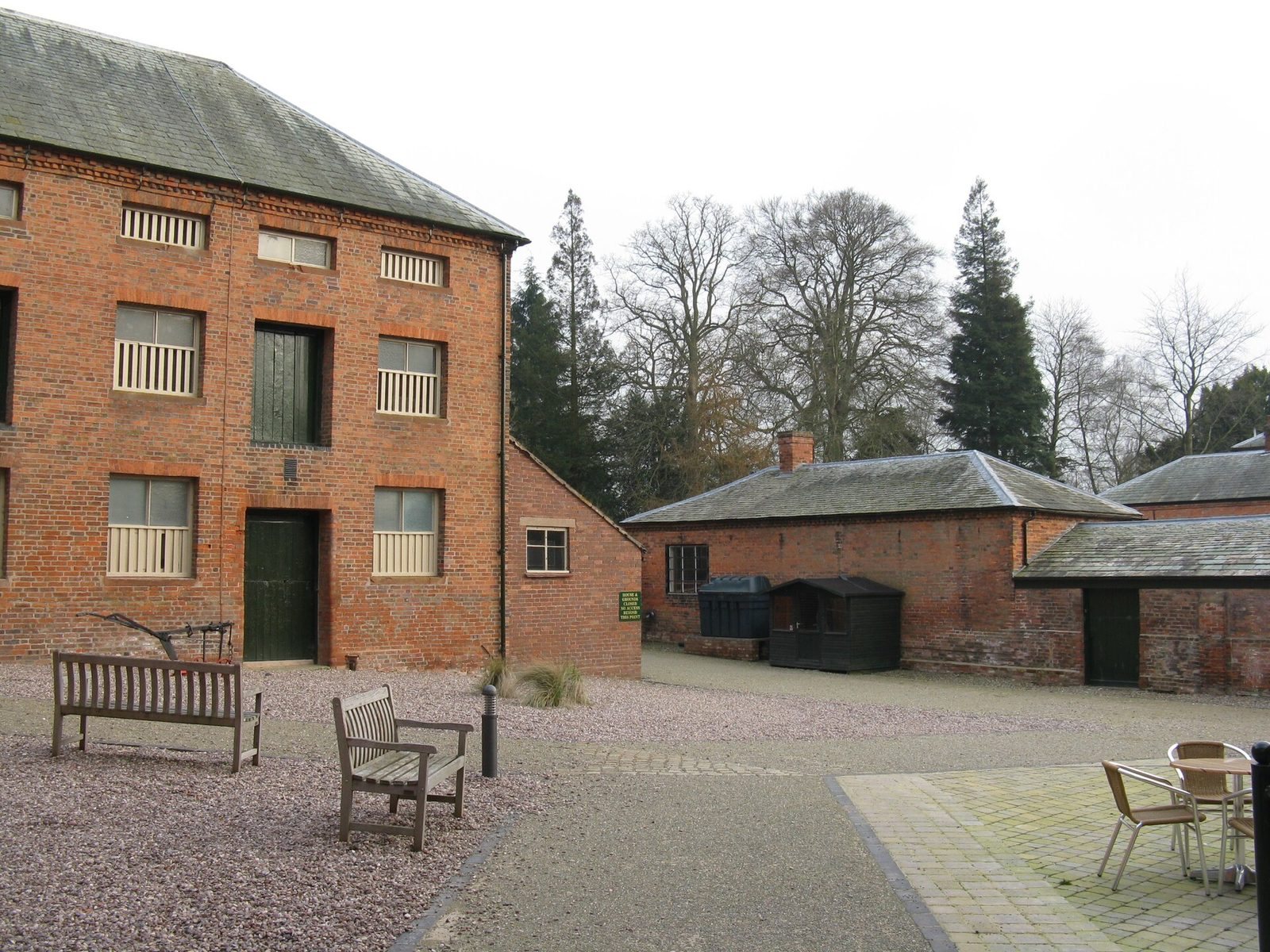
The Orangery and its attached link stand 25 metres west of the hall. The Stable Block lies 60 metres northeast of the entrance front, with a gateway attached to its southwest side. The estate also includes stables and a granary, among the buildings adjoining the house. The Granary dates to 1767 and was restored in 2009.
Church of St Andrew
The estate church, dedicated to St Andrew, stands beside the house. Architectural historian Nikolaus Pevsner described it as a project of Lady Wilbraham dating to 1700–1701.
Park structures and garden house
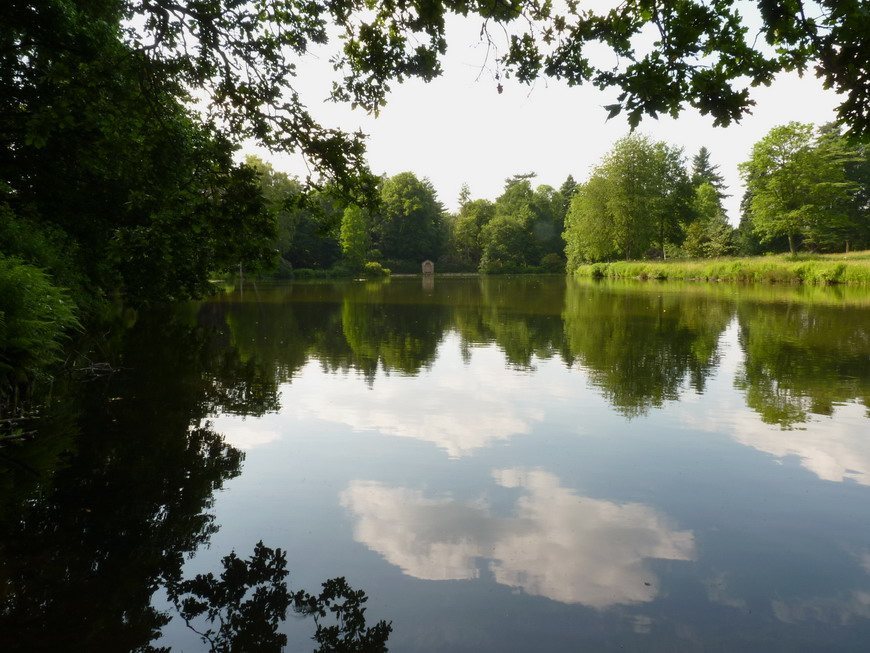
Brown’s landscaped park includes gardens and a lake, as well as a miniature railway. The stone-built Roman Bridge crosses Temple Pool on a single arch. The Temple of Diana is a garden house that also served as an orangery. Built in three bays of finely dressed stone laid in regular blocks, it has Ionic columns, a classical column design. Its interior painted panels by Giovanni Battista Innocenzo Colombo show the life of Diana, the Roman goddess associated with hunting and nature. Paine later called the building his greenhouse at Weston.
Art and collections
Paintings and portraits
Weston Park’s collection contains more than 30,000 objects. Its portraits span the seventeenth to twentieth centuries. They include two portraits of Wilbraham family women by John Michael Wright, two early portraits by John Constable, and two portraits by Sofonisba Anguissola that apparently depict the same child. A portrait of Lady Elizabeth Wilbraham is by Sir Peter Lely. The collection also includes works by Anthony van Dyck and his workshop, including a portrait of Sir Thomas Hanmer, a painting of horses by George Stubbs, and Claude Joseph Vernet’s coastal scenes Calm and Storm.
Decorative and ceremonial objects
Among the collection’s other objects are a silver dressing-table service made in 1679, one of twelve surviving early English-made services of its kind in the country, and furniture that includes pieces Thomas Chippendale made for the house. One room contains tapestries made for Weston by the Gobelins Manufactory in the 1760s. An elaborately embroidered ceremonial purse belonging to Sir Orlando Bridgeman is displayed beside his portrait. The purse is associated with his service as Lord Keeper of the Great Seal, a senior legal and government office, from 1667 to 1672.