Emblève Castle: A Medieval Fortress in Belgium
Site at a Glance
- Popularity
- Medium
- Country
- Belgium
- Primary era
- Medieval
- Eras represented
- Medieval
- Civilizations
- Holy Roman Empire
- Site type
- Military
- Remains
- Castle
On this page4 sections
History
Early references and origins
Emblève Castle is a medieval fortress ruin in Aywaille, Belgium. An early reference from 741 may concern Griffon, son of Charles Martel and half-brother of Pepin the Short and Carloman, who may have been imprisoned there after a conflict with them. The identification is uncertain: he may instead have been held at Novum Castellum at Chèvremont.
In 855, Lothair II granted Sprimont to Stavelot Abbey, which received a fortified house called the Tour de Sprimont, regarded as the castle’s origin. The fortress is estimated to have been built in the 10th century, while the castle proper dates to the 13th century. Although the ruins now lie in Aywaille, the castle historically belonged to Sprimont, whose municipal boundary passes within a few dozen metres of the building.
Lordship and demolition
The castle served as Sprimont’s seat of justice and as a residence for its lords. From the early 15th century until the late 16th century, it belonged to the La Marck-Arenberg branch of the House of La Marck. One of Wallonia’s principal noble houses, the family held the Duchy of Bouillon, the County of Arenberg and the Principality of Sedan, and included several prince-bishops of Liège. A prince-bishop held both religious office and temporal authority. The fortress defended Sprimont until its demolition in 1578.
The historic fortress is properly called Château d’Emblève. It is also known as New Castle on the Amblève and the Castle of the Four Sons of Aymon, a reference to legendary heroes of medieval French literature. The name Château d’Amblève is sometimes used in error: Emblève is the hamlet or site name, while Amblève is the river.
Remains
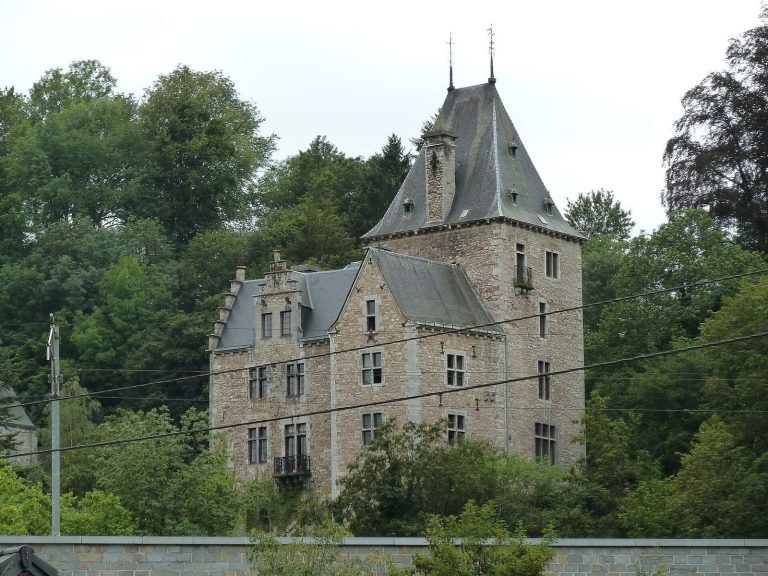
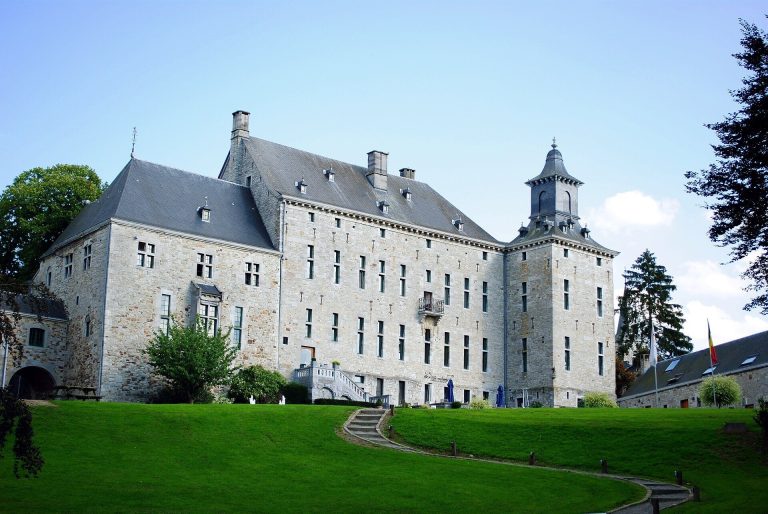
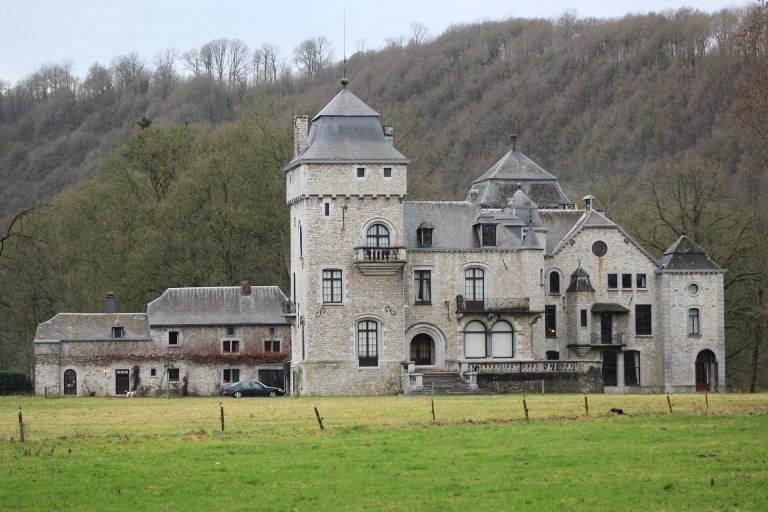
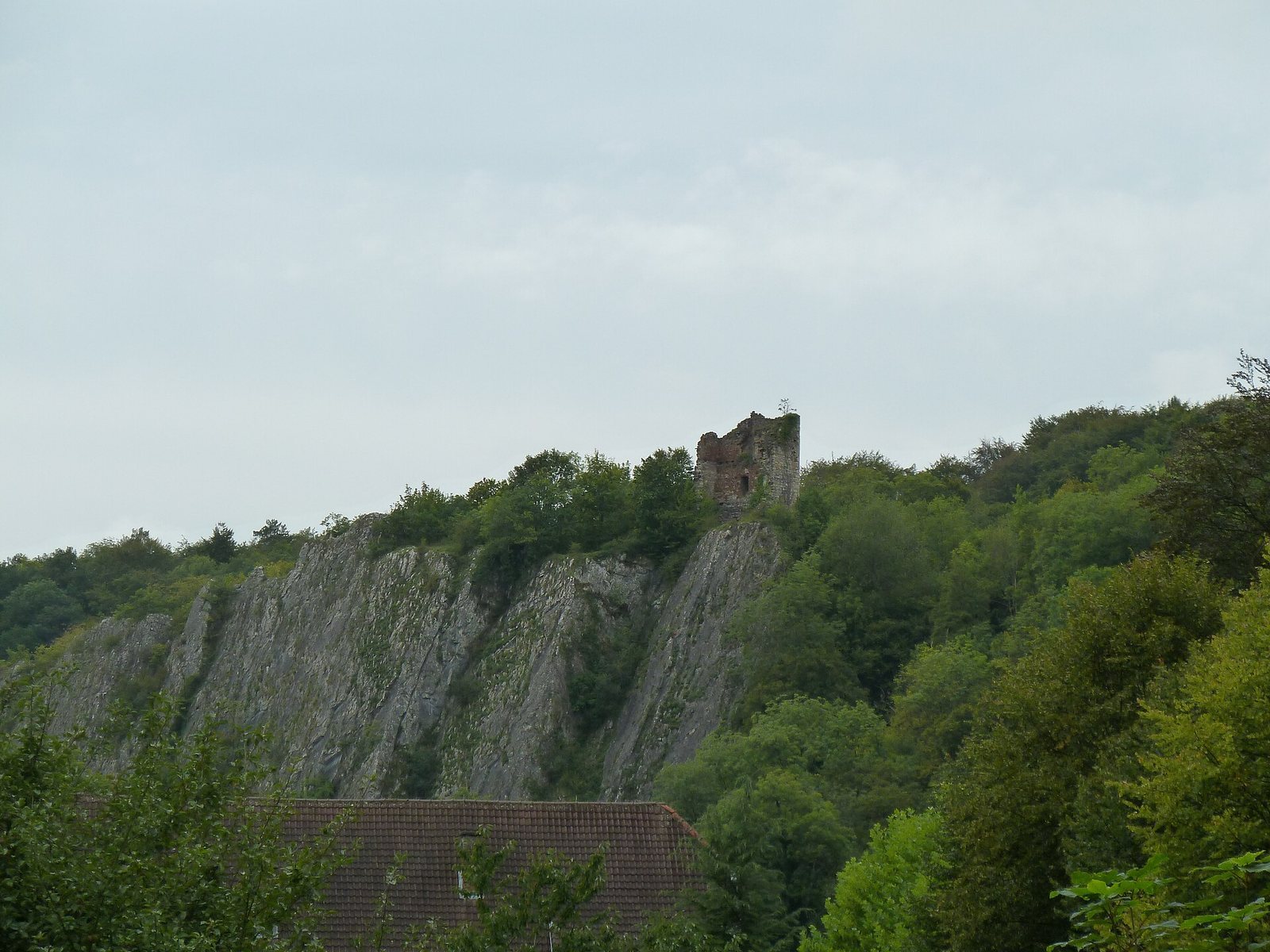
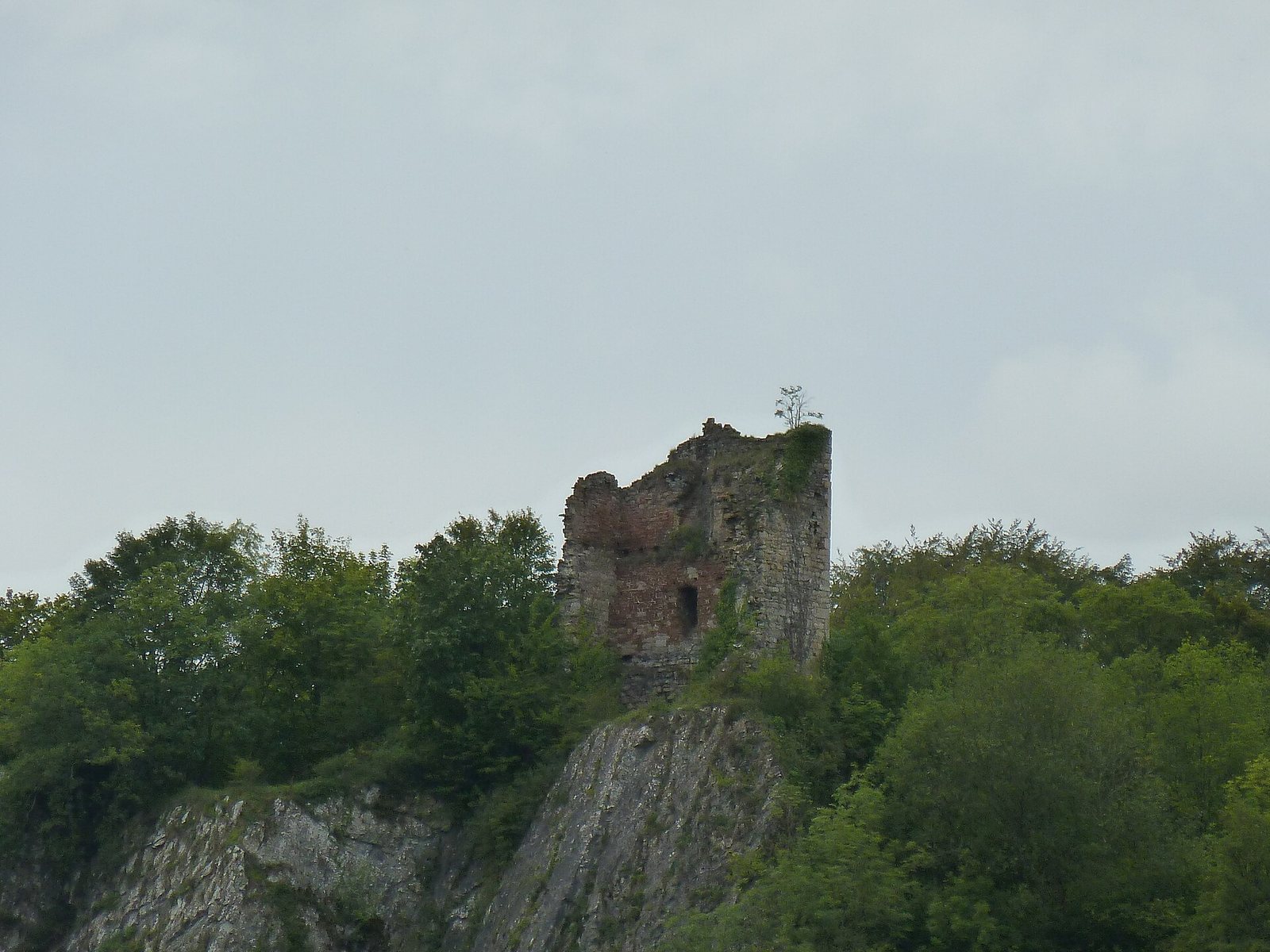
The medieval fortified castle survives as ruins on a granite cliff above the Amblève, at the highest point in the river valley. The remains occupy the cliff top, farther downstream than a separate modern Château d’Emblève beside the river. That modern building serves as its owners’ residence.