Heinrichsbürg Castle Ruins: A Medieval Noble Castle in Bavaria
Site at a Glance
- Popularity
- Low
- Country
- Germany
- Primary era
- Medieval
- Eras represented
- Medieval
- Civilizations
- Duchy of Bavaria, Holy Roman Empire
- Site type
- Military
- Remains
- Castle
On this page7 sections
History
A noble castle and Palatine holdings
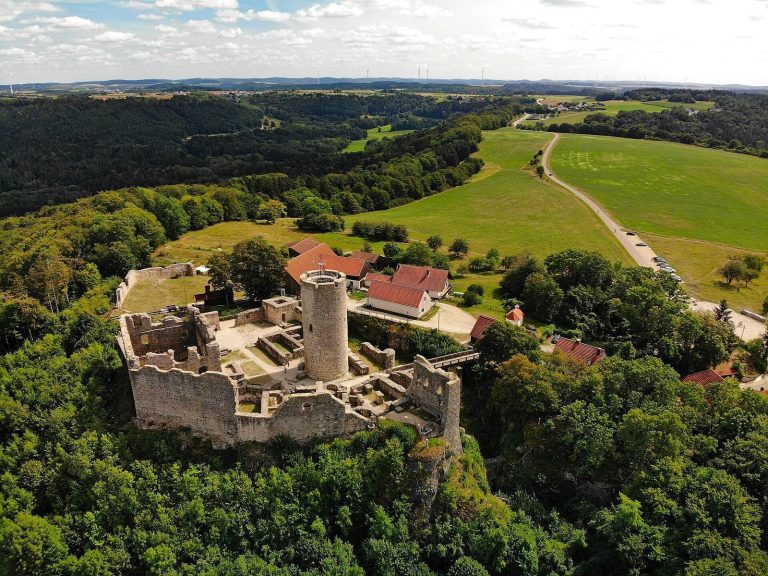
Heinrichsbürg Castle Ruins occupy the 549-metre Schlossberg near Pölling in Neumarkt in der Oberpfalz, Bavaria, Germany. The noble castle was built there in the 12th century. In 1329, it passed to the Palatinate under the Treaty of Pavia, which divided Wittelsbach lands between the Palatinate and Bavaria.
Albrecht IV of Thann held Heinrichsbürg as a fief, property granted in return for service, from 1345 to 1366. Heinrich VI of Wildenstein bought it that year, then sold it on 13 May 1369 to Heinrich IV von Stein auf Hiltpoltstein for 1,200 pounds of Heller, a medieval coin and monetary unit.
Hunting lodge and destruction
After the Stein family died out, Count Palatine Ruprecht, the Palatinate’s princely ruler, granted the castle as a fief to the knight Heinrich Strupperger of Berg, near Neumarkt, before 1402. In the 15th century, Count Palatine Johann enlarged it as a hunting lodge.
The castle was destroyed in 1504 during the War of the Landshut Succession, a conflict over who would inherit the Duchy of Bavaria-Landshut.
Remains
Summit site and defenses
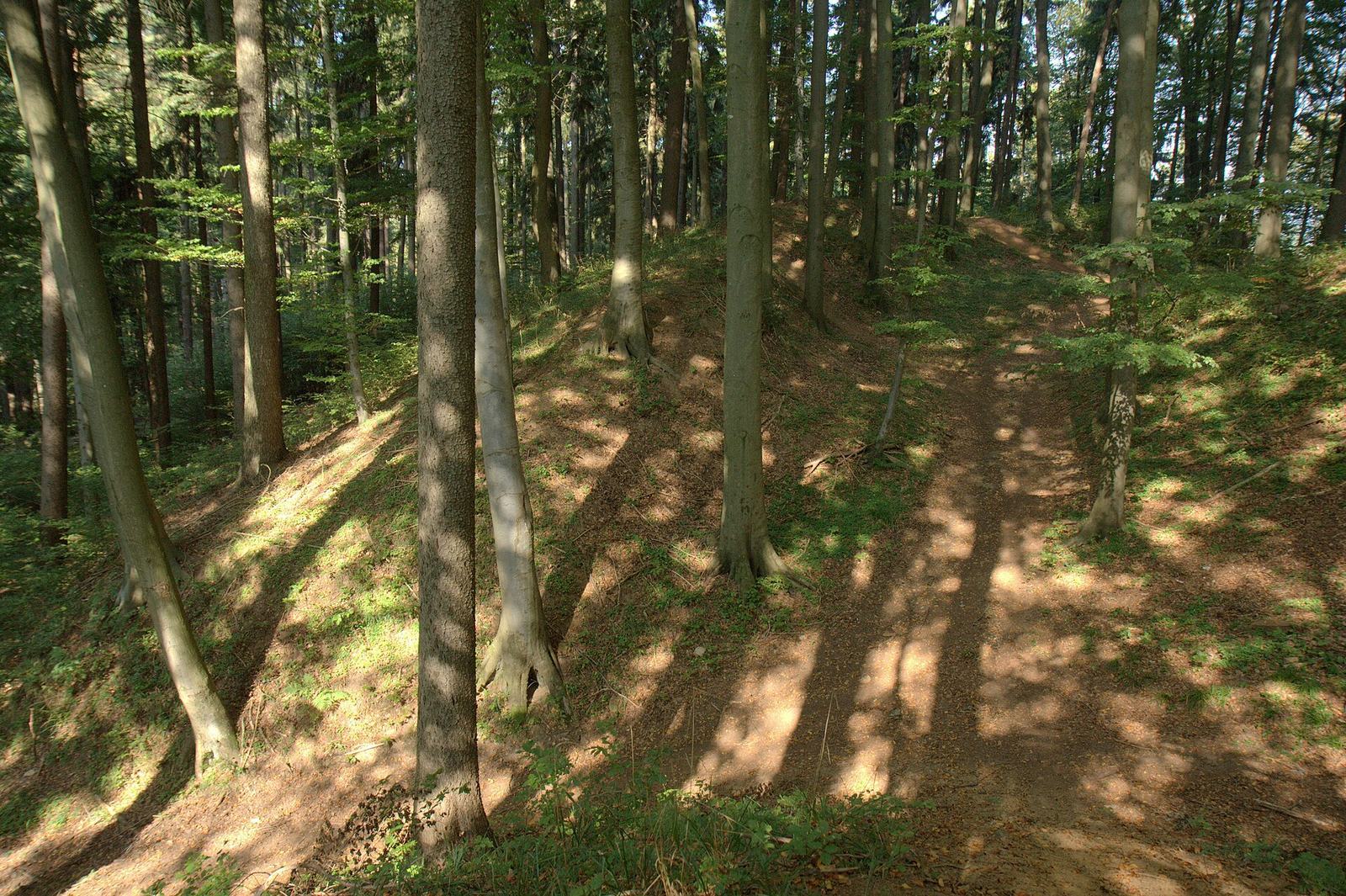
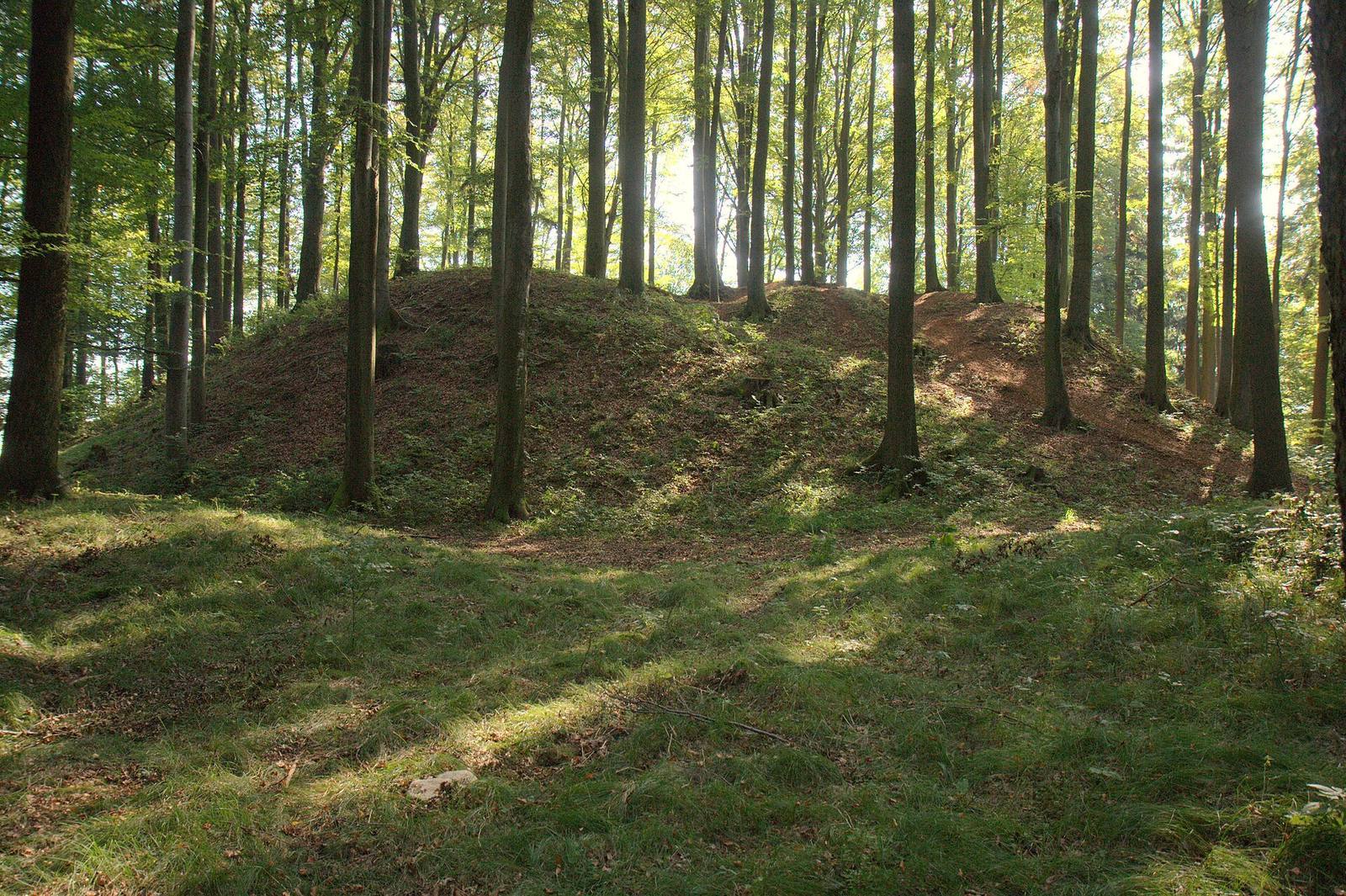
The former summit castle stands on a steep, seven-metre-high truncated cone on Schlossberg, an offshoot of the Dillberg. Its defenses included a circular system of ramparts and a ditch, traces of which remain on the mound.
Rampart and ditch
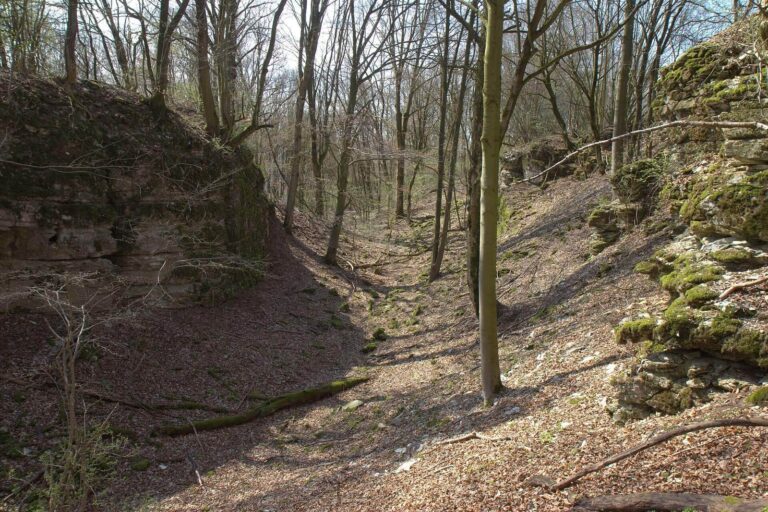
The western section of the ring ditch survives, together with its outer rampart. These are remnants of the castle’s former defensive circuit.
Walls and mound features
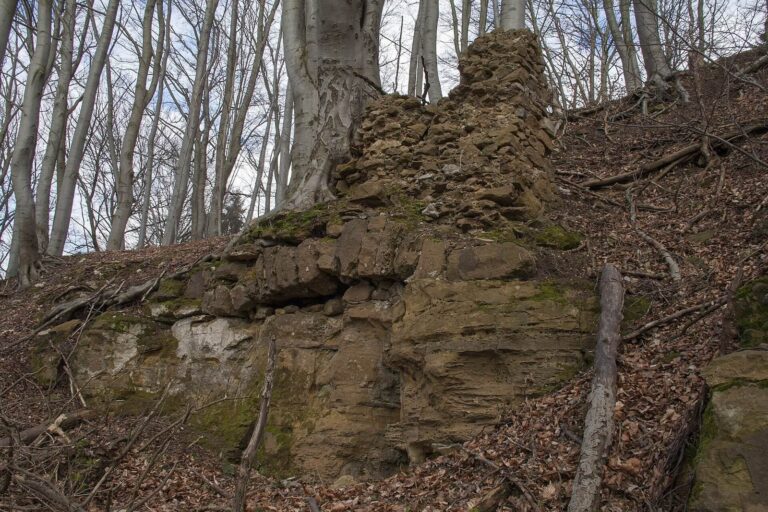
Some wall sections remain visible above ground. A hollow in the castle mound may mark the site of a building, while a patch of ground in front of the western ditch may have been the former entrance.