Neu-Wartenburg Castle: An 18th-Century Estate in Upper Austria
Site at a Glance
- Popularity
- Medium
- Country
- Austria
- Primary era
- Early Modern
- Eras represented
- Early Modern, Modern
- Civilizations
- Habsburg, Holy Roman Empire
- Site type
- Domestic
- Remains
- Castle
On this page7 sections
History
Neu-Wartenburg Castle is an estate near Timelkam and Vöcklabruck in Upper Austria, Austria, built between 1730 and 1732 for Johann Albert, Count of Saint-Julien-Wallsee. It was intended to provide suitable accommodation for Emperor Charles VI during a planned three-day falconry hunt.
The Wartenburg lordship
The Pollheimer lordship, a landed estate with associated territorial authority, is recorded by 1319. Its original seat was Wartenburg Castle, above the Vöckla on the southern foothills of the Hausruck. In 1639, the seat moved north to Alt-Wartenburg Castle. Both earlier castles are now ruins.
Johann Albert’s commission
In 1729, Johann Albert bought the lordship from the Nütz von Goisernburg family, which had held it since 1640. He commissioned the Viennese architect Anton Erhard Martinelli to prepare plans for the new castle.
Changes of ownership and later history
Debt compelled Johann Albert to sell the estate in 1754. It passed through the Ghelen family and reached the Grechtler family in 1766, then was sold to Thaddäus von Reischach in 1785 and Ludwig Ratzesberg in 1847. In 1869, Albert, Count of Saint-Julien, returned it to his family’s ownership. The last Saint-Julien heiress adopted Elisabeth, Countess von Strachwitz, and the castle has belonged to the von Strachwitz family since 1973.
A fire destroyed the dome in 1940, and it was rebuilt in 1968. The park is regarded as one of Austria’s important garden-architecture monuments and is listed under the Austrian Monument Protection Act.
Remains
Castle complex
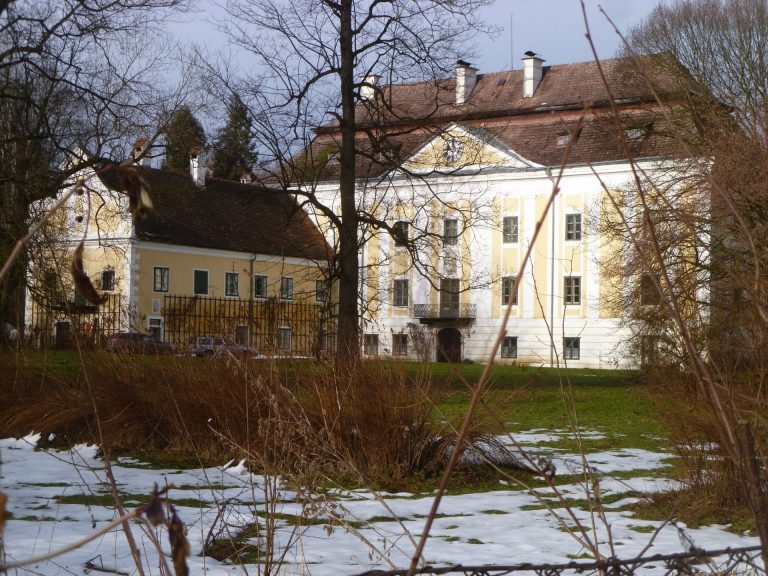
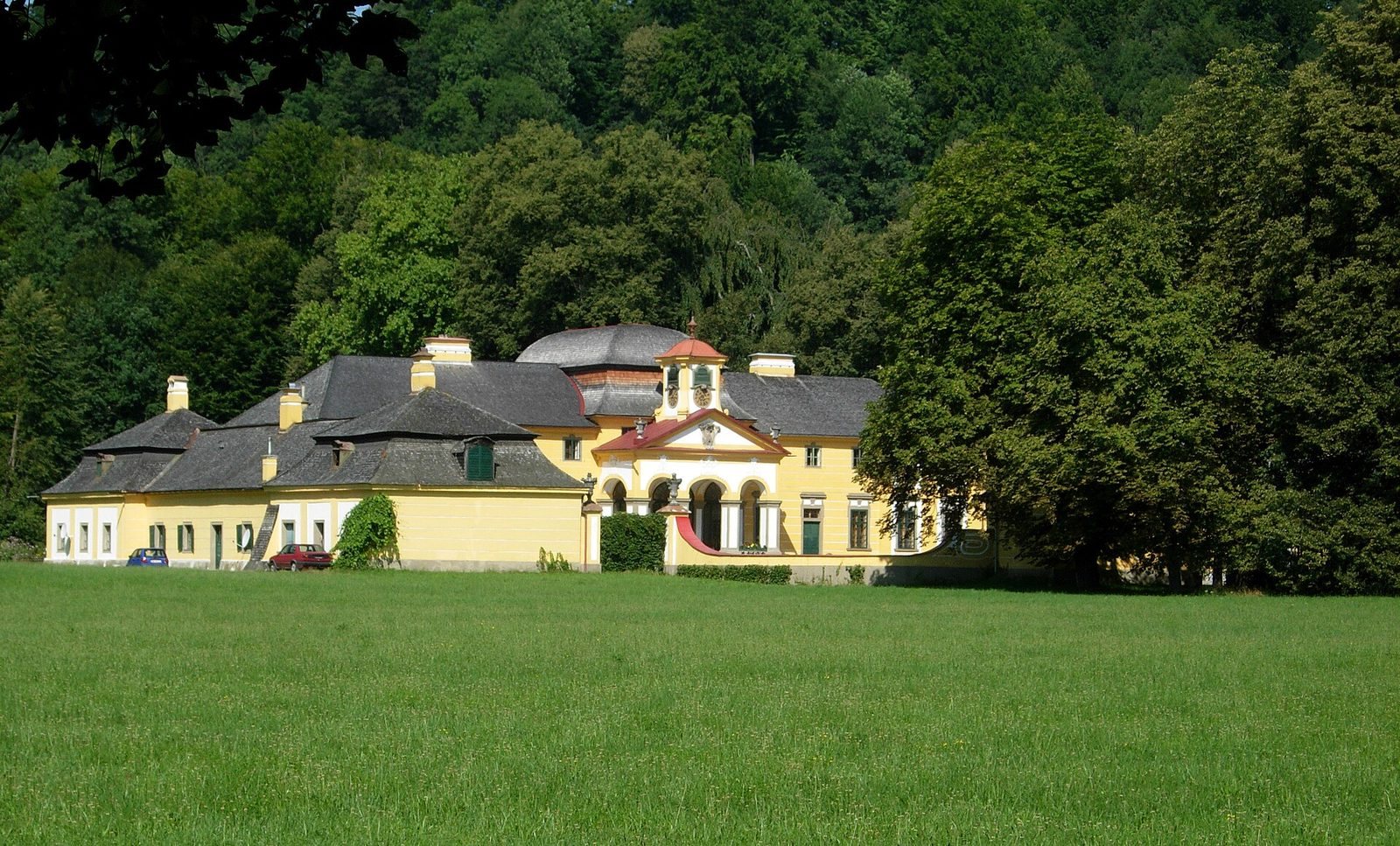
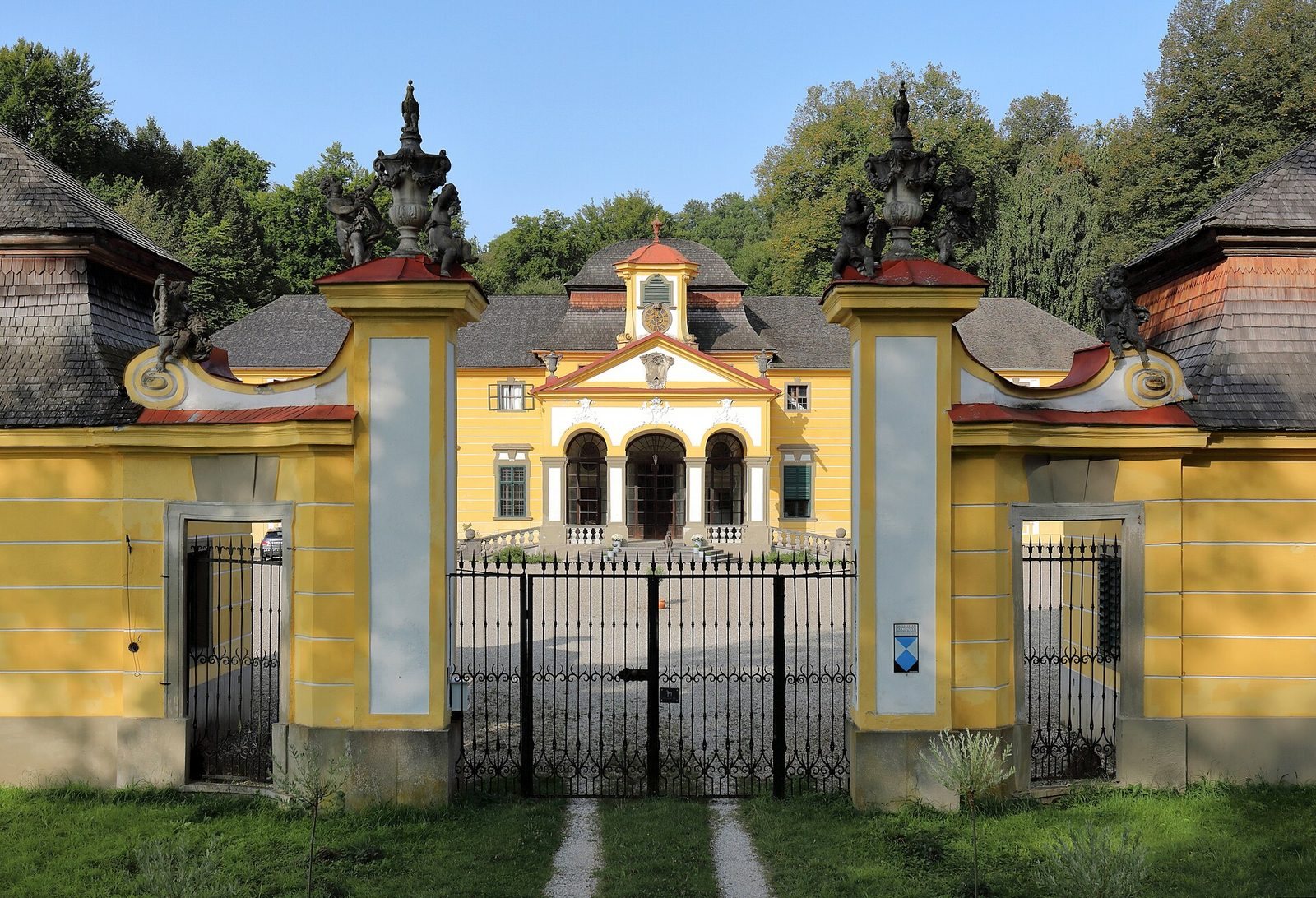
The estate lies on the right bank of the Vöckla, below Wartenburg Castle. Its main house faces an east-facing courtyard of honor, bounded by two side wings and a portal with pavilions. The main house has a raised central section topped by the rebuilt dome.
Park and settlement
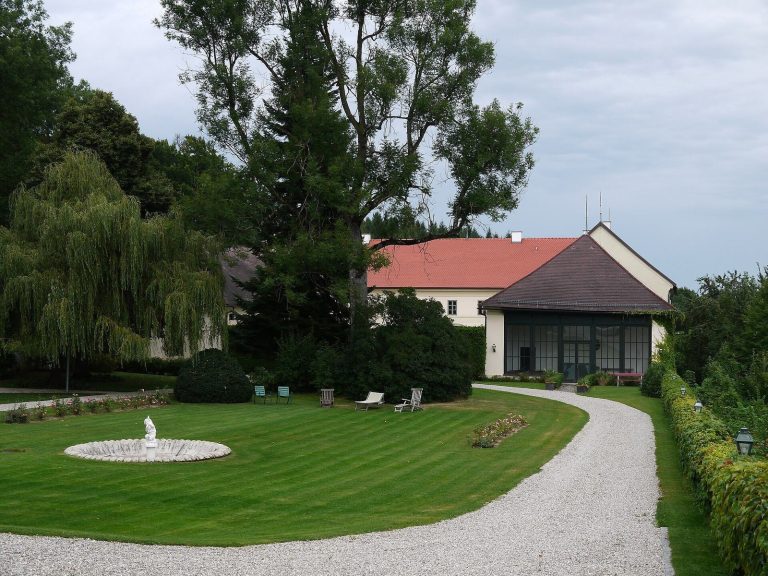
The park occupies a bend in the Vöckla. Its layout retains principal features from the 1730s, while its outer areas form a nineteenth-century landscape garden. Several houses are scattered across the estate. A farmstead stands at the far end of the avenue, within the municipality of Vöcklabruck. Together, the houses form a settlement divided between the municipalities of Timelkam and Vöcklabruck, with a locality in each.