Newby Hall: A Historic Country House in North Yorkshire
Site at a Glance
- Popularity
- Very High
- Country
- United Kingdom
- Primary era
- Early Modern
- Eras represented
- Early Modern, Modern
- Civilizations
- British, English
- Site type
- Domestic
- Remains
- Elite Residence
On this page14 sections
History
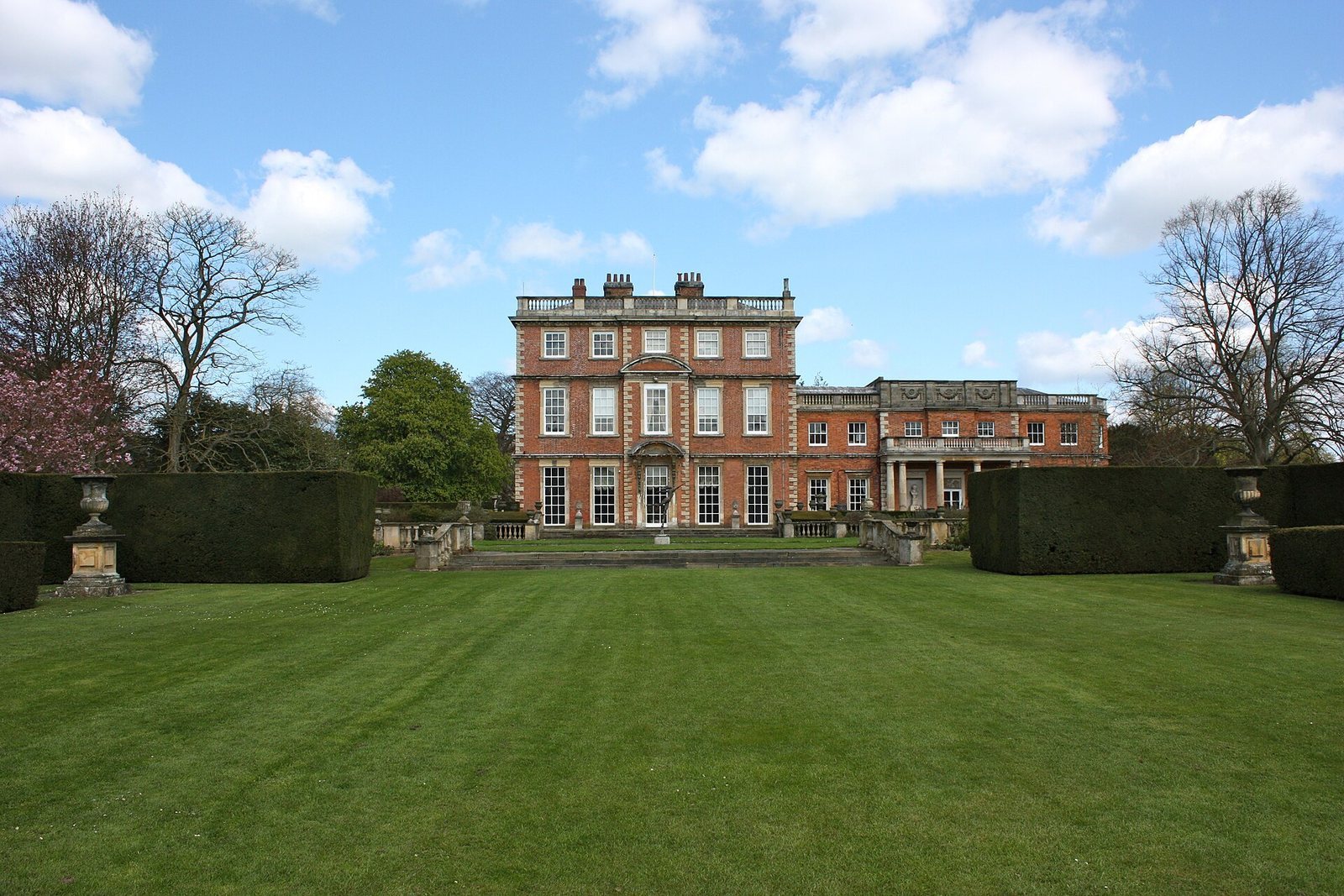
Newby Hall is a country house beside the River Ure in Skelton-on-Ure, North Yorkshire, United Kingdom. Sir Edward Blackett built it in 1697, and later owners enlarged and refashioned the house. It became home to William Weddell’s Roman antiquities and was the birthplace of Frederick John Robinson, later Viscount Goderich and prime minister in 1827-28.
The manor and Blackett’s house
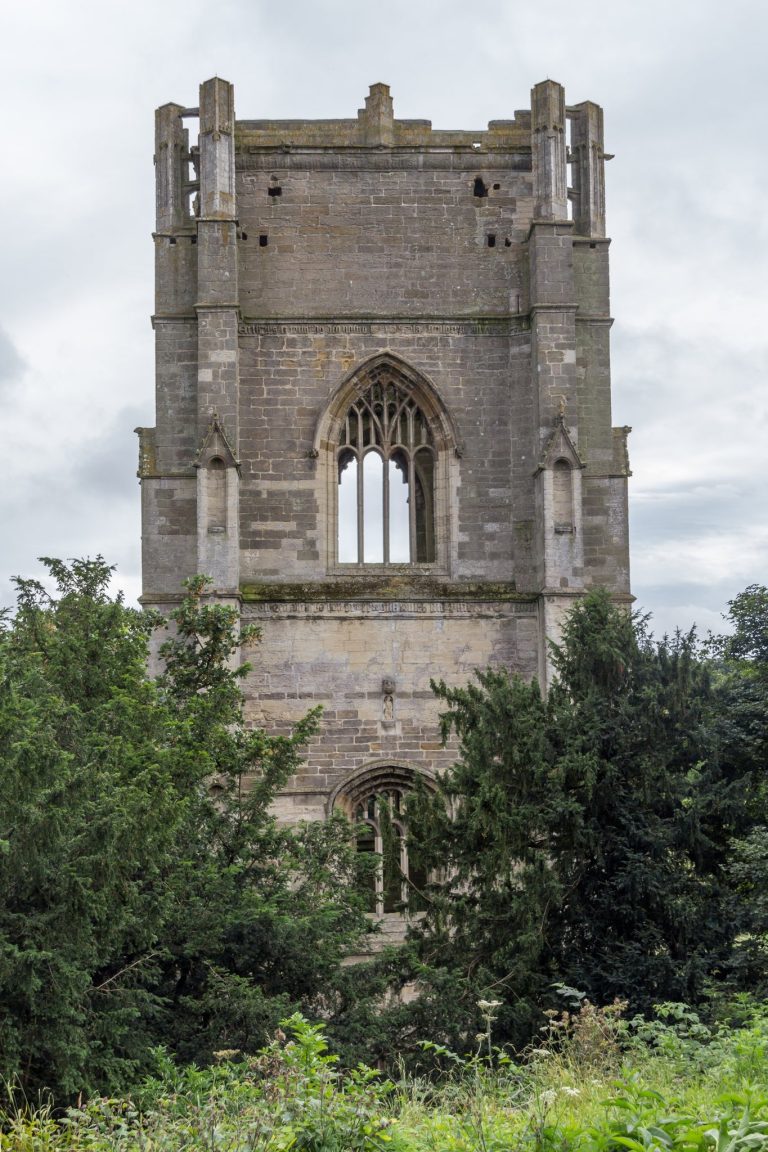
The manor of Newby was originally held by the lords of Topcliffe Castle. After Sir John Crosland died in 1670, his family sold the estate to Blackett in the 1690s. Blackett demolished the earlier manor house and built Newby Hall in 1697, perhaps with help from architect Sir Christopher Wren. Travel writer Celia Fiennes visited that year and ranked the house highly among those she had seen in Yorkshire.
William Weddell’s enlargement
Blackett’s son succeeded him in 1718, followed by a nephew, also named Edward. In 1748 the younger Edward sold Newby to Richard Elcock, later known as Richard Elcock Weddell. Richard’s young son William inherited the estate in 1762. William Weddell (1736-1792), a Member of Parliament for Malton, used wealth inherited from his great-uncle’s South Sea Company fortune to enlarge the house during the 1760s. John Carr and Robert Adam were among the architects who worked on its interiors.
Weddell brought Roman antiquities from Italy in 1764-65, and Newby Hall was adapted to house the collection. When he died in 1792, he left the estate to Thomas Philip Robinson, Lord Grantham. Robinson later adopted the names Thomas Weddell and Thomas de Grey and became the 2nd Earl de Grey.
The Robinson and Vyner families
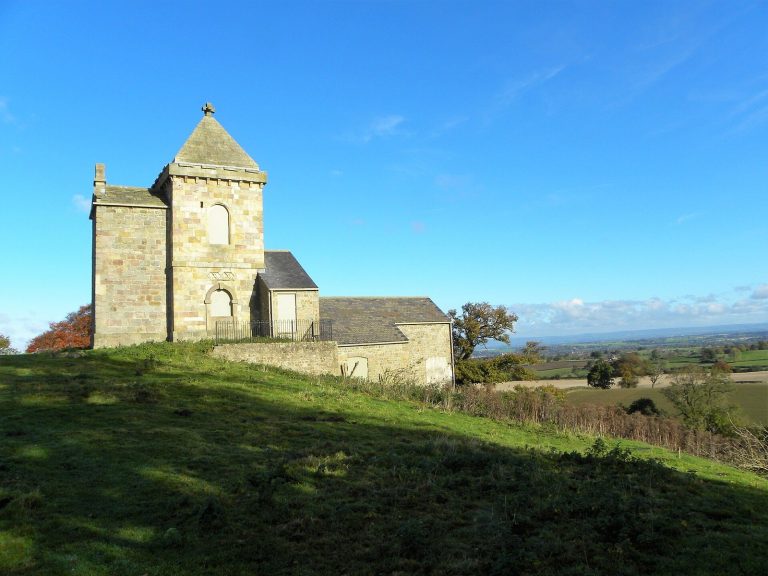
When Thomas de Grey died in 1859, his titles passed to his nephew George Robinson, 1st Marquess of Ripon and 2nd Earl of Ripon. Newby Hall went instead to Thomas’s daughter, Lady Mary Gertrude Robinson, who had married Henry Vyner (1805-1861). Between 1871 and 1876, she commissioned architect William Burges to build the Church of Christ the Consoler in the grounds as a memorial to her son, killed by bandits in Greece in 1870.
The Vyners brought an equestrian statue to England after the Restoration of the Monarchy in 1660, when Charles II returned to the throne following the period of government led by Oliver Cromwell. The statue was first erected in London and later altered to show Charles II trampling Cromwell. It was installed at Newby in 1883. The estate passed first to Lady Mary’s son Henry Frederick Clare Vyner (1836-1883), then to his brother Robert Charles de Grey Vyner (1842-1915). Robert’s daughter Mary Evelyn Vyner inherited Newby in 1915. She had married Lord Alwyne Compton in 1886 and died in 1957.
Compton stewardship and heritage status
The Compton family, descended from William Weddell through the female line, became Newby’s owners and restored the property. Major Edward Compton took over the estate in 1921. His son Major Robert Edward John Compton, known as Robin, assumed its running in 1960 and handed it to his younger son Richard in 1997. Edward developed the gardens in their present form, and Robin began the national collection of the dogwood genus Cornus at Newby in 1990.
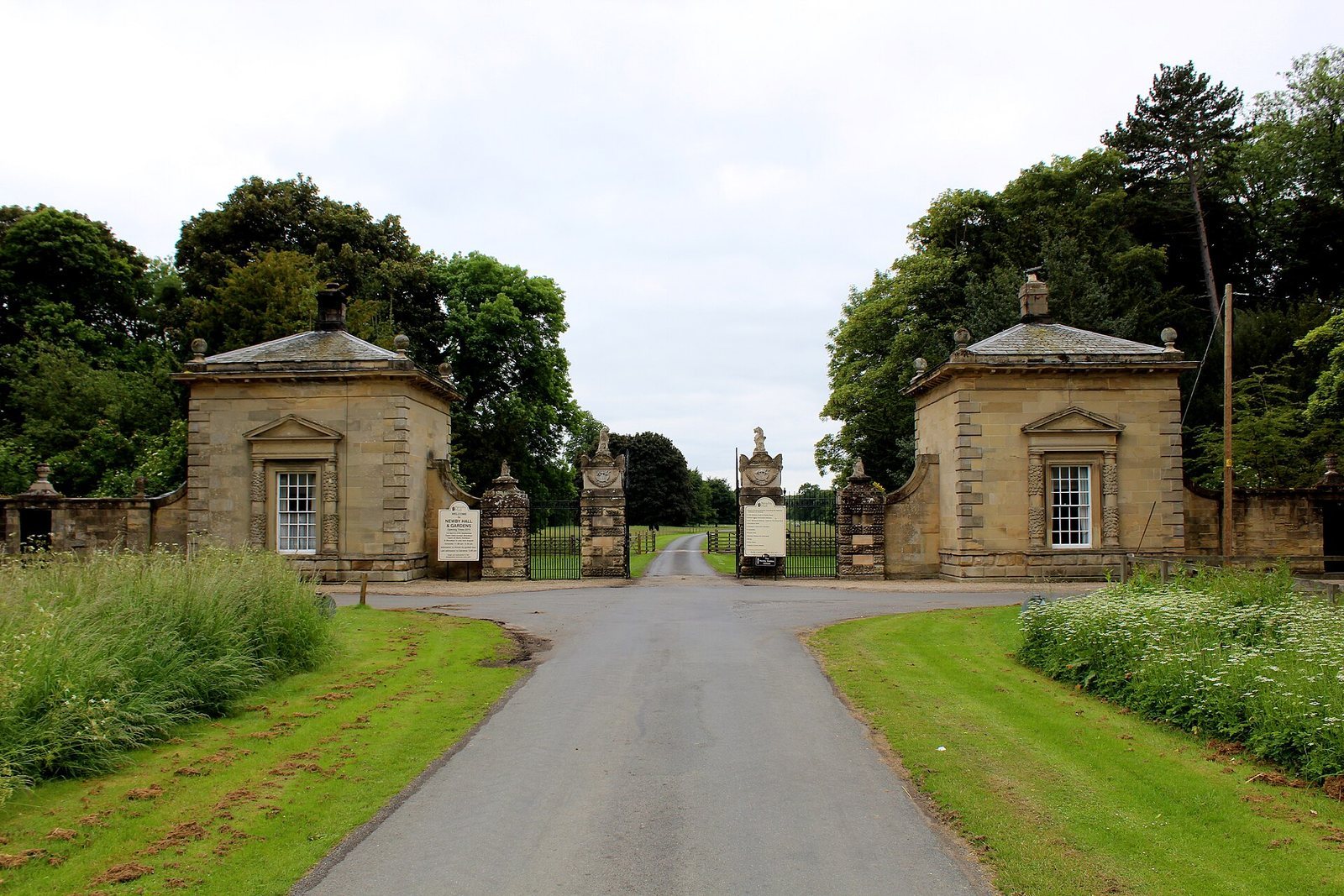
Newby Hall received Grade I listing in 1952, a category for buildings of exceptional interest. The park and garden are Grade II*, a designation for particularly important sites of more than special interest; the stable range and Skelton Lodges are also Grade I listed.
Remains
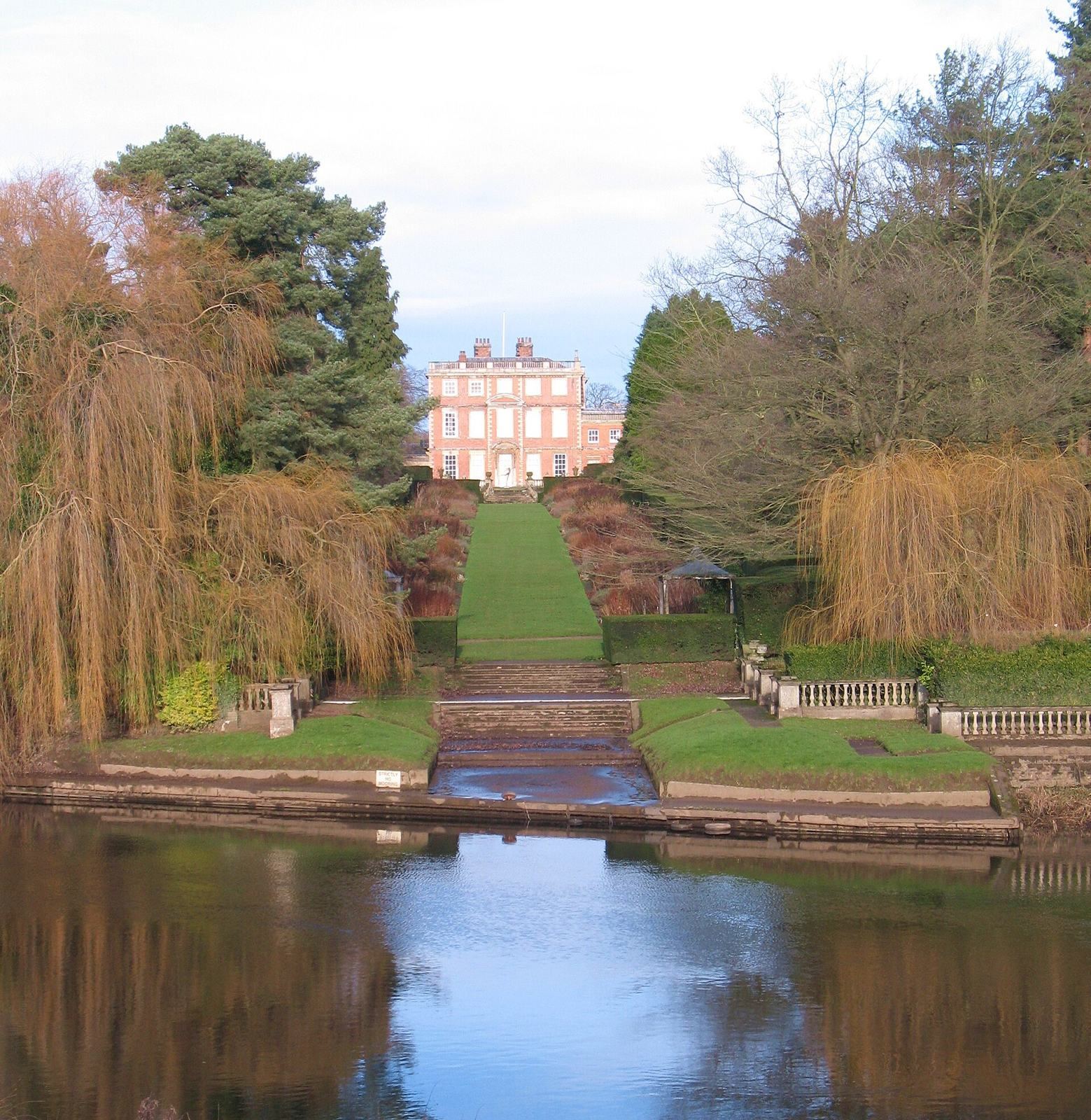
The estate brings together the red-brick hall and its grounds beside the River Ure. The stable range stands north of the house, while a long, symmetrical range of lodges marks the eastern entrance. The buildings use stone detailing and grey slate roofs in addition to brick.
Main house
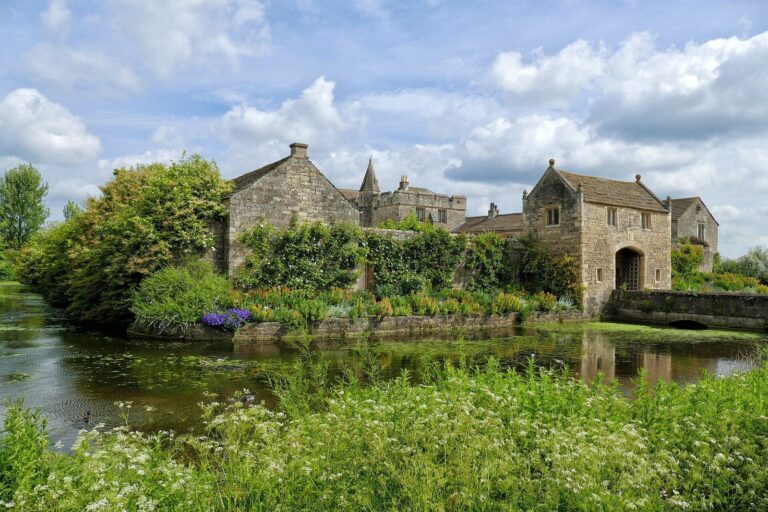
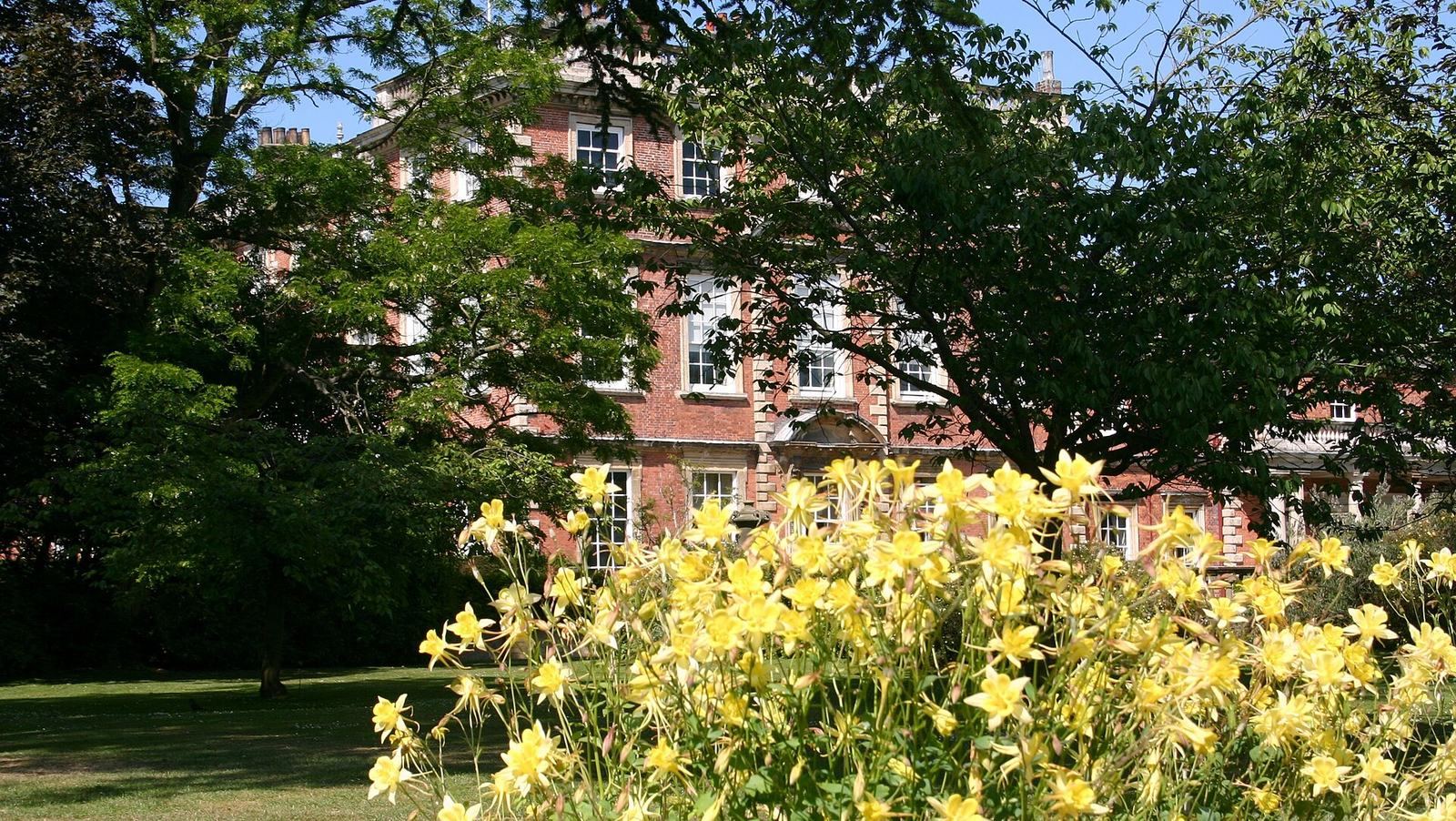
The house has red-brick walls, stone dressings, corner blocks known as quoins, balustraded parapets and grey slate roofs. Its original three-storey block has elevations of nine and five bays, meaning divisions across a facade. The former central entrance is now a window. The present entrance is on the east front, where two-storey projecting wings form a seven-bay front. A two-storey dining-room addition on the north has elevations of three and two bays. The main doorway sits beneath a porch with paired Ionic columns, an entablature, or horizontal structure above the columns, a cornice and a carved stone course. Most windows are sashes. The hall contains furniture and paintings.
Garden and woodland
The grounds include flowering borders and woodland walks. The Cornus collection contains specimens dating from the 1930s; its oldest example is a Cornus kousa planted by Robin Compton’s father.
Church of Christ the Consoler
The Church of Christ the Consoler stands within the grounds of Newby Hall.
Skelton Lodges
At the eastern entrance, double wrought-iron gates stand between inner stone piers. Railings, outer piers and ramped walls frame the approach. Beyond the gates are square, two-storey lodges, each one bay wide. Screen walls and gateways lead to single-storey lodges with three bays, then to further walls and gateways that rise towards massive end piers.
Stable range
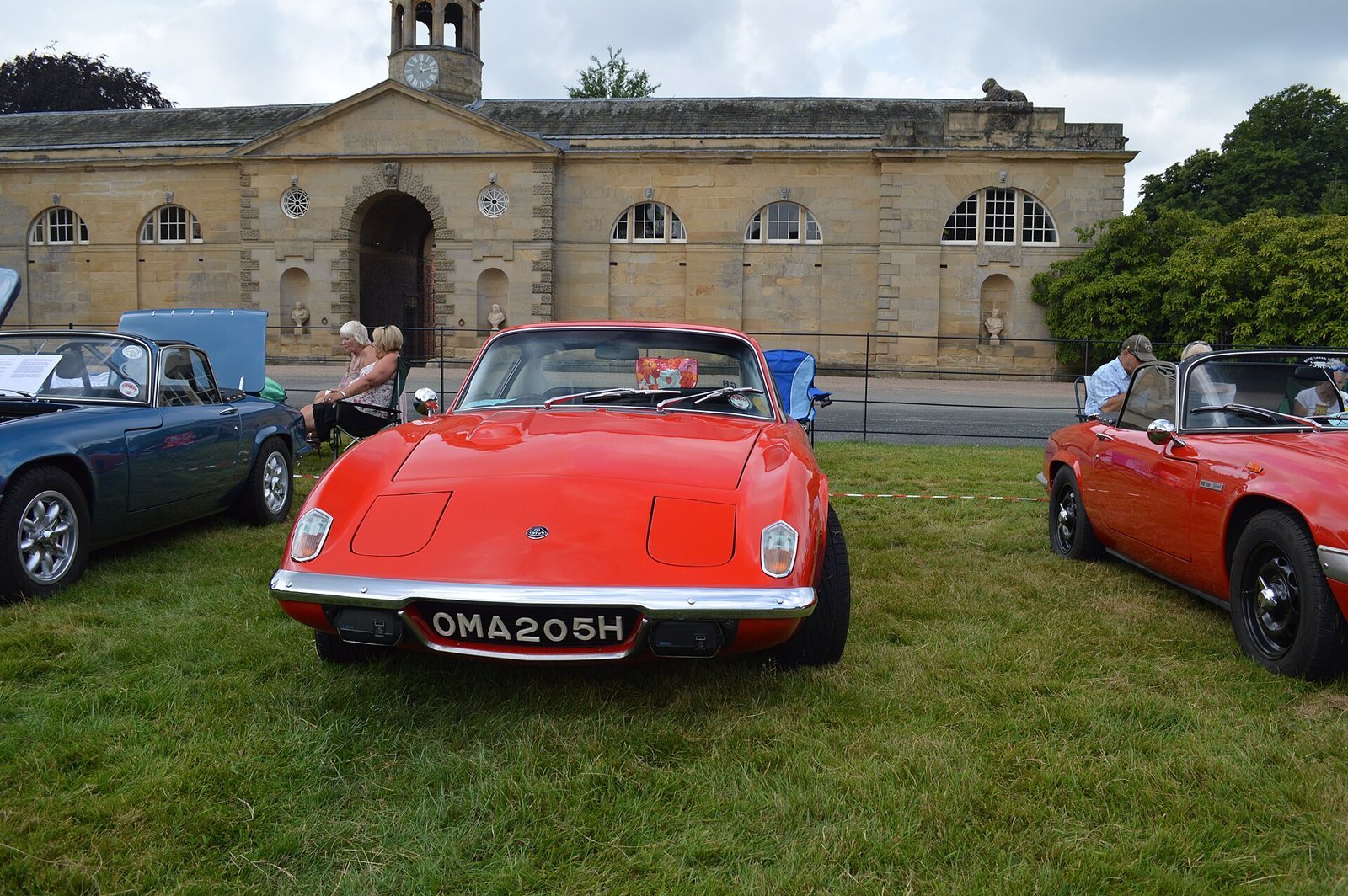
The stable range is built of brick and faced in stone on two sides, with rough-faced corner blocks, stone dressings and hipped grey slate roofs. Its four-sided plan comprises ranges of seven and nine bays. On the eastern front, a central bay topped by a triangular pediment contains a round arch with a rough-faced surround and three keystones. Round-headed niches flank it, with a plaque and circular window above. The outer bays have round-arched recesses and three-part, semicircular-headed windows above. An octagonal cupola, a small roof structure, rises above the building with a dome and an elaborate weathervane.
Equestrian statue
The statue depicts Charles II riding over Oliver Cromwell. It stands at Newby after its re-erection there in 1883.
Nidd Ferry Disaster memorial
Moved from its original location, this gritstone monument is about three metres high. Its square base has a round-arched recess on each side. Above it are clustered Corinthian-style columns, some carved with grapes, with four mushroom-shaped ornaments around them. Ball-and-cushion ornaments crown the top.
Miniature railway
The miniature railway runs along the riverbank. On Sundays and bank holidays, a Battison-built, one-fifth-scale model of the Royal Scot locomotive, number 6100, pulls the train. At other times, it is hauled by LPG-powered locomotives named Countess De Grey and Lady Mary Vyner. David Curwen designed the locomotives, which were built by Severn Lamb.