Kirby Hall: An Elizabethan Prodigy House
Site at a Glance
- Popularity
- Very High
- Country
- United Kingdom
- Primary era
- Early Modern
- Eras represented
- Early Modern
- Civilizations
- Unclassified
- Site type
- Domestic
- Remains
- Elite Residence
On this page8 sections
History
Kirby Hall is a country house in the United Kingdom whose construction began in 1570 for Sir Humphrey Stafford of Blatherwycke. It is an early and prominent example of an Elizabethan prodigy house, a grand residence built by wealthy members of Elizabeth I’s elite, often to display status during her reign (1558–1603). The house was later enlarged in the Classical style, drawing on forms associated with ancient Greek and Roman architecture.
A planned refuge for Catholic priests
Sir Christopher Hatton, an Elizabethan courtier who served as Lord Chancellor, a senior legal and government officer, bought the property in 1575. In 1599, Catholic recusant Elizabeth Vaux leased Kirby Hall intending to establish a college there for the priest John Gerard and others. A recusant was a Catholic who refused to conform to the established Church of England. The Privy Council, a body of royal advisers involved in government, raided the house in an attempt to capture the priests. Everyone except Hugh Sheldon evaded the search. Vaux abandoned her plan and enlarged her house at Harrowden instead.
Royal visits and family succession
Anne of Denmark, queen consort to James I, stayed at Kirby Hall on 9 August 1605 while James was at Rockingham Castle. James, king of England from 1603 to 1625, visited Kirby Hall nine times between 1608 and 1624, including a three-day stay in August 1616. During a royal progress, the Scottish nobleman Esmé Stewart, 3rd Duke of Lennox, died at the hall on 30 July 1624 from an illness then called the “spotted ague.”
The property later passed to Edward Finch, youngest son of Daniel Finch, 2nd Earl of Nottingham and 7th Earl of Winchilsea, and Anne Hatton, sole heiress to the 1st Viscount Hatton. Edward’s eldest son, George Finch-Hatton, married Lady Elizabeth Murray, daughter of the 2nd Earl of Mansfield. Their eldest son and heir, George, was born at Kirby Hall in 1791 and later became the 10th Earl of Winchilsea.
Decline and protection
Kirby Hall began to decline after the family moved to their newly completed mansion at Eastwell Park. By the late 1880s, the hall had been abandoned and was in ruins. The 12th Earl of Winchilsea hoped to restore the family property but died in 1898 before doing so; the title then passed to his brother. The hall and gardens remain owned by the Earl of Winchilsea and are managed by English Heritage. Kirby Hall is Grade I listed, a status for buildings of exceptional architectural or historic interest, and has been a scheduled monument, a nationally important protected historic or archaeological site, since 1927.
Remains
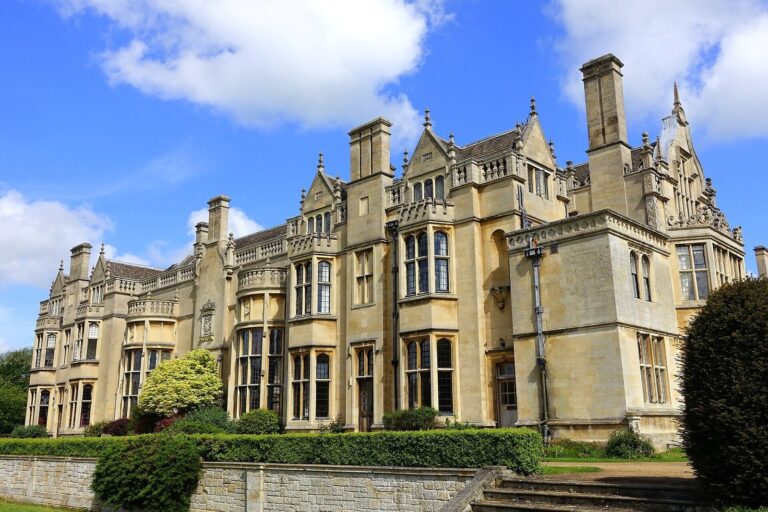
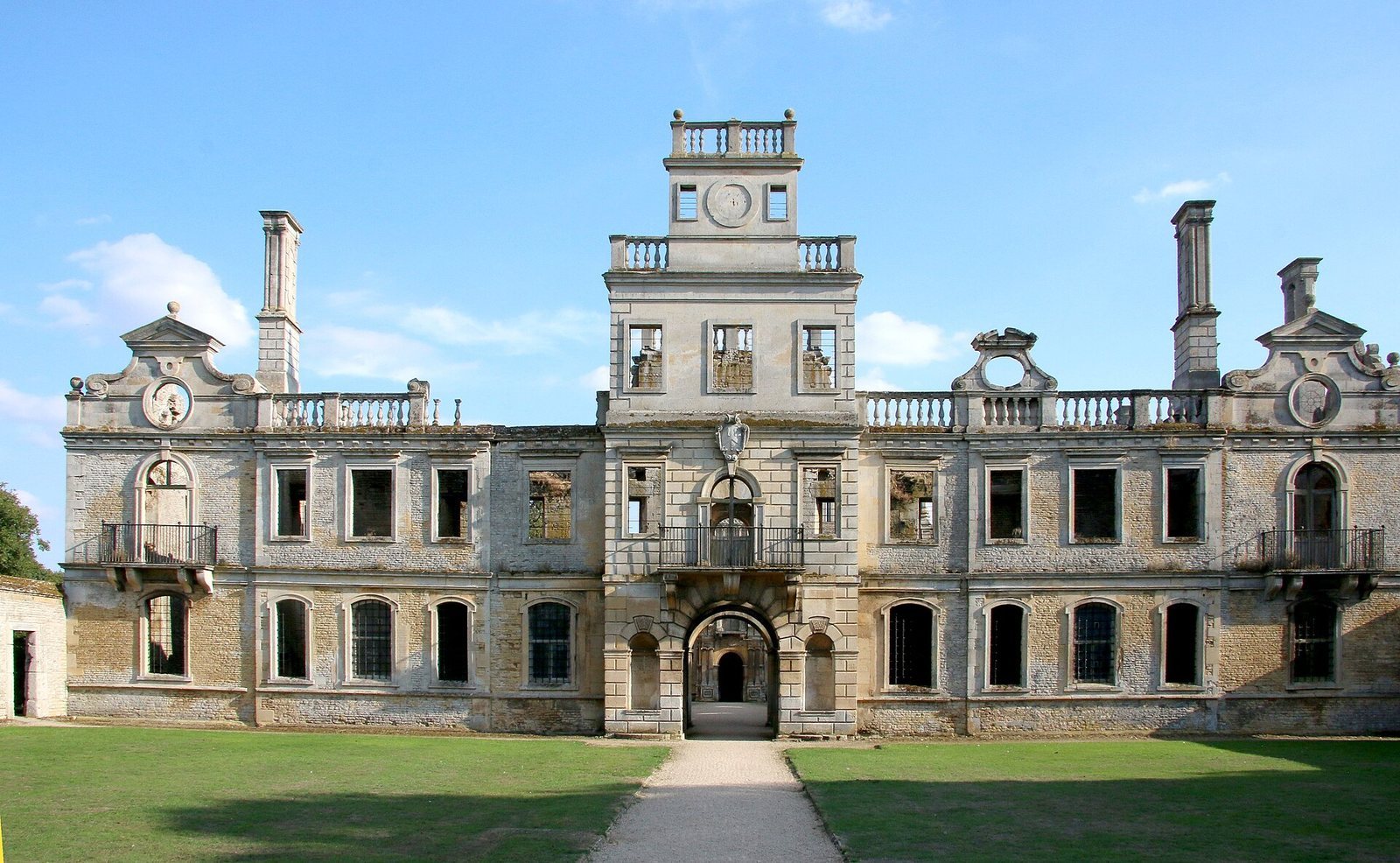
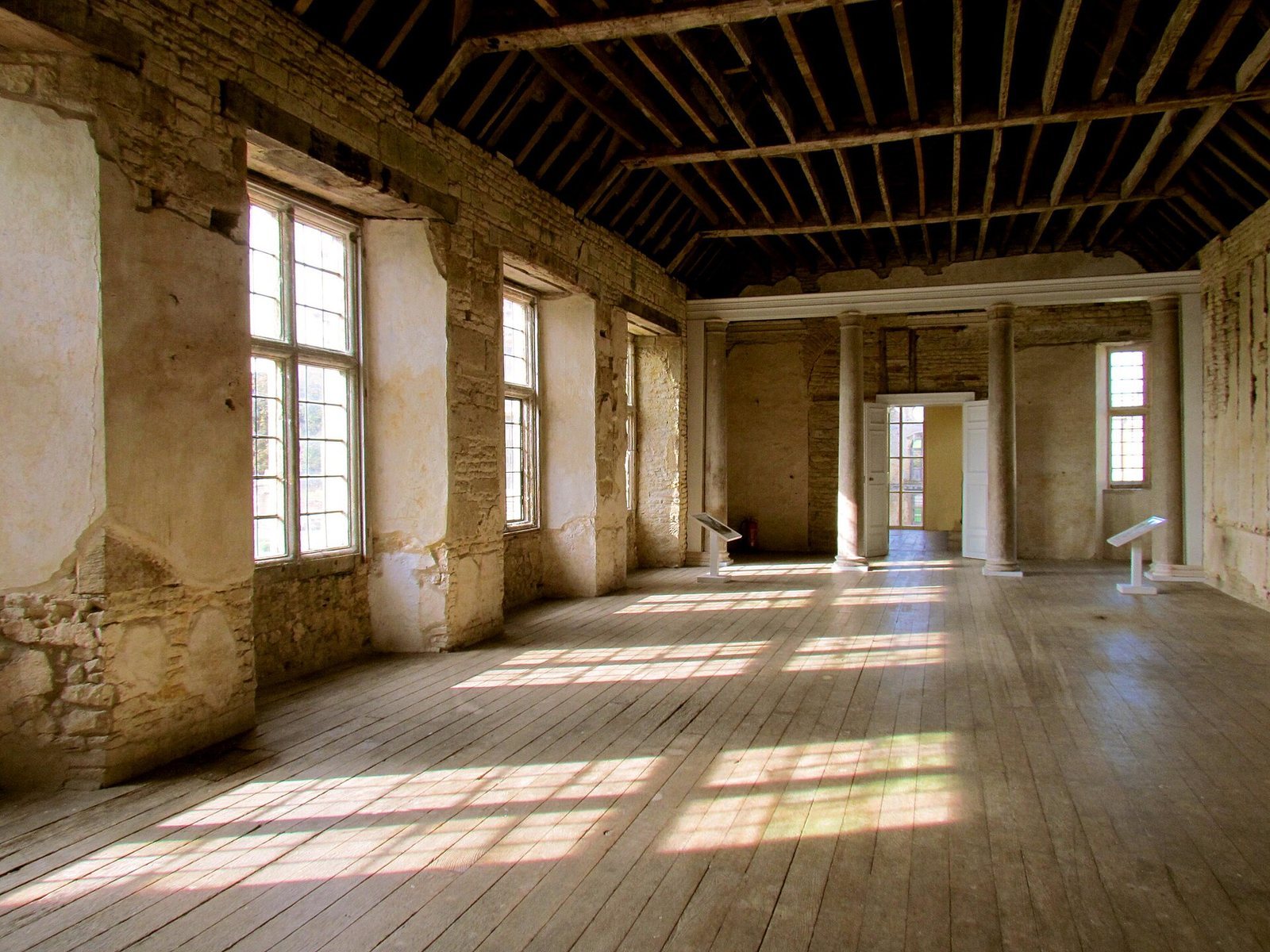
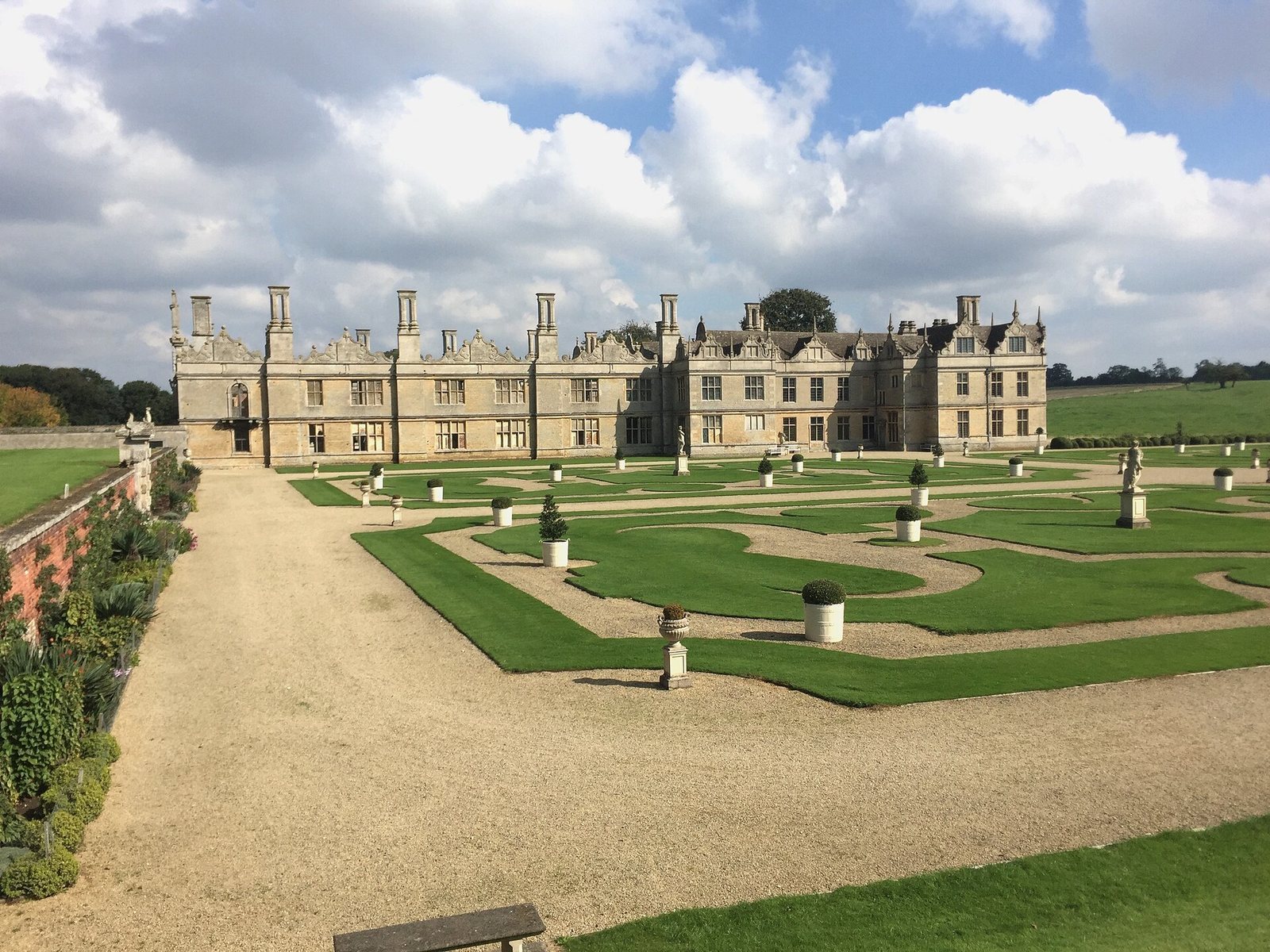
The surviving complex includes a courtyard façade, a gate at the north outer courtyard, a gate courtyard, and a raised terrace. French architectural pattern books, illustrated collections of designs used as models, informed the house’s design. Much of the building is roofless, while the Great Hall and state rooms, formal rooms for entertaining or official occasions, remain intact.
Courtyard and exterior features
The courtyard façade has a giant order, an arrangement of columns or pilasters extending across more than one storey. It is among the earliest examples of this architectural feature in England. A bust of Apollo, a god of ancient Greek and Roman religion associated with music and prophecy, stands above a balcony. The north outer-courtyard gate formerly had a clock and bell tower.
Interior rooms
During an interior renovation, decorative wood panelling from the Tudor period (1485–1603) was removed and sold, and wallpaper and a pediment were installed. One room was adapted as a library. George Finch-Hatton and Lady Elizabeth used the ballroom, and the house also has a billiard room.
Gardens
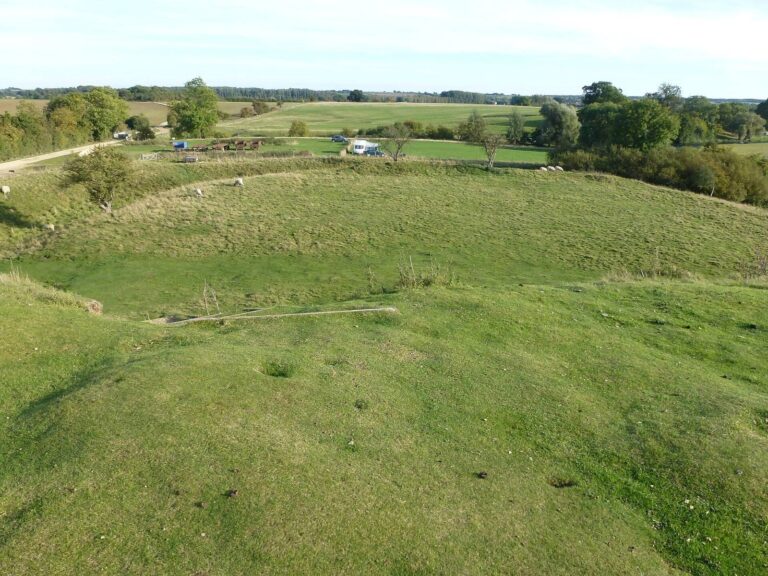
The gardens have an elaborate cutwork design, an ornamental patterned layout, with statues and urns. They have been restored.