Løvenholm: A Renaissance Water Castle in Denmark
Site at a Glance
- Popularity
- Low
- Country
- Denmark
- Primary era
- Early Modern
- Eras represented
- Early Modern
- Civilizations
- Danish
- Site type
- Domestic
- Remains
- Castle
On this page8 sections
History
Monastery, manor, and Crown seizure
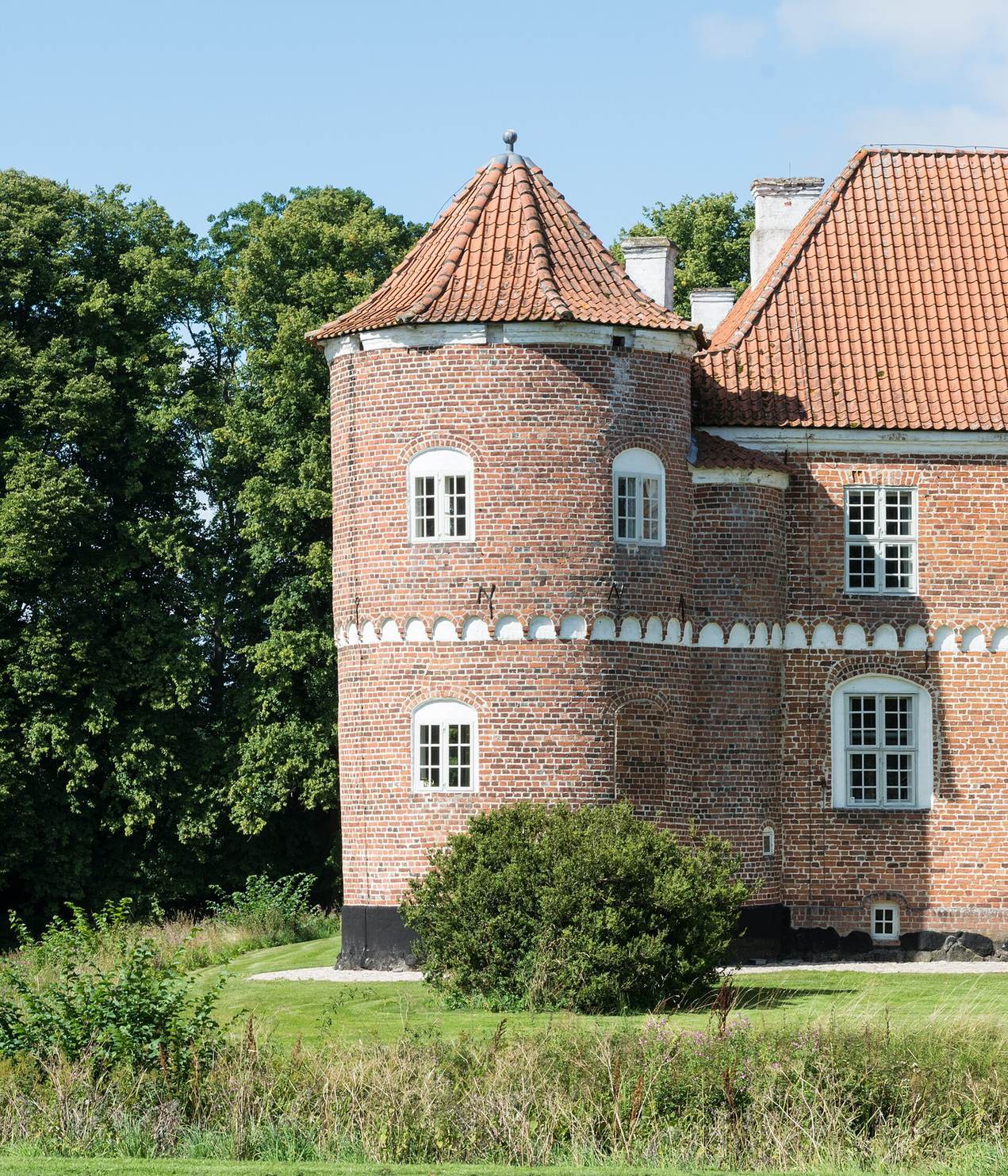
Løvenholm is a Renaissance water castle near Auning on Djursland, Denmark. A water castle is a fortified residence protected by water or moats. Its Renaissance architecture, a European style drawing on classical forms, took shape in two main building phases, 1550–1576 and 1642–1643.
A monastery was established at Løvenholm in 1440. By 1445, the place was known as Gjesingholm, a fortified manor. Its estate and peasant holdings belonged to Saint John’s religious house in Viborg, which transferred them to the Benedictine monks of Essenbæk. The Benedictines were members of a Christian monastic order following the Rule of Saint Benedict.
After the Reformation, the Crown confiscated the monastic estate and granted it to Erik Eriksen Banner. Banner had overseen Gustav Vasa’s detention at Kalø; Vasa later became king of Sweden. During the Count’s Feud, a Danish civil conflict from 1534 to 1536, Banner led Jutland’s nobles. The Banner family rebuilt and enlarged the estate’s stone residence. In the late sixteenth century, Løvenholm passed to Eske Brock, and Gert von Rantzau acquired it in 1609, making it his principal residence.
The Rantzau estate and county
Gert’s son Christian zu Rantzau built the south tower in 1642. In 1647, the estate took the name Løvenholm, inspired by the golden lion in the Rantzau coat of arms. It became part of the imperial County of Rantzau, formed around 1650 and confirmed in 1653. An imperial county had a distinct political status within the Holy Roman Empire. Christian served as governor for the Danish Crown from 1648 to 1661, became a count in 1650, and received the title of imperial count in 1653.
The end of Rantzau rule and later ownership
In 1721, Christian Detlef zu Rantzau, the third imperial count, was murdered. His brother Wilhelm Adolf, the fourth and last imperial count, was suspected of arranging the killing. Danish authorities arrested Wilhelm Adolf and imprisoned him in a fortress, where he remained until his death in 1734. Although he was subject to imperial jurisdiction, Denmark prosecuted him because he also held Løvenholm as a Danish fief, land held under the Danish Crown. A secret agreement provided for the county to pass to the Crown if there were no male heirs, but the arrangement was contested in the legal proceedings. The Crown took over the estate in 1726.
In 1732, King Christian VI granted the county to Frederik Christian Danneskiold-Samsøe. Frederik received permission to relinquish the countship in 1742 and sold Løvenholm to his older brother, Ulrik Adolph Danneskiold-Samsøe. The estate changed hands repeatedly. The Danish state took it over in 1827 because of unpaid taxes, then returned it to private ownership in 1831.
School plans and the foundation
In the late 1920s, Valdemar Uttental acquired the estate with plans to establish the Løvenholm Fonds School, a private school intended as a Jutland counterpart to the Danish boarding school Herlufsholm. The school never opened, and the castle stood vacant for a period. Local authorities later acquired it and established agricultural and forestry research facilities and student training there. The Løvenholm Foundation has owned and managed the estate since 1951.
Remains
Castle buildings and defenses
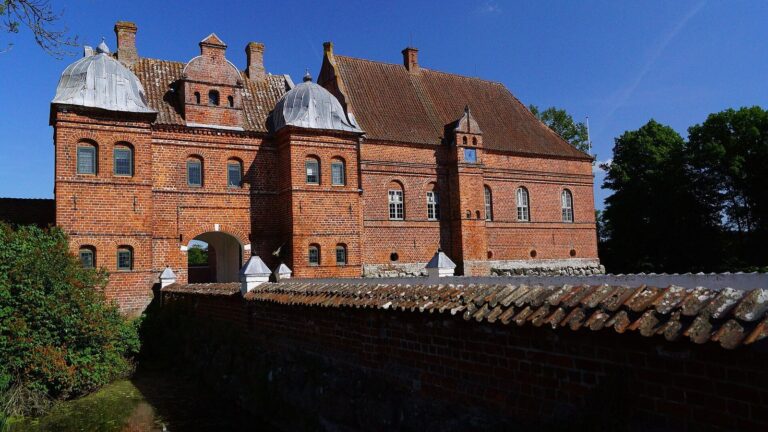
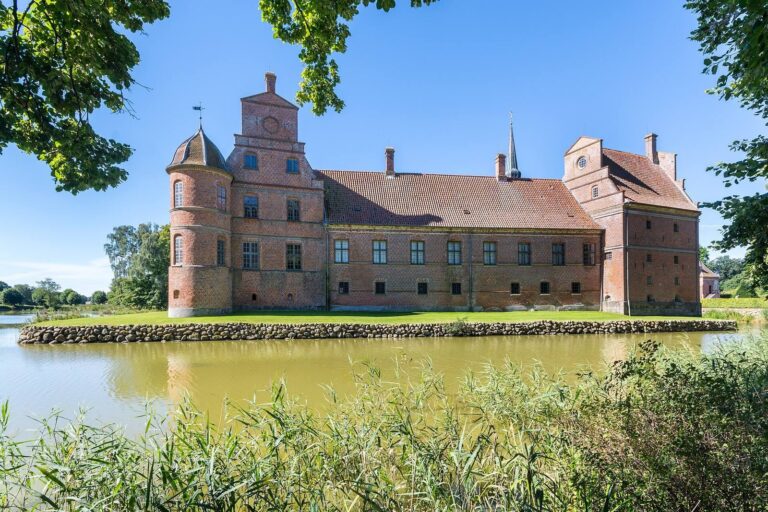
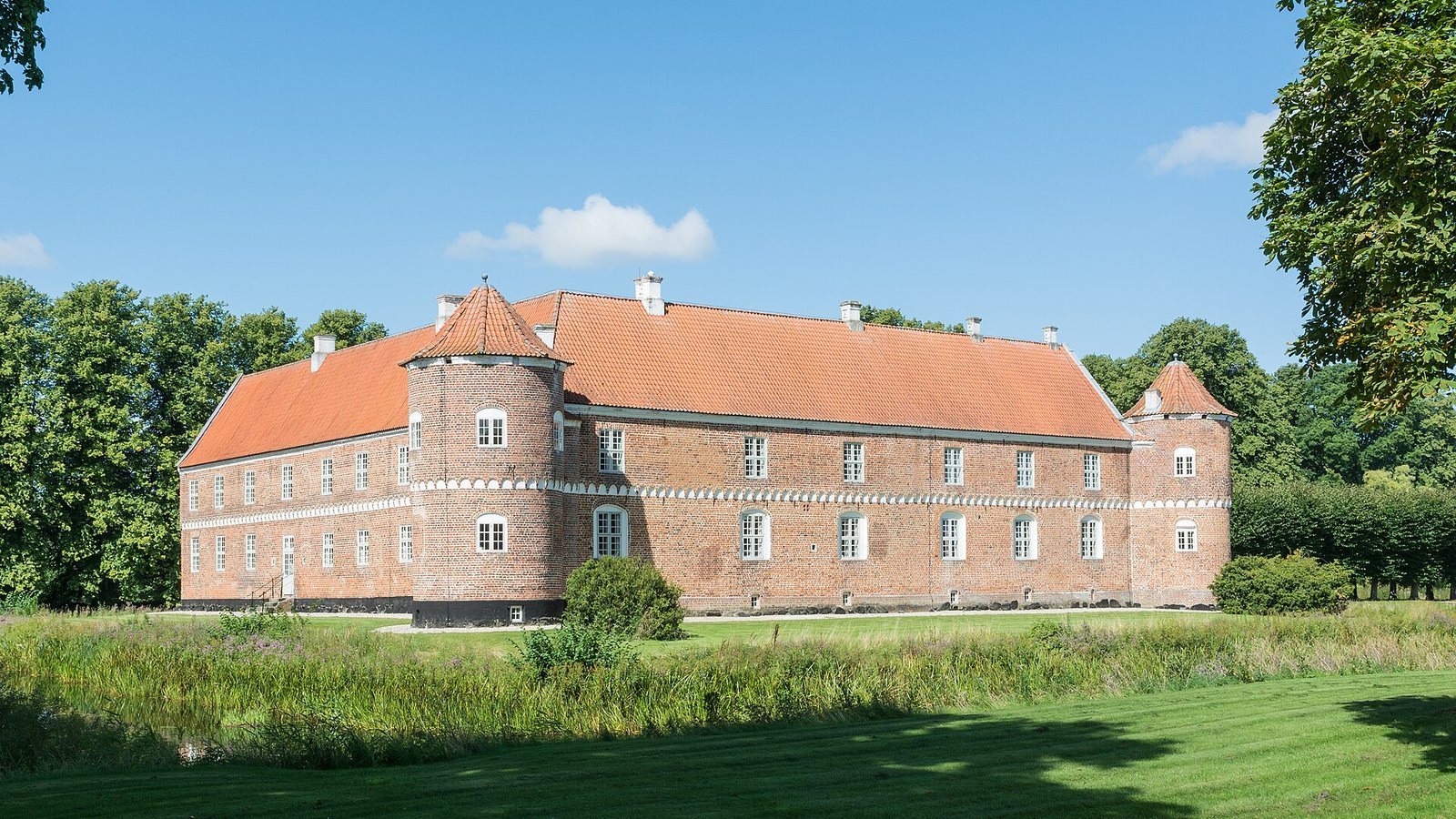
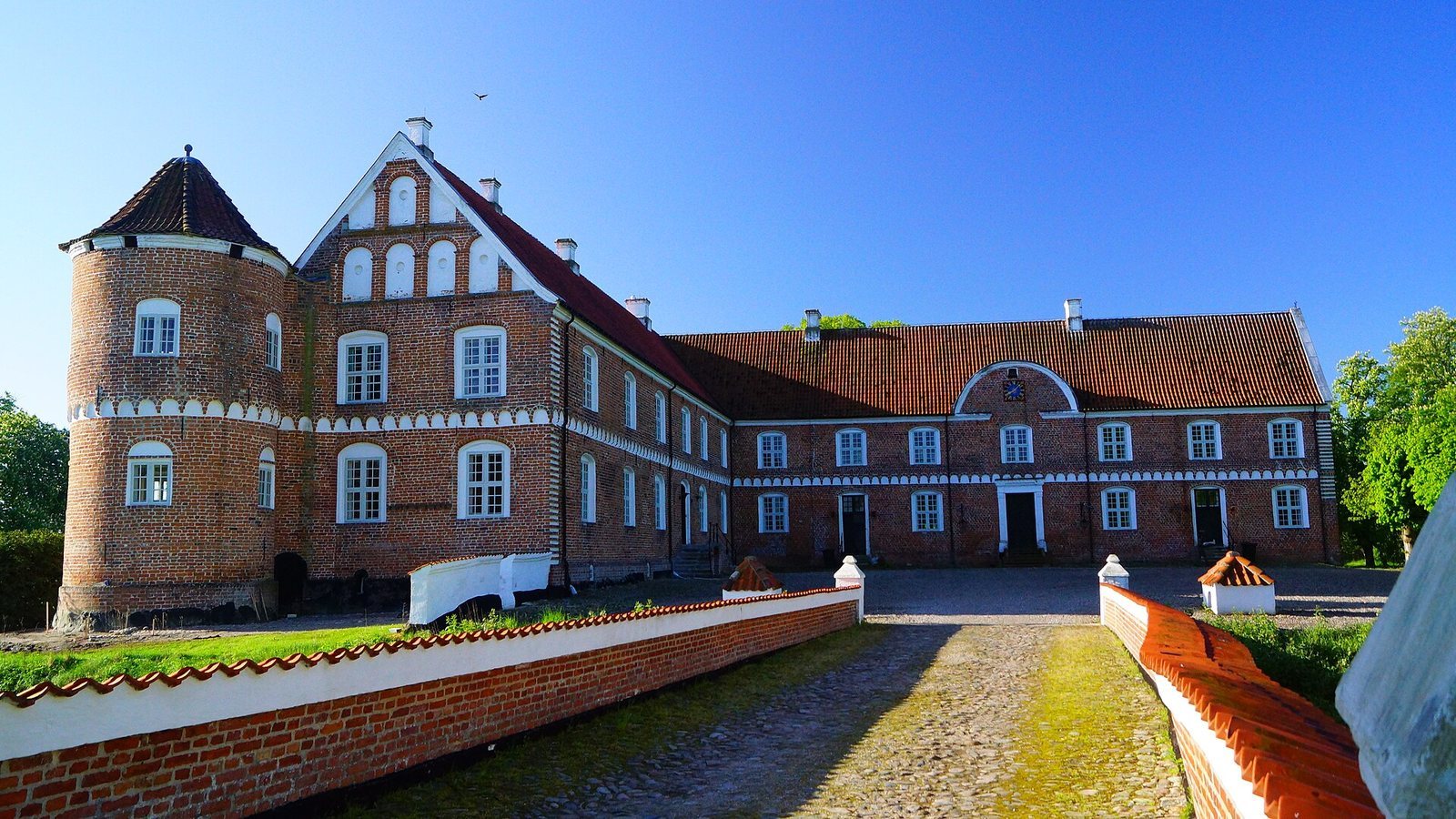
The castle comprises two two-storey stone buildings that meet at a right angle. Two projecting towers occupy the corners of the east wing, including the northern corner tower and the south tower. A wall once enclosed a square inner courtyard. The castle stands on a rectangular artificial island, reached by a bridge across the northern moat; the bridge formerly served as a drawbridge. The castle has been restored.
Estate landscape
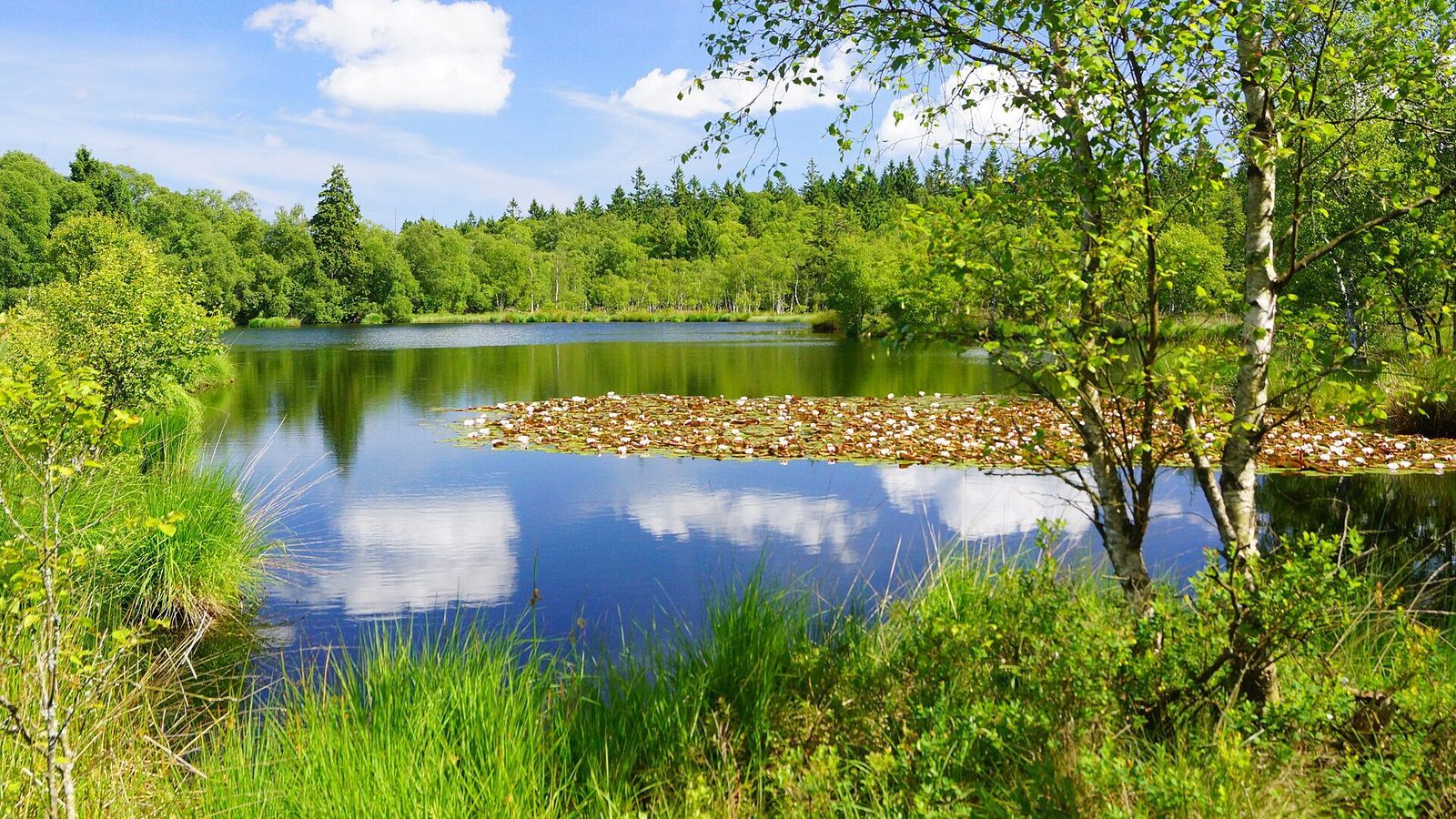
The estate covers 3,261 hectares of woodland and farmland. Løvenholm Forest is among Denmark’s larger woodlands.