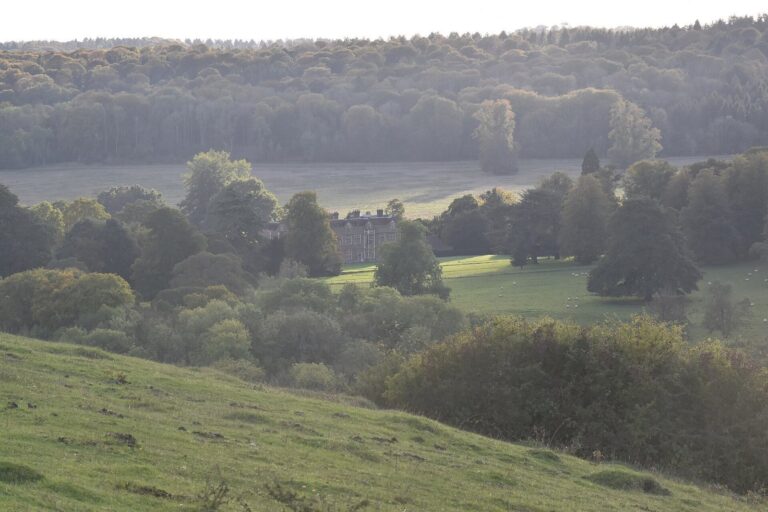
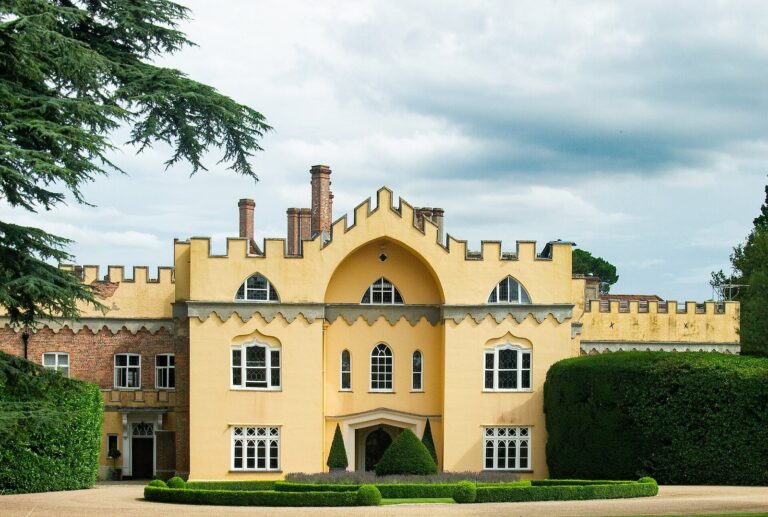
Hartwell House: A Historic Country House in Buckinghamshire
Site at a Glance
- Popularity
- High
- Country
- United Kingdom
- Primary era
- Early Modern
- Eras represented
- Medieval, Early Modern, Modern
- Civilizations
- British, English, Norman
- Site type
- Domestic
- Remains
- Elite Residence
On this page15 sections
History
Hartwell House is a country house in the parish of Hartwell, Buckinghamshire, in the United Kingdom. Built for the Hampden family in the early 17th century, its present core combines Jacobean, Georgian and Rococo elements. The house later sheltered the exiled future Louis XVIII and became a setting for scientific activity under the Lee family.
Early estate and the Lee family
Hartwell’s history reaches back to the 11th century. The property appears in the Domesday Book of 1086, a survey of English landholdings ordered by William I, and is associated with William Peverel, a Norman landholder and an illegitimate son of the king. The Hampden family built the core of the present house in the early 17th century.
A marriage into the Hampden family brought the house to the Lee family around 1650. The Lees retained it until 1938, though ownership passed between family members. Sir Charles Lee let the house to the Count of Provence from 1809 to 1814.
The French royal exile
The Count of Provence was Louis Stanislas Xavier, who used the title Count of Lille while in exile and later became Louis XVIII, king of France after Napoleon’s defeat and the restoration of the monarchy. His impoverished court at Hartwell numbered between 140 and 200 people, depending on how many members of the royal family were present. To make room for them, householders divided rooms, added windows and established stores in service buildings. Gardens were planted on the roofs, where courtiers also kept poultry and other small livestock on the lead coverings.
Louis’s wife, Marie-Joséphine of Savoy, died at Hartwell House on 13 November 1810. Her body lay in state there for several days before a funeral service at the French Catholic chapel in King Street, Portman Square, London. She was first buried temporarily at Westminster Abbey; in 1811 her remains were moved to Cagliari Cathedral in Sardinia, where she is buried. After Napoleon’s defeat, Louis signed a document accepting the French crown in the house library.
Science and changing uses
John Lee inherited Hartwell in 1827 from the unmarried Reverend Sir George Lee. In 1850 the British Meteorological Society, now the Royal Meteorological Society, was founded in the house library. John also established an observatory at Hartwell, installing a telescope and a roof cupola whose design was developed with help from the British naval officer and astronomer William Henry Smyth. John died at Hartwell on 25 February 1866, and his brother, Reverend Nicholas Lee, inherited the house.
Hartwell remained a private residence until 1938, when philanthropist Ernest Cook bought the estate to protect it from the risk of demolition. The house’s contents were sold at public auction. The estate passed to the Ernest Cook Trust, an educational charity, when it was established in 1952. Hartwell became a girls’ finishing school in the 1960s, then was converted for hotel use in the 1980s and has operated as a hotel since 1989.
In 2008 the National Trust, a British conservation organization, took a long lease on the house from the Ernest Cook Trust, running until 2111, while Historic House Hotels continued to manage the hotel. Hartwell House is Grade I listed, England’s highest category for buildings of exceptional interest. Its proximity to Chequers, the British prime minister’s country residence, has also led to government and international meetings and visits by foreign guests.
Remains
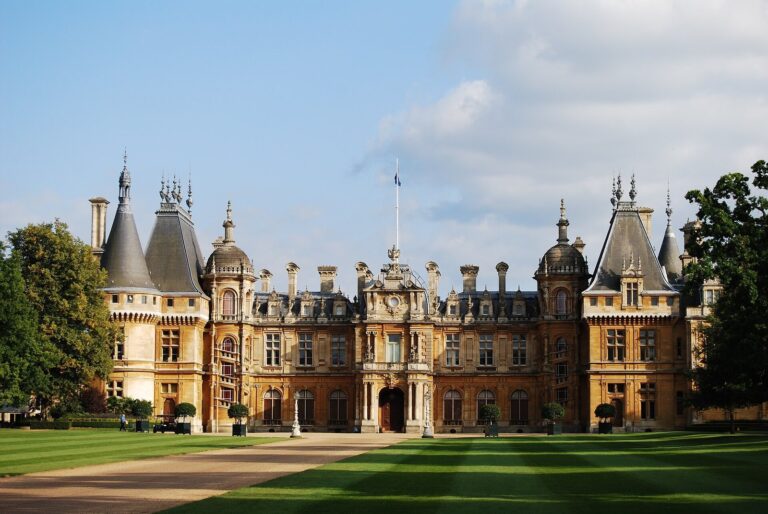
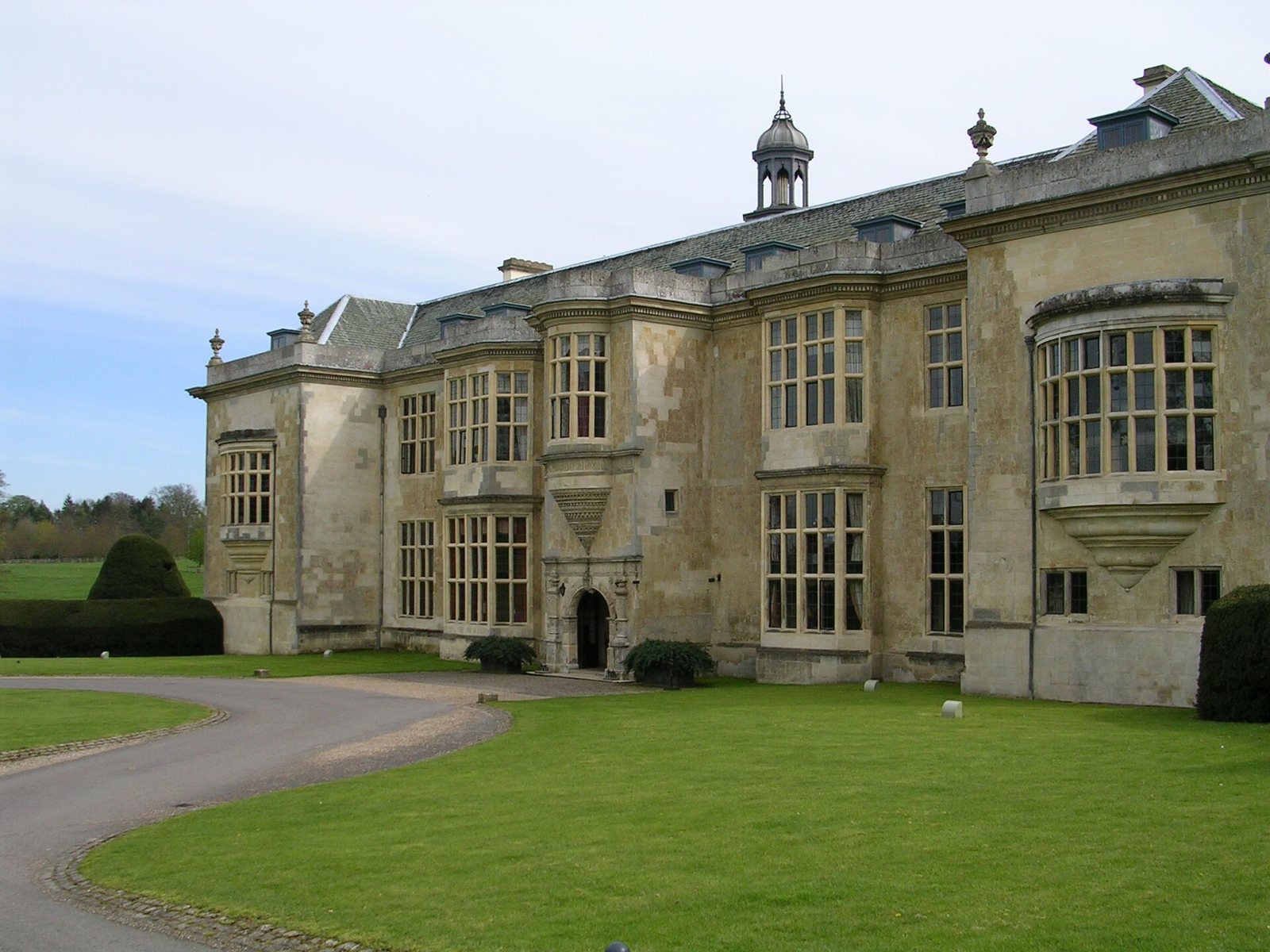
The house brings together a Jacobean north front, associated with the reign of James I, a Georgian east front, referring to the period of the British kings named George, and Rococo interiors, using an elaborate decorative style. The grounds include designed gardens, farmland and several distinct structures.
House elevations
North front
The north front is built of ashlar, finely dressed stone blocks. A projecting porch has a bow window above it. At either end, canted bays, or windows with angled sides, contain double-height oriel windows, which project from the upper storey. Two large windows on each side of the porch look into the hall. A parapet, a low wall along the roof edge, screens the roof and carries vases added in 1740.
East front
Between 1759 and 1761, the house was substantially enlarged and given a Georgian character. The east front has canted bay windows and a central porch in the Tuscan style, a simple classical architectural form.
Interiors
The great hall has decorated stucco panels, and three reception rooms contain Rococo chimneypieces. During the 1980s hotel conversion, architect Eric Throssell enclosed an 18th-century open porch with arches to create a dining room in the style of Sir John Soane. The former semicircular entrance space, which had a gallery, became an inner hall. Throssell also recreated the roof cupola associated with the house’s earlier observatory.
Gardens and estate
Designed gardens
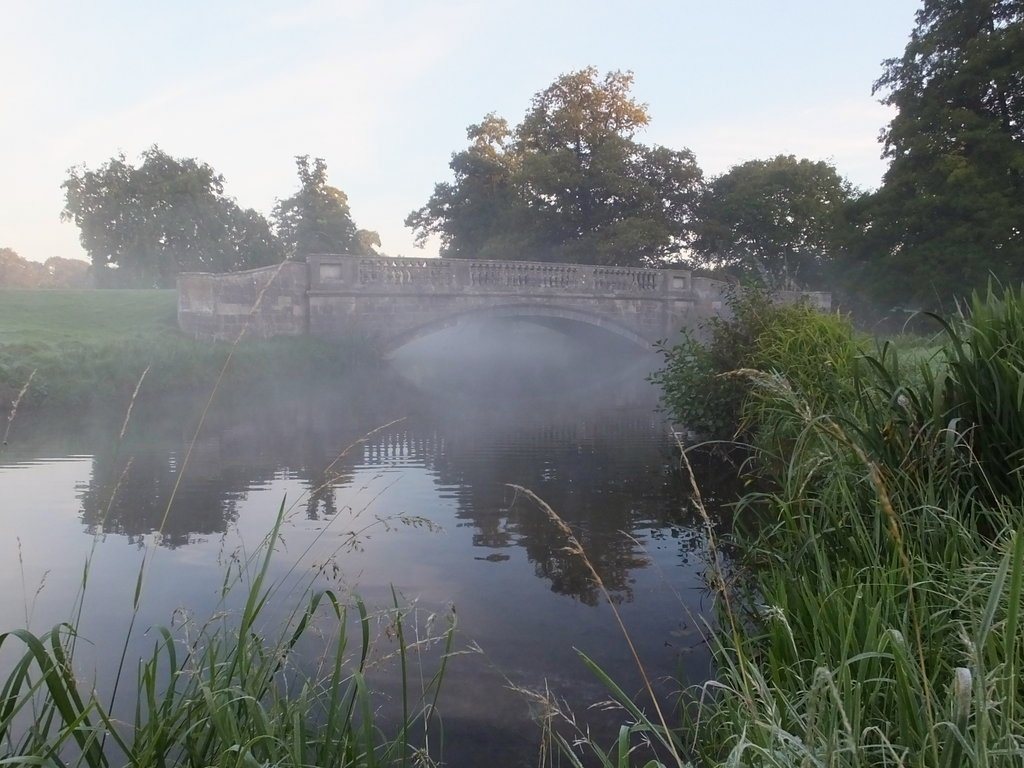
Capability Brown laid out the gardens, which cover about 36 hectares, around 1750. Their features include statues, an obelisk, an ornamental bridge and a lake. A 1738 painting by Balthazar Nebot depicts the gardens.
North Avenue and surrounding land
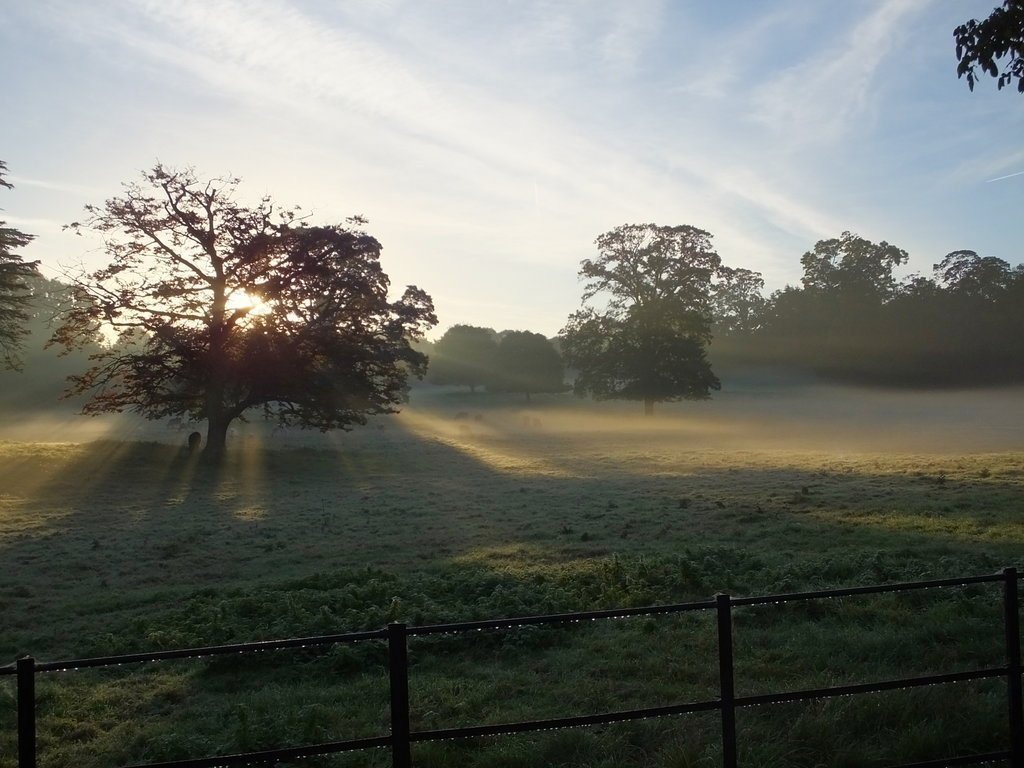
The North Avenue creates a long view through trees planted in 1830 and ends at the edge of Aylesbury. The surrounding Hartwell Estate covers about 7.3 square kilometres of farmland.
Structures in the grounds
St Mary’s Church
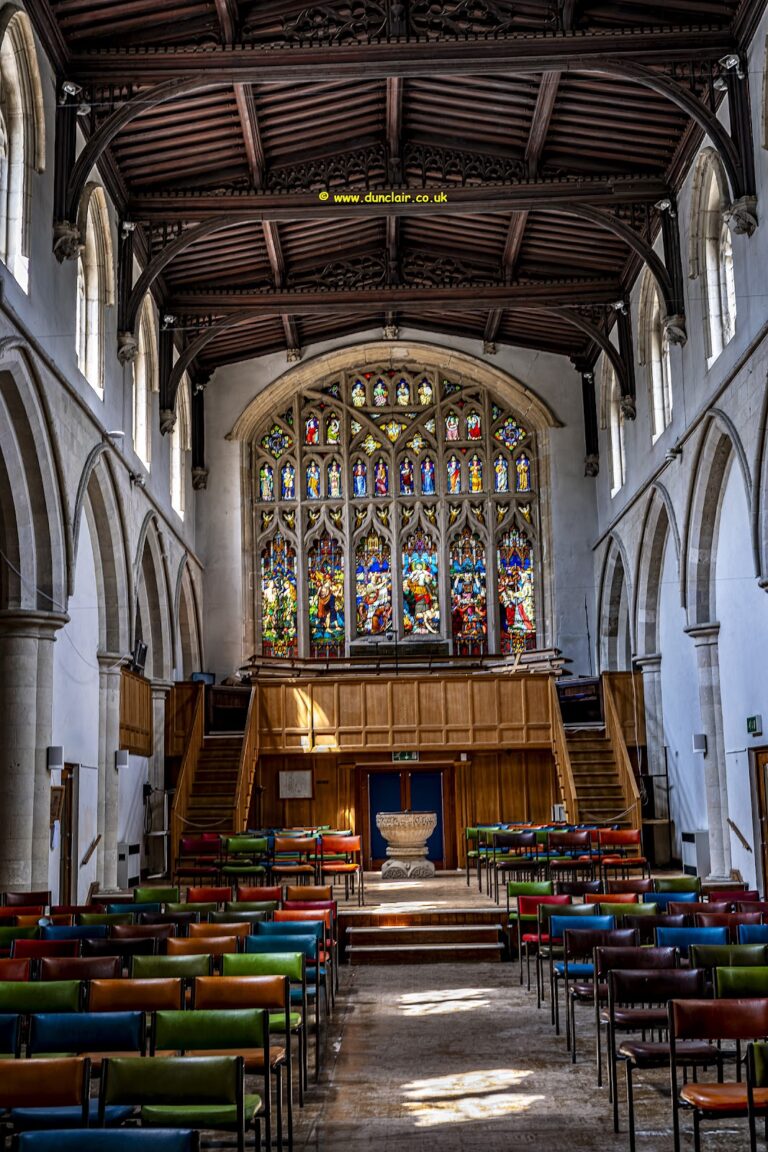
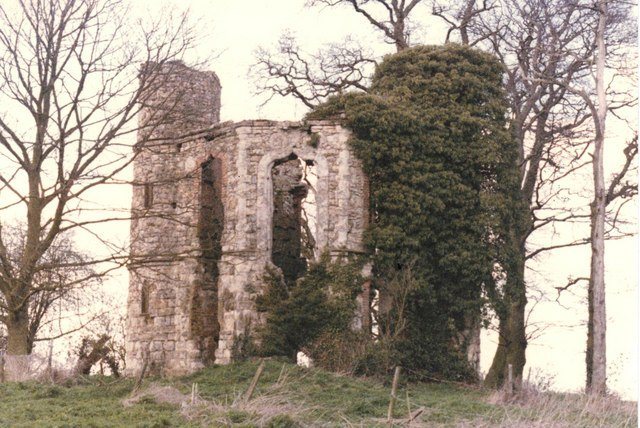
The ruined St Mary’s Church, also known as the Church of the Assumption of the Blessed Virgin Mary, stands within the grounds. Henry Keene designed it in the 1750s, drawing on the chapter house of York Minster, a meeting room where a cathedral community conducted business.
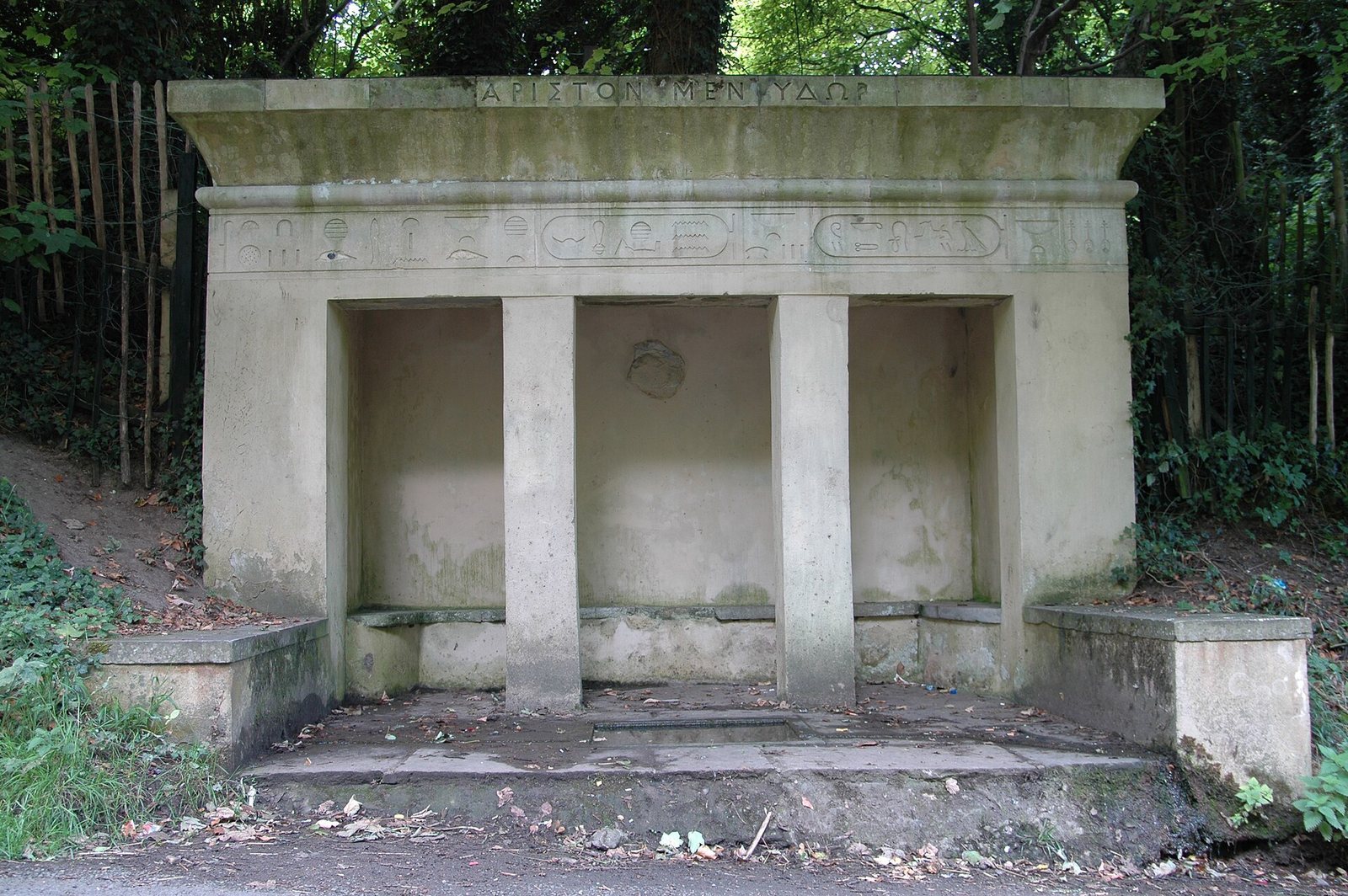
Egyptian Spring
The Egyptian Spring is an ornamental folly, a structure built chiefly as a landscape decoration, created in 1850 by architect and Egyptologist Joseph Bonomi the Younger. It takes the form of a seated alcove on the western side of Lower Hartwell, opposite a small spring. A stone tower-like feature bears an inscription translated as “Water is Best,” attributed to Thales, an ancient Greek philosopher.