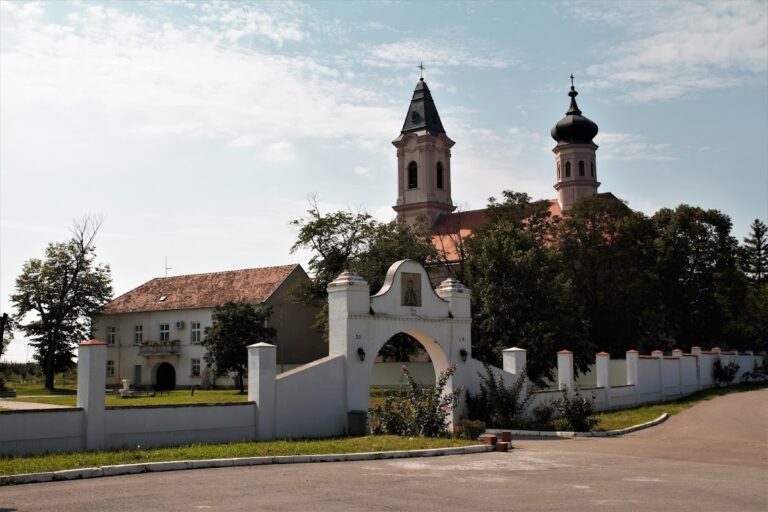
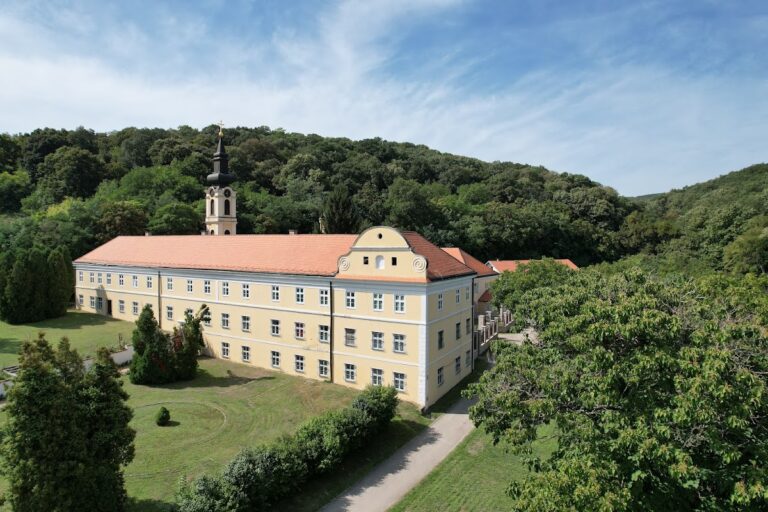
Cathedral Church of the Holy Apostles Peter and Paul: Serbian Orthodox Cathedral in Šabac
Site at a Glance
- Popularity
- Medium
- Country
- Serbia
- Primary era
- Modern
- Eras represented
- Modern
- Civilizations
- Ottoman, Serbian
- Site type
- Religious
- Remains
- Cathedral
On this page12 sections
History
The Cathedral Church of the Holy Apostles Peter and Paul is a Serbian Orthodox cathedral in Šabac, Serbia, and the central church of the Šabac Eparchy, an Eastern Orthodox diocese. The present church was built from 1826 to 1831, after Šabac became an eparchy seat early in the nineteenth century.
Earlier church and construction
Evidence places a wooden church in Šabac during Austrian rule from 1718 to 1739. By the early nineteenth century, the first Church of the Holy Apostles Peter and Paul was described as dilapidated, and a replacement was undertaken after the town became an eparchy seat.
In 1826, Serbian writer Joakim Vujić noted that materials for the new building were being prepared. Goldsmith Jovan Kurteša-Kurtović donated the plot. Three years later, a master craftsman named Janja obtained building stone from the remains of an old church and cemetery at Višnjica, near Belgrade. About 1,500 loads were carried to Šabac by ox-cart.
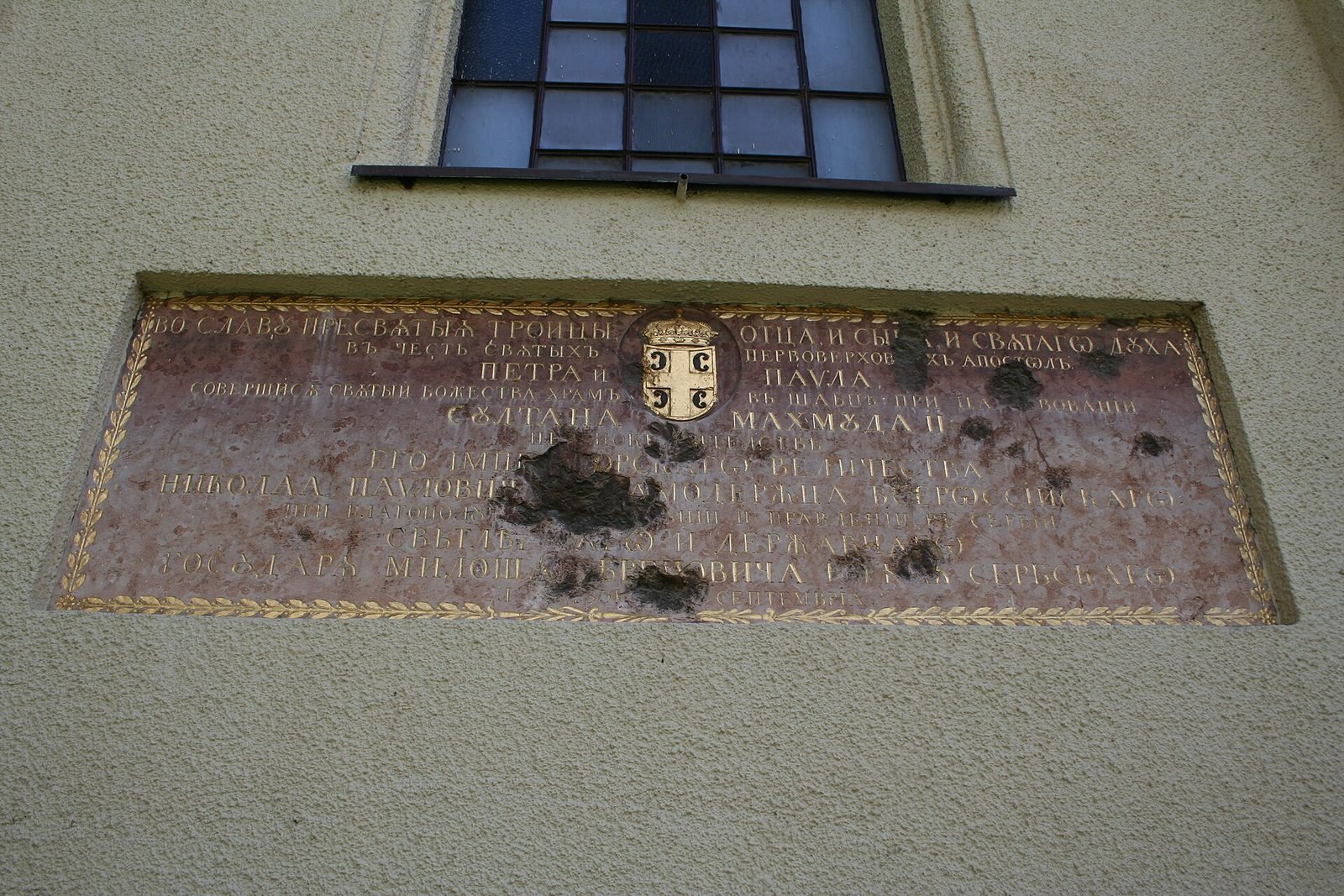
A plaque records the church’s completion in September 1831, during the reign of Ottoman Sultan Mahmud II and the rule of Serbian Prince Miloš Obrenović. It also places the church under the protection of Russian Emperor Nicholas I.
Nineteenth-century additions
On 6 November 1852, painter Pavle Simić was contracted to create the iconostasis, the screen of icons separating the sanctuary from the main church. He carried out the work from 1853 to 1857. In 1858, during the rule of Serbian Prince Alexander Karađorđević, a bell tower was added with the blessing of Bishop Mihailo. Master builder Kosta Dimović of Ohrid built the tower. Seven bells cast at Kragujevac arrived that year; Tomanija Obrenović, wife of Jevrem Obrenović, donated the largest.
War, repair, and later changes
During the First World War, Austrian occupying forces held hostages in the church, executed them outside, and later kept horses inside. Around 200 people are believed to have died in the church and its churchyard, although the exact number is uncertain. The occupiers looted portable belongings and damaged the iconostasis.
Repairs followed the war. German occupying forces had taken the bells, and seven replacements and a clock were sent from German foundries in 1924 as reparations. The bells first rang on 11 July, the eve of the church’s feast of the Holy Apostles Peter and Paul. In 1934, a memorial to Šabac residents killed in the wars of 1912–1918 was consecrated by Serbian Patriarch Varnava, in the presence of King Alexander and the regional governor of the Drina Banovina.
Repair and expansion continued in later decades, with further work to the church and its grounds in 2017. The physical changes from these periods are visible in the building’s interior, roof, and courtyard.
Remains
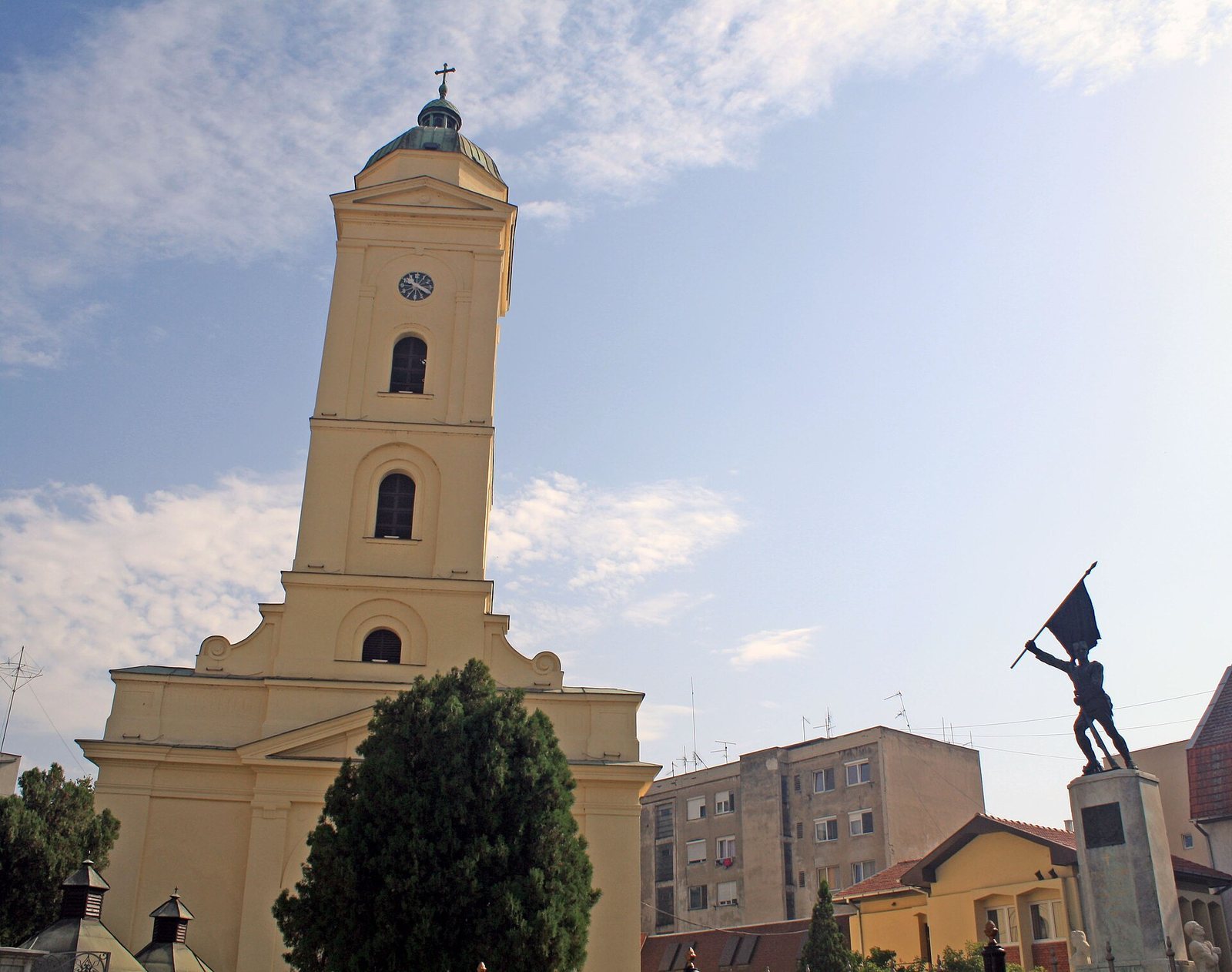
The church’s physical arrangement includes entrances on its north and west sides, a bell tower on the western façade, and a vaulted interior with a crypt below the floor. A memorial stands in front of the building. The surviving features also reflect later changes, including a copper roof and marble floor.
Church building and interior
Entrances and bell tower
A plaque by the north entrance commemorates the church’s completion and dedication. Above the west entrance, a red-marble plaque marks the construction of the bell tower. First World War damage reduced the tower to half its height and destroyed the roof, while also damaging the vaults and walls. A copper roof was installed in 1979.
The seven replacement bells weigh 1,700 kg, 1,430 kg, two at 1,300 kg each, two at 500 kg each, and one at 400 kg. The shipment also included a clock.
Iconostasis and paintings
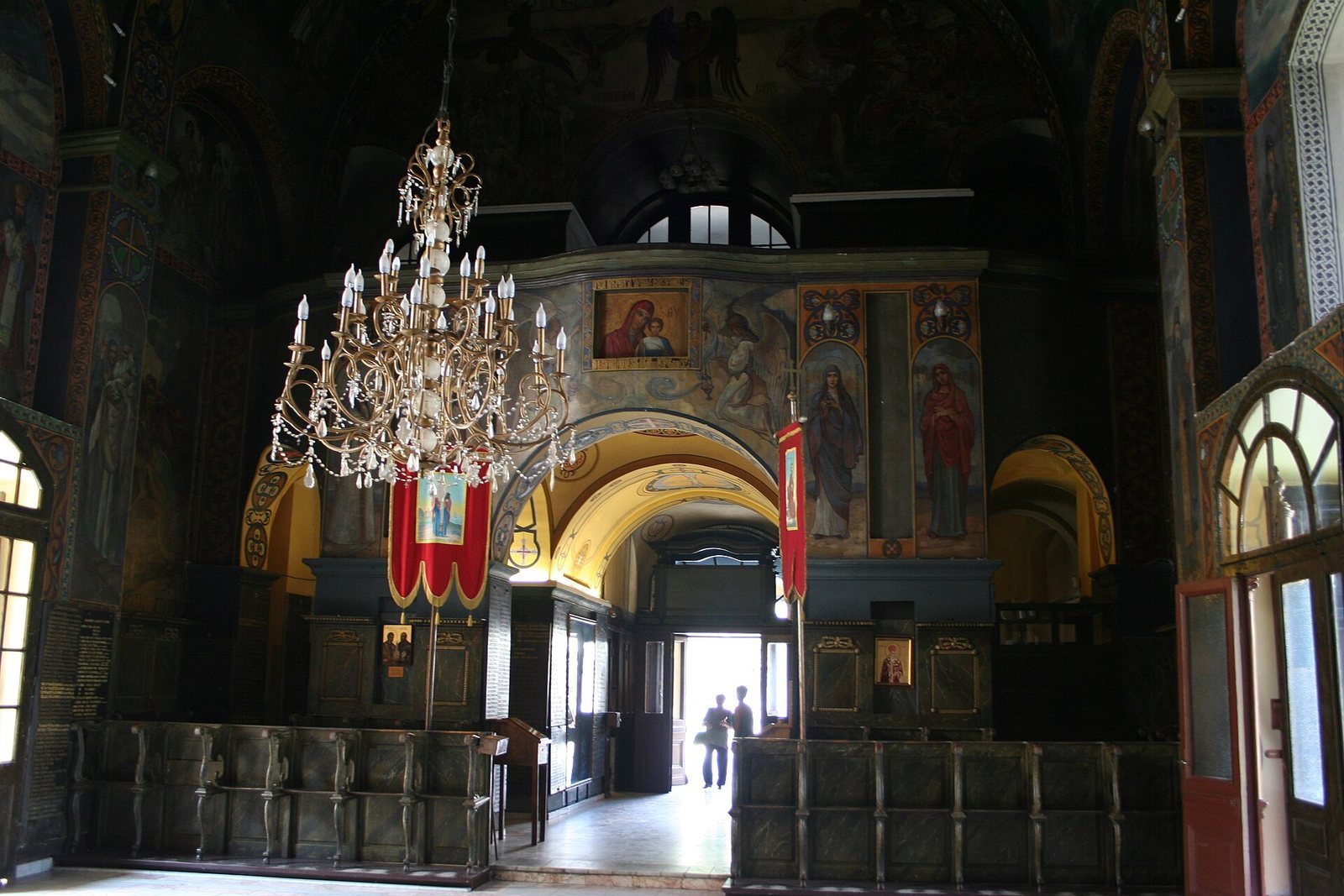
The iconostasis was painted by Pavle Simić, carved by Đorđe Dević of Bačka Palanka, and gilded by Miloš Branković. Bishop Joanikije Nešković donated its doors. Bayonets damaged its lower portion during the First World War; it was restored and conserved in 1967. Andrija Bicenko’s 1932 frescoes cover the church walls and vault, painted on dry plaster. A 1931 icon of Saint John the Baptist is by local painter Stevan Čalić.
Work on the interior in 1971 included marble floor slabs, whitewashing, and repainting.
Crypt
A crypt beneath the church floor holds the burials of priests Jovan Pavlović, Marko Petrović, Jovan Živković, and Adam Teodorović, as well as Bishop Samuilo Pantelić, who served from 1884 to 1886.
Memorial and churchyard
War memorial
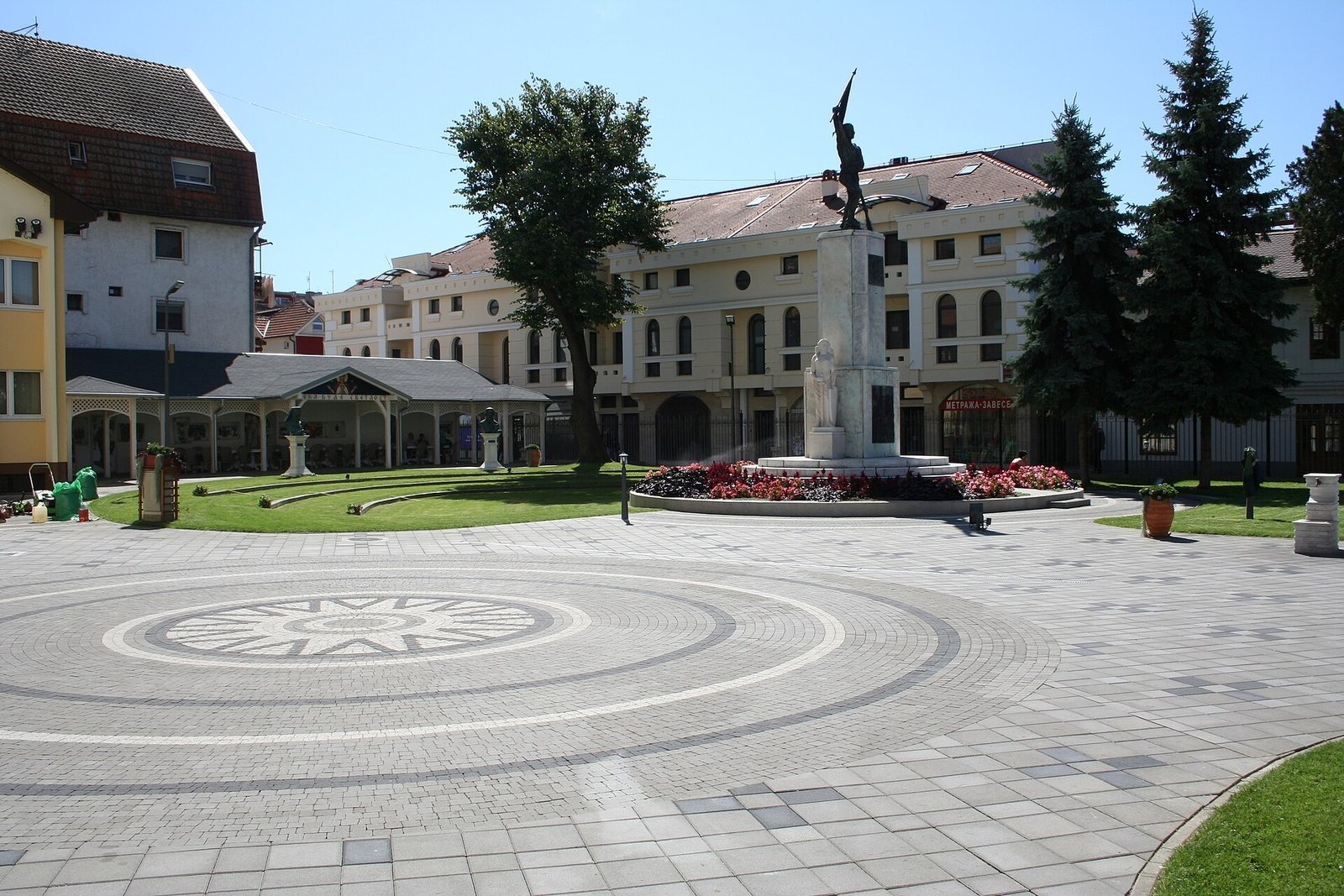
The memorial in front of the church occupies the former site of an elementary school. It was designed by Frano Mengelo Dinčić of Kotor. Its marble came from Venčac and was carved by Rogulić. Beneath it lie the exhumed remains of Šabac residents killed and burned inside the church during the First World War occupation.
Later courtyard additions
A parish house was built in 1976–1977. During courtyard improvements in summer 2017, paths were paved, two buildings and a children’s area were added, and busts of Saint Sava, a medieval Serbian archbishop and saint, and Nikolaj Velimirović, a Serbian Orthodox bishop and theologian, were installed. The work formed part of a celebration marking Bishop Lavrentije’s 50 years of episcopal service.