Roman Theatre of Dion: A Second-Century Performance Venue in Greece
Site at a Glance
- Popularity
- Very Low
- Country
- Greece
- Primary era
- Classical
- Eras represented
- Classical
- Civilizations
- Roman
- Site type
- Entertainment
- Remains
- Theatre
On this page8 sections
History
The Roman theatre of Dion is a performance venue at Dion, Greece, built under Roman rule in the second century AD, probably during the reign of Emperor Hadrian (AD 117–138). It was constructed in a period described as peaceful and prosperous.
The Hellenistic predecessor
An earlier theatre from the Hellenistic period, the era following Alexander the Great’s conquests and preceding Roman imperial rule, stood at Dion before the Roman building. It began to decline after 168 BC, when Perseus, the last king of Macedon, was defeated at the Battle of Pydna and Macedon came under Roman control. The Roman theatre gradually took its place, and the earlier building eventually fell out of use.
Late Roman alterations
Coins found during excavations indicate that at least four portions of the seating area and stage were altered in the last quarter of the fourth century AD. These changes may have addressed partial subsidence caused by earthquakes or reflected a partial change in the theatre’s use.
Remains
Setting and layout
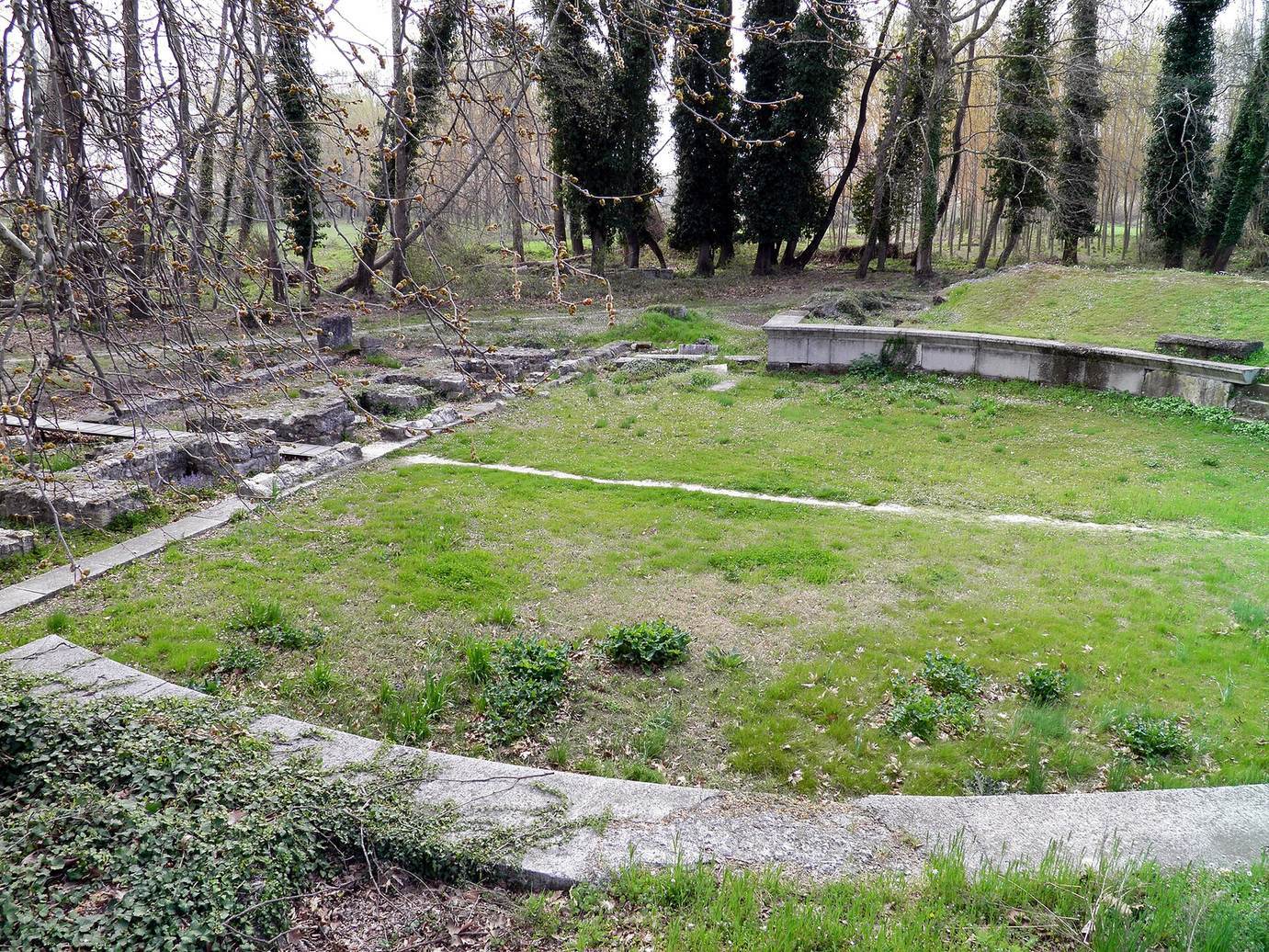
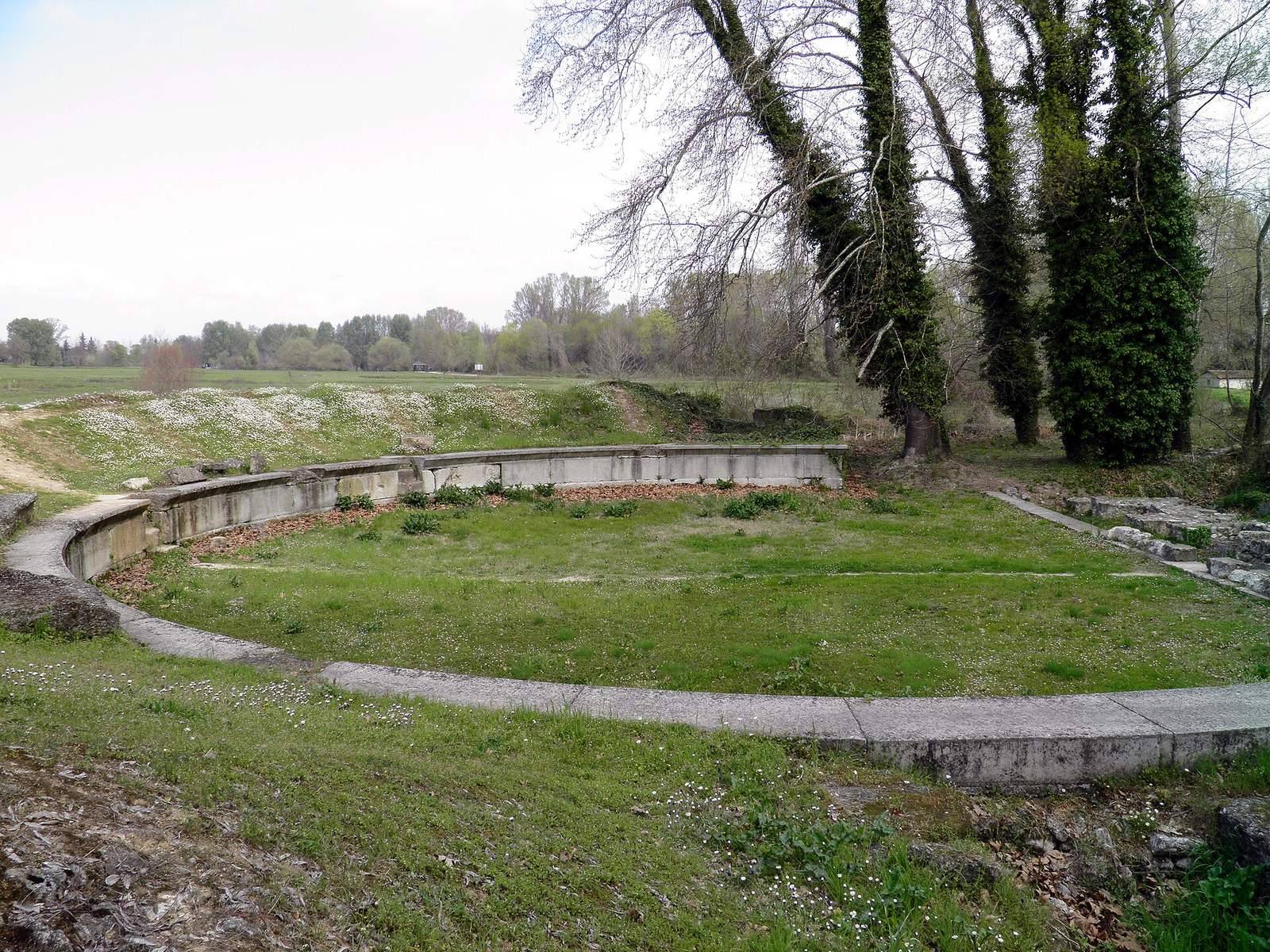
The ruins lie within the archaeological site of Dion, near the present-day village. The theatre stood on level ground outside the city walls, southeast of the Hellenistic theatre and south of the sanctuary of Zeus Olympios, an epithet associating the Greek god Zeus with Mount Olympus. Smaller than its predecessor, the theatre faced east. Its form has been compared with ancient theatres at Corinth and Patras.
Seating enclosure
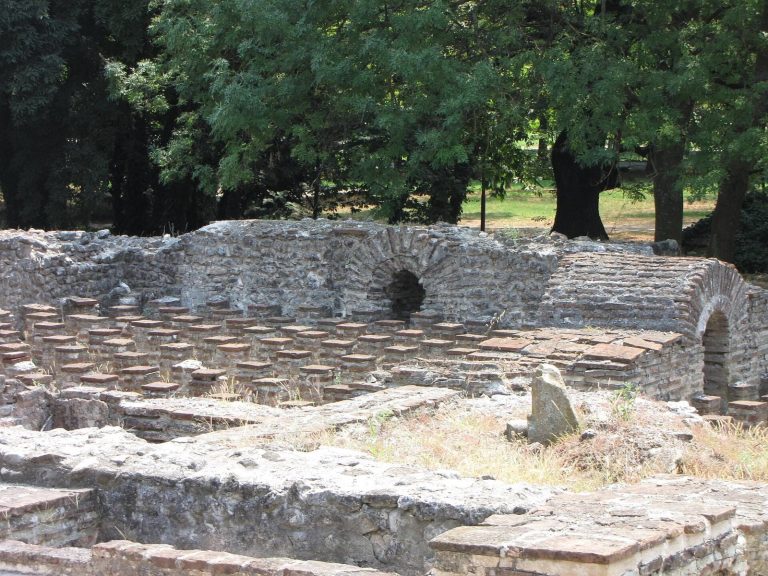
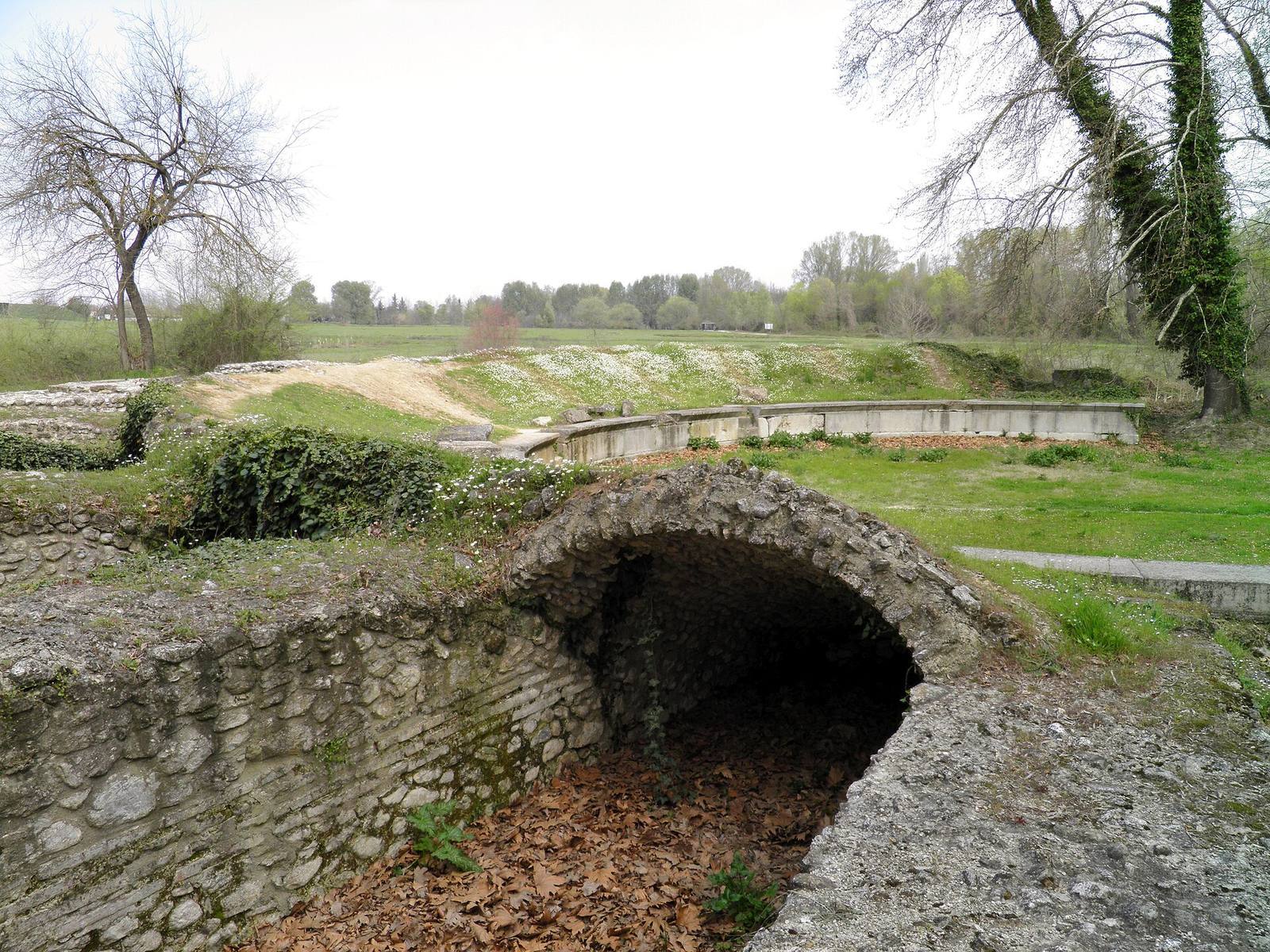
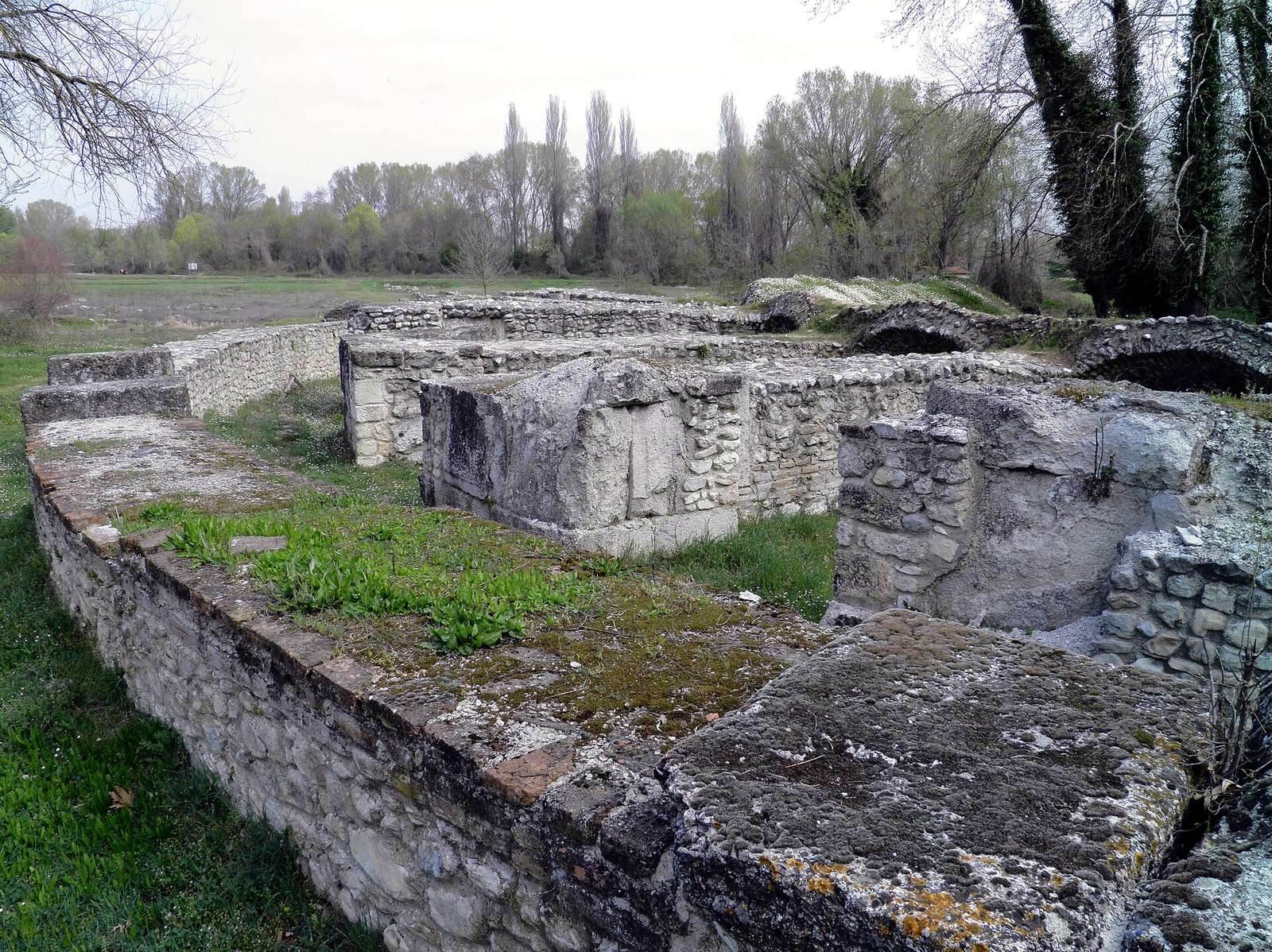
A high, semicircular stone wall enclosed the seating area, which measured about 16.5 metres. Three narrow stairways divided the seats into four sections. The 24 rows of stone benches rested above eleven arched, wedge-shaped spaces facing a semicircular inner passage beside the outer wall. The spaces at either end connected with side passages used by the audience. The lowest seating row formed a low wall beside the curved edge of the orchestra, the central performance space. Only a few stone benches survive.
Performance area and stage
The horseshoe-shaped orchestra measured about 10.7 metres, and the stage stood separately from the seating area. Its broad front-of-stage structure had rich marble facing and sculpture. Water under natural underground pressure destroyed much of this decoration.
Finds
Finds from the theatre include fragments of marble facing and marble coffers, or recessed decorative panels. They also include a headless statue of Hermes, the Greek god associated with travel and communication, holding a winged staff in his left hand, and a statue of an emperor wearing armor.