Alto da Fonte do Milho: A Fortified Roman Villa in Portugal
Site at a Glance
- Popularity
- Very Low
- Country
- Portugal
- Primary era
- Classical
- Eras represented
- Classical
- Civilizations
- Roman
- Site type
- Domestic
- Remains
- Villa
On this page8 sections
History
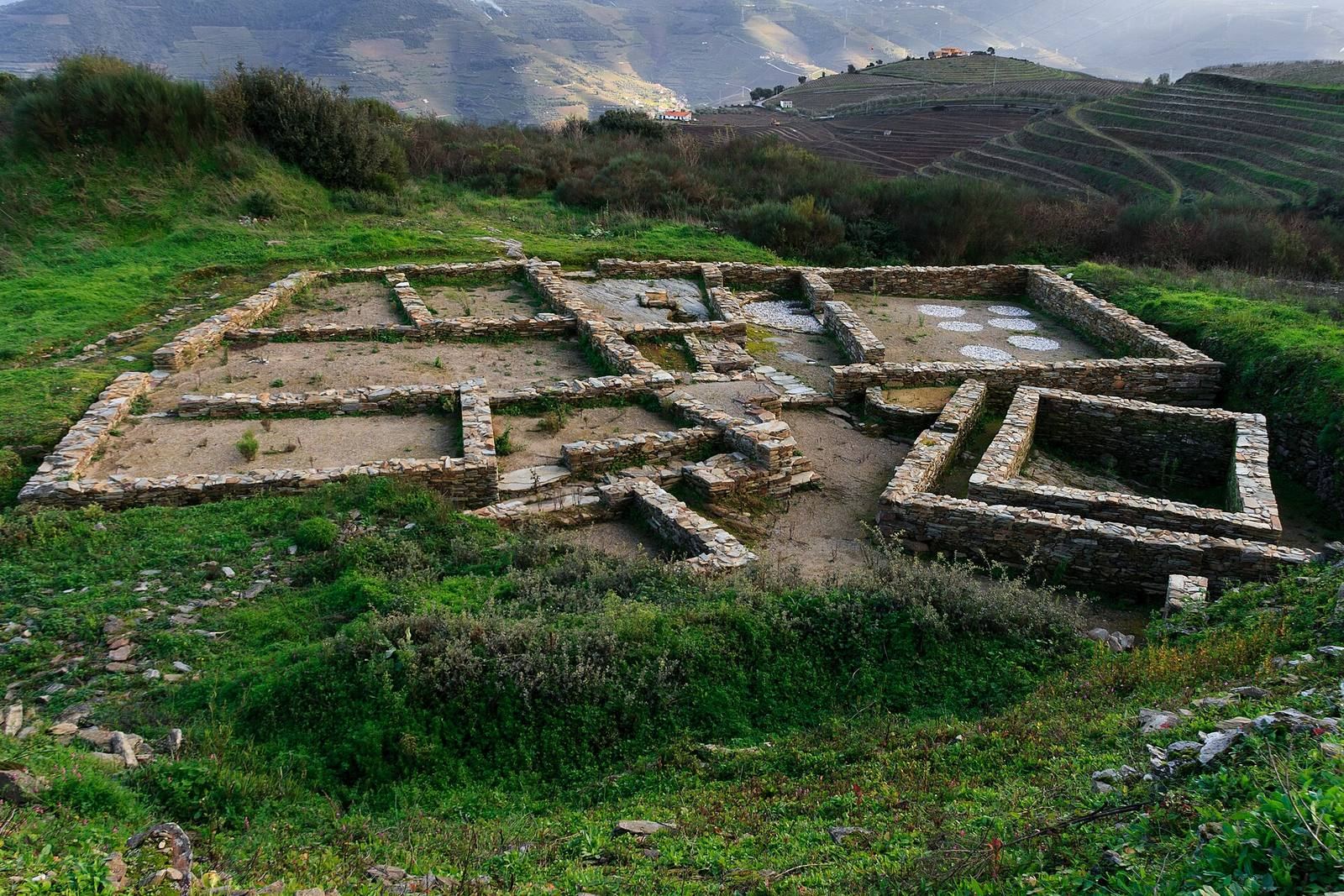
The Alto da Fonte do Milho archaeological site, also known as Castelo da Pousa, is a fortified Roman villa in Canelas, Portugal. A Roman villa was a rural estate that could combine a residence with agricultural and productive facilities. The site was used from the first century into the fourth or fifth century CE, and its archaeological importance rests particularly on evidence for a Roman wine estate.
Roman use
Coins of Augustus, Rome’s first emperor, and his successor Tiberius point to an early first-century phase, when the region came definitively under Roman rule.
Early interpretations and excavation
Eighteenth-century references called the ruins “Moorish Castles.” They were thought to be either a castle associated with conflict with the Moors or a small Roman fort. The site’s strategic position in the middle Douro Valley contributed to these interpretations.
Archaeologist Carlos Teixeira carried out archaeological work at the site in 1939. Fernando Russell Cortez began excavations in 1947, continuing them through 1949.
Recognition and conservation
The site became a National Monument in 1959. After excavation, conservation was neglected and the remains were temporarily forgotten. By 2001, they were in advanced decay; cultivation in the vineyard area contributed to soil erosion and landslides that damaged the site. That year, UNESCO, the United Nations agency overseeing the World Heritage List, considered it as a potential candidate. Consideration did not mean that the site was inscribed on the list.
Since 2009, the site has been investigated with advanced analytical techniques as part of a regional cultural heritage project involving renewed excavation, restoration, and museum interpretation.
Remains
The excavated complex occupies a north-oriented oval area, with buildings arranged around the edges of a large central courtyard. Terrace walls created level space for the buildings. Excavation exposed walls about one metre high and a gate.
Bathing and wine-production features
Bathing pool
Mosaics decorated with fish line a bathing pool within the complex.
Wine-production quarter
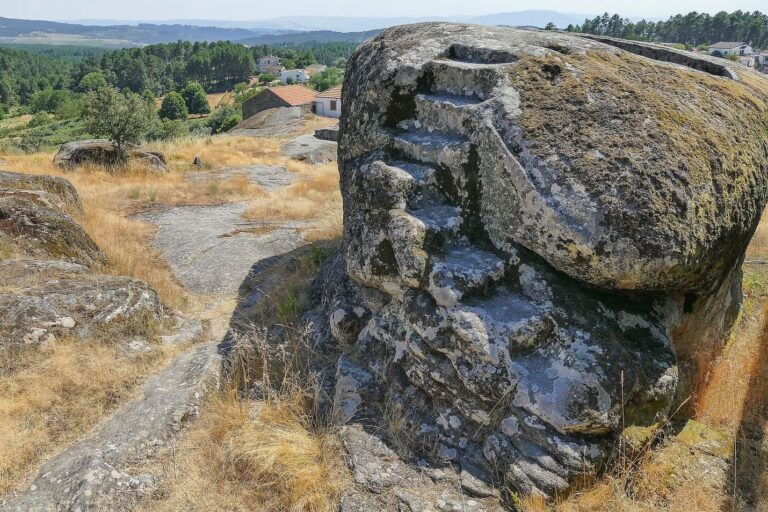
The commercial quarter yielded numerous finds connected with wine production, including a stone wine press.