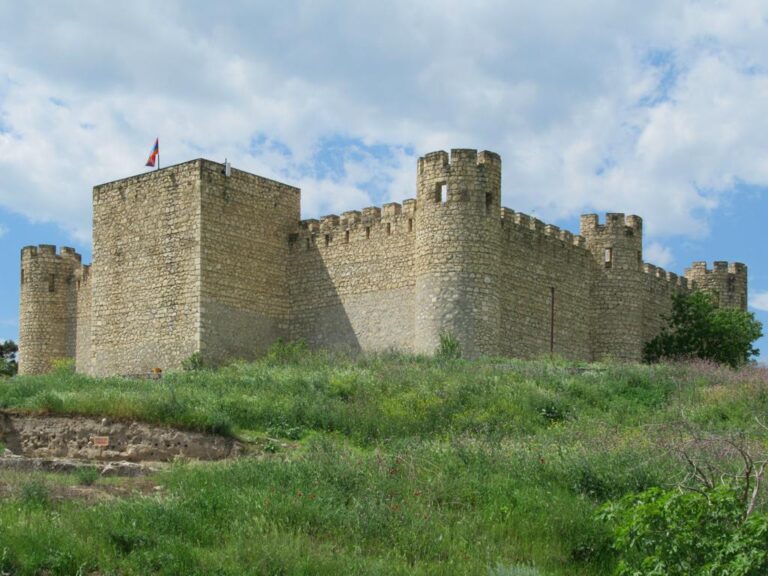
Dschraberd: An Armenian Fortress and Princely Seat in Azerbaijan
Site at a Glance
- Popularity
- Low
- Country
- Azerbaijan
- Primary era
- Medieval
- Eras represented
- Classical, Medieval
- Civilizations
- Armenian
- Site type
- Military
- Remains
- Castle
On this page5 sections
History
Dschraberd is a ruined Armenian fortress in Azerbaijan, on a rocky massif where the Tartar and Trchi rivers meet. Its construction date is uncertain: it has been associated with the period of Armenia’s Arsacid dynasty, an ancient ruling house, and has also been dated to the seventh century. The fortress is first mentioned in the work of Movses Kaghankatvatsi, an early medieval Armenian historian.
Dschraberd gave its name to one of Karabakh’s five Armenian principalities, ruled by princes known as meliks, and served as a seat of its rulers. In the seventeenth and eighteenth centuries, it was the residence of the Armenian Melik-Israelian family. Rulers also came from the Vakhtangian, Hasan-Jalalyan, Melik-Alaverdian, and Atabekian princely houses. The name Dschraberd has been interpreted as either “water fortress” or “bad fortress.”
The fortress’s defensive position was difficult to approach, and distant outposts used signals to warn of an advancing enemy.
Remains
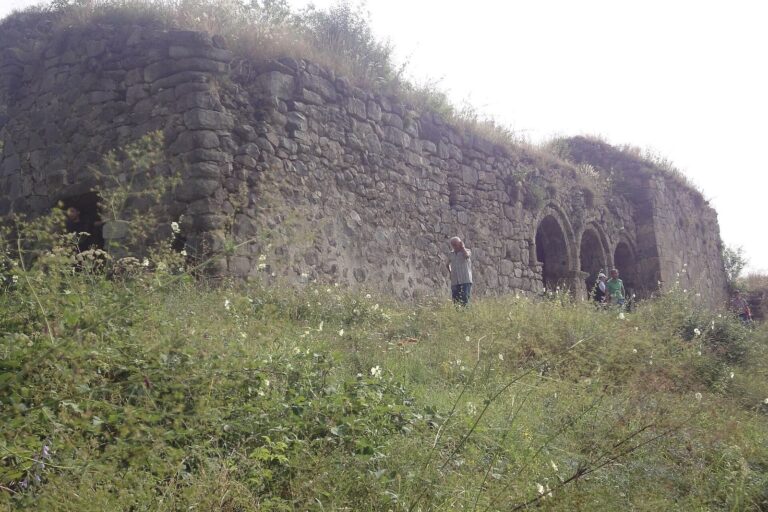
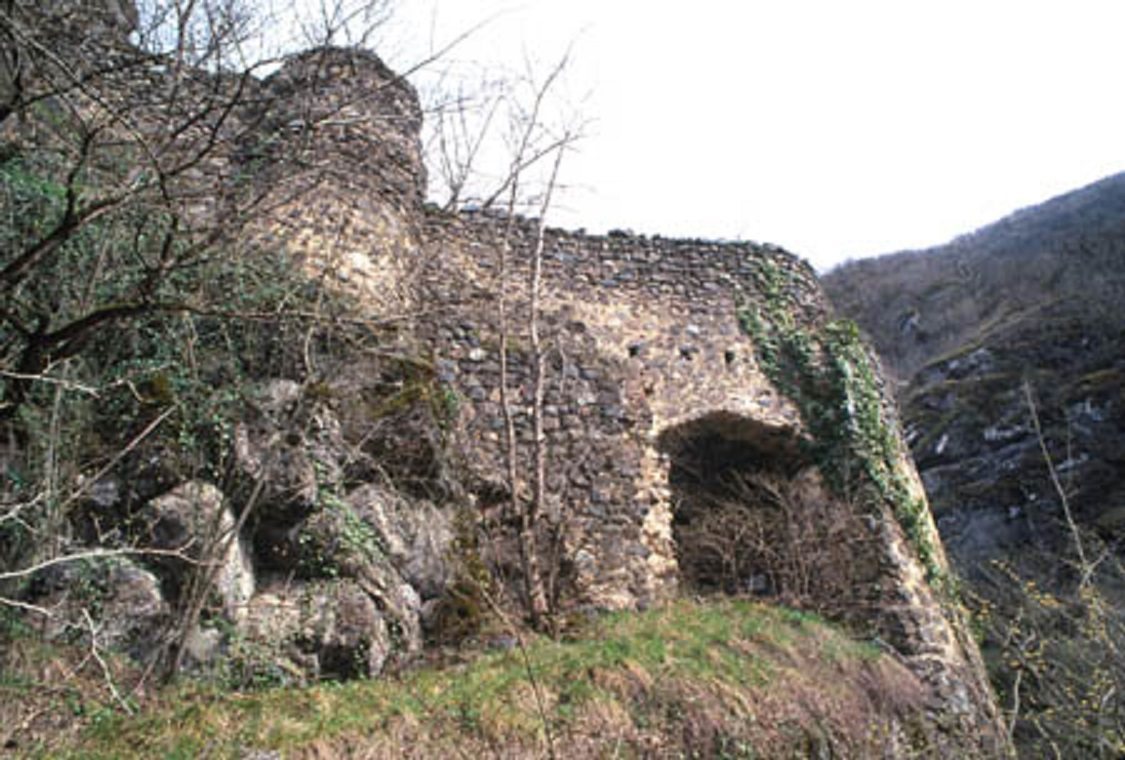
The hilltop ruins occupy a steep, wedge-shaped rocky massif. The Tartar and Trchi rivers flow around the rock, forming a peninsula, with the fortress close above the water.
Fortress layout and defenses
Natural defenses and water supply
The rivers protect two sides of the fortress, while a sheer cliff forms its northern defense. Its elevated position made access to water difficult. The water supply is thought to have come through a vertical shaft cut into solid rock.
Tunnel, walls, and gate
A tunnel was cut beneath the fortress rock. The surviving ruins include walls belonging to military and supporting structures, as well as the fortress gate.