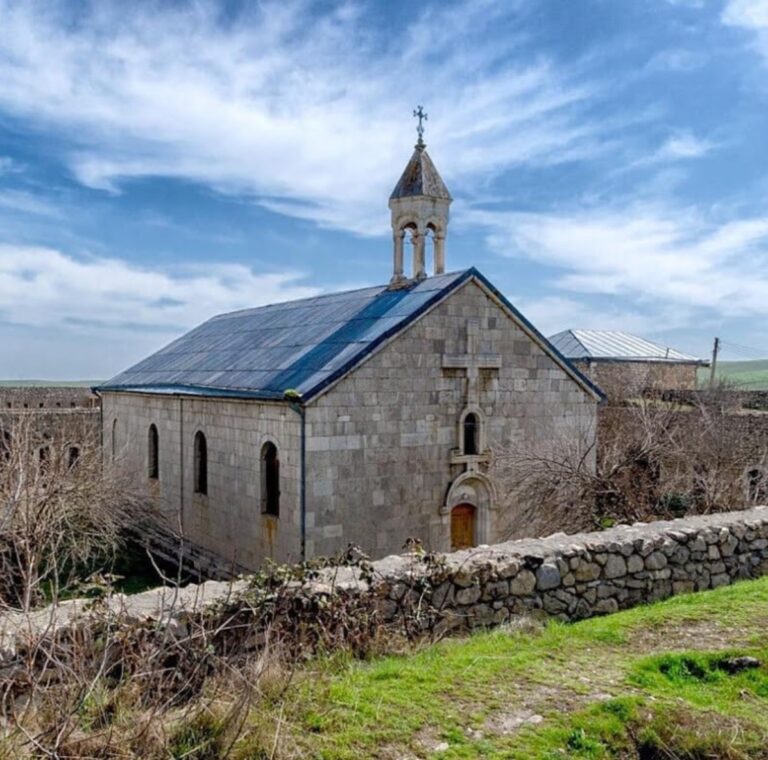
Bayat Castle: First Capital of the Karabakh Khanate
Site at a Glance
- Rating
- 4.6
- Popularity
- Very Low
- Country
- Azerbaijan
- Primary era
- Early Modern
- Eras represented
- Early Modern
- Civilizations
- Unclassified
- Site type
- Military
- Remains
- Castle
On this page7 sections
History
Bayat Castle is an eighteenth-century fortress in Azerbaijan, associated with the Arran architectural school and dated to 1748. Founded by Panah Ali Khan Javanshir, it served as the first capital of the Karabakh Khanate, a territory governed by a khan that emerged after the weakening of Iranian rule following Nader Shah’s death in 1747.
Foundation of the Karabakh Khanate
Panah Ali Khan had previously served under Nader Shah, the Iranian ruler whose death created the political conditions for the formation of several semi-independent khanates in the region. He later took refuge in Sheki and Shirvan, and Adil Shah appointed him khan of Karabakh. Panah Ali Khan ruled from 1748 to 1763.
After Nader Shah was assassinated, Panah Ali Khan returned to Karabakh with about 200 horsemen. Members of the Otuziki, Javanshir, and Kebirli tribes also returned after being forcibly relocated to Khorasan. His eldest son, Ibrahim Khalil Agha, who was 15 years old, fled from Khorasan and joined him.
Seeking a permanent seat of power and a defensible base against numerous enemies, Panah Ali Khan began constructing Bayat Castle in the Kebirli district in 1745. The castle is dated to 1748, and its name comes from the Turkic Bayat clan. Once it had been built, Panah Ali Khan moved his court, family, household, relatives, and members of the local nobility into the fortress.
Settlement and Siege
The castle’s establishment attracted nearby inhabitants and craftsmen. Families from the Tabriz and Ardabil regions also settled there, drawn by the prosperity and hospitality associated with Panah Ali Khan’s court. Bayat thus became both a ruling seat and a growing settlement.
Its development alarmed Haji Chelebi, ruler of the neighboring Sheki Khanate, and the khan of Shirvan. They besieged Bayat because they feared Panah Ali Khan’s increasing power and independence. The siege lasted for more than a month. Repeated sorties and surprise attacks by the defenders inflicted heavy losses on the besieging army, while many horses and pack animals were captured. The attackers eventually withdrew.
The failed siege strengthened Panah Ali Khan’s authority, but Bayat remained exposed to several enemies. After five years there, he decided that the site was unsuitable for the construction of a permanent city and fortress. He sought a location linked with the Karabakh Mountains, where the region’s nomadic population could protect its livestock and property in the mountain country.
Transfer of the Capital
Construction of Shahbulag Castle began near the Shahbulag spring on 20 November 1751. Panah Ali Khan, his family, and his close associates moved there on 7 November 1752, and Bayat ceased to be the khanate’s capital. The seat of power later moved to Shusha, a more defensible natural fortress on a rocky mountain site, particularly in response to threats from Iran.
Bayat Castle has partially survived after more than two centuries and is regarded as a valuable historic and cultural monument of Azerbaijan.
Remains
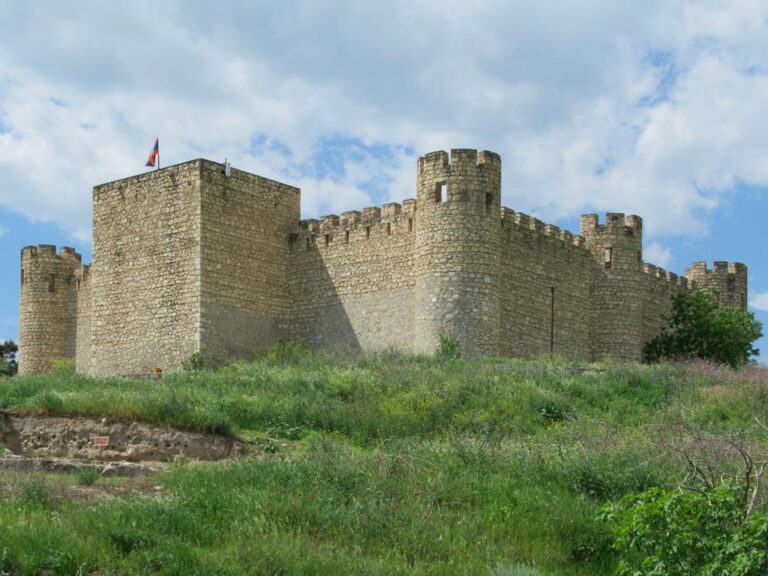
Bayat Castle stands in Kebirli village in Azerbaijan’s Tartar District. Its surviving remains represent a fortified settlement associated with the Arran architectural tradition. The castle was constructed from hard-fired bricks and combined defensive works with buildings that supported the life of the court and its wider community.
Defensive Works
The fortress was enclosed by defensive outer walls and protected by ditches. These elements formed the castle’s principal defenses during the siege by the rulers of Sheki and Shirvan. The brick construction and fortified perimeter shaped Bayat’s role as both Panah Ali Khan’s residence and the first seat of the Karabakh Khanate.
Market, Bathhouse, and Mosque
Within the built complex were a market, a bathhouse, and a mosque. Together with the court and residential population, these structures show that Bayat was planned as more than an isolated military position. The market served the settlement’s economic life, while the bathhouse and mosque formed part of its communal facilities.
Nearby sites