Le Castella Fortress: A Fortified Settlement on the Ionian Coast
Site at a Glance
- Popularity
- Low
- Country
- Italy
- Primary era
- Classical
- Eras represented
- Classical
- Civilizations
- Ancient Greek
- Site type
- Military
- Remains
- Fort
On this page6 sections
History
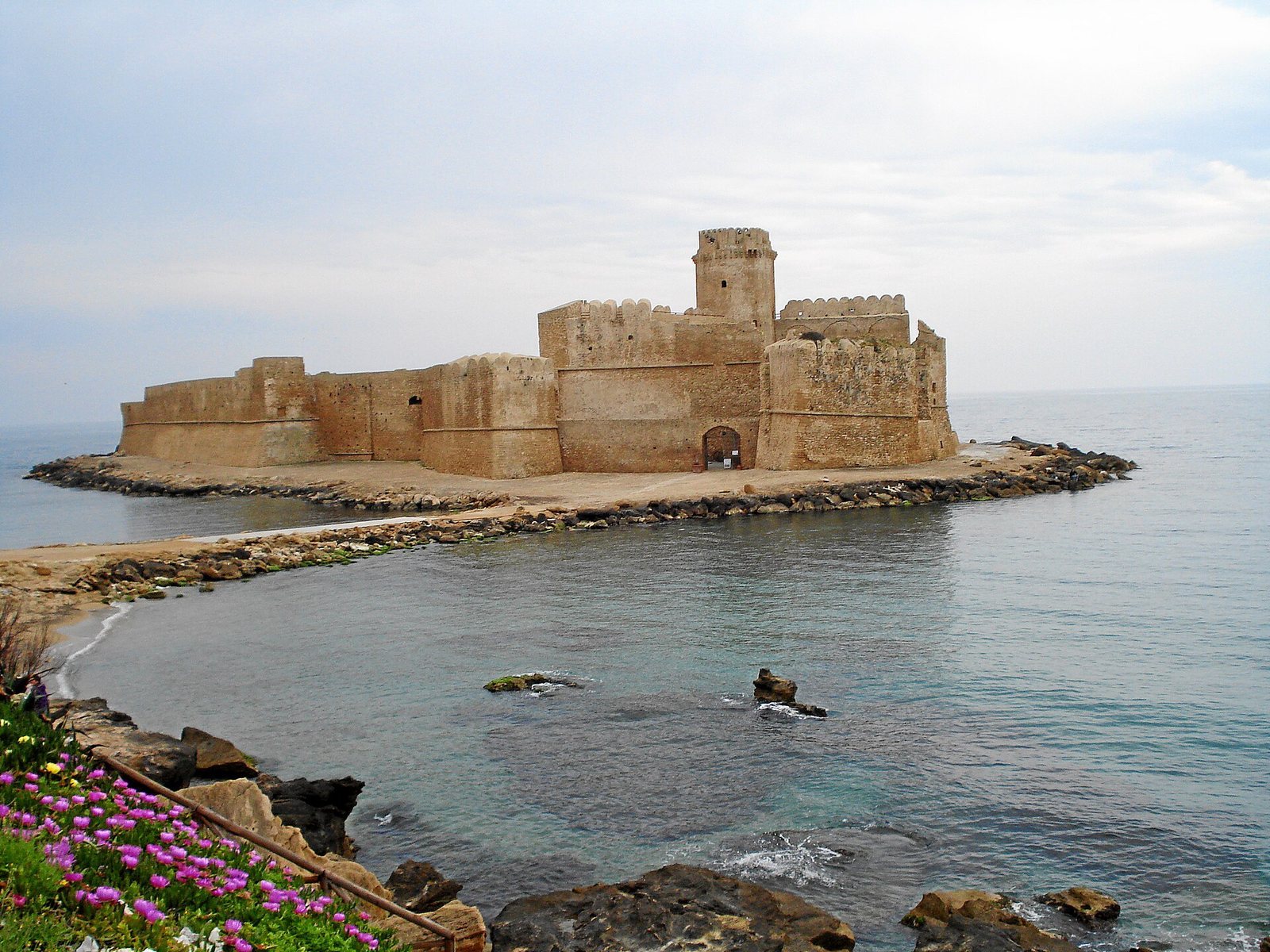
Le Castella Fortress is a fortified complex at Le Castella in Calabria, Italy. Its origins probably date to Magna Graecia, the Greek-colonized areas of southern Italy, and it changed repeatedly as rulers and defensive needs shifted.
Origins and changing defenses
A storm in the 1970s exposed a wall beneath the fortress foundations. Its masonry resembles that of a Hellenistic wall at Velia, another ancient Greek city in southern Italy, dated between the second half of the fourth and the third centuries BCE. The exposed structure may have been an ancient breakwater or part of a Crotonian military outpost, a fortified station associated with the Greek city of Croton.
The complex served as a defended settlement for its garrison and local residents, with civil and religious buildings. Its different parts were built in different periods as the fortification was adapted over the centuries.
Settlement and museum
From at least the second half of the seventeenth century until the beginning of the eighteenth, the settlement stood within the fortress’s enclosing wall. The promontory was then used mainly for agriculture and livestock raising. Today, the complex is a major museum managed by a regional directorate of Italy’s Ministry of Culture.
Remains
The fortress complex
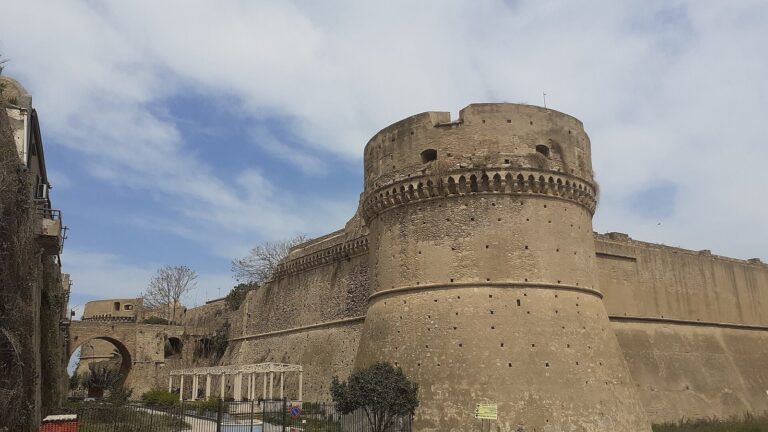
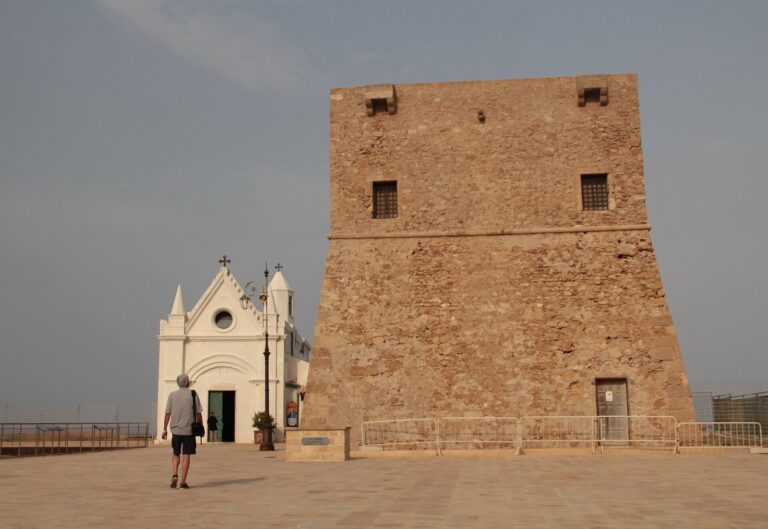
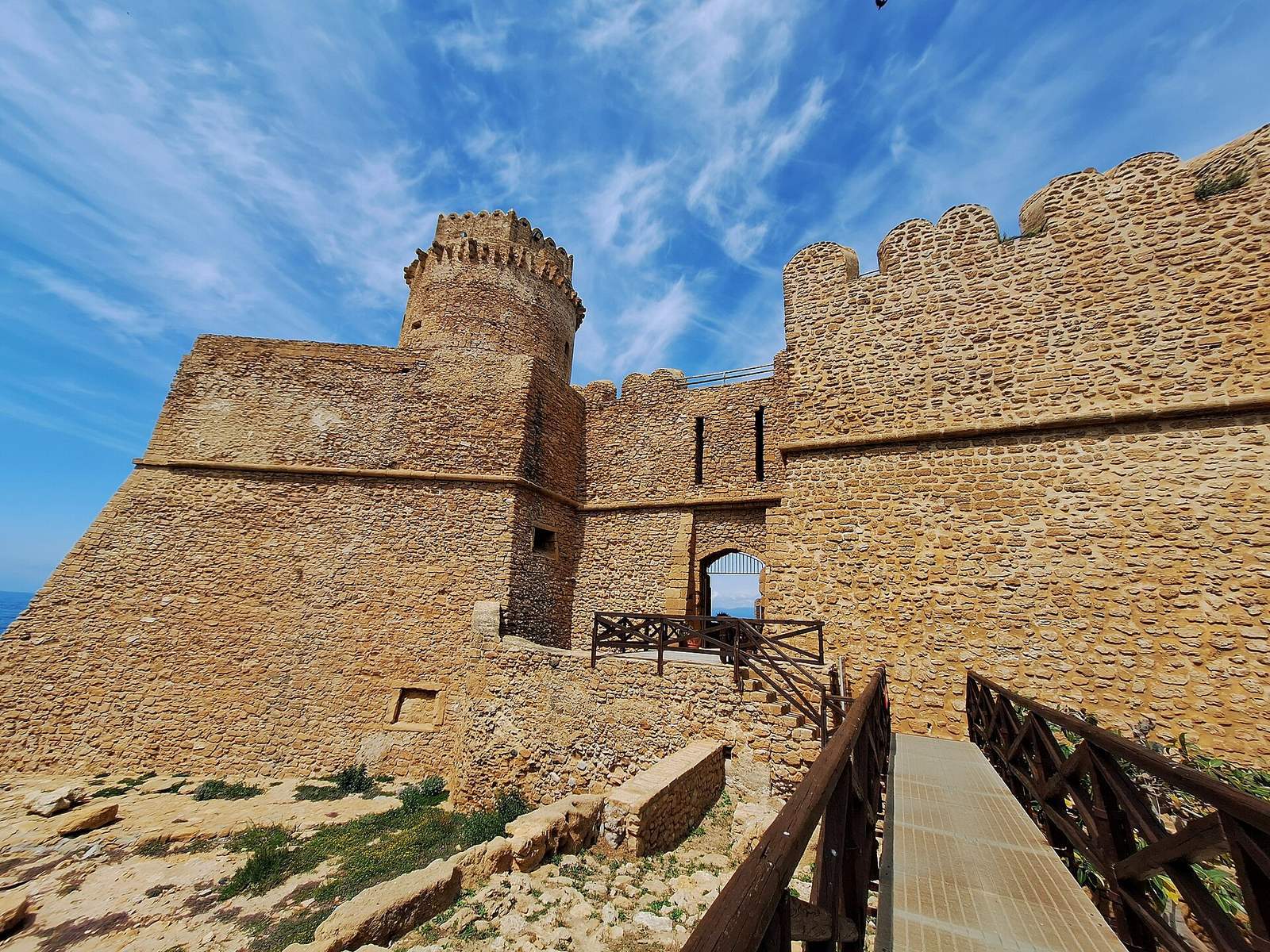
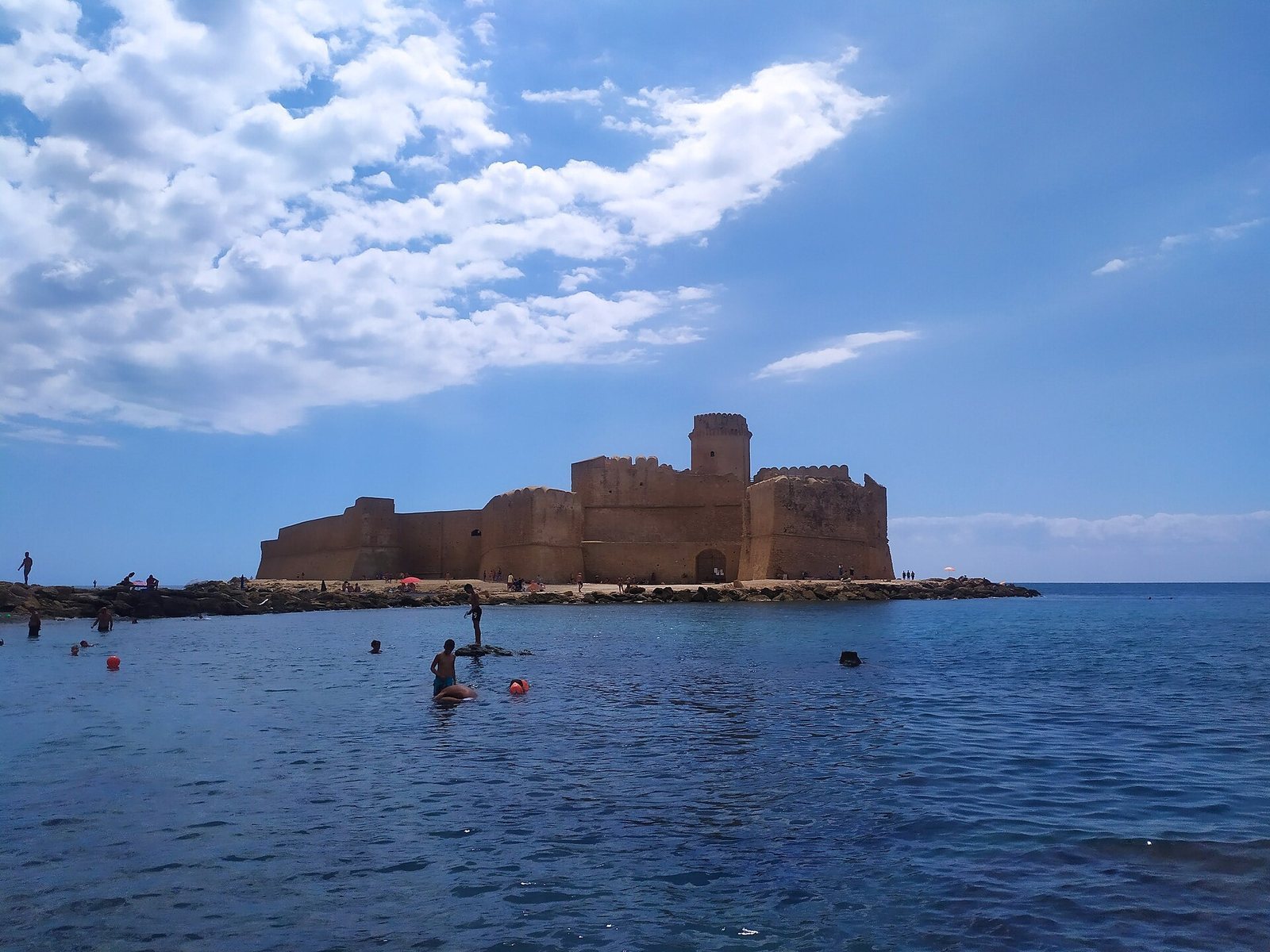
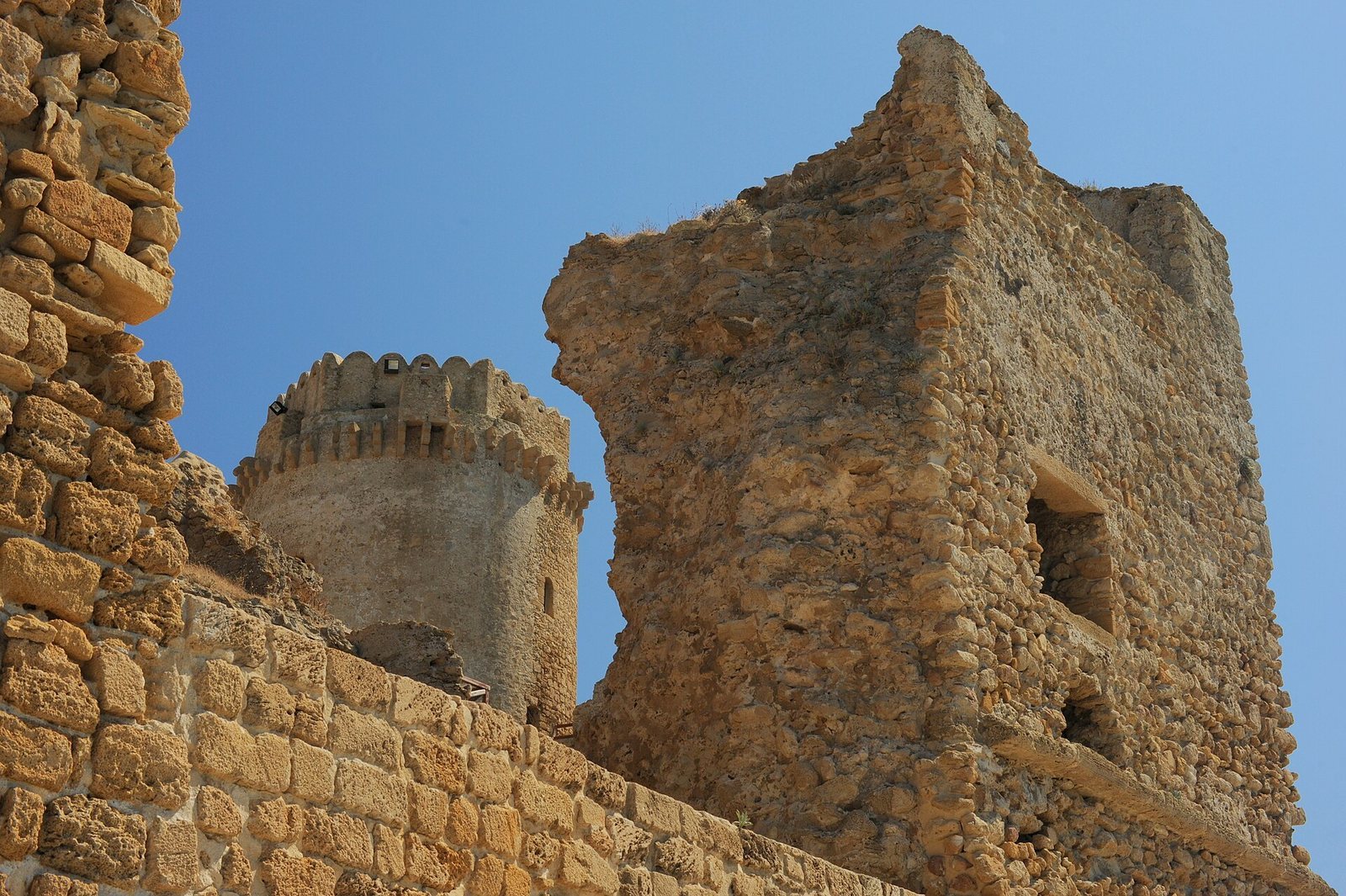
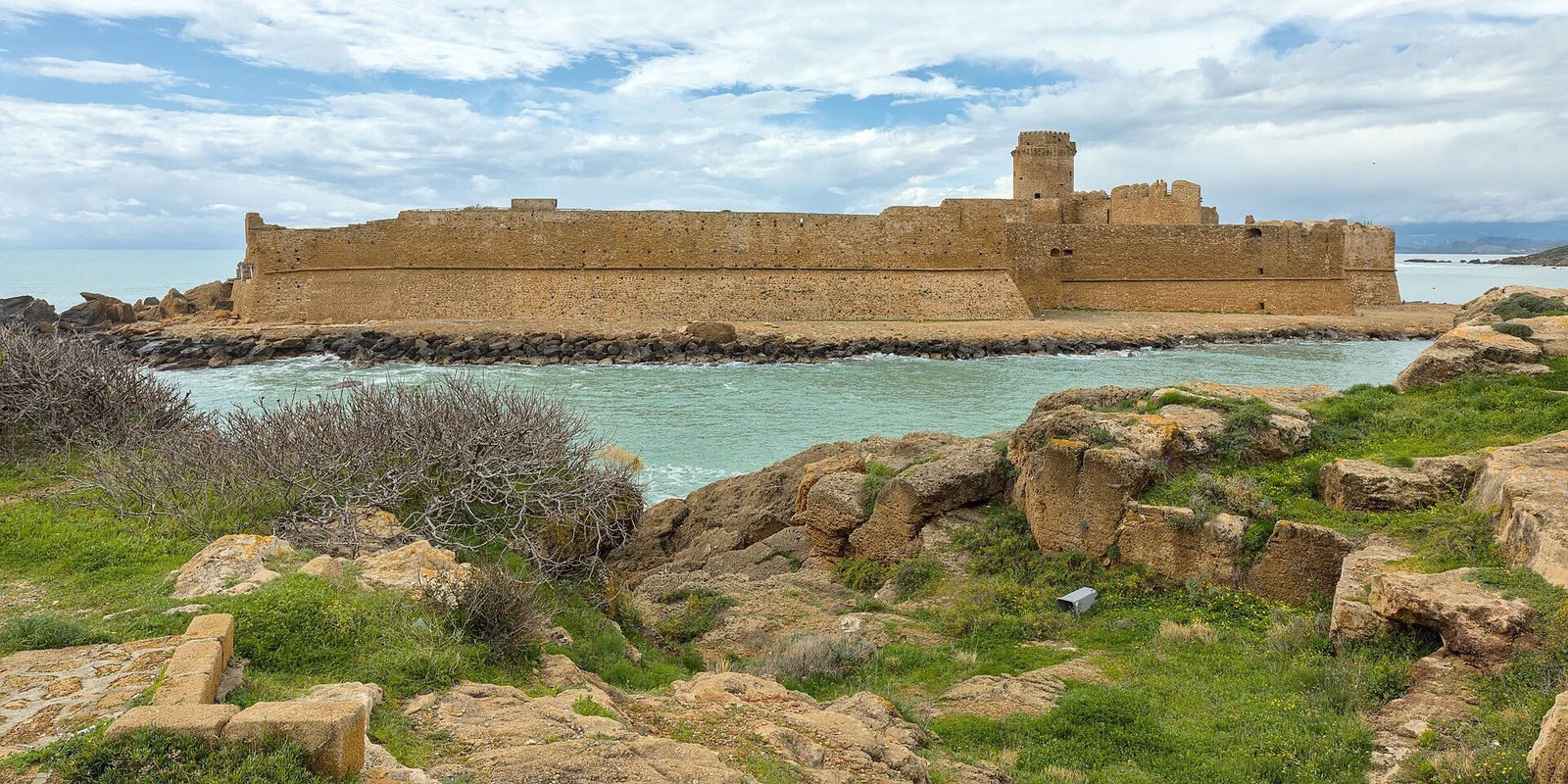
The ruined fortress occupies a small peninsula projecting into the Ionian Sea. Its remains include an enclosing wall, a keep (the principal fortified tower), military installations, and civil and religious buildings. A chapel within the complex has a fresco on the vault above its curved apse.
The earlier wall
The wall exposed by the storm lies beneath the fortress foundations, behind its eastern flank, and extends for about 40 metres. It is made of limestone blocks and small square stones arranged in a checkerboard pattern. Its form and masonry resemble those of the Hellenistic wall at Velia, although its function at Le Castella remains uncertain.