Arch of Caracalla in Tébessa: A Roman Honorific Monument
Site at a Glance
- Popularity
- Medium
- Country
- Algeria
- Primary era
- Classical
- Eras represented
- Classical
- Civilizations
- Roman
- Site type
- Civic
- Remains
- Arch
On this page9 sections
History
Roman construction and dedication
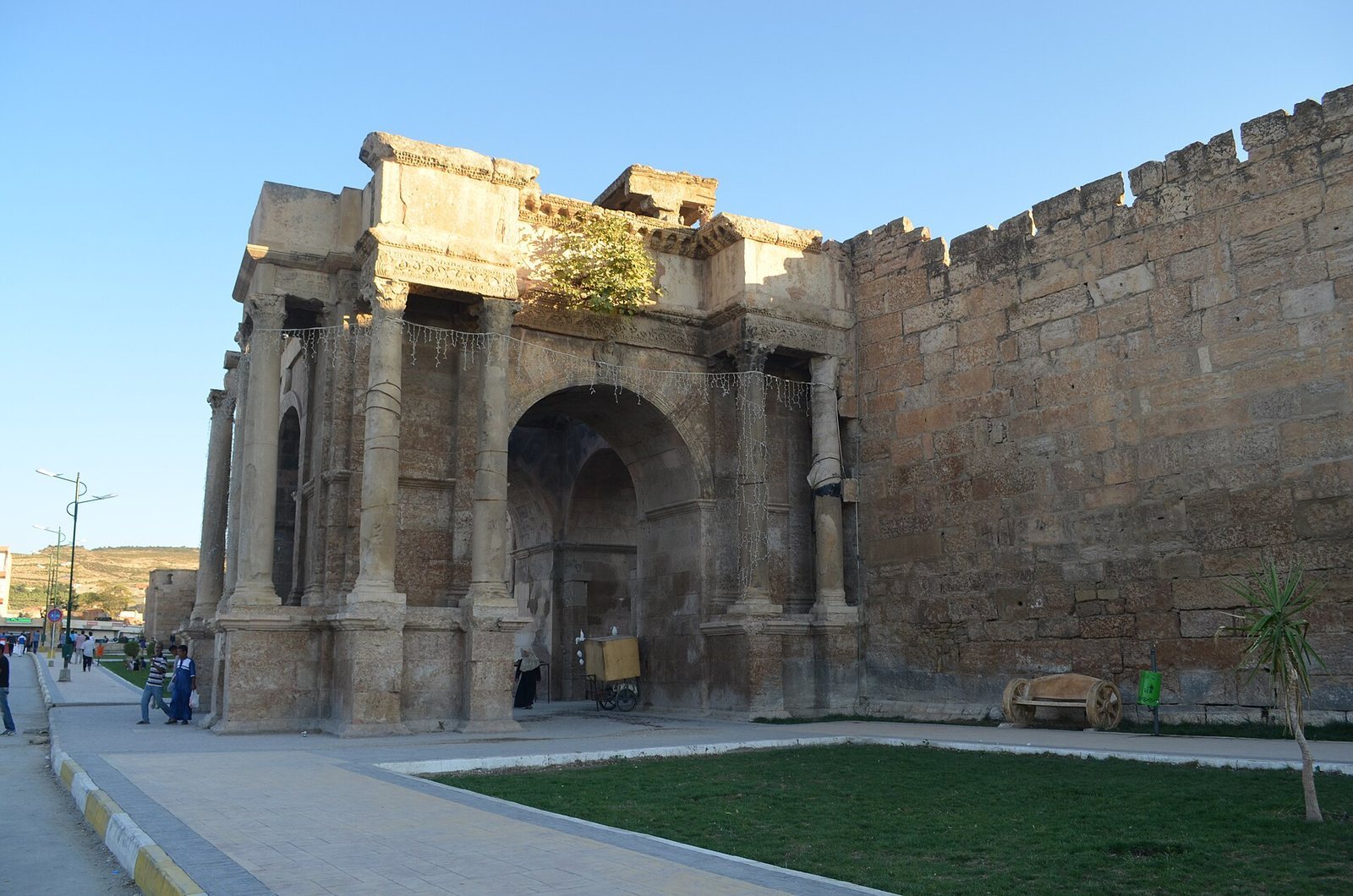
The Arch of Caracalla in Tébessa is a Roman honorific monument in Algeria, built between 211 and 214 in the Roman colony of Theveste. It honored Emperor Caracalla, his mother, Empress Julia Domna, and his father, Emperor Septimius Severus. Its construction was financed by a bequest from Gaius Cornelius Egrilianus, a native of Theveste and a senior officer of the Fourteenth Legion. His testamentary gift assigned 250,000 sestertii, a Roman monetary unit, to the project.
Byzantine reuse
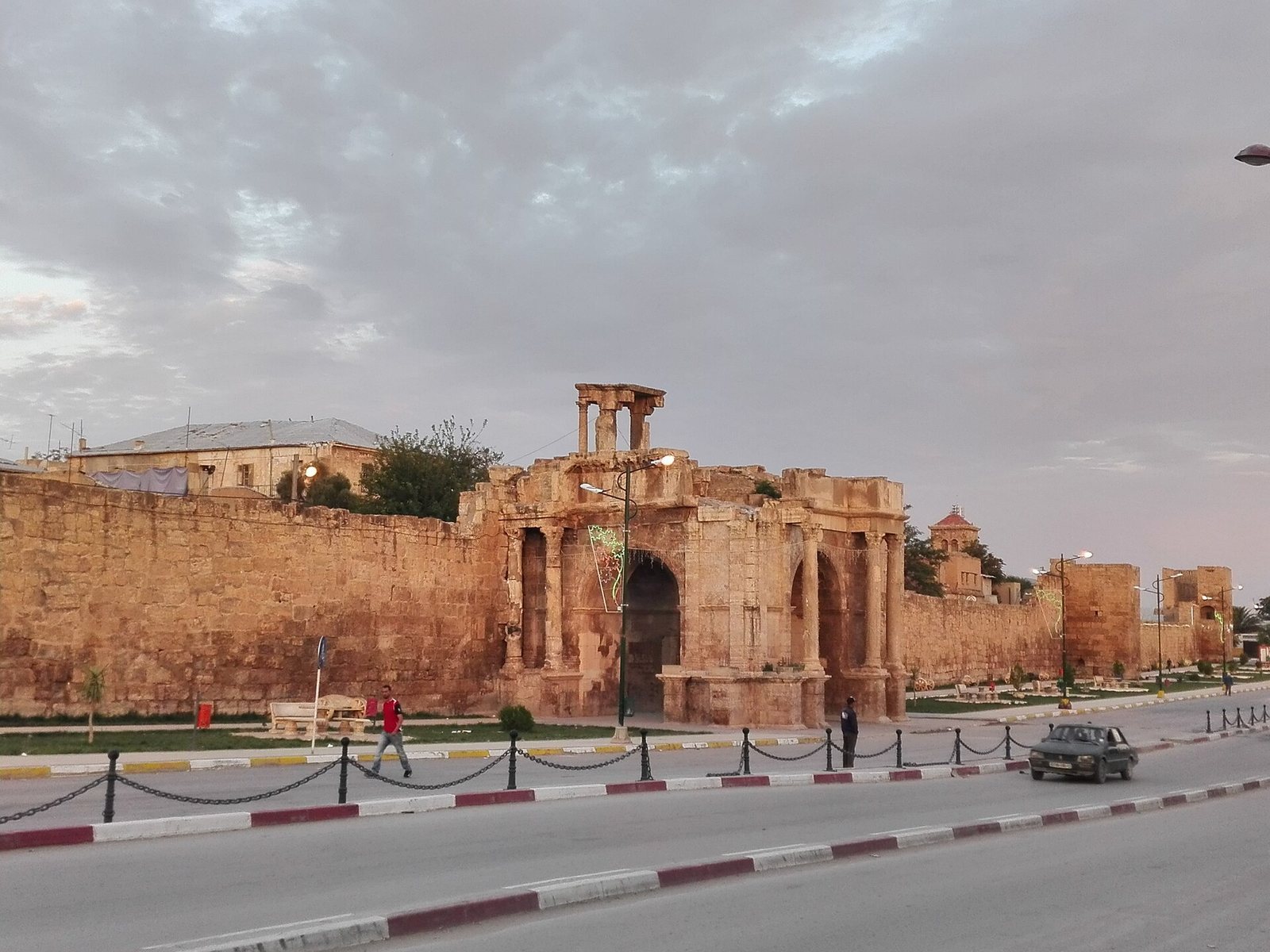
During the Byzantine period, the era of the Eastern Roman Empire, the arch became part of a newly built city wall and served as its northern gate. The side arches and north passage were blocked. A Byzantine inscription connects this work with Solomon, a Byzantine military commander. French military engineers reopened the arches and passage during the colonial period.
Remains
Plan and construction
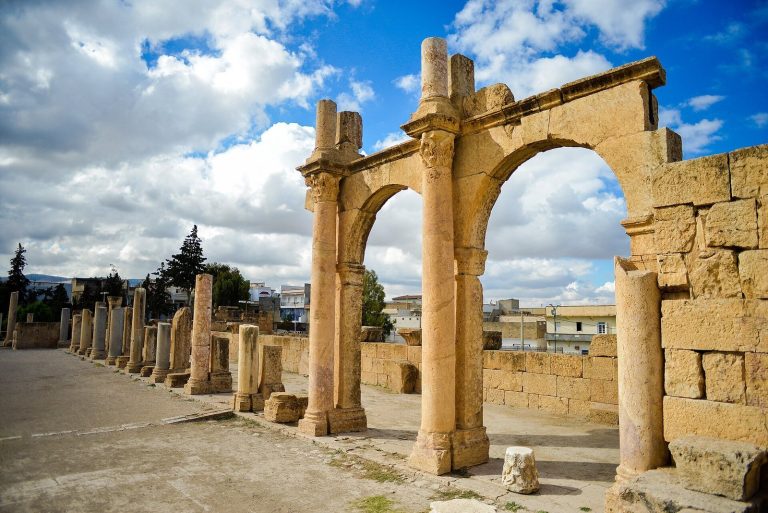
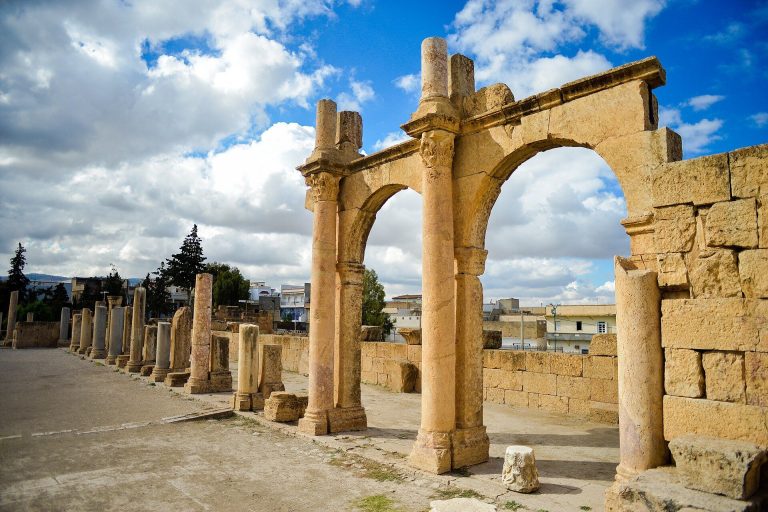
The limestone monument has a square plan with four passages, one through each side, a form known as a tetrapylon. Each side measures 10.94 metres, and the height from the base to the top of the entablature is 10.93 metres, giving the arch roughly cubic proportions.
Architectural decoration
Columns and entablature
Pairs of Corinthian columns stand before pilasters on the piers beside the openings. The columns and pilasters rise from a podium with projecting pedestals. Above them, the entablature, the horizontal structure carried over the columns, continues into the recesses above the passages. It is stepped to meet the line of the arch’s entablature.
Medallions and inscriptions
Medallions showing busts of deities appear above the arches on three sides. The attic carries dedications to the deified Septimius Severus, Julia Domna, and Caracalla on three sides. On the fourth is a reconstructed Byzantine inscription about the arch’s incorporation into the city wall, originally found in the vault infill. An inscription naming the donor is located on the walls inside the passage.
Statue settings
At the centre of each side, the entablature supported an aedicula, a small shrine-like frame for a statue. The design of the uppermost part remains uncertain. Jean Meunier proposed an octagonal lantern whose base would have been concealed by the aediculae, while another interpretation suggests a low dome. Lidiano Bacchielli proposed that four aediculae joined by railings held statues of the deified Septimius Severus and Julia Domna, Caracalla, and Geta, Caracalla’s brother.