Euromus: An Ancient City of Caria
Site at a Glance
- Popularity
- Medium
- Country
- Turkey
- Primary era
- Classical
- Eras represented
- Classical
- Civilizations
- Carian, Roman
- Site type
- City
On this page9 sections
History
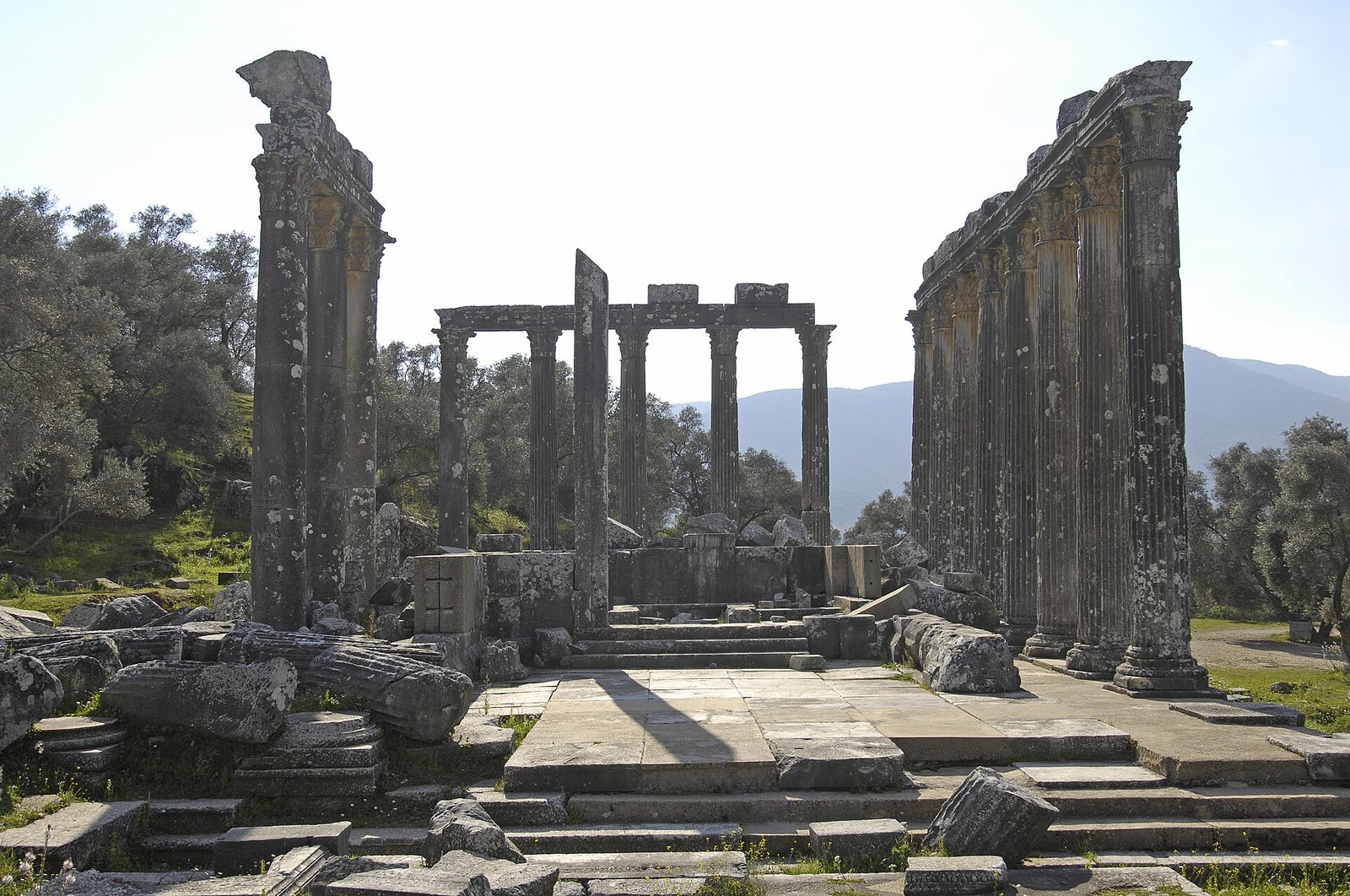
Euromus was an ancient Carian city near Kızılcakuyu in Türkiye. Its foundation date is uncertain, but it was part of regional politics by the fifth century BC and later passed among several powers. The Temple of Zeus Lepsinos, dedicated to Zeus, a principal god of ancient Greek religion, under the local name Lepsinos, was built during the reign of the Roman emperor Hadrian in the second century AD.
Carian origins and early rule
The city was once called Kanimca, a name associated with worship of a mother goddess, a female deity connected with motherhood and fertility. In the fourth century BC, Mausolus, ruler of Caria, changed its name to Euromus as part of an effort to promote Greek language and culture.
Traditions offer different explanations for the city’s beginnings. One names Euromus, son of the Carian Idris, as its founder; Greek myth instead makes him a grandson of Car, a legendary ancestor of the Carians. An account attributed to Apollonius assigns the foundation to Lycians, a claim not supported by archaeological discoveries.
In the fifth century BC, Euromus belonged to the Attic-Delian League, an alliance led by Athens, and paid tribute to it. The city also formed part of Mausolus’s kingdom.
Macedonian, Seleucid, and Rhodian rule
After Alexander the Great, king of Macedon, conquered much of the eastern Mediterranean and Near East, control of Euromus probably passed among Macedonian, Egyptian, and Syrian rulers. In 201 BC, Philip V of Macedon captured the city and held it for four years, renaming it Philippi. It passed to Antiochus III, ruler of the Seleucid Empire, a kingdom formed after Alexander’s death, in 197 BC.
The Treaty of Apamea, a peace settlement that ended the war between Rome and the Seleucid Empire, placed Euromus under Rhodes, an ancient Greek island state, in 188 BC. Euromus did not regain its freedom under Rhodian rule and was compelled to ally with Mylasa. Herakleia, a neighboring city angered by the arrangement, later attacked it. Euromus subsequently developed as an independent settlement and underwent rebuilding and repairs. It was freed from Rhodian rule in 167 BC.
During the Seleucid period, Euromus belonged to the Chrysaorian League, a regional association of Carian cities. It minted its own coins from the second century BC through the second century AD and joined a political confederation with neighboring cities in the second century.
Roman rule and later history
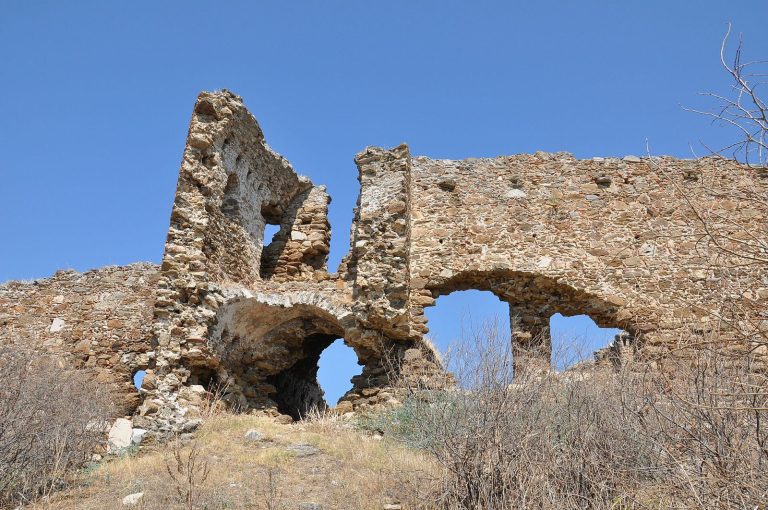
Under Roman rule, Euromus belonged to the judicial district of Alabanda. During the Byzantine period and the early years of the Ottoman Empire, the city probably declined and was abandoned. In the Ottoman period, lime kilns within the ancient city burned ruins to produce lime.
From the eighteenth century onward, European visitors and researchers surveying Caria recorded Euromus and produced engravings of its temple. Later archaeological work included surveys and excavations at the temple, as well as efforts to raise fallen columns.
Remains
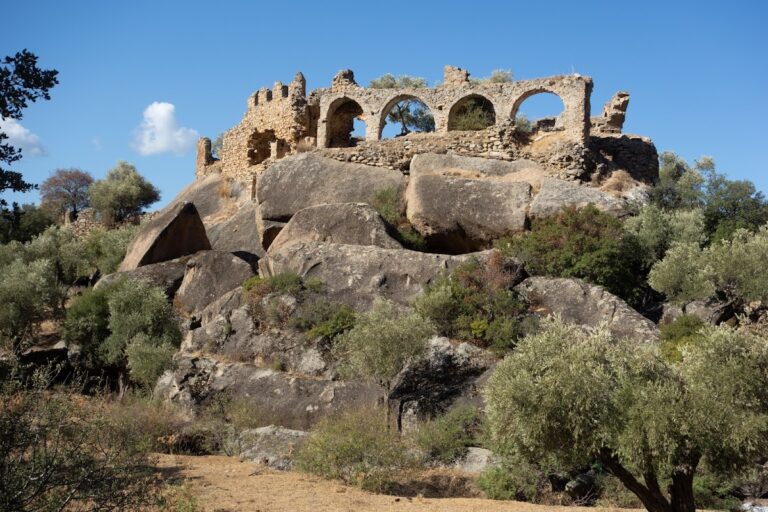
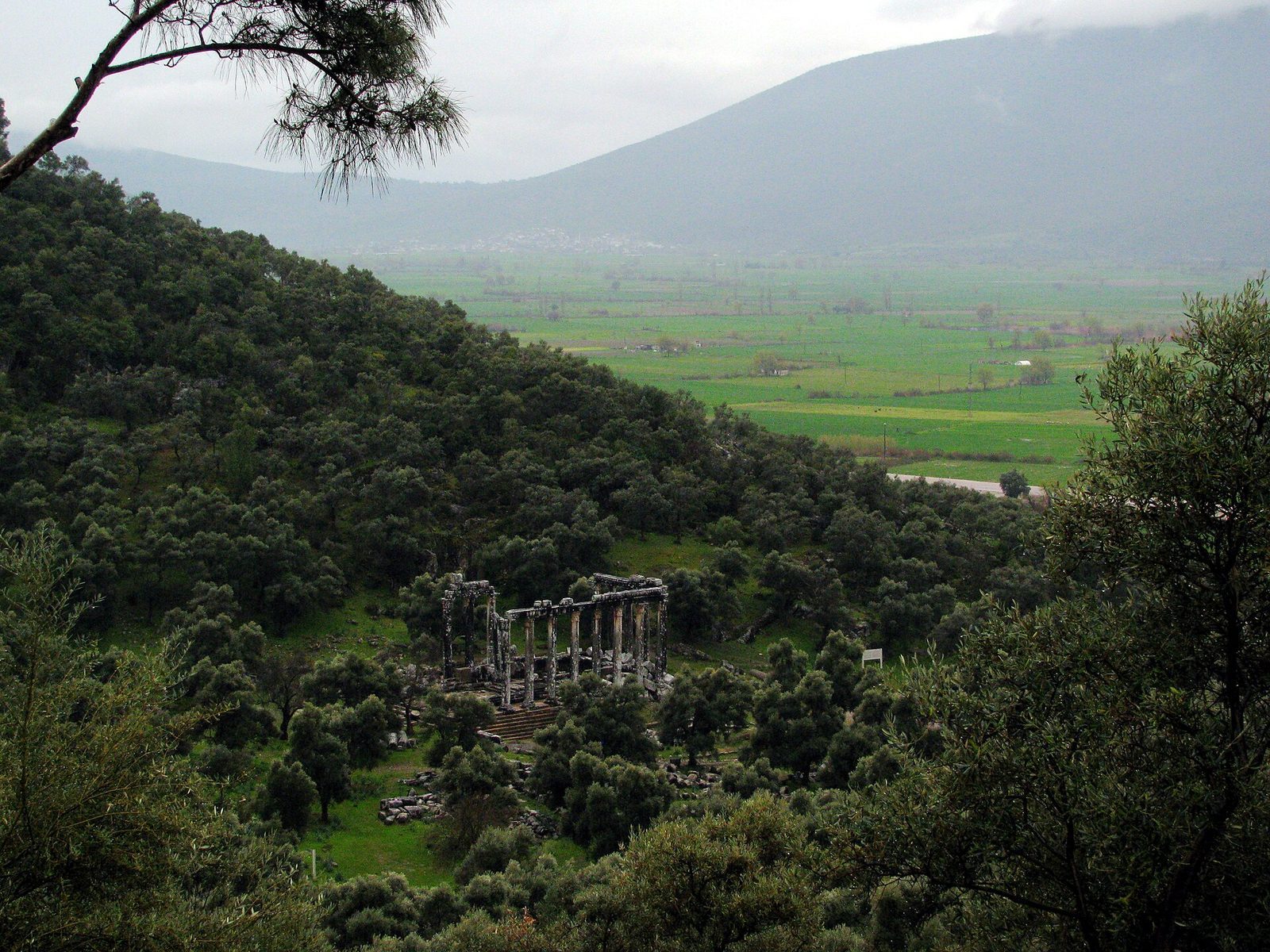
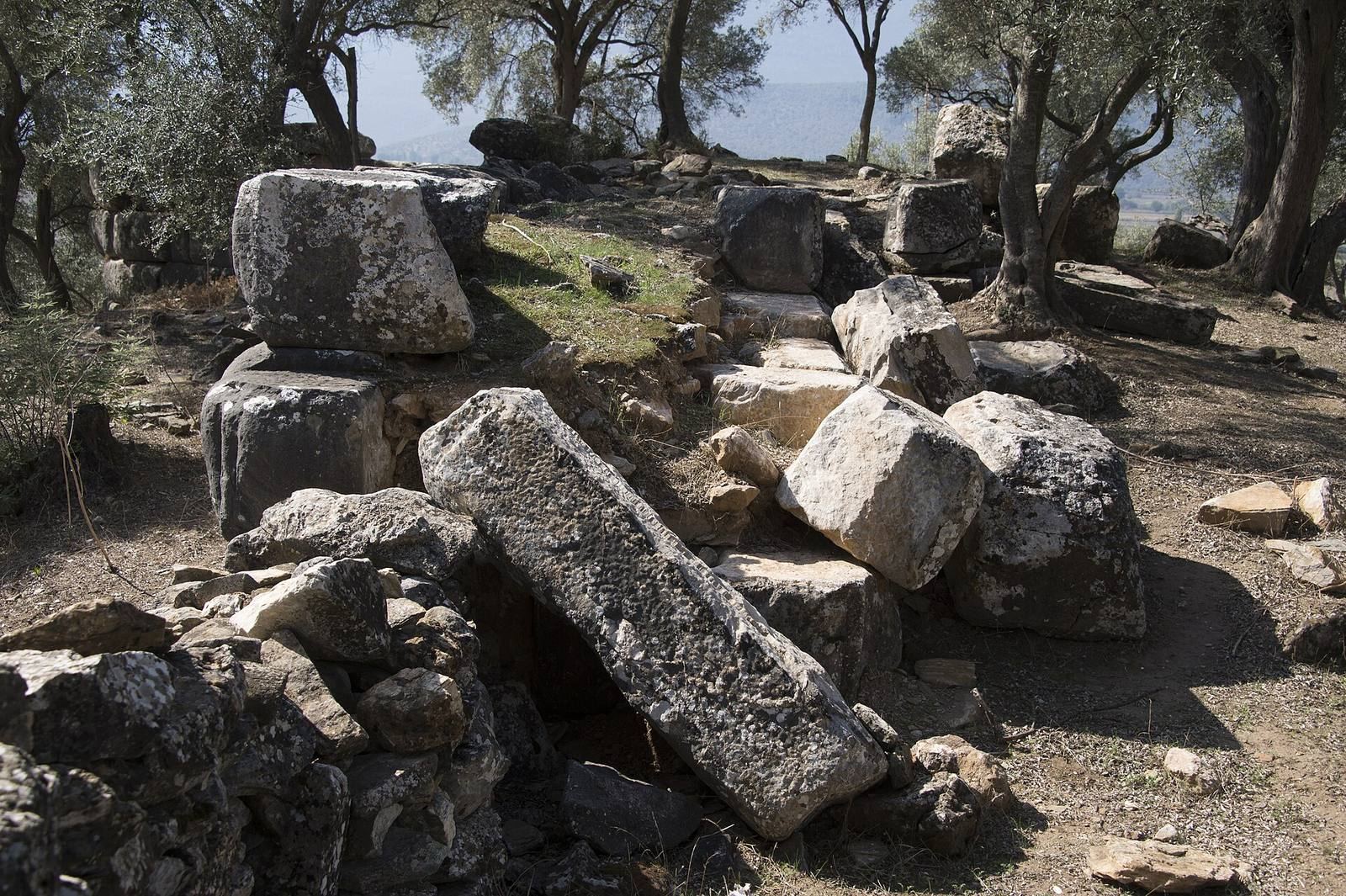
The ruins lie at the foot of Mount Grium, which runs parallel to Mount Latmus. A river flowed near the ancient city, which was also close to Priene, Miletus, and the mouth of the Maeander. Euromus lies about 12 km northwest of Milas and 4 km southeast of Selimiye; the temple stands between Milas and Lake Bafa. The surviving remains include religious and civic buildings, with the agora at the settlement’s center and the theatre on its western slope.
Temple of Zeus Lepsinos
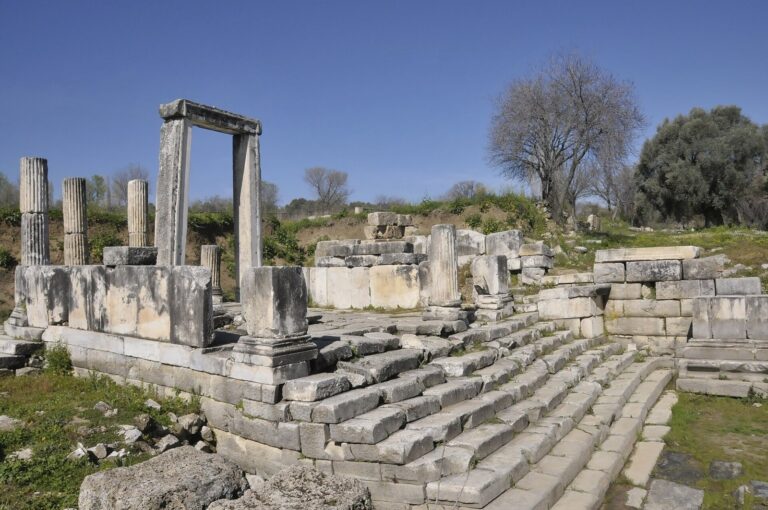
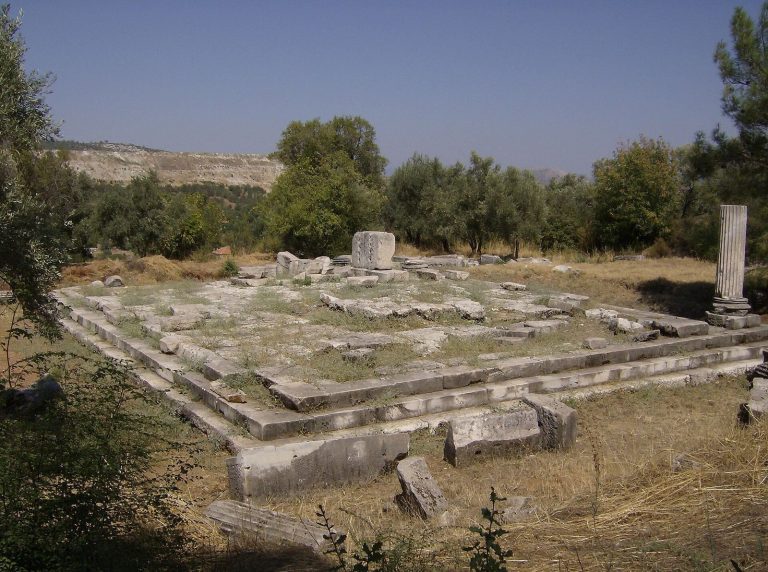
The temple was designed with 17 columns, of which 16 remain standing with their architraves, the horizontal beams above the columns. Three columns on the south and southwest sides are unfluted, a feature taken as evidence that construction was never completed. Inscriptions on most of the columns honor the citizen who commissioned them. Fired-clay fragments indicate activity at the temple site by at least the sixth century BC. An inscription from the Hellenistic period, the era following Alexander the Great’s conquests, was found in a 1969 surface survey and shows that the temple stood over an earlier one.
Excavations at the temple in 2021 uncovered two marble statues, each depicting a figure holding a lion, along with an inscription. The figures are estimated to be 2,500 years old. One is nude; the other wears leather armor and a short skirt. Work has also been undertaken to raise fallen columns.
Civic buildings and settlement remains
Agora
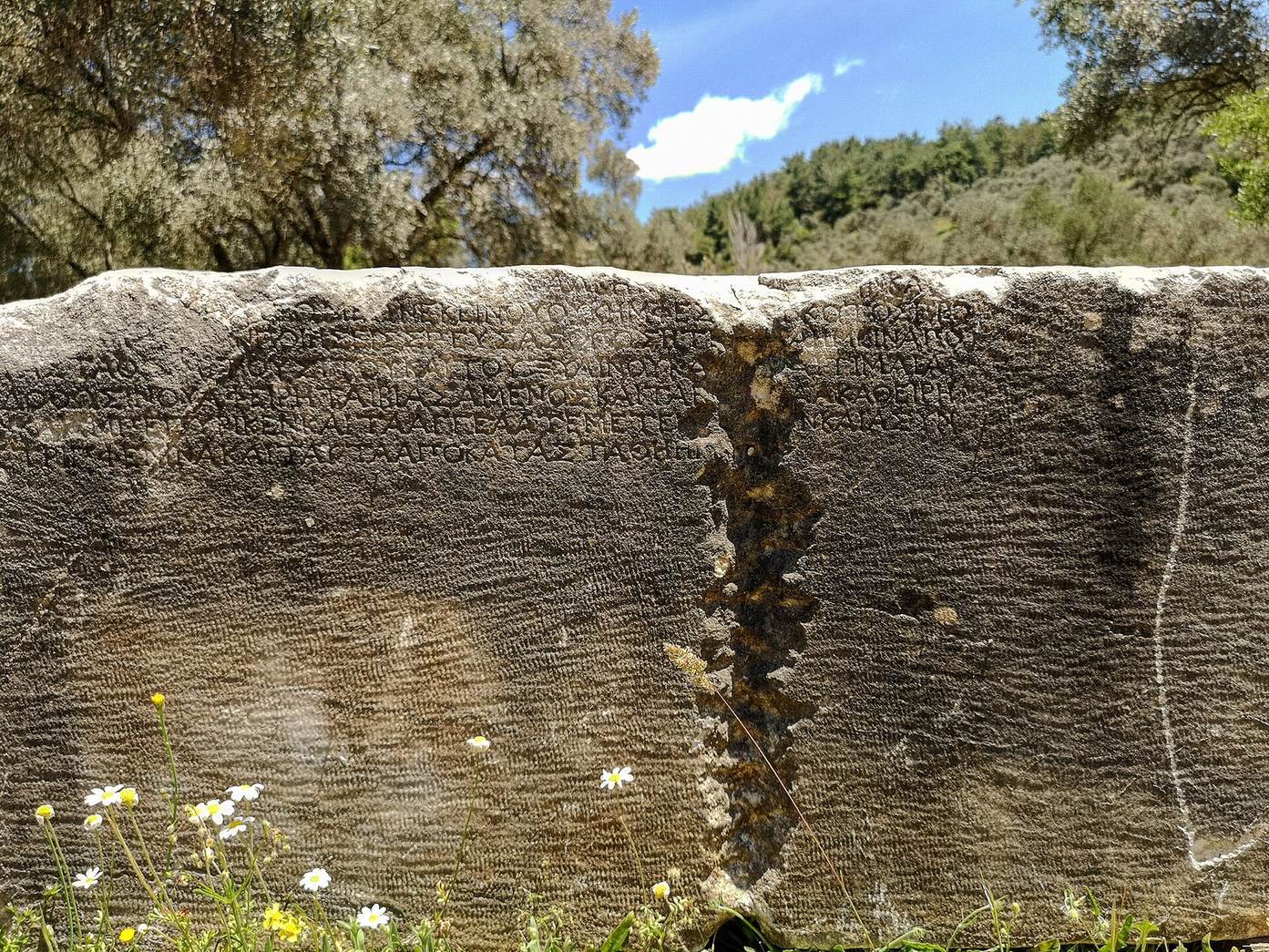
The agora, or central public square, lies east of the Milas-Selimiye road. Its nearly square plan measures about 95 by 83 m, with porticoes, roofed structures supported by columns, enclosing all four sides. On the south side, Ionic columns, one classical Greek style, line the inner side, while Doric columns, another style, form the outer side. The other three porticoes use Doric columns. The west portico has heart-shaped piers, solid vertical supports, at both corners. An honorific decree, a public text honoring an individual, appears on the northwest pier. It names Kallisthenes, son of Polykhares, and dates to about 150 BC.
Theatre and other remains
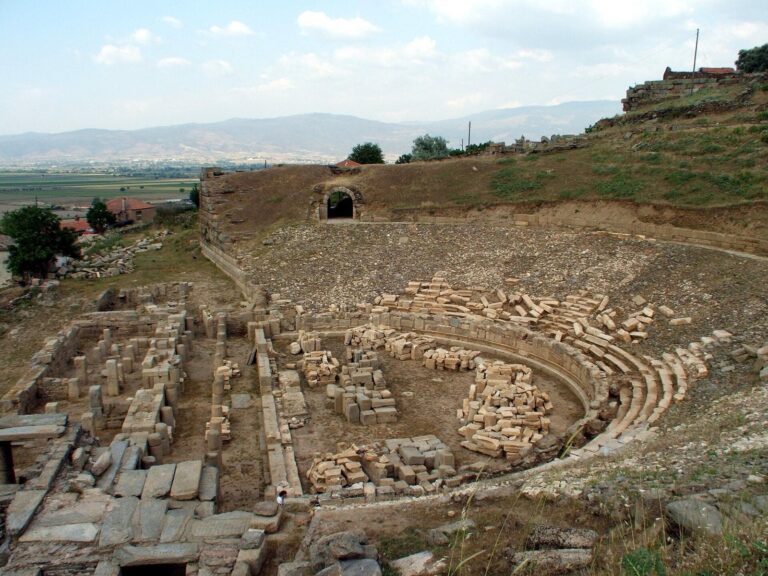
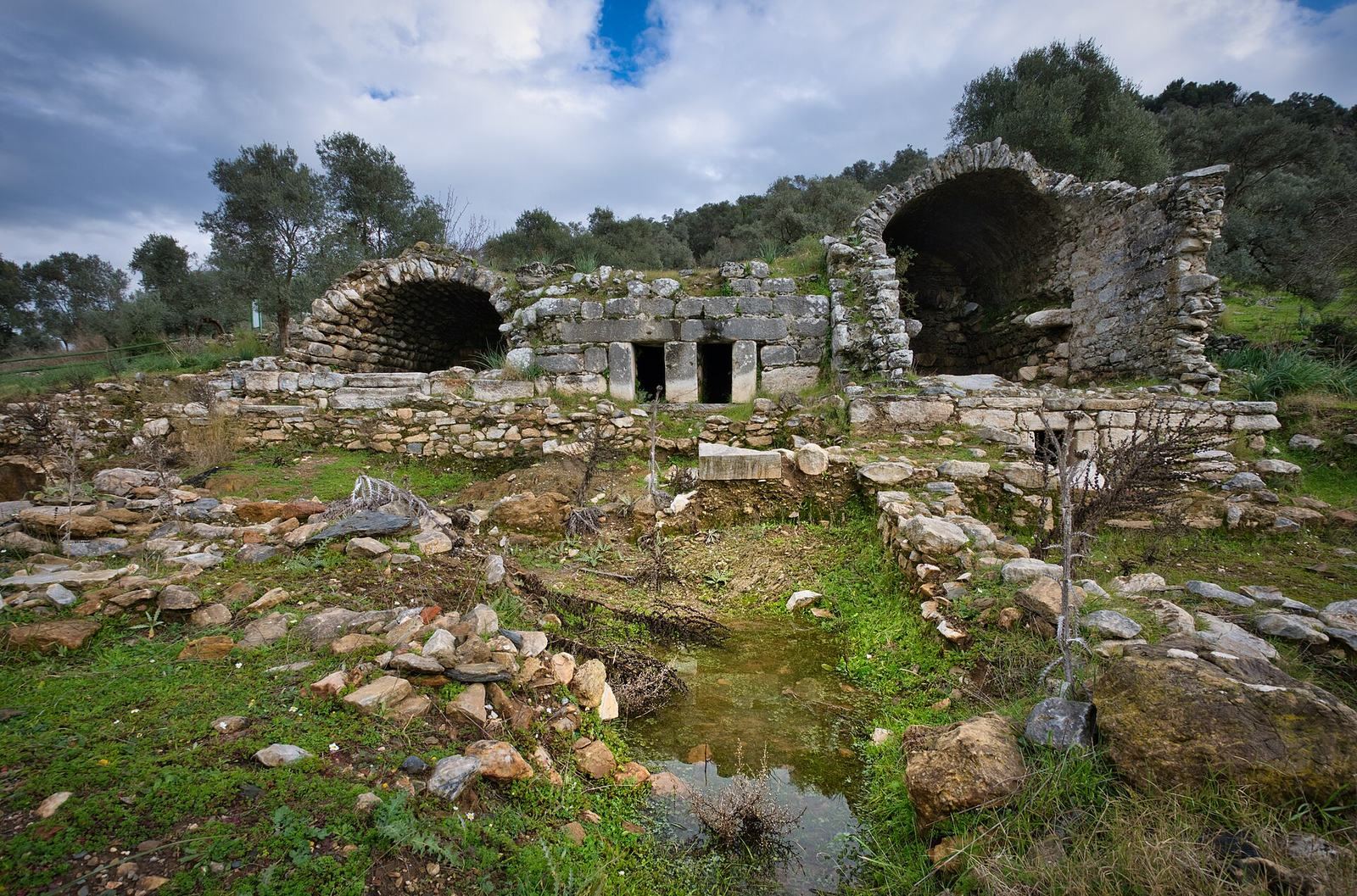
The theatre occupies the settlement’s western slope. Its foundations appear to rest on bedrock, and its seating capacity is estimated at about 2,000. Its form follows the Greek theatre tradition. Other remains at Euromus include parts of the city walls, a bath, additional buildings, and Carian tombs cut into the rock.