Wilson’s Arch: The First Span of a Herodian Bridge in Jerusalem
Site at a Glance
- Popularity
- High
- Country
- Israel
- Primary era
- Classical
- Eras represented
- Classical, Medieval, Early Modern, Modern
- Civilizations
- Mamluk, Ottoman, Roman
- Site type
- Infrastructure
- Remains
- Bridge
On this page11 sections
History
Wilson’s Arch is a limestone arch in Jerusalem, Israel, forming the first span of a bridge between the Herodian Temple Mount and the city’s Upper City on the western hill. Construction began under Herod the Great, Rome’s client king in Judea, and the bridge was initially completed between 20 BCE and 20 CE. It carried a street and the final stretch of a water channel from Solomon’s Pools near Bethlehem. The first-century Jewish historian Josephus described this connection.
Roman enlargement and dating
The bridge was widened between 30 and 60 CE, during the period of Roman provincial governors. The enlargement may have begun under Pontius Pilate, the Roman governor of Judea. The date of the arch that survives today was long debated. Charles Wilson placed it in the fifth or sixth century, while other proposals assigned it to the late Roman or Byzantine era, or to the Umayyad period, when an early Islamic dynasty ruled. Some scholars thought the present arch replaced an earlier one from the Second Temple period, the era of Jerusalem’s Second Temple. Archaeologist Dan Bahat favored an Umayyad date, while a 2010 study argued for a Herodian origin. Radiocarbon dating of organic material in mortar, carried out in 2020, supported the view that the arch began in the Herodian phase and was later enlarged.
Documentation and excavation
Titus Tobler noted the structure in 1853. British surveyor Charles Wilson scientifically recorded it in 1865, and the arch’s modern name commemorates him. Charles Warren soon dug trial shafts below it and published his findings in 1876, calling the bridge remains the Great Causeway. Excavations began in 1968, after the 1967 Six-Day War brought the Western Wall under Israeli control. They uncovered the arch’s opening and cleared rubble, while work to expose the Western Wall continued until 1985. More limited investigations took place in 2006 and 2011. Substantial work beneath the arch followed from 2015 to 2018, and excavations between 2015 and 2019 helped establish its construction chronology. A claim made in the 1980s that the arch’s original stones lay about eight metres below modern paving was later disproved.
Synagogue and prayer use
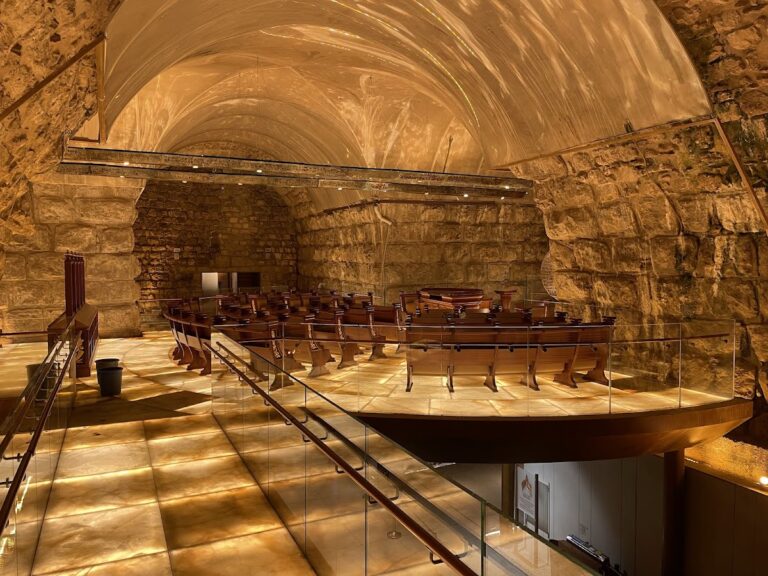
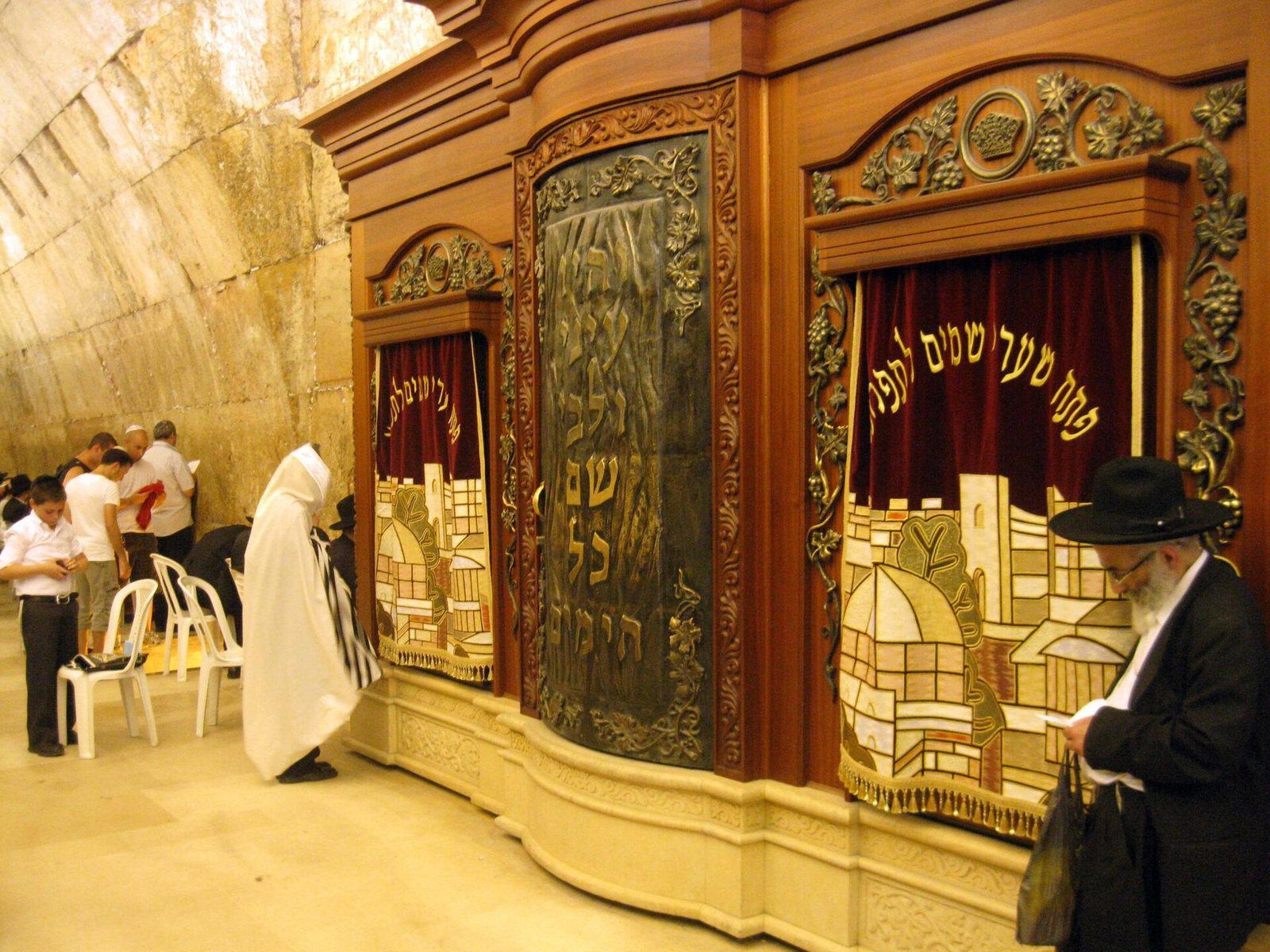
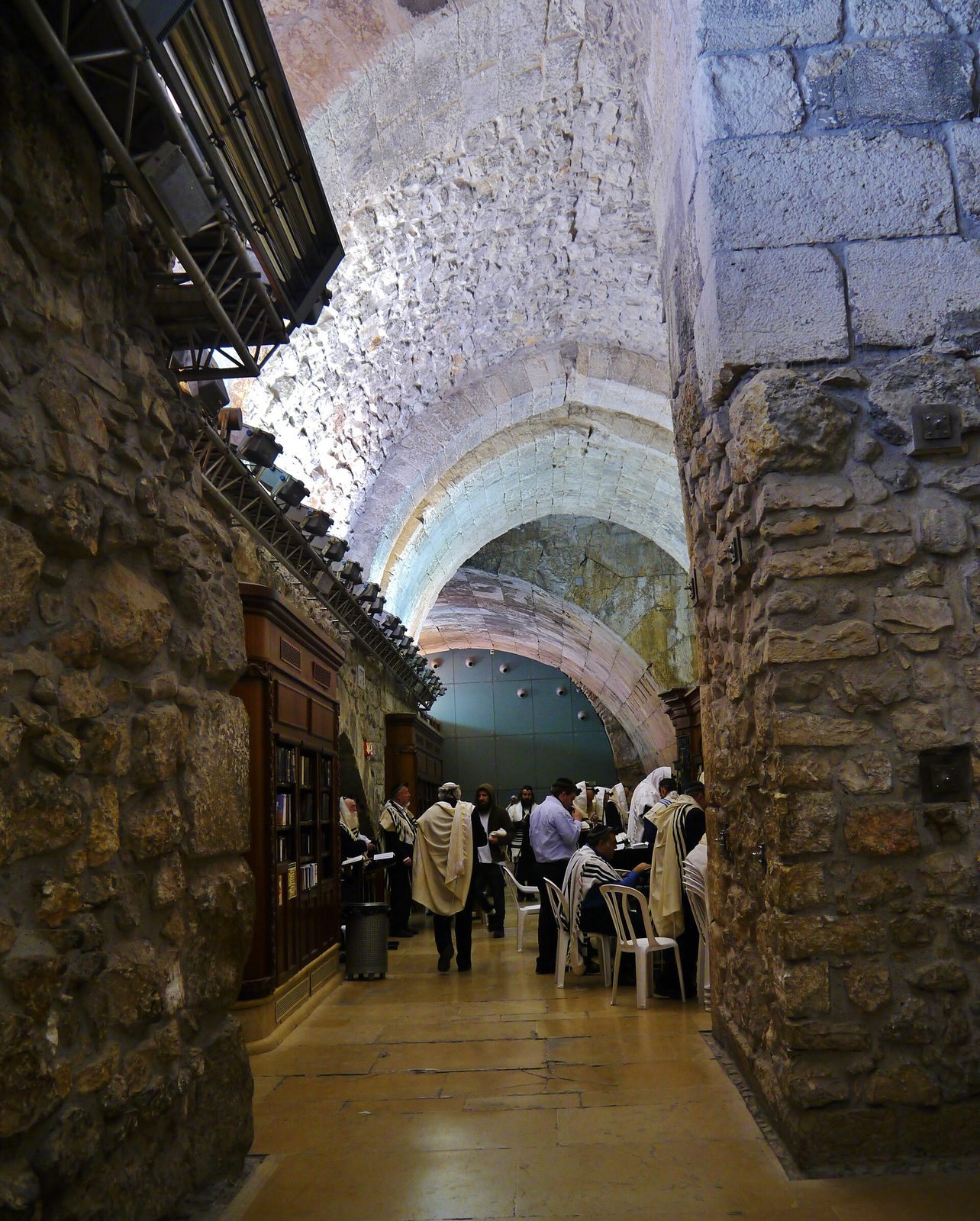
The space beneath the arch became a synagogue after 1967. In 1983, an interfaith service there was the first such service at the Western Wall since it came under Israeli control. Men and women attended together; U.S. Navy chaplain Rabbi Arnold Resnicoff led the service, which was authorized as part of a special welcome for the U.S. Sixth Fleet. A renovation campaign begun in 2005 strengthened the arch and prepared the space for prayer. The prayer area was dedicated on 12 March 2006, followed by the dedication of a women’s section and gallery on 25 May. The synagogue remains active. The Kabbalistic midnight prayer Tikkun Chatzot, offered for salvation, is held there. On 25 July 2010, an oil-burning Ner Tamid, or perpetual light, was installed, the first such light in the Western Wall area. It was intended to recall the Temple menorah and the lasting fire associated with burnt offerings.
Remains
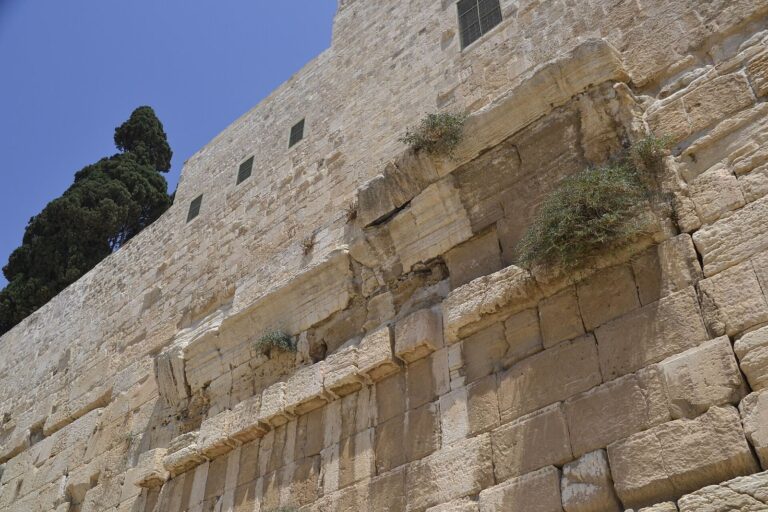
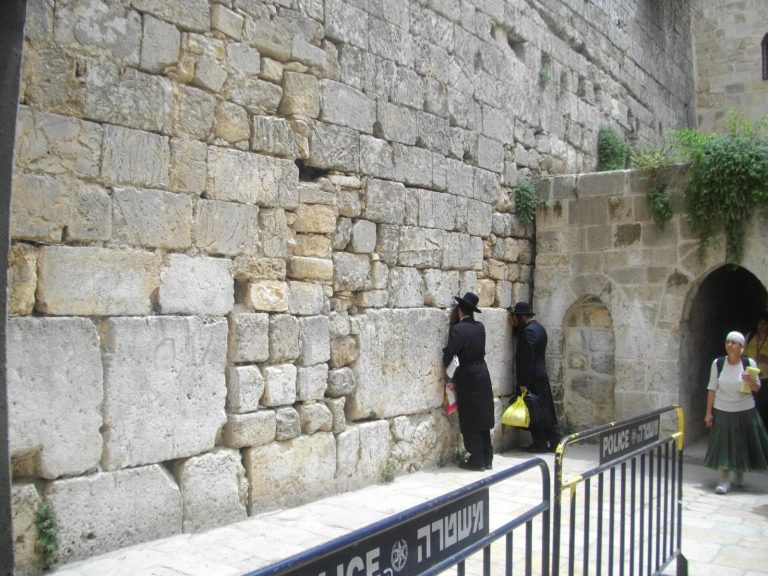
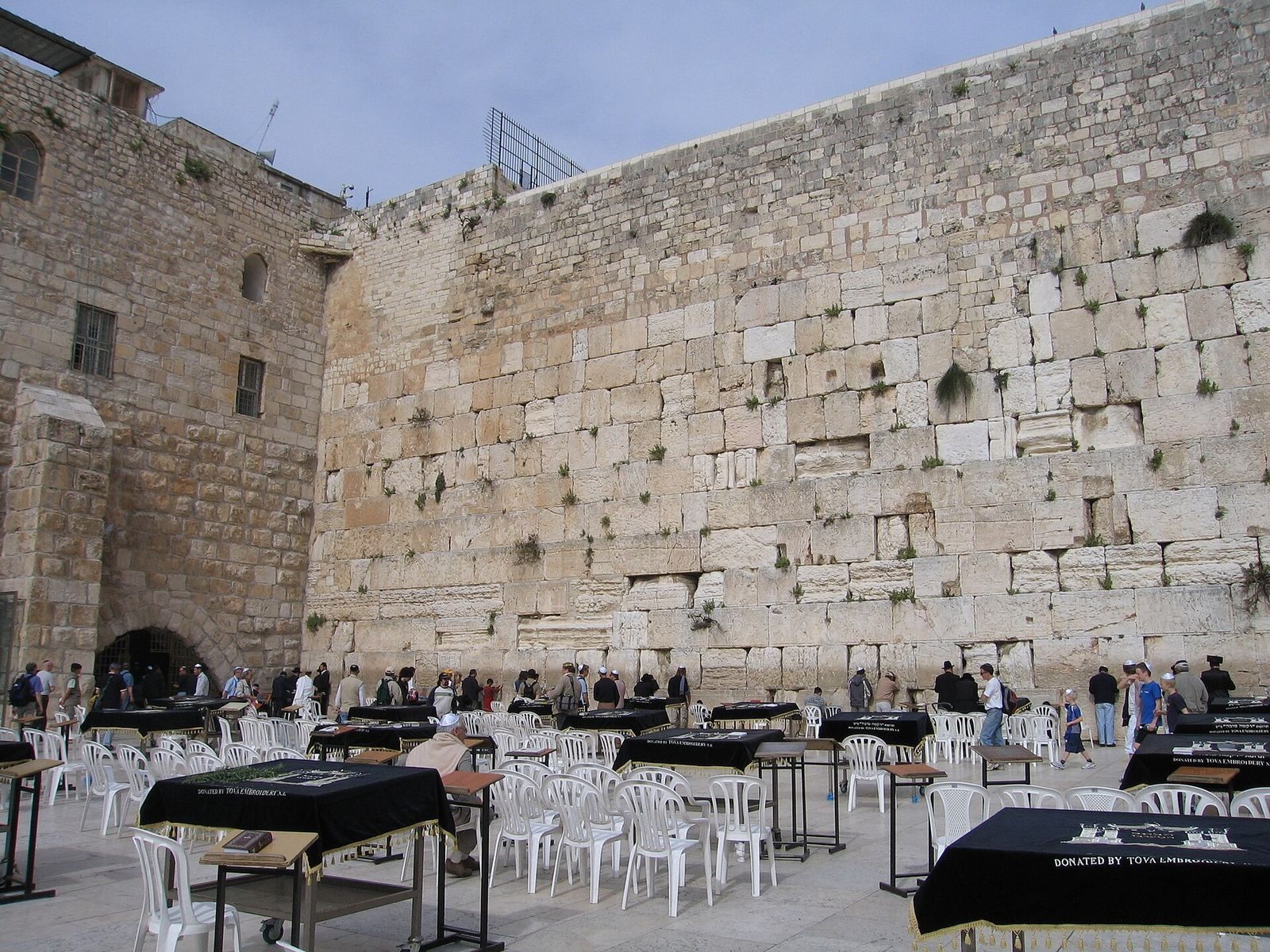
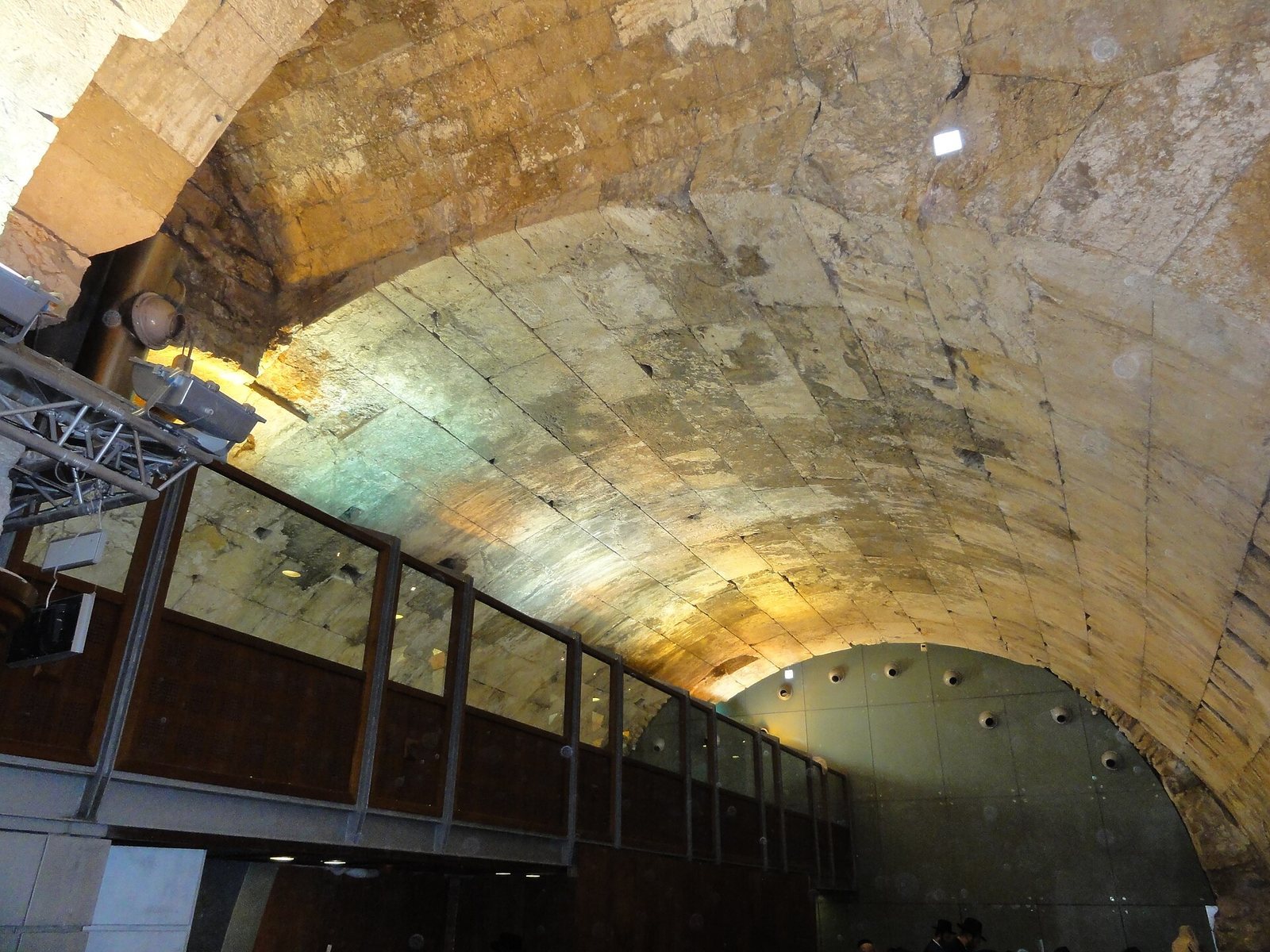
The arch stands at the north side of the Western Wall Plaza, beneath the Street of the Chain, which leads to the Chain Gate of the Temple Mount. It rises from the Western Wall and is partly concealed by later buildings. The hall partly covered by the arch opens onto the plaza’s northeast corner. Above it, the bridge crossed a paved street and reached a gate at the Temple Mount’s surface level. The ground surface in the Second Temple period was about three metres lower than during the early Arab conquest.
Bridge and arch
The limestone arch spans about 13 metres and is recorded as 13.1 metres wide. Its crown is 22.17 metres above bedrock, although about six metres of the structure are exposed today. Its masonry comprises 23 regular horizontal rows of cut stone. The bridge above carried the street and water channel described in the historical record; it is also known as the Royal Bridge. Warren called the underground corridor along its southern side the Secret Passage.
Stone shaft and drainage channel
A square shaft cut beneath the arch reaches 16 metres deep and exposes fourteen courses of stone, including one cut into bedrock. Excavation in 2017 also revealed eight previously concealed courses of the Western Wall and a drainage channel beneath the arch.
Western Stone
The Western Stone is a single block forming part of the lower level of the Western Wall, in the arch’s northern section. It measures 13.6 metres long and 4.5 metres wide, with an estimated height of 3.5 metres, and weighs about 570 tonnes. The block is partly intact; the remainder was destroyed during the Roman siege of Jerusalem in 70 CE, when the Second Temple was destroyed.
Roman theatre-like structure
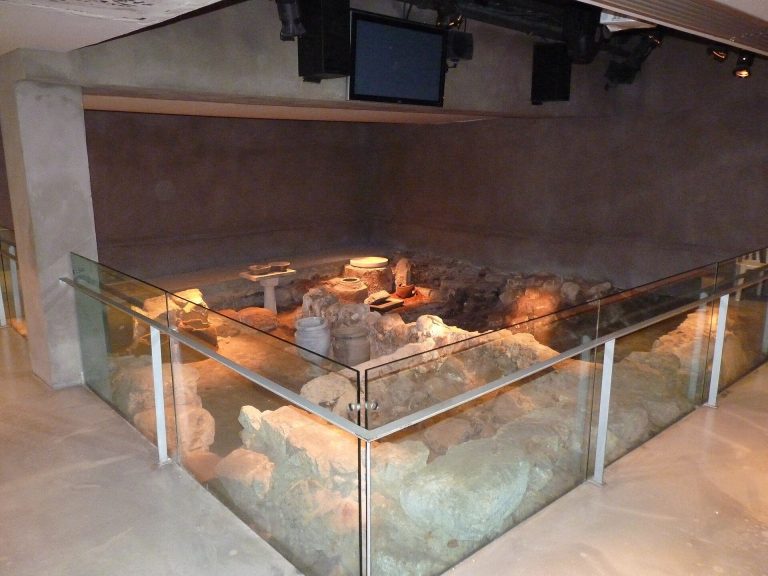
Directly beneath the arch is a small Roman theatre-like structure, about six metres in diameter and built around 130 CE. Its seating rested against the Western Wall, its stage stood against the arch’s supporting structure, and the arch provided its roof. Some construction details remain unfinished, including steps that were never completed.
Cistern and synagogue hall
A large cistern beneath the modern synagogue is known as the Al-Buraq Pool, a name used by Wilson and Warren. The synagogue floor was laid above the cistern floor, and the oldest pool beneath the arch dates to 1305–1340. The prayer hall has separate men’s and women’s areas and a gallery. Its men’s section contains a Torah ark, a cabinet for Torah scrolls, with capacity for more than one hundred scrolls, as well as bookshelves and a library. A separate room is used by scribes who maintain and preserve the scrolls.
Makhkama courthouse
The large historic courthouse known as the Makhkama, or Tankiziyya, stands above the area partly covered by the arch’s prayer hall. Its porch overlooks the Temple Mount. Former Chief Rabbi Shlomo Goren used the porch for special Kinot, or lamentations, on the night of Tisha B’Av, a Jewish fast day associated with mourning the destruction of the Temples.