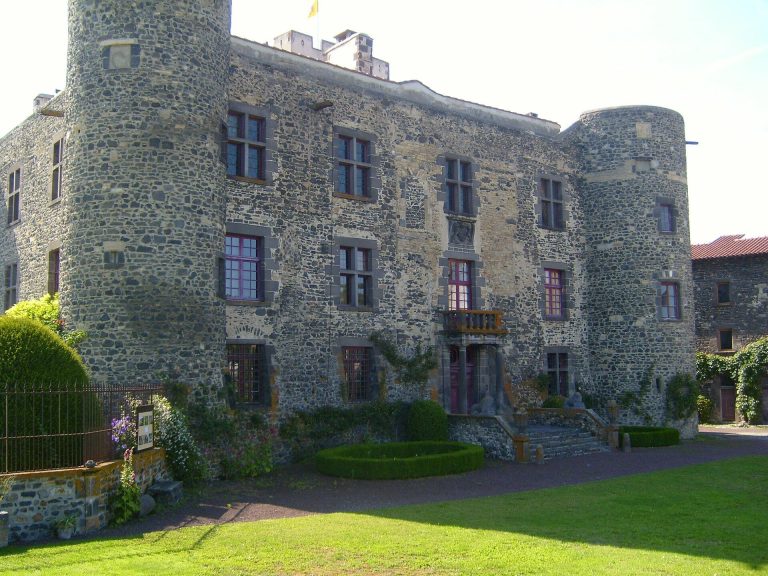
Menhir de Sainte-Anne: An Iron Age Stela in Clermont-Ferrand
Site at a Glance
- Popularity
- Very Low
- Country
- France
- Primary era
- Iron Age
- Eras represented
- Iron Age
- Civilizations
- Celtic
- Site type
- Civic
- Remains
- Megalithic Monument
On this page5 sections
History
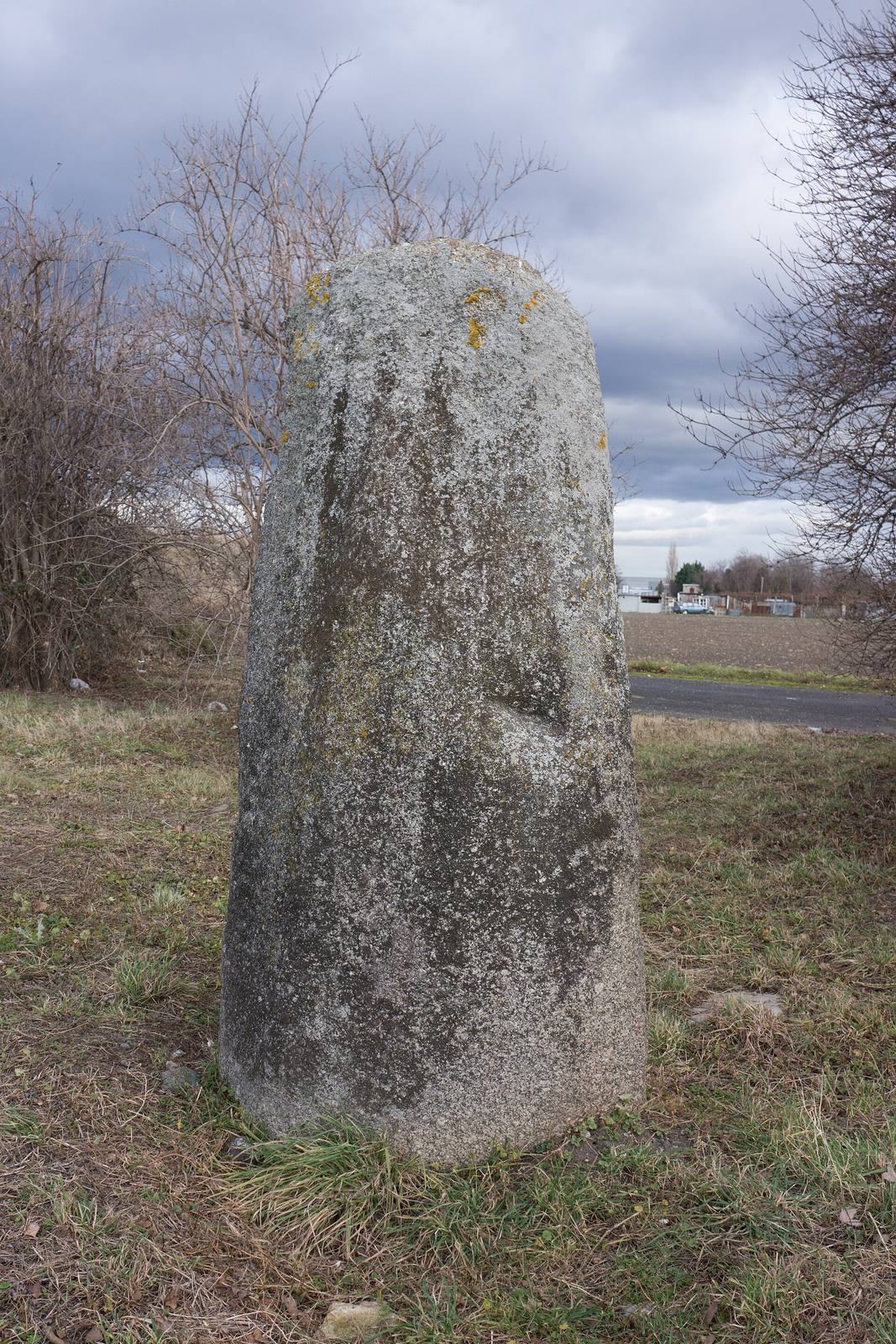
The Menhir de Sainte-Anne is a granite stela, or upright stone monument, in Clermont-Ferrand, France, interpreted as an Iron Age monument dating to the second century BC. Despite its name, it is understood as a stela rather than a Neolithic menhir, a large upright stone generally associated with prehistory, or a Roman milestone, a roadside marker recording distances along Roman roads.
Its proximity to an ancient road once led to its identification as a Roman milestone. In 1924, it was classified as a historic monument, France’s formal heritage-protection designation, under a label that described it as a “menhir, milestone.”
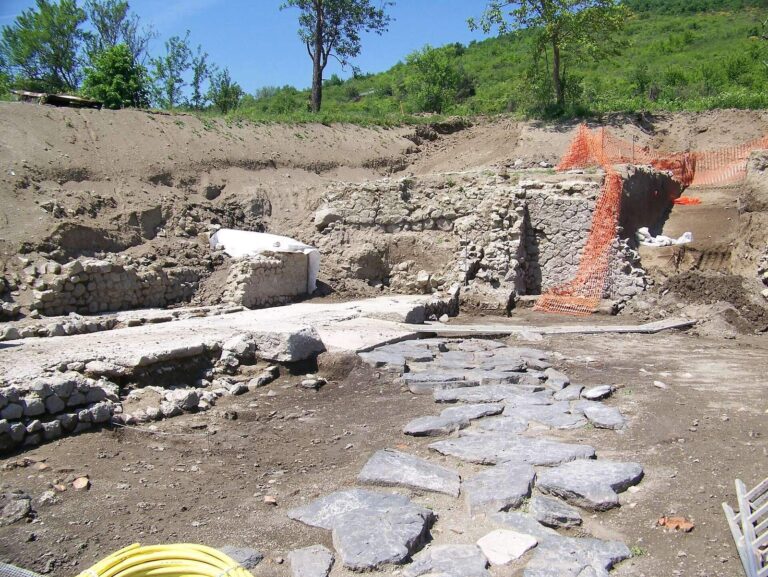
Archaeologist Frédéric Surmely’s 2008 excavations supported the interpretation that the stone was erected during La Tène, a later Iron Age cultural period in Europe. Its form resembles Iron Age stelae known from western France. The alternative idea that it began as a Neolithic menhir and was raised again later is considered less likely. Once its full dimensions were established in 2008, it was regarded as the most imposing monolith in Auvergne or the Massif Central.
Remains
The Menhir de Sainte-Anne stands on a strip of land bordered by a former road, a few metres from the road and a few dozen metres southeast of the D772-D766 junction. The principal feature is a dressed granite upright, while the separate Puy-de-la-Poix menhir lies about 400 metres away.
Standing stones
Menhir de Sainte-Anne
The stone is granite from the Artière gorge near Ceyrat, about nine kilometres away. It has a roughly cylindrical form with four regular faces and a slightly rounded top. Its full height is 5.70 metres, but substantial earth fill covers the base, leaving about 2.50 metres visible. Its weight is estimated at 18 tonnes.
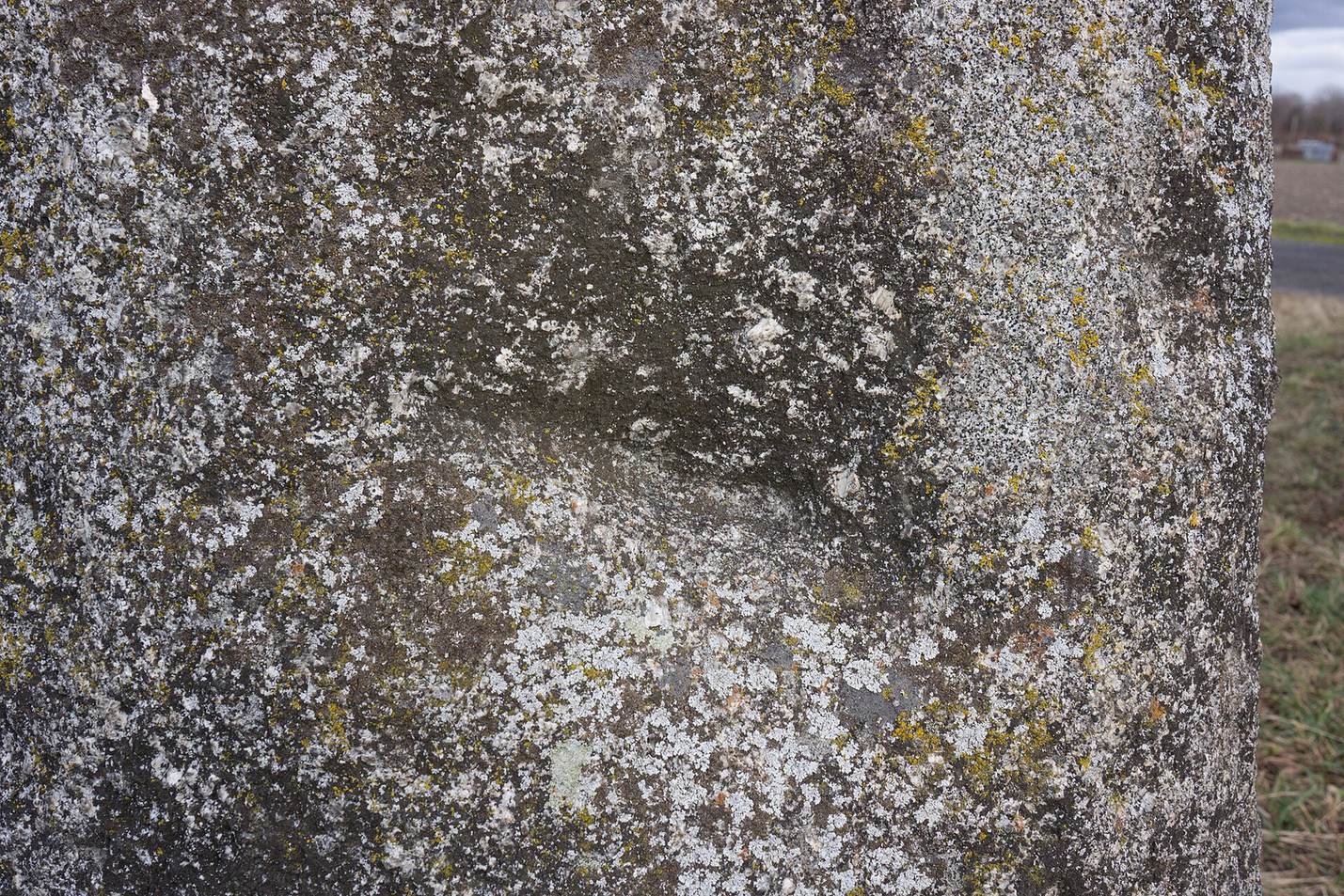
An oval depression on the southwest face measures about 21–22 centimetres long, 13.5 centimetres wide and 7 centimetres deep. Surmely regarded the stone’s regular shaping as evidence that it had been worked into shape, a practice he associated with stelae from the same broad period.
Puy-de-la-Poix menhir
This separate standing stone is about 400 metres from the Menhir de Sainte-Anne and measures approximately 2.7 metres long.