Şahruh Bridge: A Historic Crossing of the Kızılırmak River
Site at a Glance
- Popularity
- Medium
- Country
- Turkey
- Primary era
- Medieval
- Eras represented
- Medieval
- Civilizations
- Ottoman, Seljuk
- Site type
- Infrastructure
- Remains
- Bridge
On this page6 sections
History
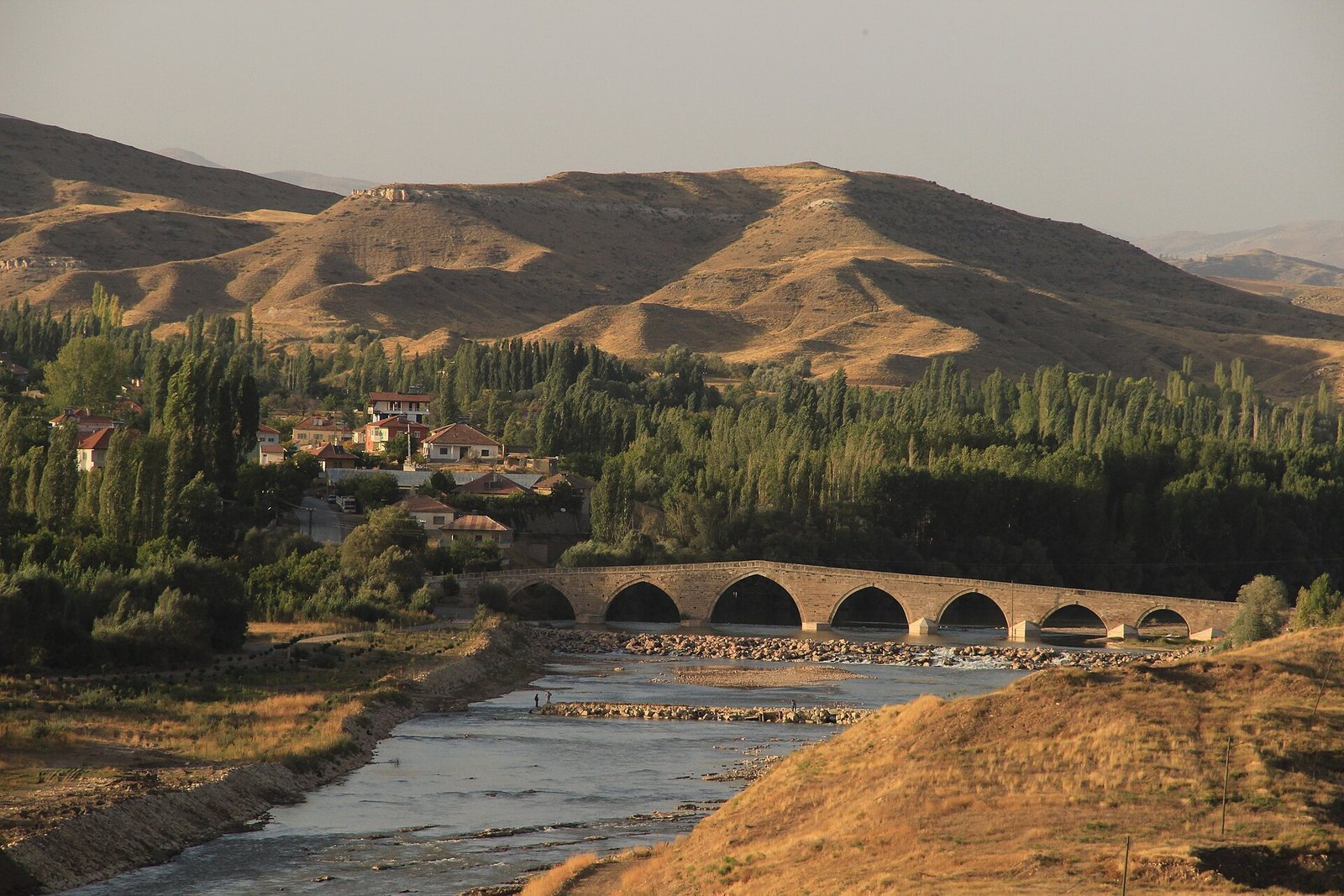
Şahruh Bridge is a stone crossing of the Kızılırmak River at Karaözü, Türkiye, probably commissioned by the Dulkadirid ruler Şahruh by 1480. The Dulkadirids were a Turkmen principality in Anatolia. The bridge’s exact construction date is uncertain: one proposal places it in the Seljuk period, the era of Seljuk rule in Anatolia, and suggests that Şahruh later restored it.
Dulkadirid origins and Ottoman restoration
Şahruh may have commissioned the bridge while governing the Kırşehir sanjak, an administrative district. Its construction is thought to date no later than 1480, when his uncle Shah Budak punished him after a family dispute. A different interpretation assigns the bridge’s construction to the Seljuk period and identifies Şahruh as its restorer.
An inscription for a restoration in 1538 attributes the bridge to Şahruh, son of Alaüddevle Bozkurt Bey. Bey was a Turkish title meaning ruler. The inscription names Şahruh’s son Mehmet as responsible for the restoration, carried out during the reign of Suleiman the Magnificent, the Ottoman sultan who ruled from 1520 to 1566.
Religious traditions and continuing use
The bridge and the Kulunç Stone were associated with devotional practices. Nomadic groups and other travelers crossing the river or passing nearby prayed in groups. On Fridays, travelers and people staying at the neighboring inn formed prayer rows facing the stone. The bridge was believed to have a special privileged status. People also pressed their backs against the stone’s hollow and rocked from side to side in the hope of easing aches and pains; making wishes there became customary.
A religious lodge built in honor of Sheikh Ibrahim, a Muslim religious leader, later collapsed. Its stones were reused to build an inn beside the bridge, which also eventually collapsed. The bridge itself remains in use, carrying motor vehicles and pedestrians across the Kızılırmak.
Remains
Bridge structure
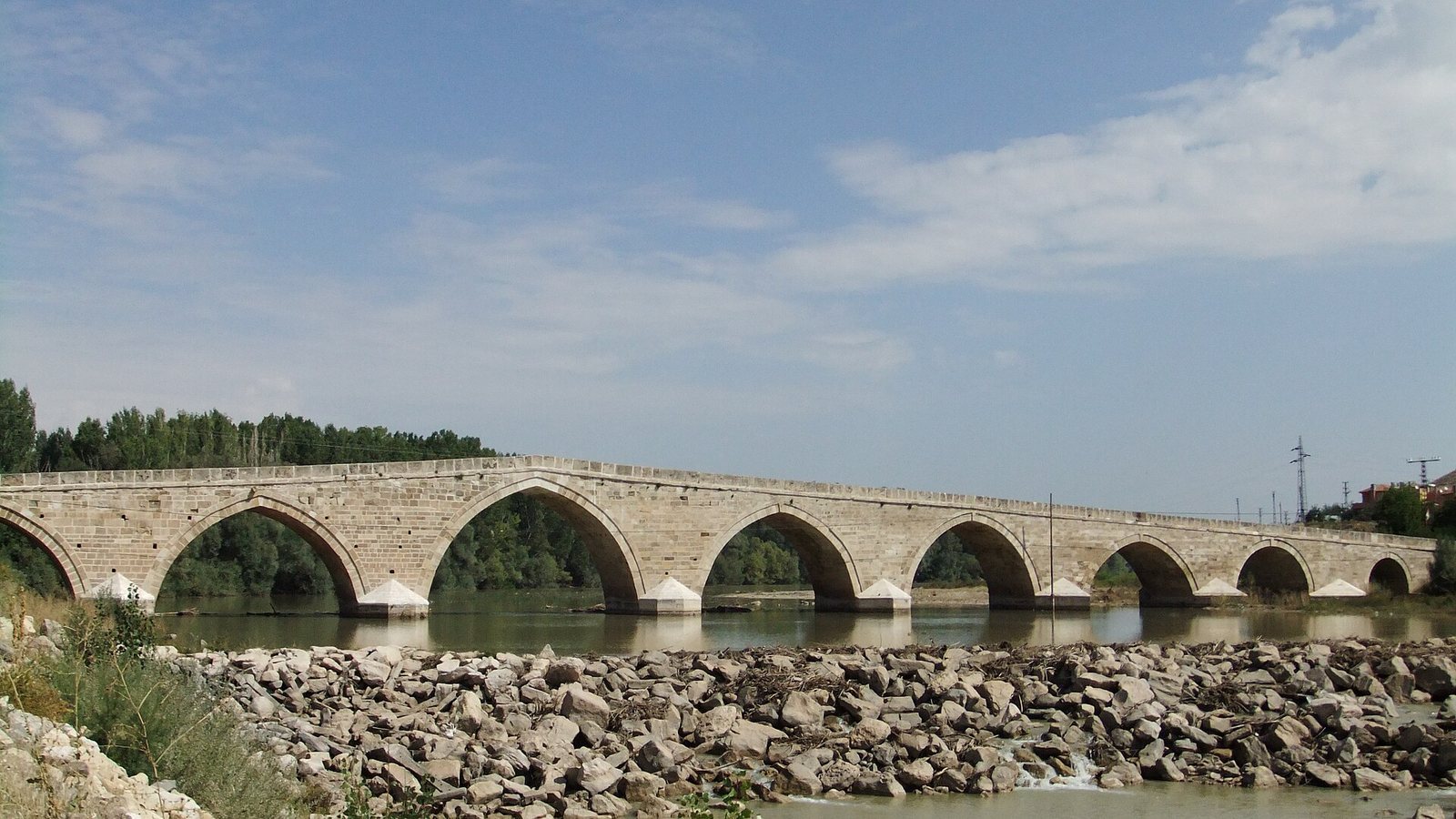
The stone bridge runs east to west across the Kızılırmak, known in antiquity as the Halys. It has eight pointed arches, whose sides meet at a peak, and the widest spans 12 metres. The bridge is 144.5 metres long and 5.6 metres wide, and rises to a maximum height of 11 metres.
Kulunç Stone
The Kulunç Stone is set among the upper parapet stones on the bridge’s left side. Its broad hollow is large enough to accommodate a person’s back. The stone faces the qibla, the direction of prayer toward Mecca, and formerly served as a mihrab, a feature marking that direction in a prayer space.