Surgeons’ Hall Museums: The Royal College of Surgeons of Edinburgh Museum
Site at a Glance
- Popularity
- High
- Country
- United Kingdom
- Primary era
- Modern
- Eras represented
- Classical, Medieval, Early Modern, Modern
- Civilizations
- Roman
- Site type
- Museum
On this page15 sections
History
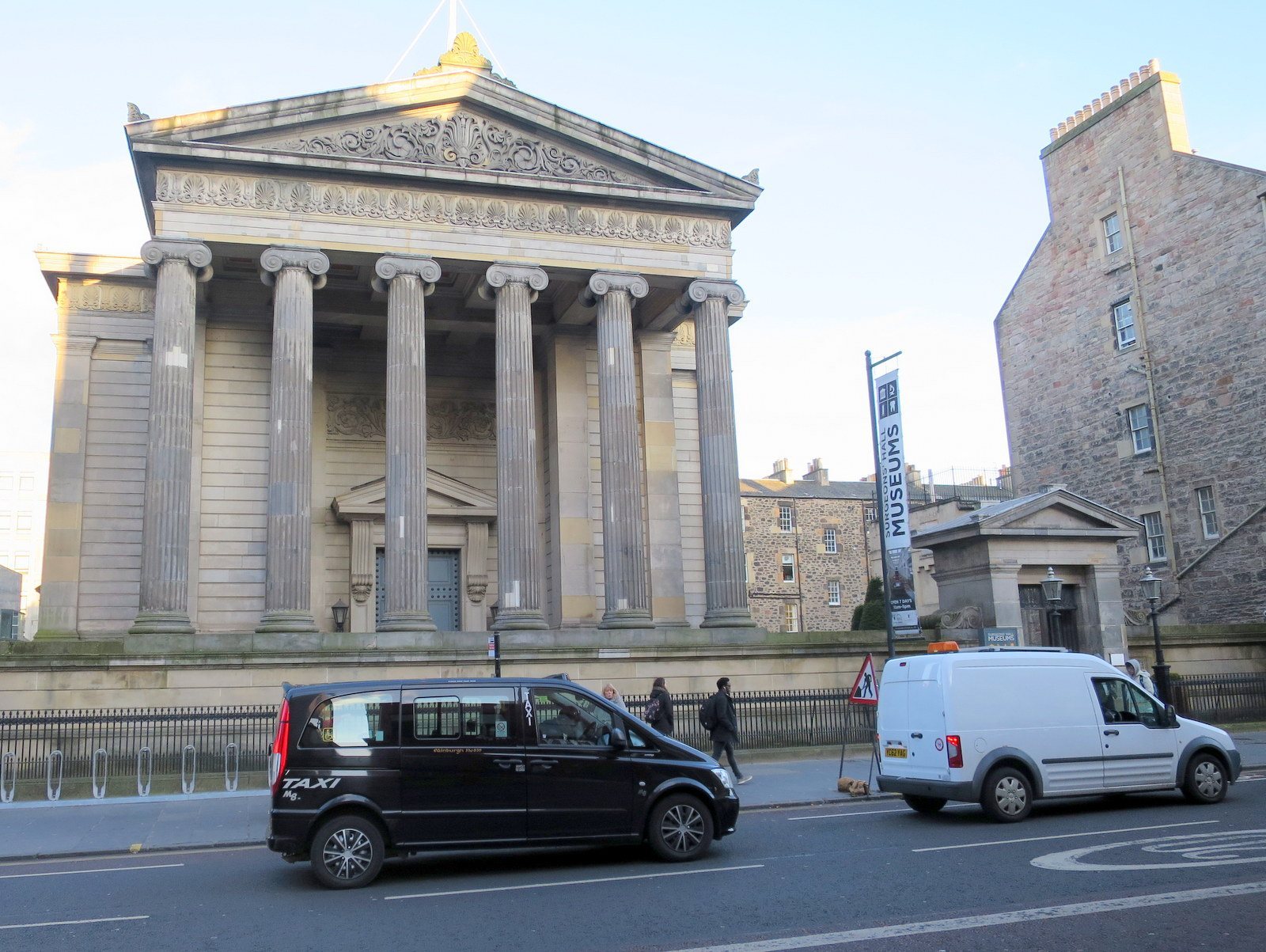
Surgeons’ Hall Museums, the museum of the Royal College of Surgeons of Edinburgh, is in Edinburgh, United Kingdom. Its present Surgeons’ Hall opened in 1832 after the College’s teaching collections outgrew an earlier building. The museum’s history is closely linked to the College’s work in teaching anatomy and surgery, training surgeons, and examining their knowledge.
The College and its early museum
The institution began as the Incorporation of Surgeons and Barbers of Edinburgh, formally established on 1 July 1505. Apothecaries, who prepared and dispensed medicines, joined in 1657, while the barbers remained associated until 1722. A charter granted by King George III in 1788 added the word Royal to the institution’s name. By the early nineteenth century it was known as the Royal College of Surgeons of Edinburgh.
A Surgeons’ Hall building existed by 1697, and the museum collection began in 1699. That year, the Incorporation announced plans to gather natural and man-made curiosities and invited people to donate objects. The English writer Daniel Defoe visited in 1726 and remarked on the abundance of unusual items. Much of this early collection was given to the University of Edinburgh in the 1760s.
The Playfair museum and surgical education
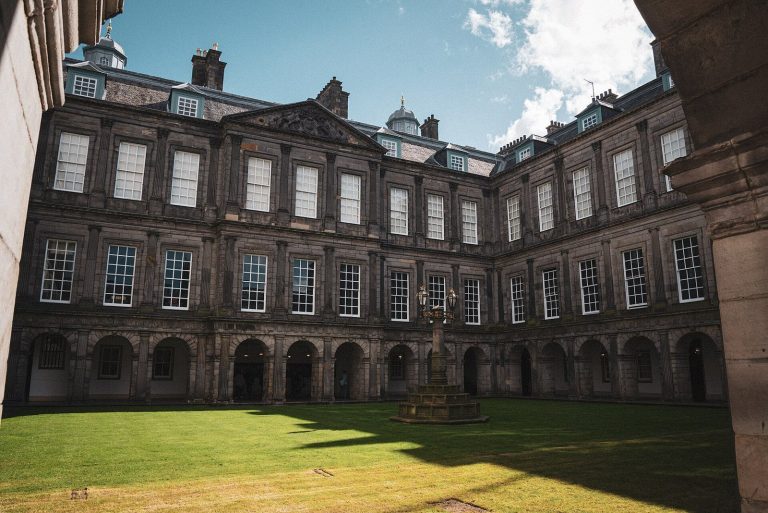
The College treated teaching anatomy and surgery, training surgeons, and testing their knowledge as core responsibilities. Specimens of human anatomy and disease served those aims. The collections grew through anatomy teacher John Barclay’s donation and the College’s 1825 purchase of surgeon and anatomist Charles Bell’s collection. As these holdings exceeded the capacity of the original Hall, the College commissioned Scottish architect William Henry Playfair to design a new building.
The new Surgeons’ Hall opened in 1832, with its entire upper floor initially used for museum displays, which the public could visit. Robert Knox, an anatomist and teacher, supervised the packing and shipment of Bell’s collection to Leith; the collection became a central part of the new museum. Knox’s teaching is also connected with the Burke and Hare murders. Facing a shortage of bodies for dissection in his popular anatomy classes, William Burke and William Hare murdered people to supply the school. Hare gave evidence against Burke, who was convicted and hanged. Professor Alexander Monro tertius dissected Burke’s body.
Surgeons’ Hall also figured in a struggle over women’s entry to medical education. In November 1870, a crowd that included male medical students tried to stop the University of Edinburgh’s first seven women medical students from entering the Hall for their anatomy examination. The women endured abuse but also gained support from colleagues and politicians; several later founded hospitals and helped improve healthcare for women. Another connection to Edinburgh’s medical teaching was surgeon Joseph Bell, College president from 1887 to 1889. He taught Arthur Conan Doyle and chose him as his assistant, and Doyle later credited Bell as an inspiration for Sherlock Holmes.
Changing collections and public access
During the nineteenth and early twentieth centuries, surgeons and pathologists added instruments and equipment as well as specimens. The collections came to include anaesthetic equipment, slides for studying tissues under a microscope, X-rays, and photographs. In 1905 the College adapted museum space for its main hall. Two years later, it rejected a proposal to dispose of Barclay’s collection and instead moved it into new accommodation created by converting an adjoining multi-storey residential building.
As jarred anatomical and disease specimens were regarded as less useful for teaching, the museum placed greater emphasis on dentistry, the study of disease in tissues, X-ray imaging, and surgical instruments and equipment. Much of Barclay’s collection was transferred to other museums in the 1950s. From the 1960s, public entry was restricted to a small number of pre-booked tours. Later in the century, the museum renewed its focus on general visitors. A permanent exhibition, 500 Years of Surgery in Scotland, opened in 1989, using models, paintings, photographs, film, printed material, and other objects.
Redevelopment and present status
Redevelopment in 2014–2015 added lift access and updated displays, making it possible to exhibit twice as many objects. It was the building’s first radical alteration since 1908. The College also took over an adjacent three-storey building on Hill Place, formerly a language school, for conferences and events; it named the building for Prince Philip, the College’s patron from 1955.
Surgeons’ Hall is a Category A listed building, Scotland’s highest listed-building category for buildings of national or international importance. The Scottish Government recognizes the museum collection as being of national significance.
Remains
Buildings and room arrangement
The museum occupies rooms in parts of the Playfair building and adjoining properties on Nicolson Street. The College’s library and archive are also housed in Surgeons’ Hall. The Wohl Pathology Museum lies beside the College’s main hall and retains Playfair-era design, decoration, and display cabinets. The main hall occupies about half of the upper-floor space formerly used for museum displays. Some galleries are in adjoining rooms that originally belonged to the property at 9 Hill Square, while the converted former tenement associated with Barclay’s collection forms part of the site’s building history.
Permanent galleries
The Wohl Pathology Museum
The Wohl Pathology Museum contains specimens showing disease, surgical instruments, casts, and paintings. Its Playfair-era fittings and cabinets preserve the character of the original museum interior.
History of Surgery Museum
On the ground floor, the History of Surgery Museum includes a mock anatomy theatre, a room arranged for observers to watch dissections. A video recounts the public dissection of David Myles in 1702, projecting explanations of body parts and systems onto a plastic body model set on a dissecting table. Display cabinets trace surgery from the sixteenth century to the present, with particular attention to Edinburgh.
Techniques, technology, and dentistry
The Techniques and Technologies display presents surgical instruments and techniques from Roman times to the present. The expanded dental displays bring together instruments, artefacts, engravings, models, prints, and paintings on dental subjects. They also include a nineteenth-century dentist’s office and its instruments. The museum’s permanent displays include the Body Voyager gallery as well.
Collections and objects
Bell and Barclay collections
Bell’s anatomical and disease specimens form part of the displays. The museum also holds 15 oil paintings he made in 1809 showing gunshot wounds and complications among casualties he treated at Portsmouth after the Battle of Corunna, a 1809 engagement in the Peninsular War. Surviving items from Barclay’s collection include an elephant skull, three human skeletons, and a small number of other specimens.
Skulls and dental collections
Surgeon and museum conservator David Middleton Greig’s collection comprises about 250 skulls. Clinical details for the cases were recorded and, where possible, accompanied by drawings and photographs. The dental historian John Menzies Campbell donated a collection of dental specimens, instruments, and paintings in 1964. Its displays include a nineteenth-century dentist’s office and instruments.
Casts and objects linked to Burke and Hare
Wax and plaster casts reproduce bodily features and medical conditions, including tumours of the face and eye, fetal development, and the anatomy and disease of the intestine. Two objects connected with the Burke and Hare murders are also displayed: Burke’s death mask and a pocketbook made from his skin.