Mikri Doksipara Zoni Tomb: A Second-Century Burial Mound in Greece
Site at a Glance
- Popularity
- Low
- Country
- Greece
- Primary era
- Classical
- Eras represented
- Classical
- Civilizations
- Roman
- Site type
- Burial
- Remains
- Burial Mound
On this page6 sections
History
The Second-Century Burial
The Mikri Doksipara Zoni tomb is a second-century AD burial mound in the Evros region of Greece. It held the cremated remains of four members of a wealthy aristocratic landowning family: three men and one woman. Two of the men were middle-aged, while the other man and the woman were young. All four died within a short interval.
An ancient road linking Hadrianopolis, near present-day Edirne, and Philippopolis, present-day Plovdiv, passed close to the mound. Archaeologist Gergana Kabakchieva has proposed that it and the Svirachi burial mound formed the family burial ground of an aristocratic household based at Villa Armira, an ancient Roman villa in present-day Bulgaria. Her interpretation draws on the mounds’ proximity to the villa, similarities in the dates of finds and burial customs associated with ancient Thrace, and their positions at opposite ends of the valley. Svirachi lies to the west and Mikri Doksipara Zoni to the east.
Archaeological Investigation
Excavation began in 2002 under the 19th Ephorate of Prehistoric and Classical Antiquities of Thrace, the Greek archaeological service responsible for antiquities in its area. Work continued through 2004 after repeated attempts to destroy and plunder the mound.
Remains
The Mound and Burial Features
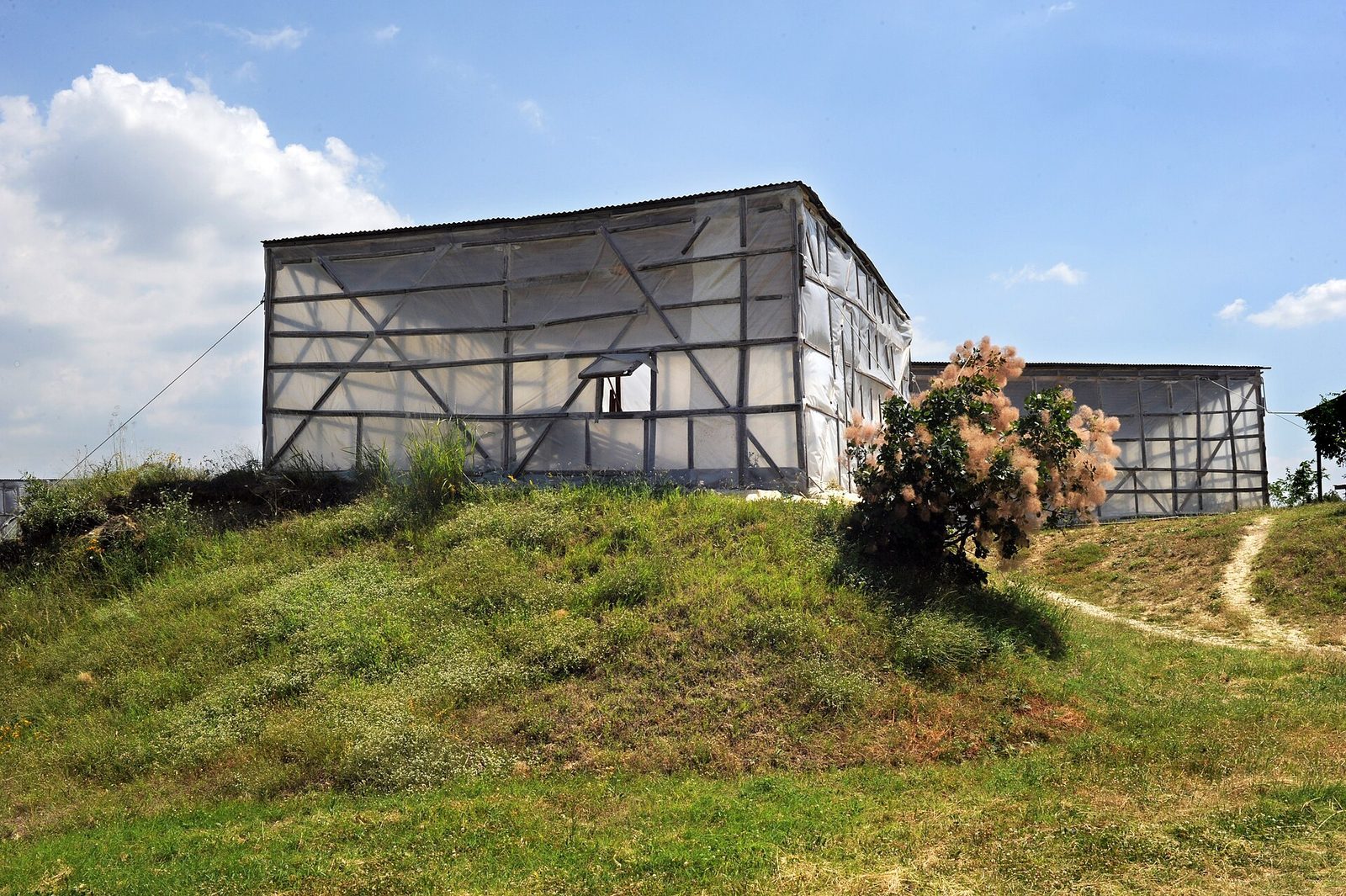
The mound measures 60 metres across and 7.5 metres high. It lies near Mikri Doxipara, Zoni, and Chelidona, and a protective structure covers it. Cremation took place in specially dug pits. Two brick structures at the mound served as altars for offerings of food, water, wine, and milk. Ashes, animal bones, and vessel remains provide evidence of sacrificial offerings.
Wagons and Horses
Five four-wheeled wagons were buried with horses, and horse bones were recovered during excavation. The wagons had carried the deceased to the burial place; their burial with the horses expressed the owners’ status and wealth. They are regarded as the site’s most valuable archaeological find.