Workshop of Phidias: A Sculptor’s Workshop at Olympia
Site at a Glance
- Popularity
- Medium
- Country
- Greece
- Primary era
- Classical
- Eras represented
- Classical
- Civilizations
- Ancient Greek, Byzantine, Roman
- Site type
- Economic
- Remains
- Production Complex
On this page12 sections
History
Phidias and the statue of Zeus
The Workshop of Phidias was a Greek sculptural workshop at Olympia, Greece, built around 430 BCE in the second half of the fifth century BCE. After completing the decoration of the Parthenon in Athens, the sculptor Phidias moved to Olympia and used the building to create a colossal gold-and-ivory cult image of Zeus, a principal Greek god. The nearby Temple of Zeus had been completed in 456 BCE. Making the statue probably took several years, and it was likely transported to the temple in sections for assembly. In later tradition, the statue became one of the Seven Wonders of the World.
Later uses
The workshop may have remained in use for sculpture until around 420 BCE. Although it had been intended as a temporary workplace, the building continued to be used and altered into the Roman period. It also became a sanctuary, with altars dedicated to different gods. Pausanias, a Greek writer who visited in the second century CE, described an altar there for all the gods in his Description of Greece. The priests who cared for the statue may also have lived in the building.
Christian church
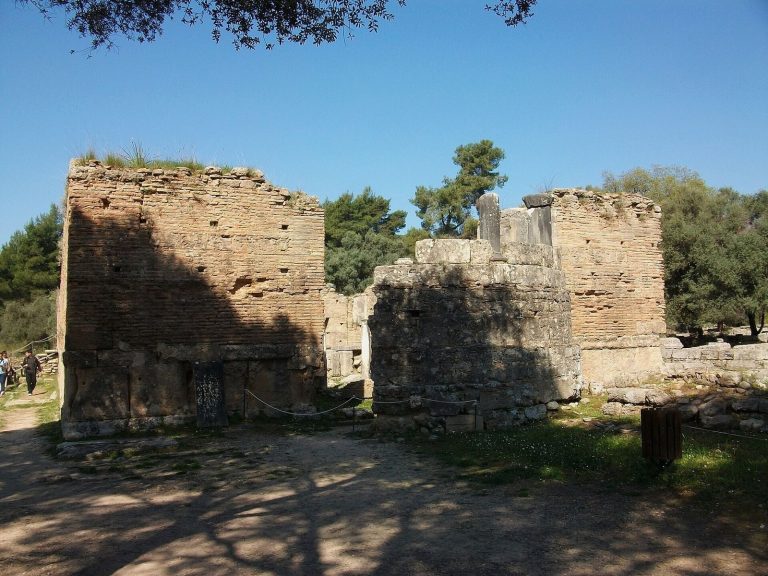
Between about 435 and 451 CE, an early Christian basilica was constructed over the workshop’s surviving remains, adapting the site for use as a church. It was the earliest known early Christian church in Elis, an ancient region in the western Peloponnese. An earthquake destroyed it around 550 CE.
Excavation and recognition
A French expedition cleared the remains in 1829 and identified them as Phidias’s workshop. Excavations later in the nineteenth century did not confirm that conclusion and mainly reached Roman-period layers. German excavations in 1954–55, led by classical archaeologist Emil Kunze, investigated deeper deposits. The identification was confirmed in 1968, after the church’s foundations were recognized as lying over the fifth-century BCE workshop. The site forms part of the Olympia UNESCO World Heritage property, inscribed in 1989, and is also designated a national historic monument.
Remains
Workshop structure
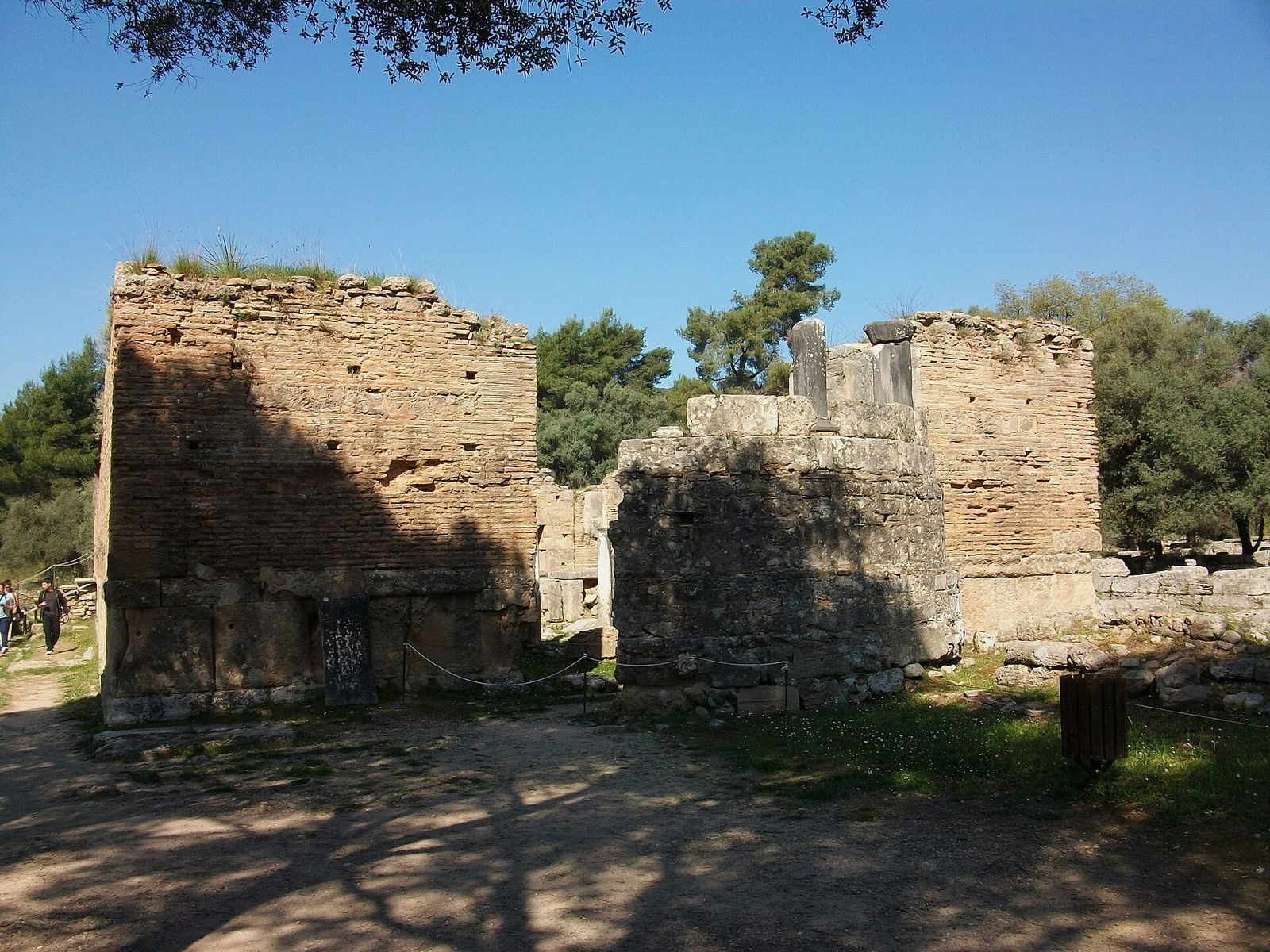
The remains lie outside Olympia’s Altis, the sacred enclosure, west of and opposite the Temple of Zeus. The rectangular building was aligned east to west and measured about 32.18 by 14.57 metres. Its proportions resembled the temple’s cella, or main enclosed chamber, apparently helping with work on the statue. The walls were built of local limestone rich in shells. An entrance at the east end faced the temple, and the building contained two rooms. In the western room, two rows of columns divided the space into three aisles. The raised walls may have had nine windows along each long side and a tall, wide central doorway to admit daylight. Smaller buildings to the south may have housed workers, while adjoining rooms served as auxiliary workshops for preparing and handling statue components.
Production areas and finds
Work installations
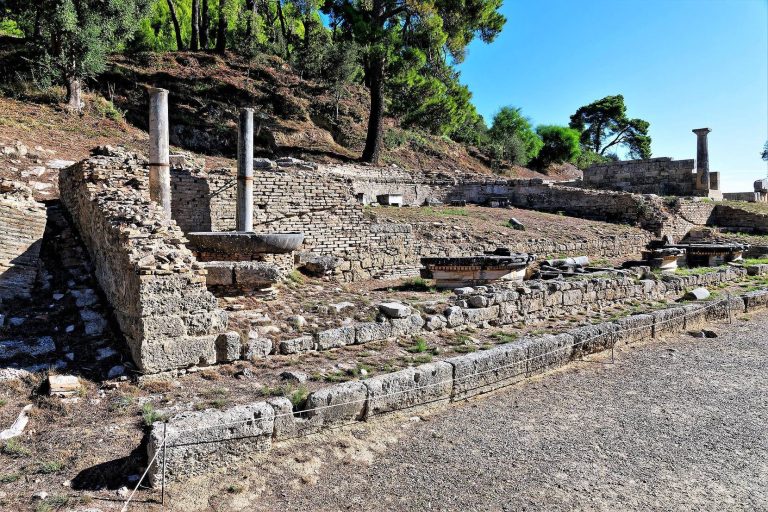
Stone staging inside the building may have supported as many as three platforms at different heights, giving access to different parts of the statue during its assembly. The figure was constructed in sections around a central wooden framework rather than as one solid piece. Two smelting furnaces formed part of the workshop’s working equipment. A large bronze cauldron on a base may have been used to hold water, and a well inside the building had a stone-lined rim and interior.
Tools, moulds, and materials
Finds include bone engravers, chisels, bronze tools, a small anvil, and a small hammer used for inlay or setting. Ivory fragments, bone shavings, obsidian, rock crystal, cut glass, and glass ornaments were also recovered. Fired-clay moulds came in different sizes and shapes, with some containing internal iron rods. Their variety has been taken to indicate work on both the large statue of Zeus and the smaller Nike figure, the goddess of victory, held in its right hand. The lightly fired clay could shape a soft material such as gold, and terracotta moulds were used for gilded parts of the statue.
Metalwork and everyday objects
Fragments and offcuts of bronze and other metals, including shields, helmets, greaves, cauldron handles, and pieces of tripods and vessels, were found piled in the area of the former furnaces. A small black-glazed ceramic wine jug bears the inscription Feidio eimi, meaning I belong to Phidias; its discovery provided decisive evidence for identifying the building as his workshop. Lamps, plates, bowls, jugs, lids, cups, and amphorae, or two-handled storage jars, show that the building also saw everyday use. The excavated finds are held at the Olympia Archaeological Museum.
Early Christian basilica
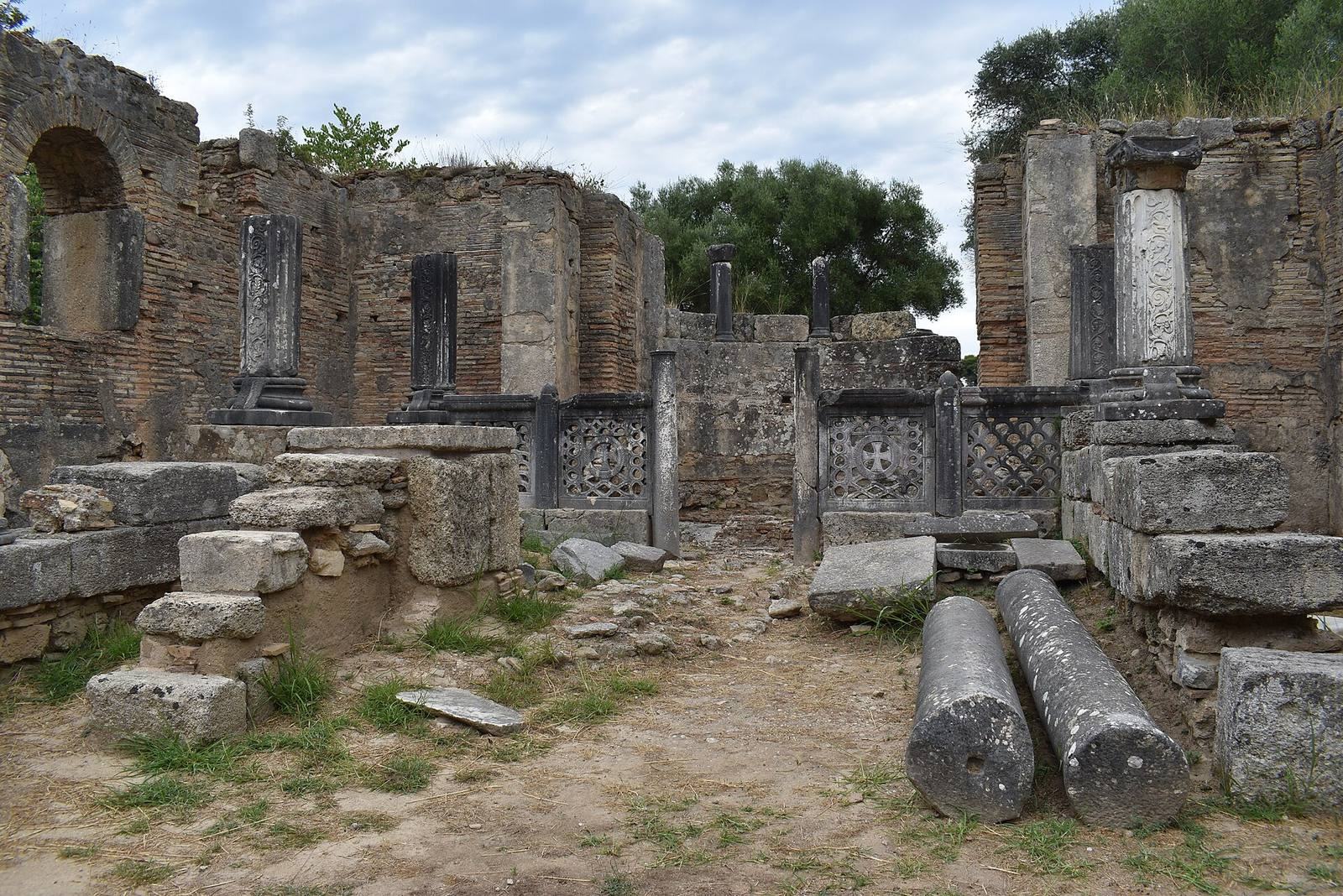
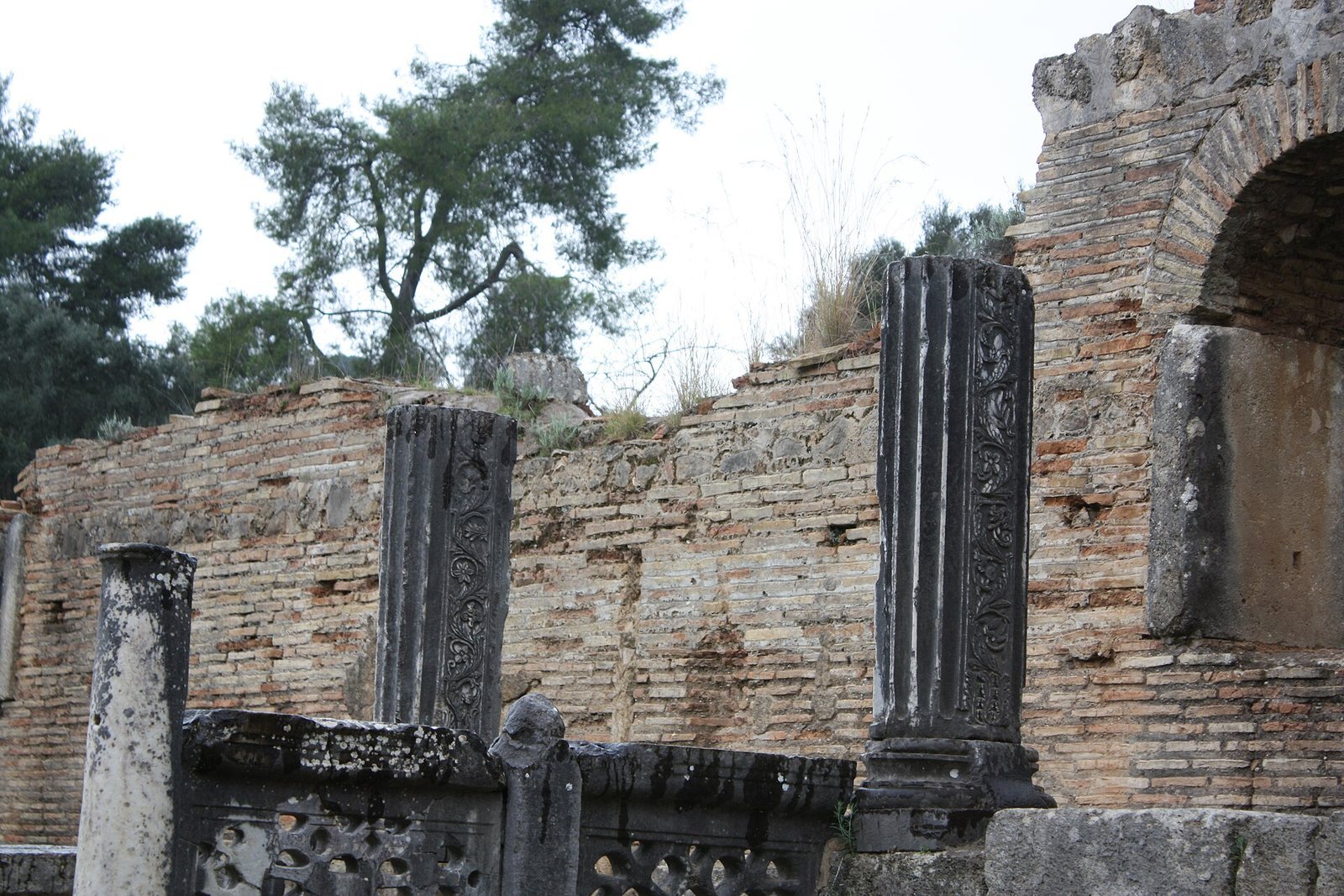
The church built over the workshop had three aisles and an apse, a recessed end space. Its altar stood at the east end, where the workshop entrance had been. The church was entered from the south end of a narthex, an entrance vestibule at the west end. Brick walls, a marble floor, and a wooden roof formed the building, while a low marble chancel screen, a barrier separating the sanctuary from the main worship area, survives. Christian inscriptions also belong to this phase. Successive alterations and repairs substantially changed the earlier building, and the church remains among Olympia’s best-preserved monuments.