Saint Mesrop Mashtots Church: Armenian Apostolic Shrine in Oshakan
Site at a Glance
- Popularity
- High
- Country
- Armenia
- Primary era
- Modern
- Eras represented
- Classical, Modern
- Civilizations
- Armenian, Russian, Sassanid
- Site type
- Religious
- Remains
- Church
On this page10 sections
History
Saint Mesrop Mashtots Church is an Armenian Apostolic church in Oshakan, Armenia, rebuilt in 1873–1879 as a single-nave vaulted basilica above the grave of Mesrop Mashtots, the monk and scholar credited with creating the Armenian alphabet. The Armenian Apostolic Church is the historic Armenian church within the Oriental Orthodox tradition. The church remains a pilgrimage destination, especially during the October Feast of the Holy Translators, an observance honoring translators associated with Armenian religious and literary life.
Burial and Early Shrine
After Mashtots died around 440, three possible burial places were considered: his native Taron region, Goghtn, where he had begun missionary work, and Vagharshapat, Armenia’s political and religious capital. His body was instead brought to Oshakan by military commander Hmayeak Mamikonian and Vahan Amatuni, a Persian-appointed chief of finances whose native village was Oshakan. Koriun, Mashtots’ disciple and biographer, and Ghazar Parpetsi both place the burial there.
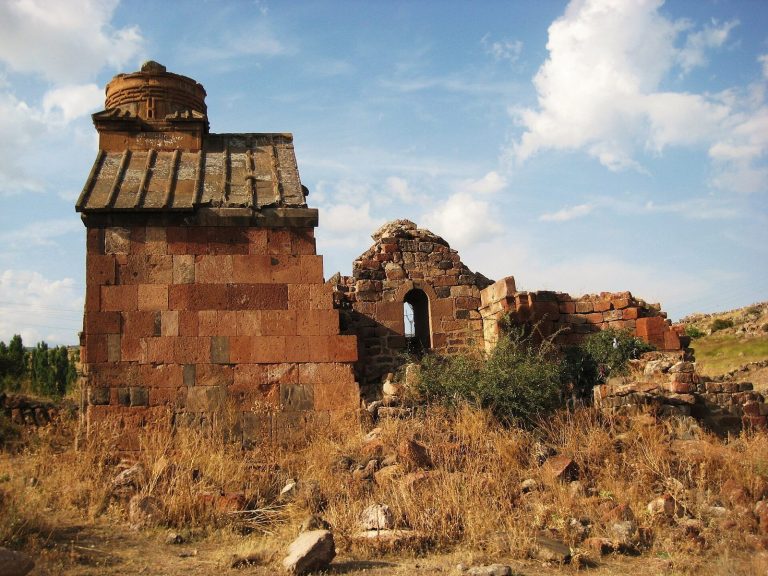
In 443, Vahan Amatuni built a structure over the grave. Koriun described it as an “altar,” a term understood in different ways: it may have referred to an altar within an existing chapel, a new church, or a tomb shrine, perhaps built underground.
Medieval and Early Modern History
In the early nineteenth century, cleric and historian Hovhannes Shahkhatuniants recorded five inscriptions at the church. Four carried dates between 1285 and 1295. One was left by Sahmadin, a wealthy Armenian who apparently renovated the building. These inscriptions were believed to have been lost during the rebuilding of the 1870s.
By the seventeenth century, the roof had collapsed and only the main altar remained, as described by historian Arakel of Tabriz. Catholicos Pilippos, the senior leader of the Armenian Apostolic Church, renovated the church between 1639 and 1645. It had fallen into serious disrepair again by the nineteenth century. An attempt by Catholicos Nerses Ashtaraketsi to renovate it in 1850 did not succeed, and in 1860 writer and activist Mikayel Nalbandian lamented its condition in a poem.
Nineteenth-Century Rebuilding
Catholicos Gevorg IV began a rebuilding campaign in 1868, raised funds, and issued an appeal in 1872. Work on a new church over Mashtots’ grave began in spring 1873. Greek workers from Alexandropol (Gyumri) built it, and it was consecrated on October 21, 1879.
A marble gravestone for Mashtots was installed in 1884 with support from Archbishop Andreas, leader of the Artsakh Diocese. It was replaced by a gravestone made of Italian marble in 1962. A memorial over Vahan Amatuni’s grave was erected just outside the church in 1880.
Commemoration and Modern Church Life
On October 13, 1912, Catholicos Gevorg V, other religious figures, and members of the public travelled in procession from Vagharshapat to Oshakan for celebrations marking 1,500 years of the Armenian alphabet. A school established beside the church in 1913 later served as a public school during the Soviet period. Renovated in 1996–1997, it reopened on October 18, 1998, as a scientific and educational center devoted to Mashtots and the Armenian alphabet.
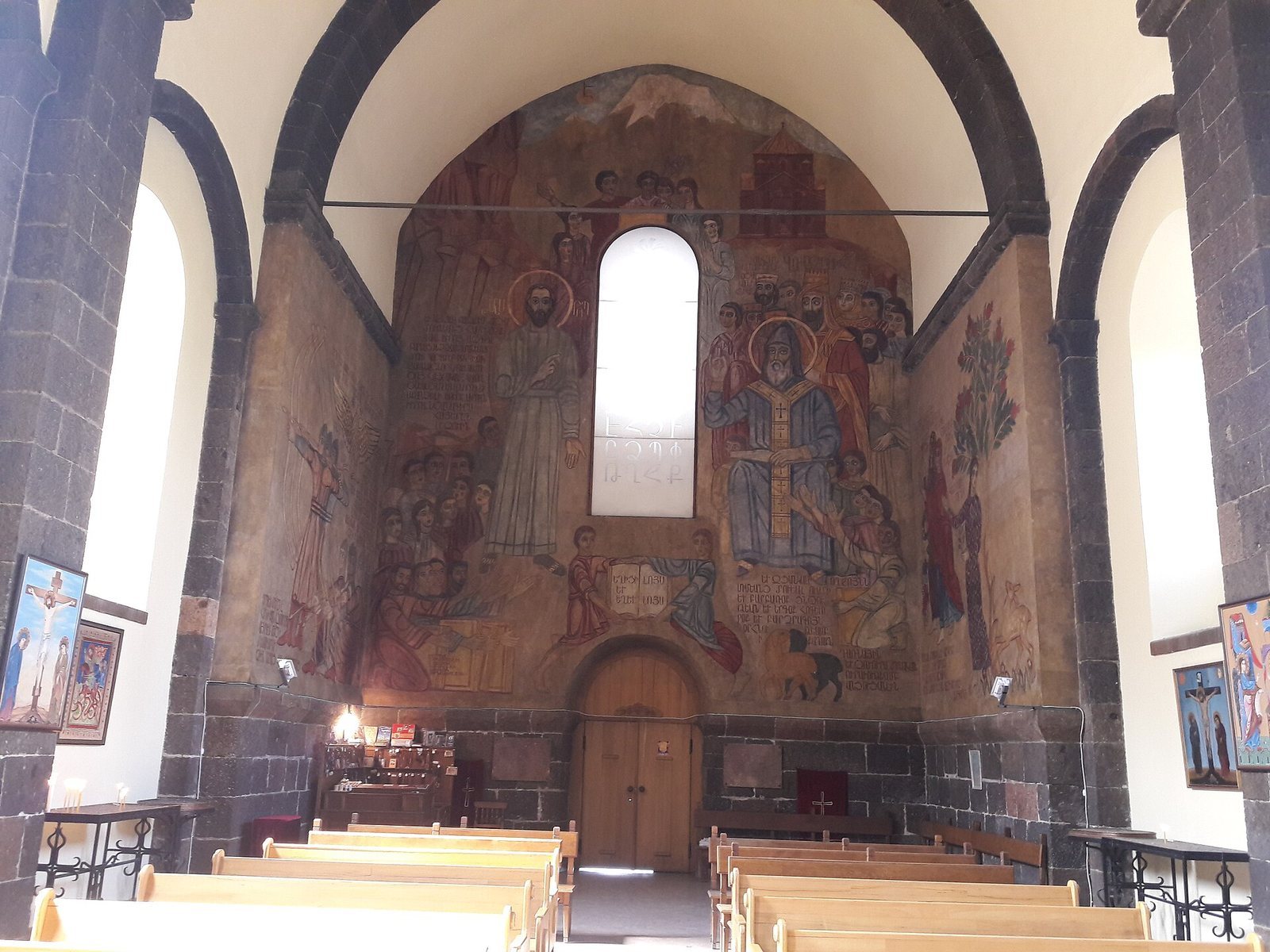
In the early twentieth century, a separate nineteenth-century building nearby served as an orphanage for children whose parents had died during the Armenian genocide of 1914–1916, the mass deportation and killing of Armenians in the Ottoman Empire during the First World War era. The church underwent extensive renovation in the 1960s during the tenure of Catholicos Vazgen I. Artists Hovhannes Minasian and Henrik Mamian painted its interior frescoes between 1961 and 1964, and the frescoes were restored in 2019–2020.
The church became the seat of the Diocese of Aragatsotn, a regional church jurisdiction, in 1996. A prelacy, or diocesan administrative headquarters, was unveiled in 1997, and the surrounding area was renovated in 2000.
Remains
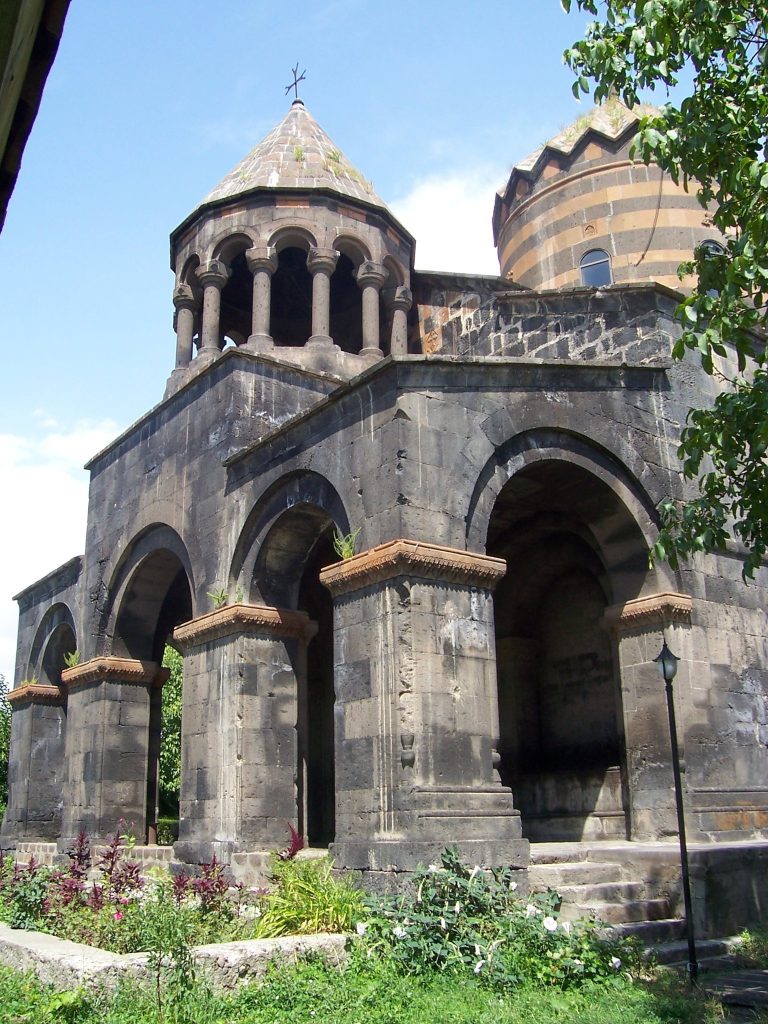
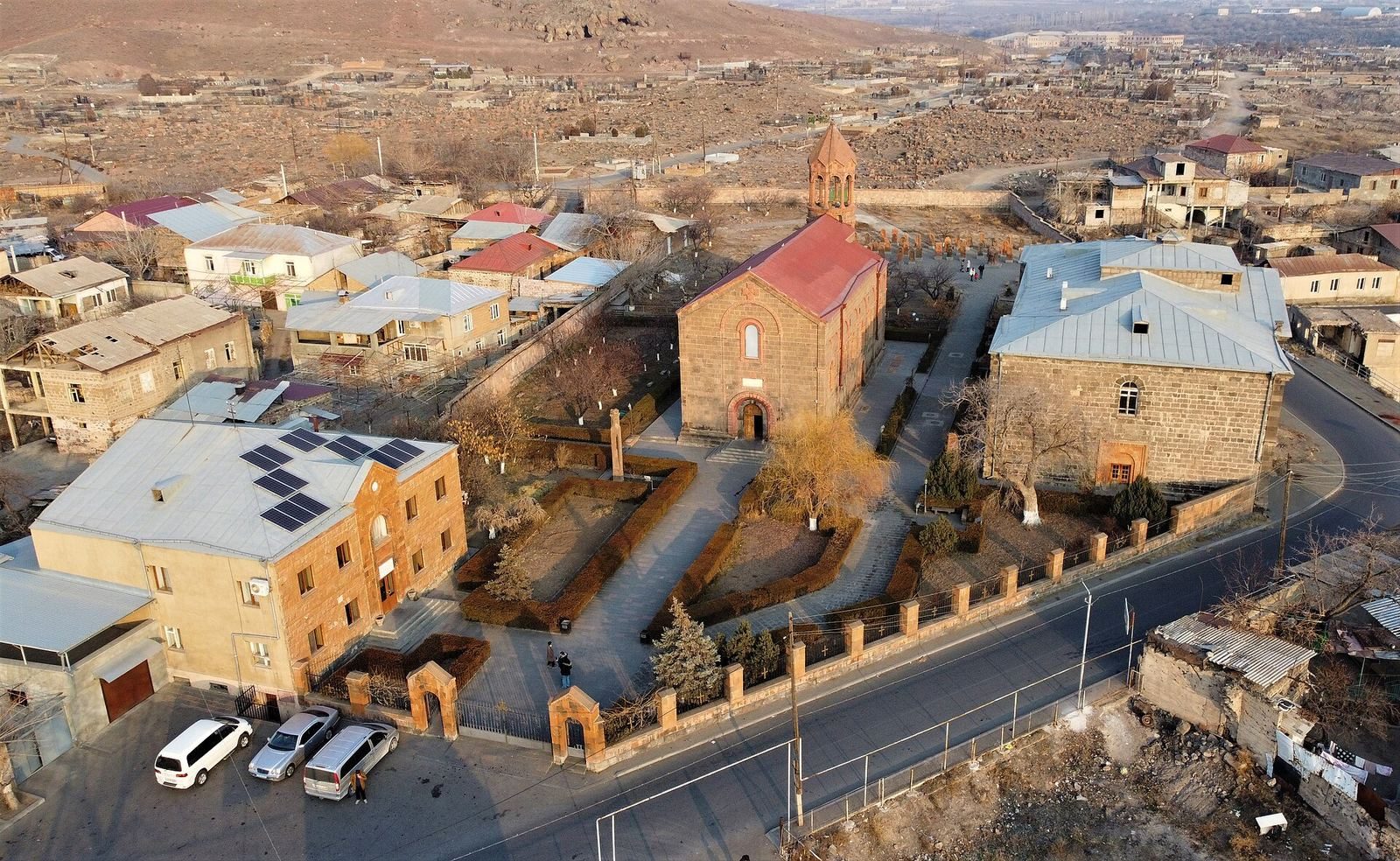
The complex includes a main church, a chapel, a bell-tower, and an educational center. The main church is built of black tuff as a single-nave basilica with a vaulted ceiling. A tuff wall measuring 310 metres surrounds the church.
Main Church and Tomb
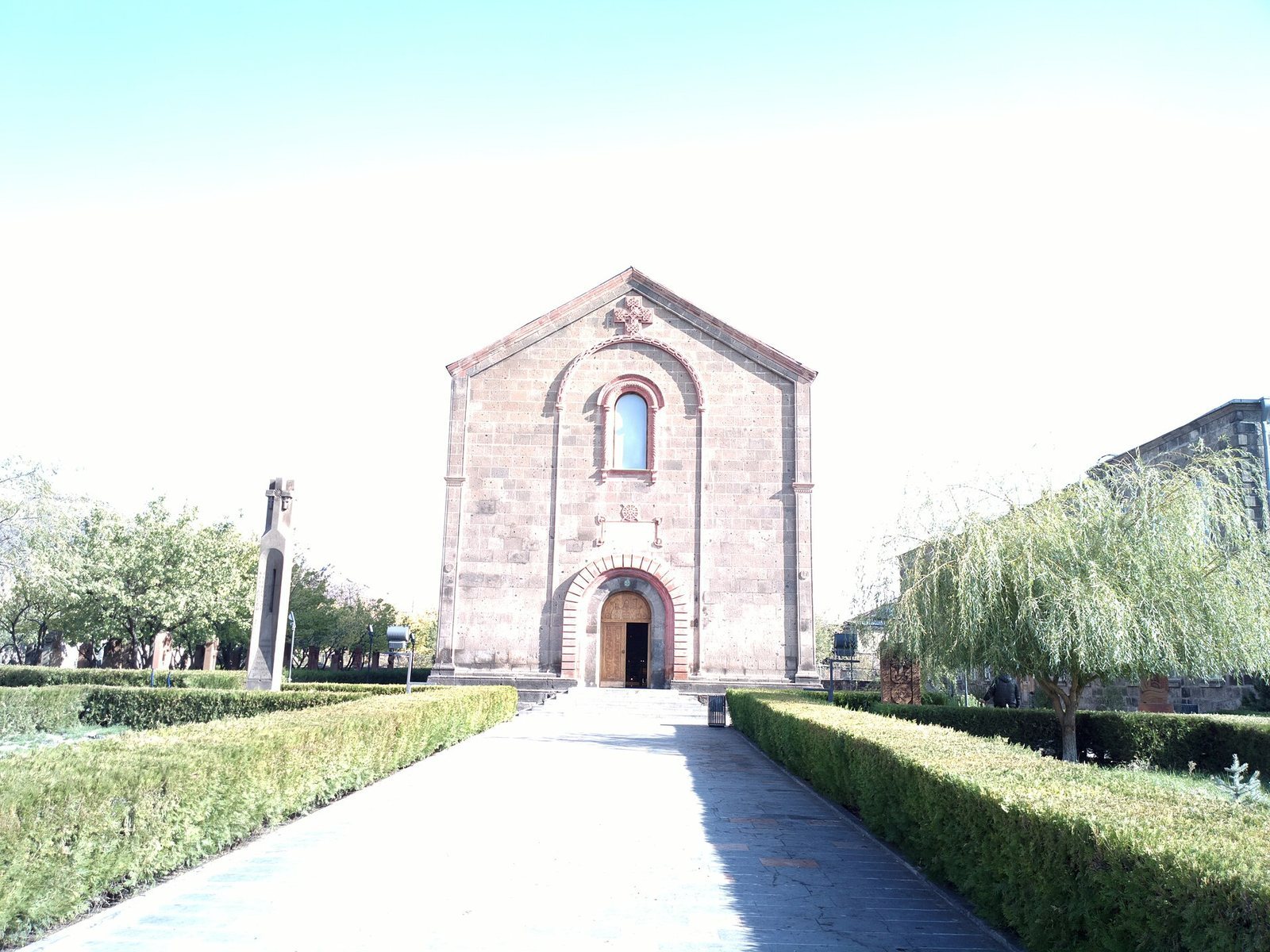
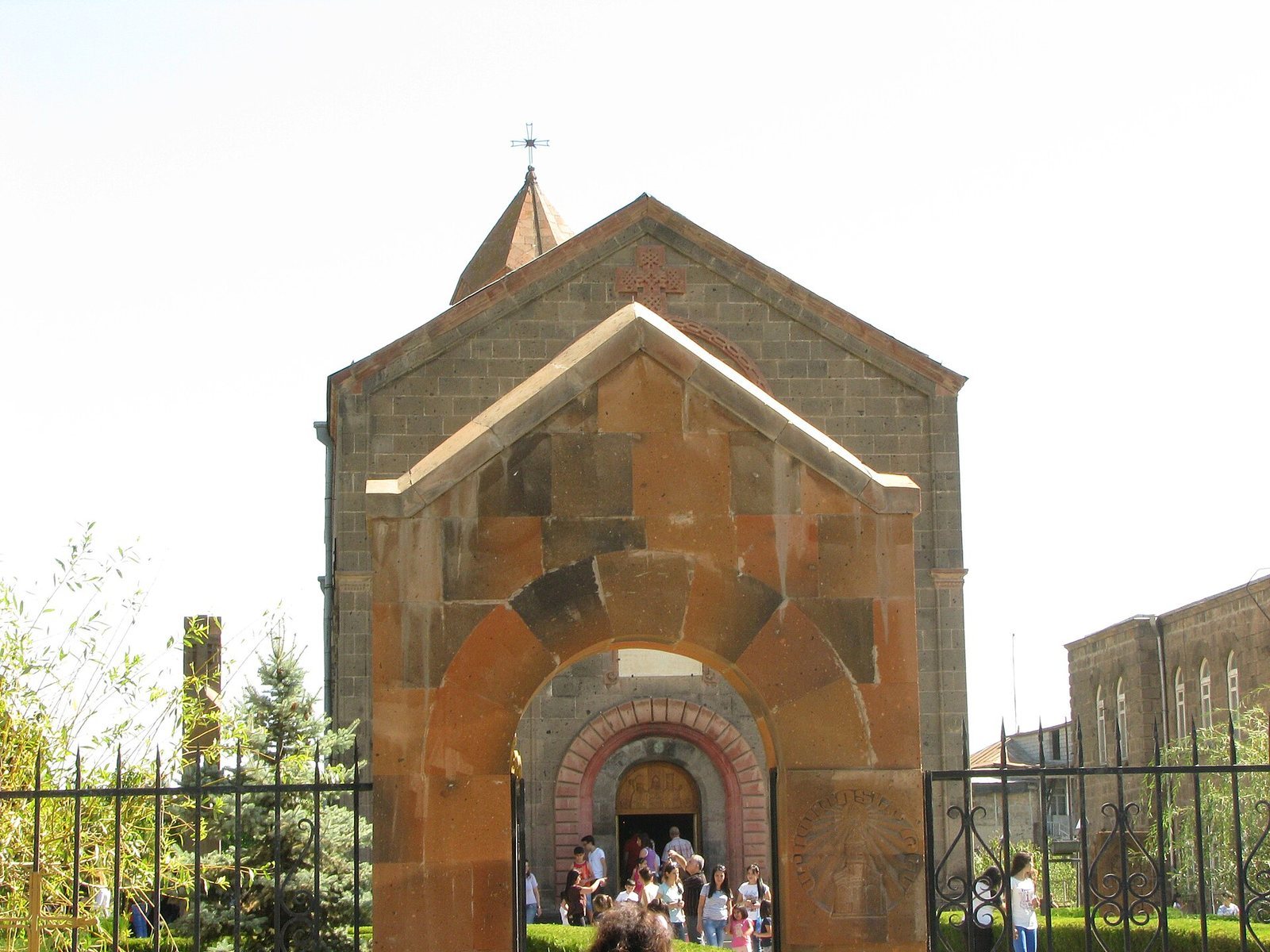
The church has entrances on its north, south, and west sides, eleven windows apart from the smaller bell-tower windows, and a decorative arch on its exterior facade. It is in good condition and has capacity for 800 people. Mashtots’ tomb lies beneath the altar. Its Italian-marble gravestone bears the inscription “Saint Mesrop Mashtots 361–440.”
Bell-Tower and Memorial
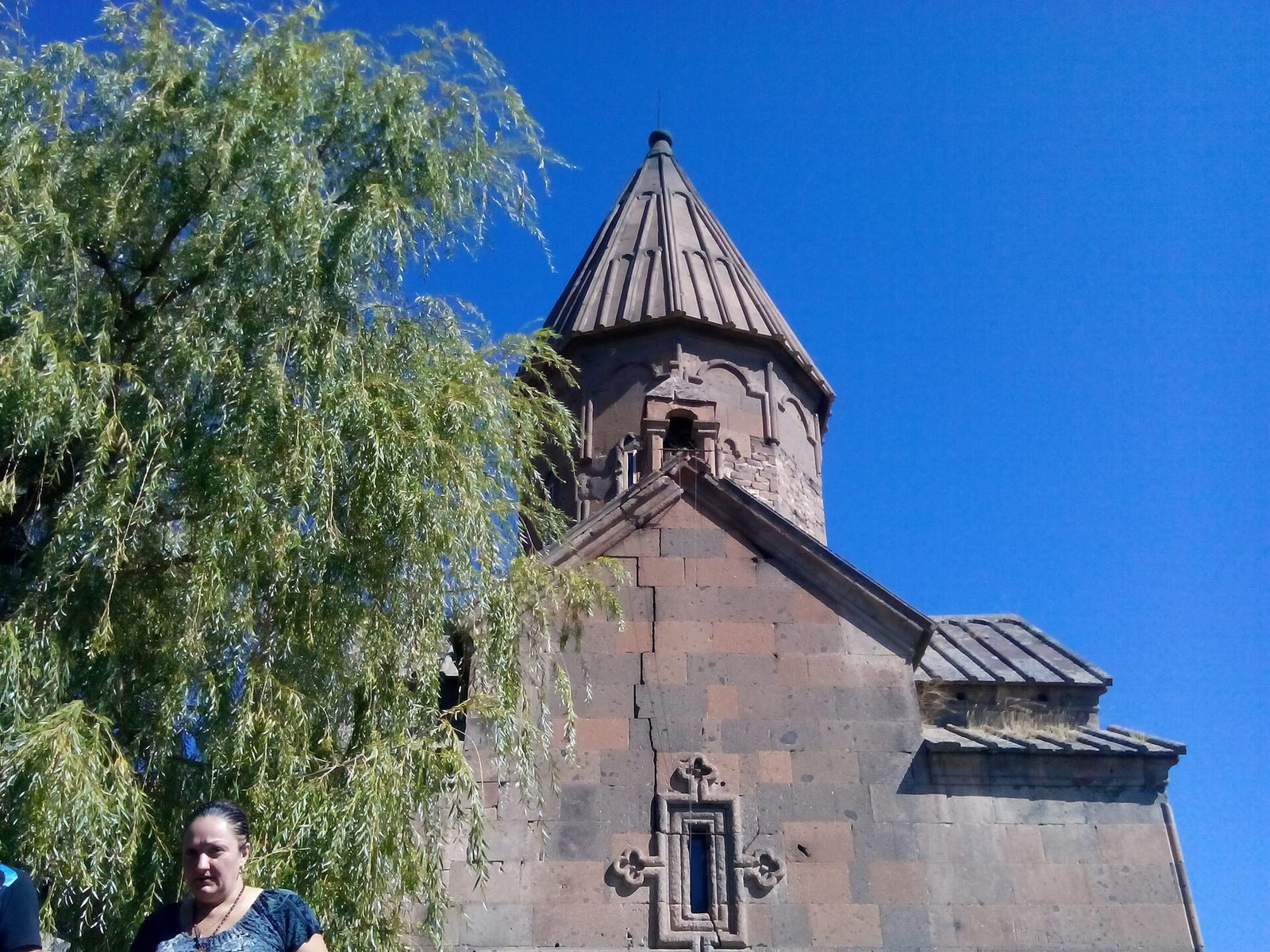
A cylindrical, two-storey bell-tower stands on the eastern side of the church. Its entrance faces the altar, and its upper level is a rotunda, a circular structure, with eight columns and a dome. The tower’s eastern position and cylindrical form are described as rare in Armenian architecture. Vahan Amatuni’s memorial stands immediately outside the church over his grave.
Interior and Courtyard Features
The church floor is surfaced with basalt tiles. Among the interior frescoes is the large composition Glory to Armenian Letters and Literature, depicting the creation of the alphabet with Mashtots, Catholicos Sahak Partev, King Vramshapuh, and Prince Vahan Amatuni. Minasian also painted an altarpiece of the Virgin and Child in 1966. Near the entrance to Mashtots’ tomb, a monument depicts the alphabet’s original 36 letters in erkatagir, a monumental Armenian lettering style; Baghdasar Arzoumanian designed it. The courtyard drinking fountain, installed in 1964, was designed by Rafael Israelyan.
Adjacent Buildings and Archaeological Remains
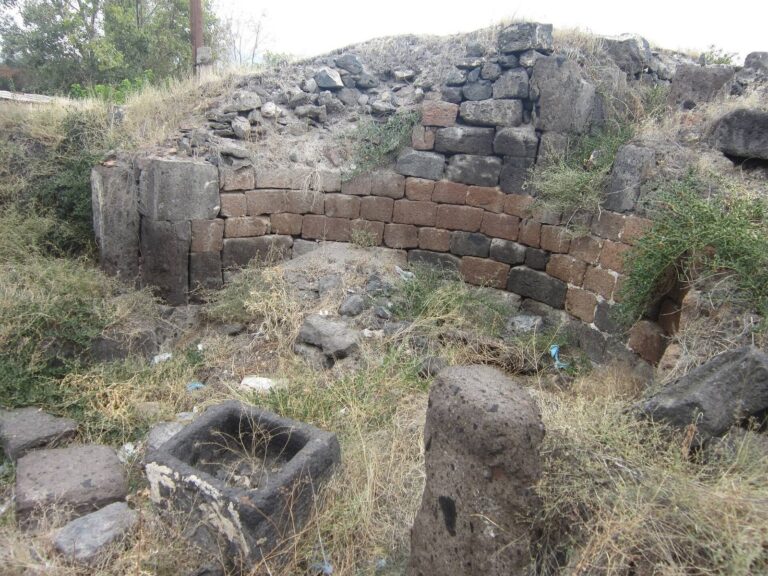
The educational-center building stands south of the church. A separate former orphanage building nearby dates to the nineteenth century and survives. In August 2012, archaeologist Frina Babayan uncovered remains of a fifth-century structure near the bell-tower foundations.