Temple of Hadrian in Ephesus: A Roman Temple Dedicated to Hadrian and Artemis
Site at a Glance
- Popularity
- Medium
- Country
- Turkey
- Primary era
- Classical
- Eras represented
- Classical
- Civilizations
- Roman
- Site type
- Religious
- Remains
- Temple
On this page9 sections
History
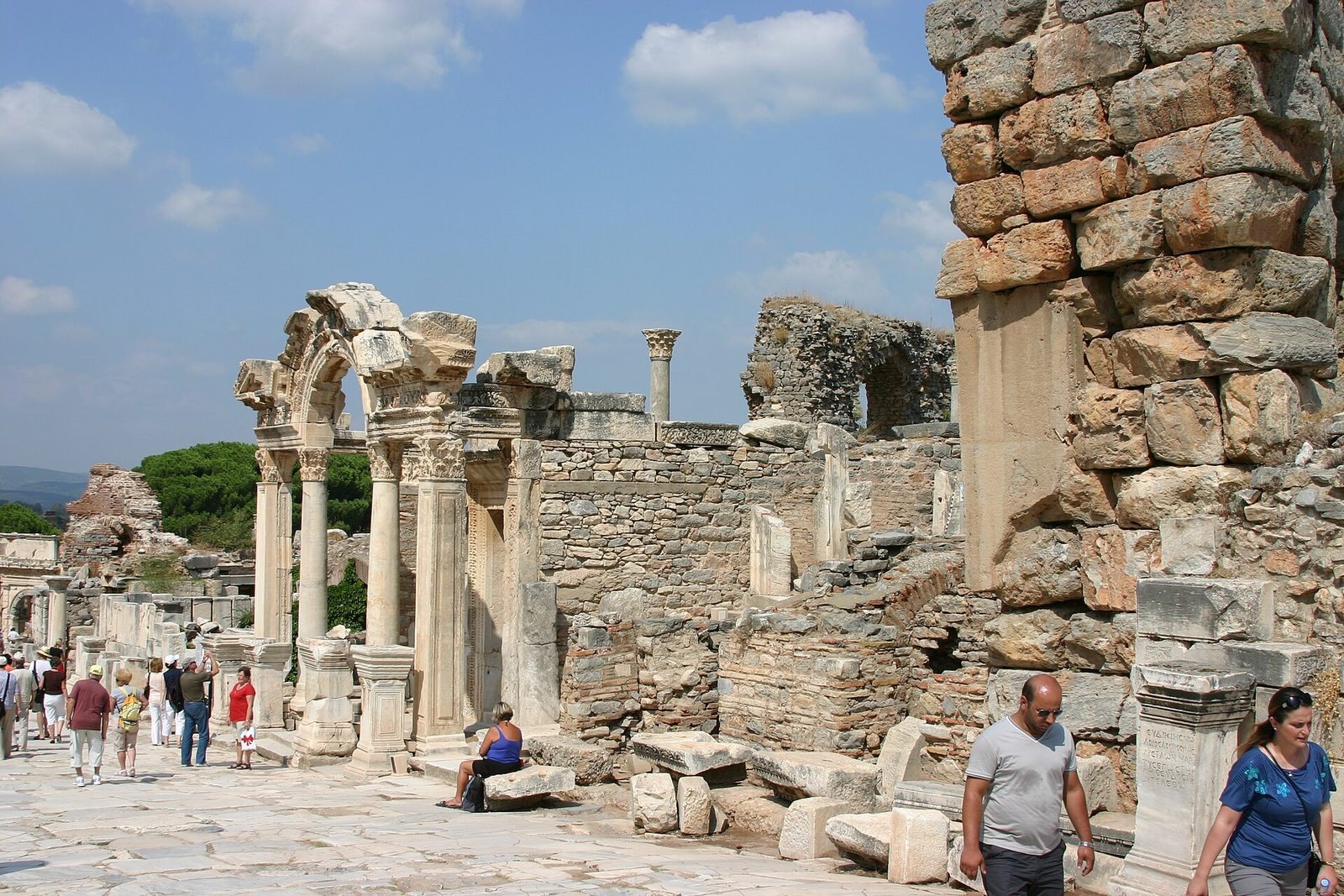
The Temple of Hadrian in Ephesus is a Roman temple on Curetes Street in ancient Ephesus, near modern Selçuk, Türkiye, probably built in 117 or 118 CE. It honored Artemis of Ephesus, the locally worshipped form of the Greek goddess Artemis, the emperor Hadrian, and the people of the city.
Construction and dedication
Publius Quintilius Valens Varius, an Ephesian civic benefactor, had pledged the project during the final years of Trajan’s reign, before Hadrian became emperor. An inscription says that Varius, his wife, and their daughter Varilla dedicated the temple, its decoration, and its cult statue at their own expense. Although the temple is usually dated to 117 or 118, a date in the 130s has also been proposed.
The inscription places the dedication during the tenure of Servaeus Innocens, governor of the Roman province of Asia, whose term probably fell in 117/118 or 118/119. It also names Publius Vedius Antoninus, a civic secretary, or official serving the city’s assembly, who was in his second term and held the Asiarch office, a prominent civic-religious position in Asia. The project had been promised under an earlier civic secretary, Tiberius Claudius Lucceianus, whose term is dated to 114 to 116.
Rebuilding and archaeological work
Parts of the temple’s front porch were destroyed in the fourth century, possibly by an earthquake, and later rebuilt.
The Austrian Archaeological Institute excavated the temple in the 1950s under archaeologist Franz Miltner. During broader work to clarify the remains of Ephesus, streets including Curetes Street were cleared. In 1957 and 1958, recovered architectural pieces were reassembled in a partial reconstruction directed by architect Karl Heinz Göschl. Archaeologist Ursula Quatember carried out further research into the building’s history from 2009 to 2012.
Remains
Plan and facade
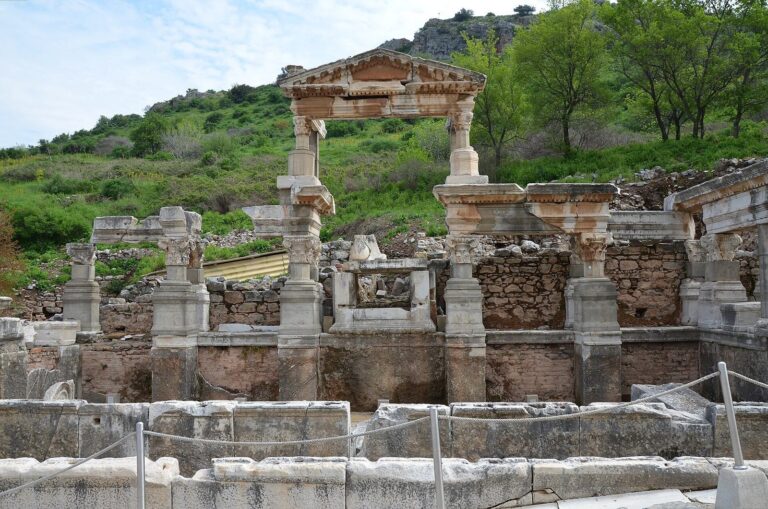
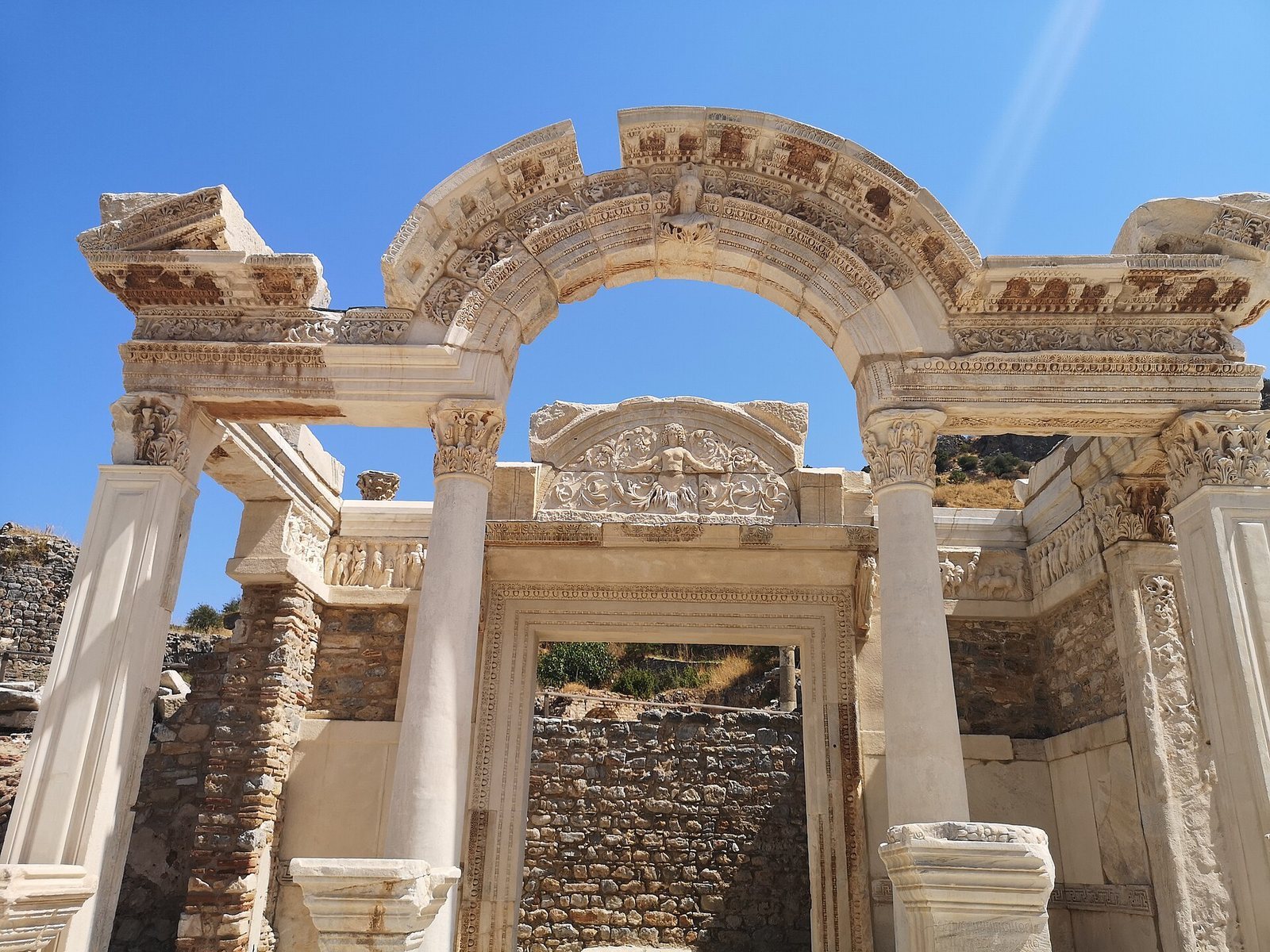
The partly reconstructed temple stands in the southwest of ancient Ephesus, directly on Curetes Street, and is partly incorporated into the rear of the Scholastica Baths, another complex built by Varius. A broad front porch leads to a small rectangular inner chamber set across the building’s width. The facade has two columns and two piers, topped with Corinthian capitals, decorated column tops bearing acanthus leaves. A triangular roof-front originally crowned the facade.
Statue bases
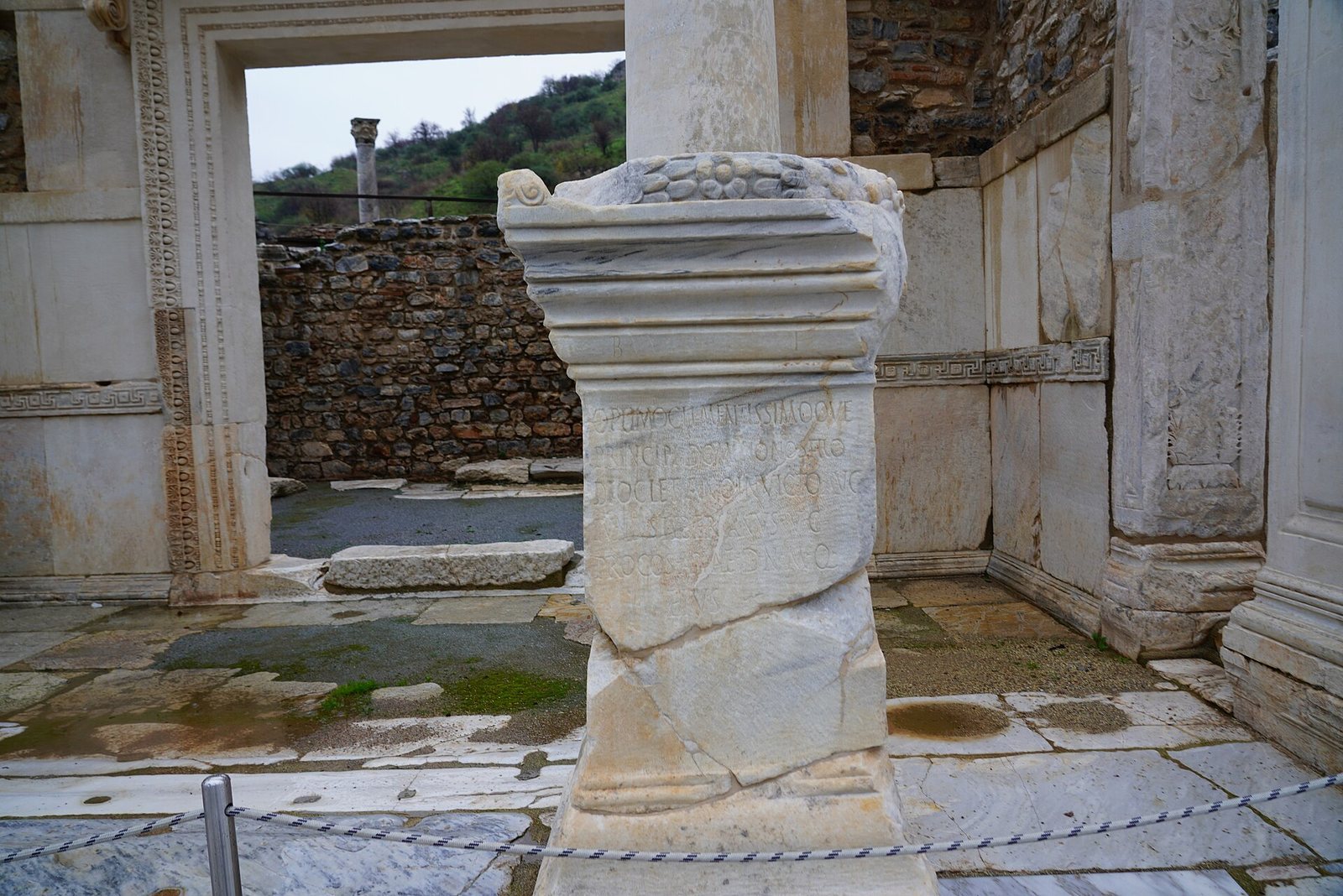
Four inscribed statue bases stand in front of the facade’s columns and piers. They belonged to statues of the First Tetrarchy, a system of rule by four emperors established by Diocletian. The emperors were Diocletian, Constantius Chlorus, Galerius, and Maximian. A statue of Maximian was later replaced by one depicting the father of Theodosius I.
Arch and exterior carving
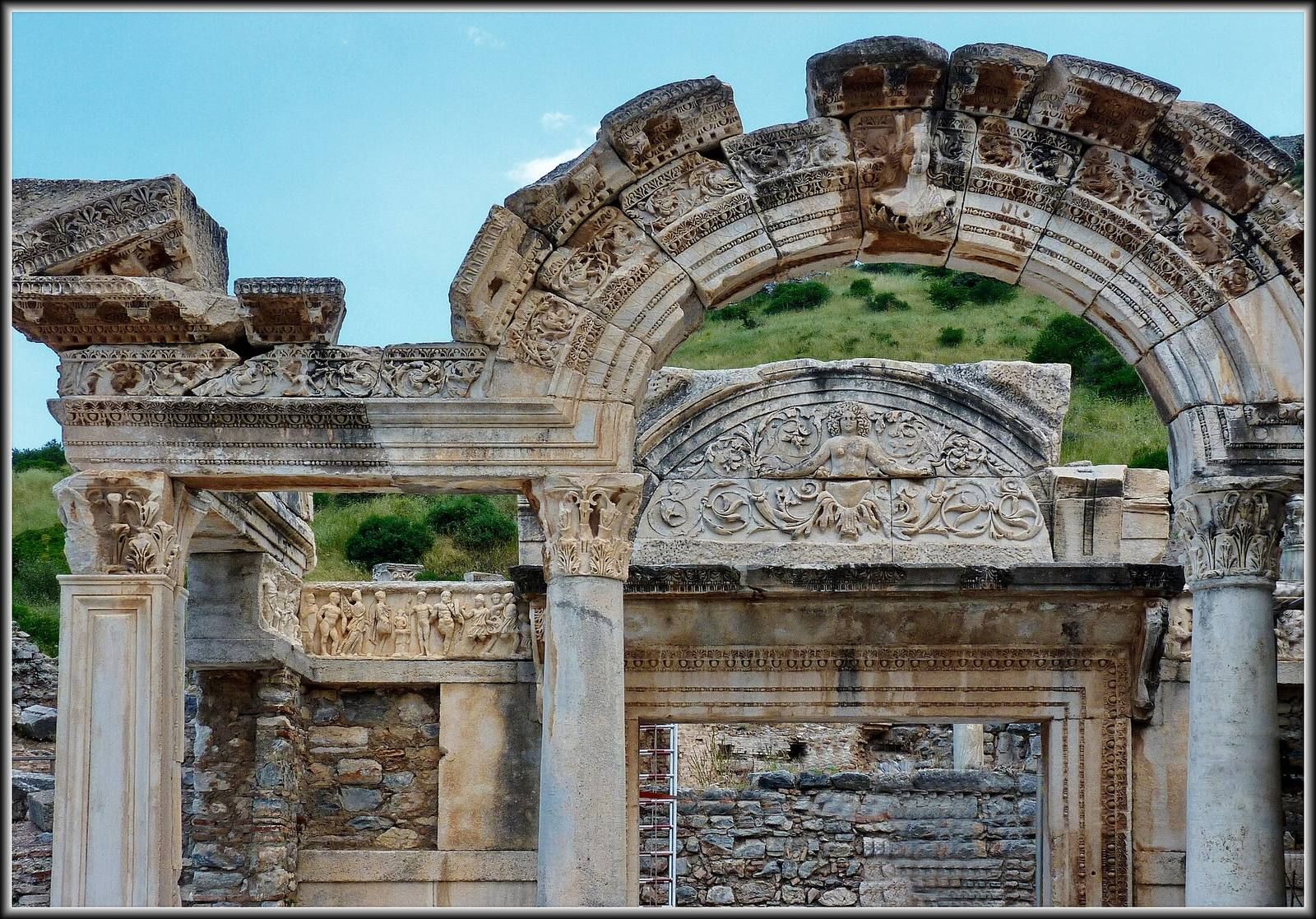
A curved Syrian arch spans the two central columns. Its keystone bears a bust of Tyche, the personification of fortune. The horizontal beam above the supports carries a carved band of acanthus leaves and other plant forms.
Porch frieze
A continuous sculpted band decorated the inside of the front porch. Its original is now in the Selçuk Museum. The left section depicts Ephesus’s foundation myth, including the legendary founder Androklos hunting a boar, along with gods and Amazons shown among other scenes at a festival of Dionysus, a Greek god associated with wine and festivity. The right section differs in style. It has been interpreted as a piece brought from another building during later rebuilding, while other research suggests it belonged to the temple from the outset.
Doorways
The lintel above the inner chamber’s entrance has a bead-and-egg pattern made of repeating bead-like and oval shapes. A female figure with plant-like legs appears above it in the arch field. On the facade, an arched portal is flanked by rectangular entrances. A comparable arrangement appears in other buildings of the period, including the Canopus at Hadrian’s Villa near Tivoli.