Medieval Castle of Jönköping: A Thirteenth-Century Defensive Installation

Site at a Glance
- Rating
- 4.2
- Popularity
- Medium
- Country
- Sweden
- Primary era
- Medieval
- External website
- Open
- Eras represented
- Medieval, Early Modern
- Civilizations
- Swedish
- Site type
- Military
- Remains
- Castle
On this page5 sections
History
The Medieval Castle of Jönköping, also called Jönköping House, was a thirteenth-century defensive installation in Jönköping, Sweden. It stood near the medieval town and helped protect the area against attacks from the south. Its construction and development are only partly understood, but the castle was first mentioned in writing in 1278.
The Medieval Defence of Jönköping
The castle was established a few years before Magnus Ladulås, a thirteenth-century king of Sweden, issued Jönköping’s privileges charter in 1284. This formal grant defined rights and exemptions for the town. Jönköping House formed part of a wider royal defensive system. Rumlaborg, a medieval fortress, was established about six kilometres east at the mouth of the Huskvarna River on Lake Vättern, while Näs Castle, an older royal residence, stood on the southern end of Visingsö Island from the twelfth century.
A monastery was built immediately southwest of Jönköping House during the late thirteenth century. After the Reformation, the sixteenth-century religious transformation that brought monastic properties into new uses, the monastery was rebuilt from 1544 and through the seventeenth century as the more modern fortification known as Jönköping Castle.
Incorporation into Jönköping Castle
As Jönköping Castle developed, an arsenal was constructed on a forecourt, an open area within or in front of a fortified complex. It lay between Bastion Christina, a projecting fortification designed to support defensive fire, and the northern outer rampart, an exterior defensive embankment or wall, at the site of the medieval castle.
Remains
Position beside the Watercourse
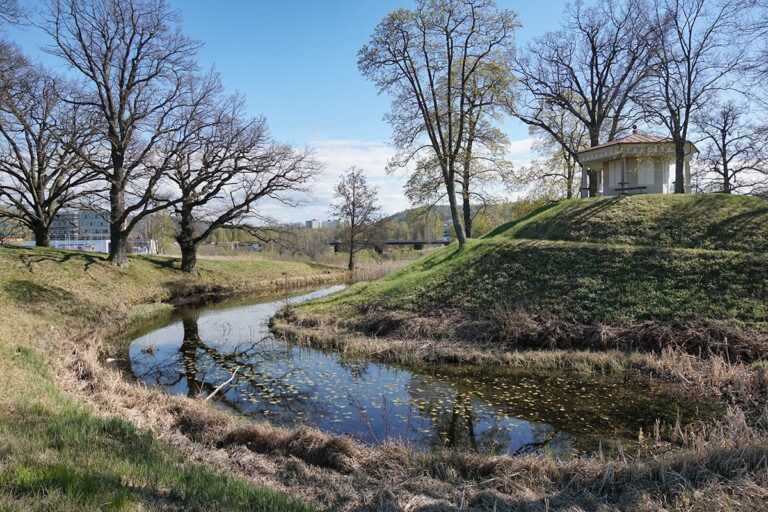
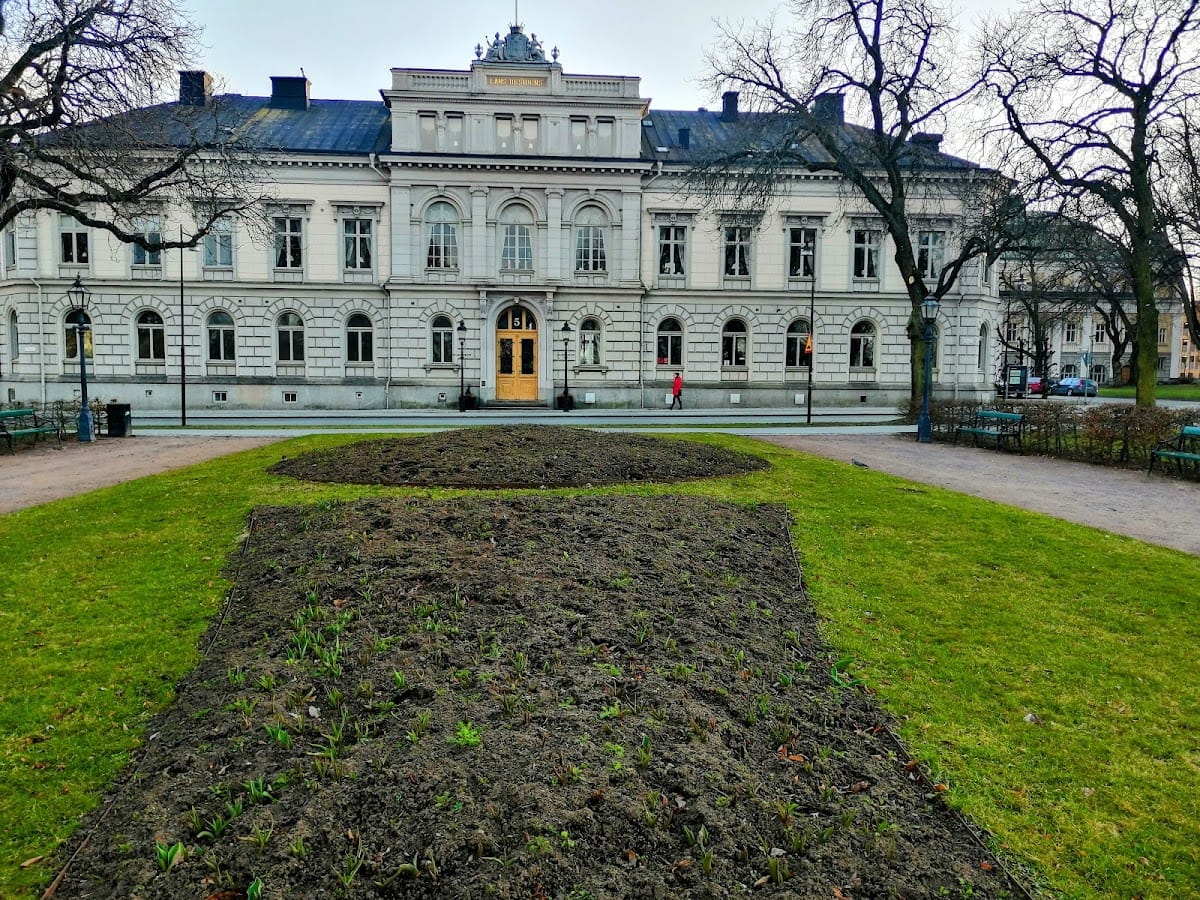
The castle occupied the western side of the short watercourse linking Lake Munksjön with Lake Vättern. It stood immediately east of Jönköping’s medieval urban area, which was located on present-day Väster before the seventeenth century. The site corresponds to the northeastern corner of present-day Rådhusparken.
Jönköping’s southern bridge crossed the watercourse from the sandbar known as Sanden to the castle. The former watercourse is now represented by Hamnkanalen, preserving the physical setting that connected the castle to the lakes and to the medieval town.