Rye Castle Museum (Ypres Tower): Coastal Fortress, Prison, and Museum
Site at a Glance
- Rating
- 4.5
- Popularity
- Low
- Country
- United Kingdom
- Primary era
- Medieval
- External website
- Open
- Eras represented
- Medieval, Early Modern, Modern
- Civilizations
- British, English
- Site type
- Military
- Remains
- Castle
On this page10 sections
History
Rye Castle Museum (Ypres Tower) is a medieval coastal fortress in Rye, United Kingdom, traditionally associated with King Henry III and broadly dated to the thirteenth or fourteenth century. A castle at Rye was considered in 1226 and 1249, with 1249 traditionally linked to its construction. The site helped defend the coast against French attacks while Rye, one of the Cinque Ports, supported maritime defence and trade.
Medieval defence
The castle’s exact building date remains uncertain. In 1329, Rye applied for murage, a levy or grant used to pay for town walls and other defences. Defensive works continued during the fourteenth century, both before and after French attacks, strengthening the town’s coastal role.
The structure was first known as Baddings Tower. It may have served as a prison, and in 1430 it became the property of John de Iprys, a fifteenth-century owner whose name became associated with the later title Ypres Tower.
Artillery and imprisonment
During Henry VIII’s Device Fort programme, which developed coastal artillery fortifications, the adjacent Gun Garden battery was built overlooking the harbour. It was rearmed during the Spanish Armada crisis of 1588, when a large Spanish naval expedition was sent against England, and again during the eighteenth-century wars with France. In 1830, it remained in active service with 18 guns.
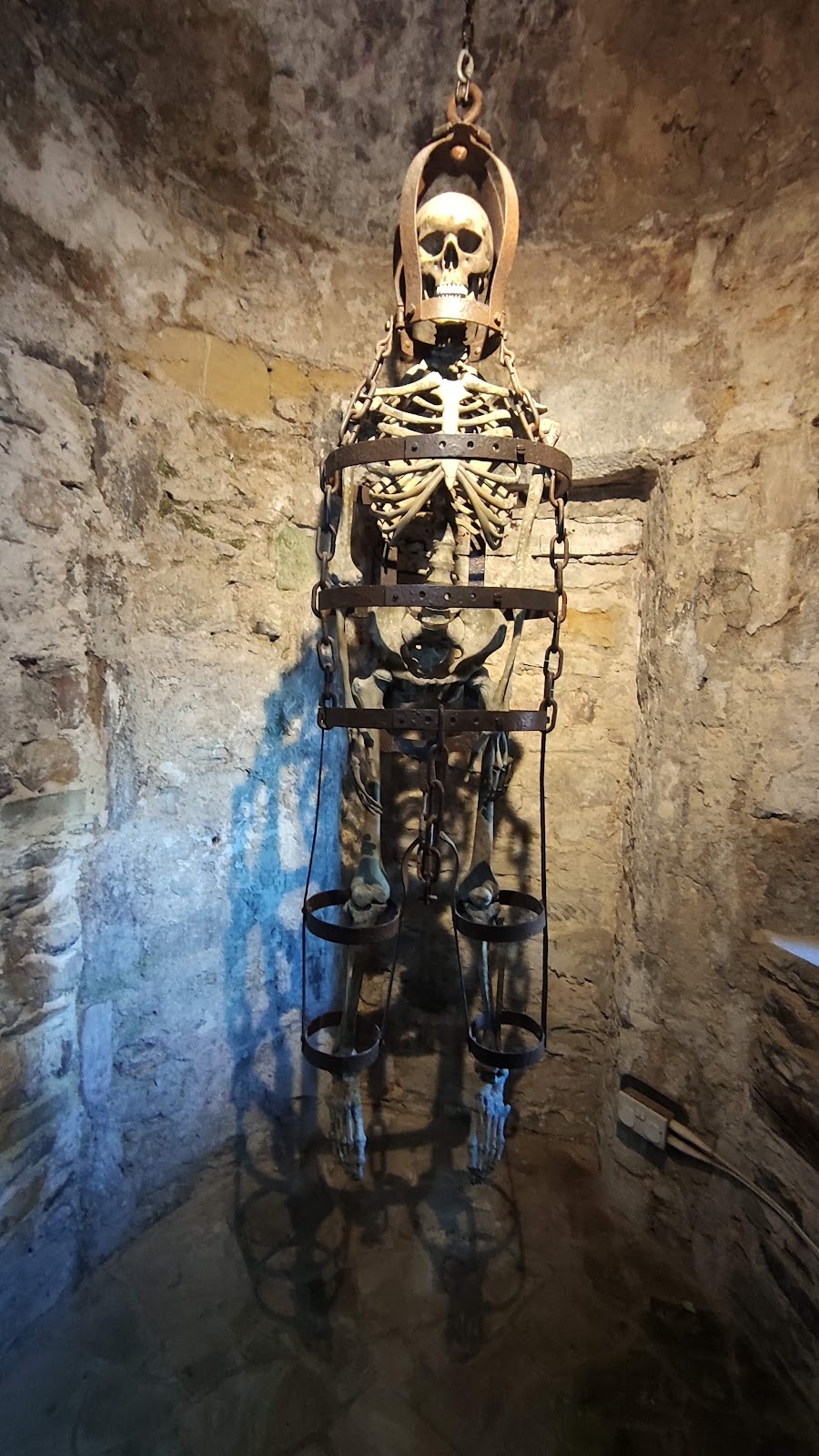
By the sixteenth century, the tower was being used as a prison and courthouse. A full-time gaoler was appointed in 1796, an exercise yard was later added, and a women’s prison followed in 1837. The prison function continued until 1891, after which the tower became Rye’s town morgue.
Modern preservation and museum use
Ypres Tower was damaged by air raids during the Second World War and was later repaired and restored. It is now one of the two sites of Rye Castle Museum. The museum’s main exhibition area opened at East Street in 1999 in a former brewer’s bottling factory.
Ypres Tower is a Grade I listed building and a scheduled ancient monument. In England, these designations recognize exceptional architectural or historic interest and provide national protection for important archaeological or historic sites. The heritage listing covers Ypres Tower and part of Rye Town Wall. The building was listed in 1923 and received Grade I status in 1951.
Remains
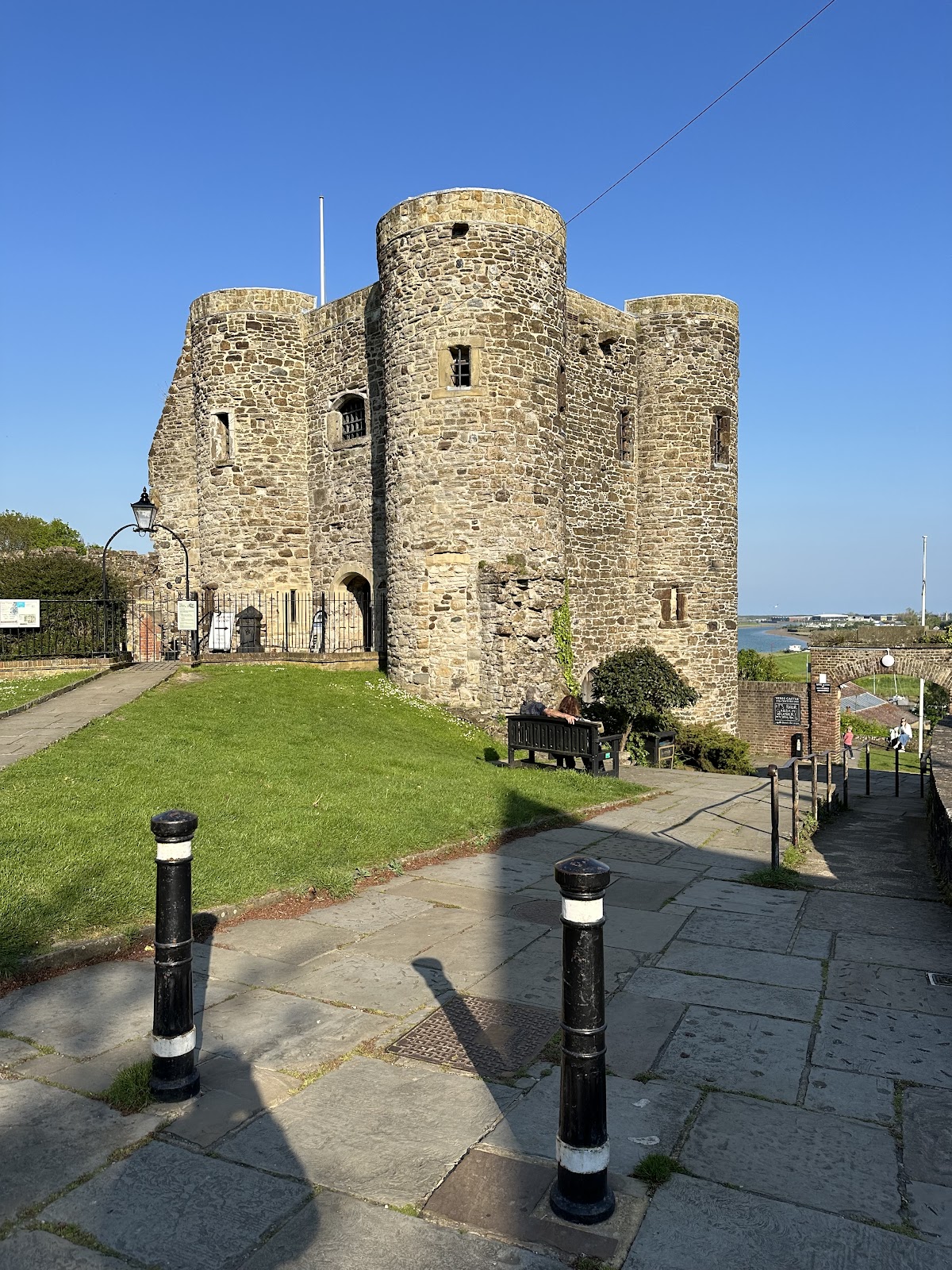
Ypres Tower is a three-storey, square-plan structure built from iron-stained sandstone. A round tower rises at each corner, giving the building a compact fortified form. The entrance on the north side is secured by a portcullis, a heavy grille that moves vertically to close a fortified gateway.
Gun Garden
Beside the castle, the Gun Garden forms an artillery battery, a fortified position designed to mount and operate several guns. It overlooks the harbour and was equipped with 18 guns in 1830, linking the surviving site to Rye’s later coastal defences.
Prison remains
The former prison complex included an exercise yard and a women’s prison added in 1837. These features belong to the tower’s later institutional use, which continued until the building ceased to function as a prison in 1891.
Museum collections
Ypres Tower exhibits
Exhibits in Ypres Tower include locally made medieval pottery, other medieval artefacts, an embroidery showing aspects of Rye’s life and history, activities, and maps of the town.
East Street displays
The East Street museum occupies a former brewer’s bottling factory. Its local-history displays include firefighting equipment, material on changes in trade caused by the retreat of the sea, maritime-history and shipbuilding exhibits, antique toys and games, photographs, town seals, and archaeological artefacts.