Westenhanger Castle: A Fortified Manor House in Kent
Site at a Glance
- Rating
- 4.8
- Popularity
- Low
- Country
- United Kingdom
- Primary era
- Medieval
- External website
- Open
- Eras represented
- Medieval
- Civilizations
- English
- Site type
- Military
- Remains
- Castle
On this page11 sections
History
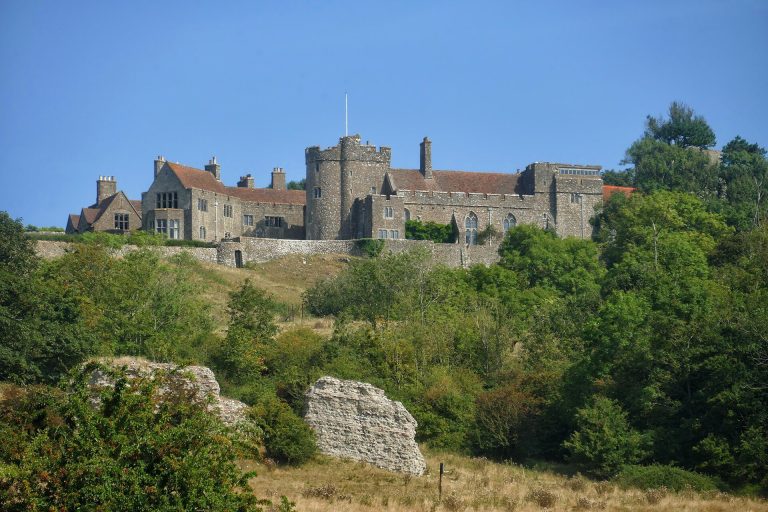
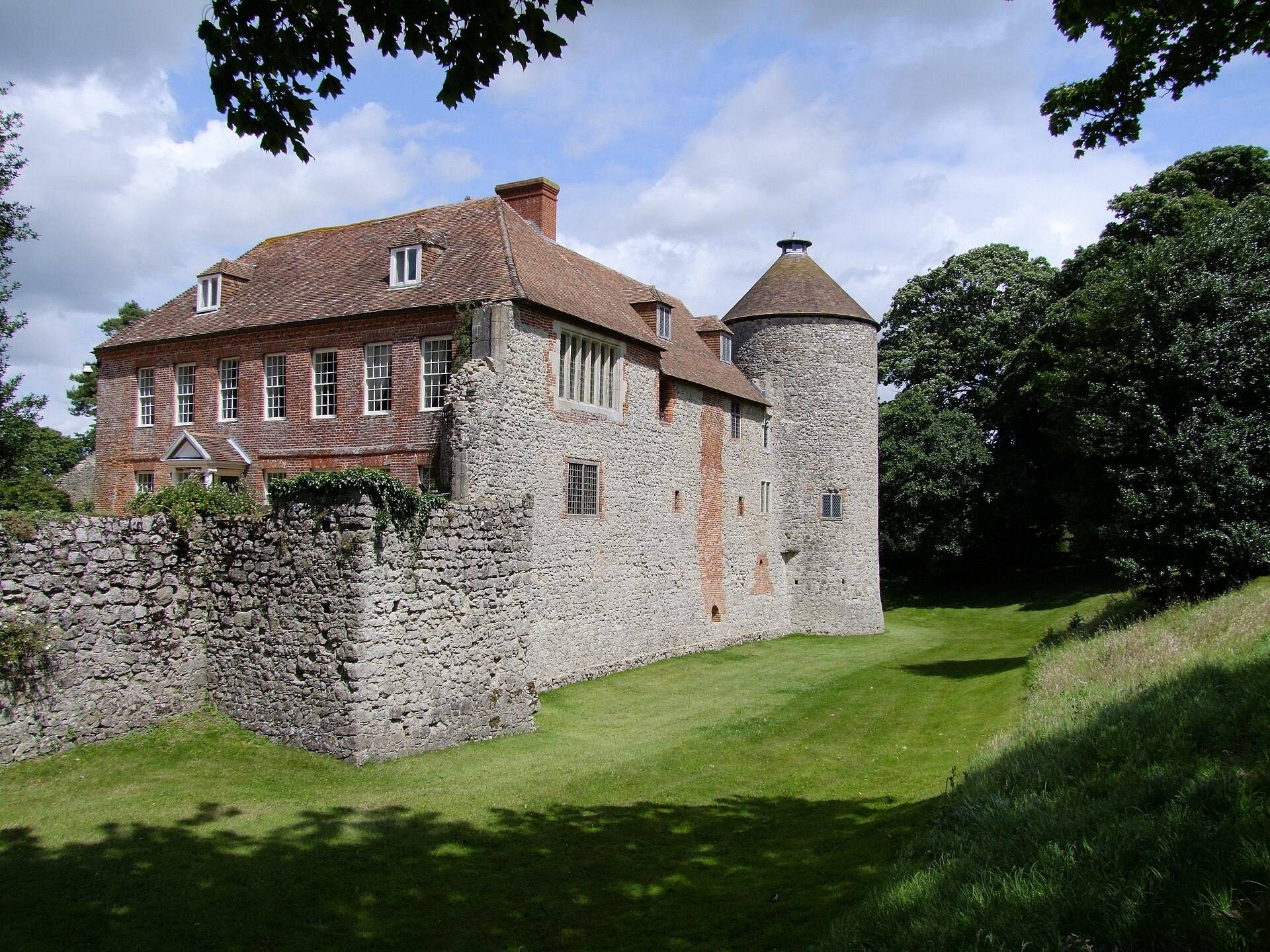
Westenhanger Castle is a fortified manor house in the United Kingdom, near Hythe in Kent. Its estate was owned by Canute, also known as Cnut the Great, in 1035, and the first permanent structure was commissioned in 1343 by the de Criol family, descendants of the medieval nobleman and royal official Bertram de Criol. Built as a four-sided fortified manor house, it reflected the wealth of its owners and formed the basis of the surviving complex.
The de Criol manor
The estate remained with the de Criol family until the Wars of the Roses, the fifteenth-century dynastic conflicts between the houses of Lancaster and York for control of the English crown. Sir Thomas de Criol, also known as Kyriell, was beheaded by order of Margaret of Anjou, the Lancastrian queen consort of Henry VI, on the day after the Second Battle of St Albans. As he had no sons, Westenhanger passed to his son-in-law, Sir John Fogge, an English courtier and landowner.
During the period of de Criol ownership, the manor house contained 126 rooms. Across its history, Westenhanger also had successive connections with Henry II, Rosamund de Clifford, Edward Poynings, Henry VIII, Elizabeth I, Thomas “Customer” Smythe, and Percy Smythe, 8th Viscount Strangford.
Elizabeth I and the Spanish Armada
In 1588, when Westenhanger belonged to Thomas “Customer” Smythe, Elizabeth I used the castle as the command centre for Kent’s 14,000 troops. They were intended to defend the southern English coast against the Spanish Armada, the large Spanish naval expedition sent against England that year.
The Smythe family and colonial connections
Thomas “Customer” Smythe received Westenhanger, then called Ostenhanger, as a reward for serving as the Queen’s collector of imports. The estate remained with the Smythe family until Percy Smythe, 8th Viscount Strangford, died without issue in 1869. It then passed to his nephew, Captain Hugh Baillie, who also died without issue in 1876.
Westenhanger is associated with the early English colonization of North America through the Smythe family. Sir Thomas Smythe commissioned the ship Discovery for the East India Company, an English joint-stock company established to conduct trade in Asia, in 1600. On 19 December 1606, Discovery sailed for Virginia with Susan Constant and Godspeed, under Captain John Smith, an English soldier and colonial leader associated with the early settlement of Virginia. The expedition entered Chesapeake Bay on 13 May 1607 and led to the subsequent establishment of Jamestown, described as the first permanent English-speaking settlement in the New World.
In 1656, Westenhanger was considered as lodging for the exiled Charles II, whose exile followed the execution of his father, Charles I, during the English Civil Wars. Thousands of armed men were ordered to hide in the surrounding woodland and attack the king and his followers if he entered the house. Charles was warned before leaving France, however, and did not come to Westenhanger.
Decline and conservation
Over the centuries, the manor house was reduced from its historical extent and suffered serious neglect, approaching ruin. Since the mid-1990s, its current owners have worked with English Heritage on consolidation, conservation, and restoration intended to prevent further deterioration of the house, curtain walls, and adjoining buildings. English Heritage lists Westenhanger Castle as a Grade I listed historic building, the highest category of protection for listed historic buildings in England. The estate is now used as a conference and wedding venue.
Remains
The fortified manor complex
Manor house and curtain walls
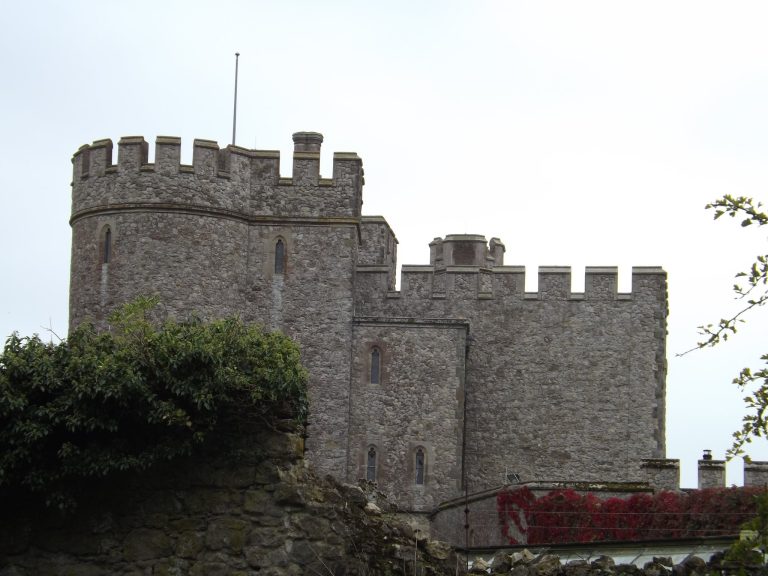
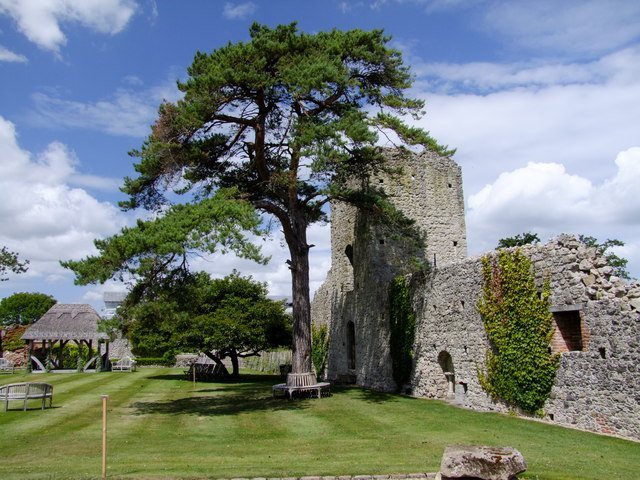
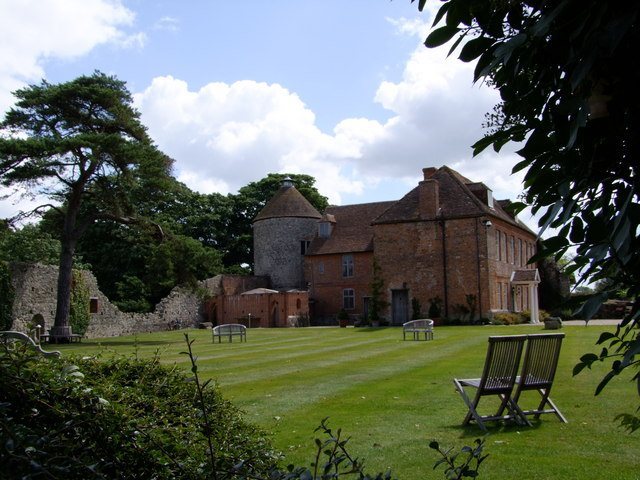
The surviving complex is centred on the reduced fourteenth-century manor house, a fortified four-sided building. Its defensive enclosure includes curtain walls, meaning the outer walls surrounding a castle or fortified complex, together with adjoining buildings. Conservation has focused on the stonework of the manor house, the castle walls, and the associated structures, preserving the remaining fabric of the medieval complex.
Medieval barns
Medieval barns stand intact outside the curtain wall. They were later reunited with the castle under a single ownership, and restoration work has aimed to return them to something close to their original state. Their survival forms part of the wider complex of buildings associated with Westenhanger’s medieval manor.
Ship replica
A replica of the ship Discovery is housed at the castle. It represents one of the three vessels that entered Chesapeake Bay in 1607 and is directly associated with the expedition that led to the founding of Jamestown. The replica was presented to Westenhanger Castle by the Jamestown UK Foundation on 19 December 2008.
Setting
Westenhanger Castle stands beside Westenhanger railway station and the grandstand of Folkestone Racecourse, in a largely agricultural landscape approximately 72 metres above sea level. The nearest sea lies to the southeast.